US Government
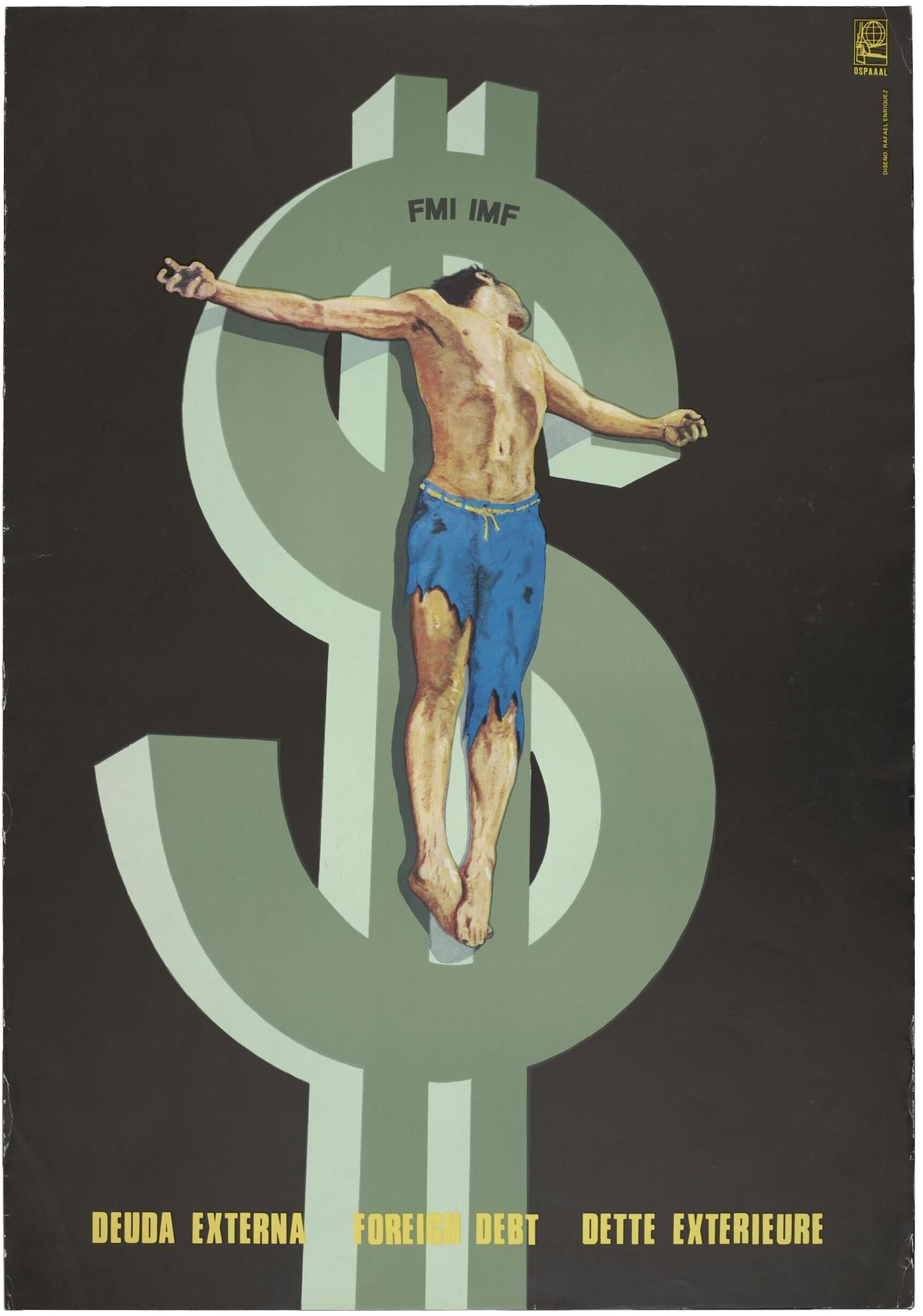
FOREIGN DEBT, 1983
Between the 1960s and 1990s, more than fifty designers worked at OSPAAAL (the Organisation of Solidarity with the People of Africa, Asia and Latin America). Based in Cuba, they made magazines and posters that were sent around the world. Their aim was to promote radical political ideas. Many of their posters celebrate socialist revolutions and liberation movements from the Global South. From 1977 onwards, Rafael Enríquez Vega was creative director at OSPAAAL and a prolific poster designer. In Foreign Debt, he uses a crucifix to accuse the International Monetary Fund of sustaining the U.S. dollar by sacrificing the economies of developing countries.
Content warning: capital punishment, torture

HIROSHIMA - DAY OF WORLD SOLIDARITY WITH THE STRUGGLE OF THE JAPANESE PEOPLE (August 6), 1972
Between the 1960s and 1990s, more than fifty designers worked at OSPAAAL (the Organisation of Solidarity with the People of Africa, Asia and Latin America). Based in Cuba, they made magazines and posters that were sent around the world. Their aim was to promote radical political ideas. Many of their posters celebrate socialist revolutions and liberation movements from the Global South. OSPAAAL marked the date of the atomic bombing of the city of Hiroshima by the U.S.A. as a day of solidarity with Japanese citizens.
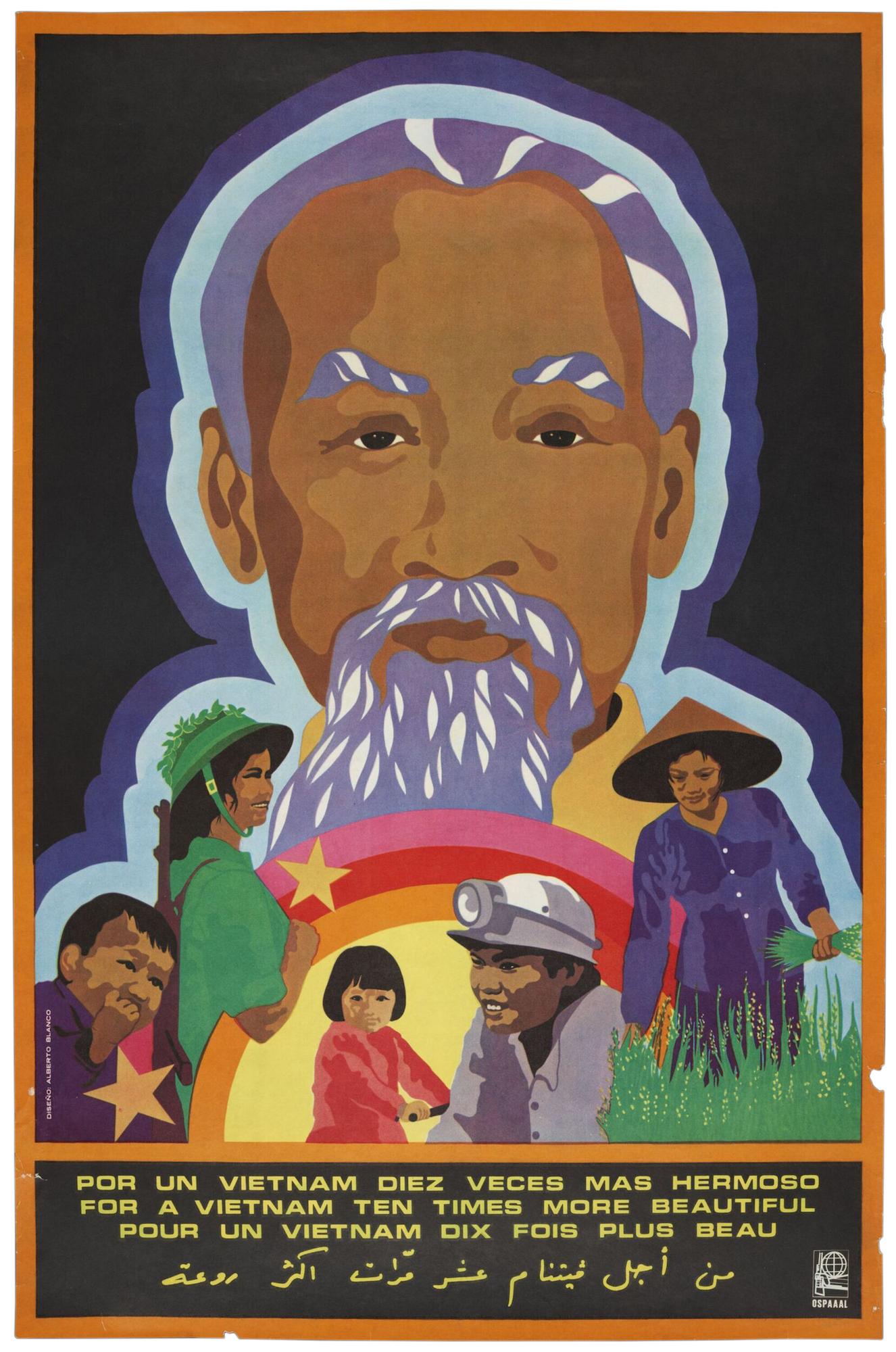
FOR A VIETNAM TEN TIMES MORE BEAUTIFUL, 1980
Between the 1960s and 1990s, more than fifty designers worked at OSPAAAL (the Organisation of Solidarity with the People of Africa, Asia and Latin America). Based in Cuba, they made magazines and posters that were sent around the world. Their aim was to promote radical political ideas. Many of their posters celebrate socialist revolutions and liberation movements from the Global South. President Hồ Chí Minh promised that a country “ten times more beautiful” would be rebuilt after the destruction caused by the war between North Vietnam and South Vietnam, allied with the U.S.A. (known as the ‘Vietnam War’ and ‘War Against the Americans to Save the Nation’).. This posthumous portrait of the leader pictures Vietnamese citizens in the socialist realist style used in propaganda posters from the Soviet Union and People’s Republic of China.
Content warning: weaponry
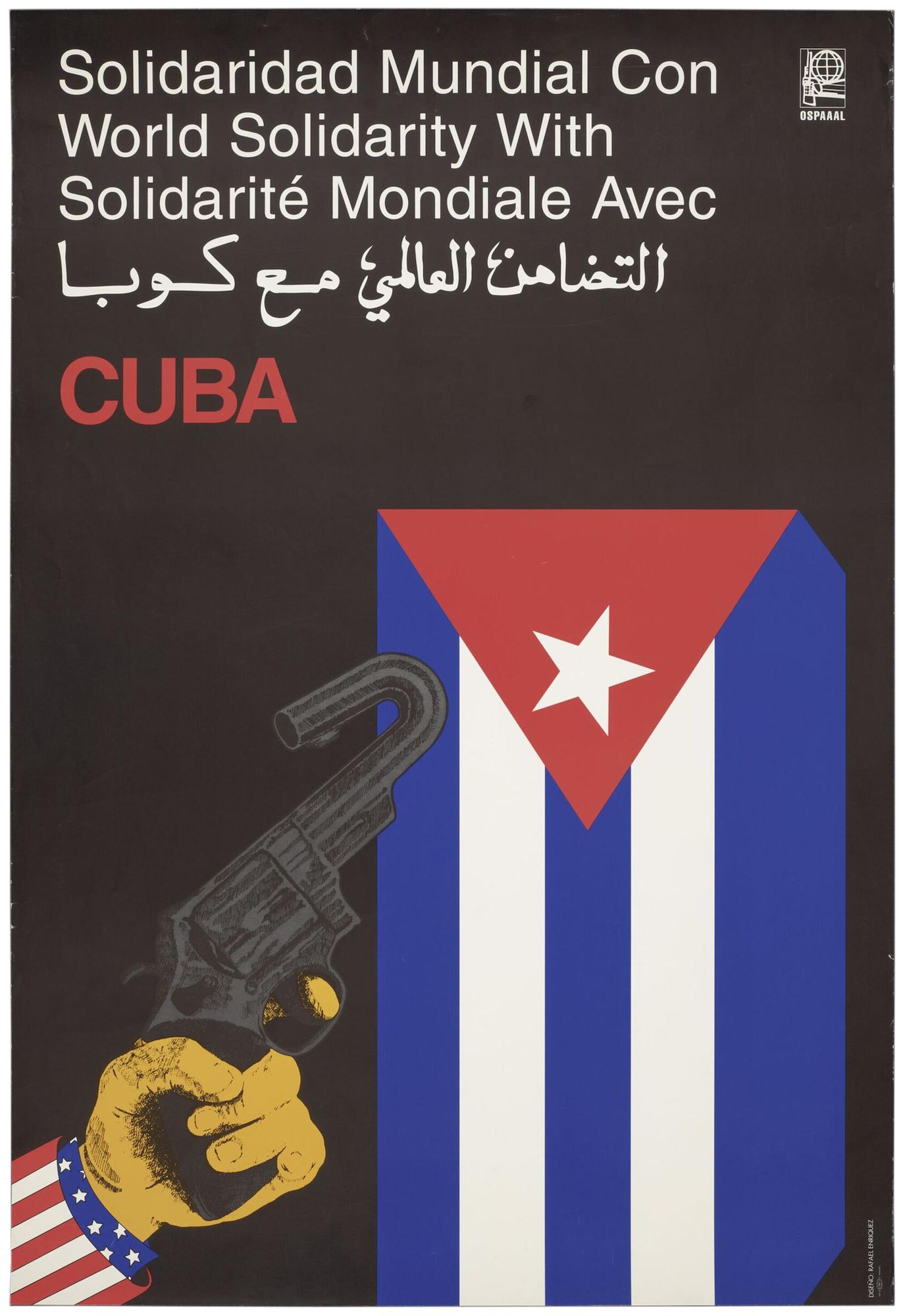
World Solidarity With CUBA, 1980
Between the 1960s and 1990s, more than fifty designers worked at OSPAAAL (the Organisation of Solidarity with the People of Africa, Asia and Latin America). Based in Cuba, they made magazines and posters that were sent around the world. Their aim was to promote radical political ideas. Many of their posters celebrate socialist revolutions and liberation movements from the Global South. They also criticised the foreign policy of the U.S.A. In this design, the Cuban flag represents the Cuban revolution repelling the U.S. military, represented by the hand of fictional character Uncle Sam.
Content warning: weaponry
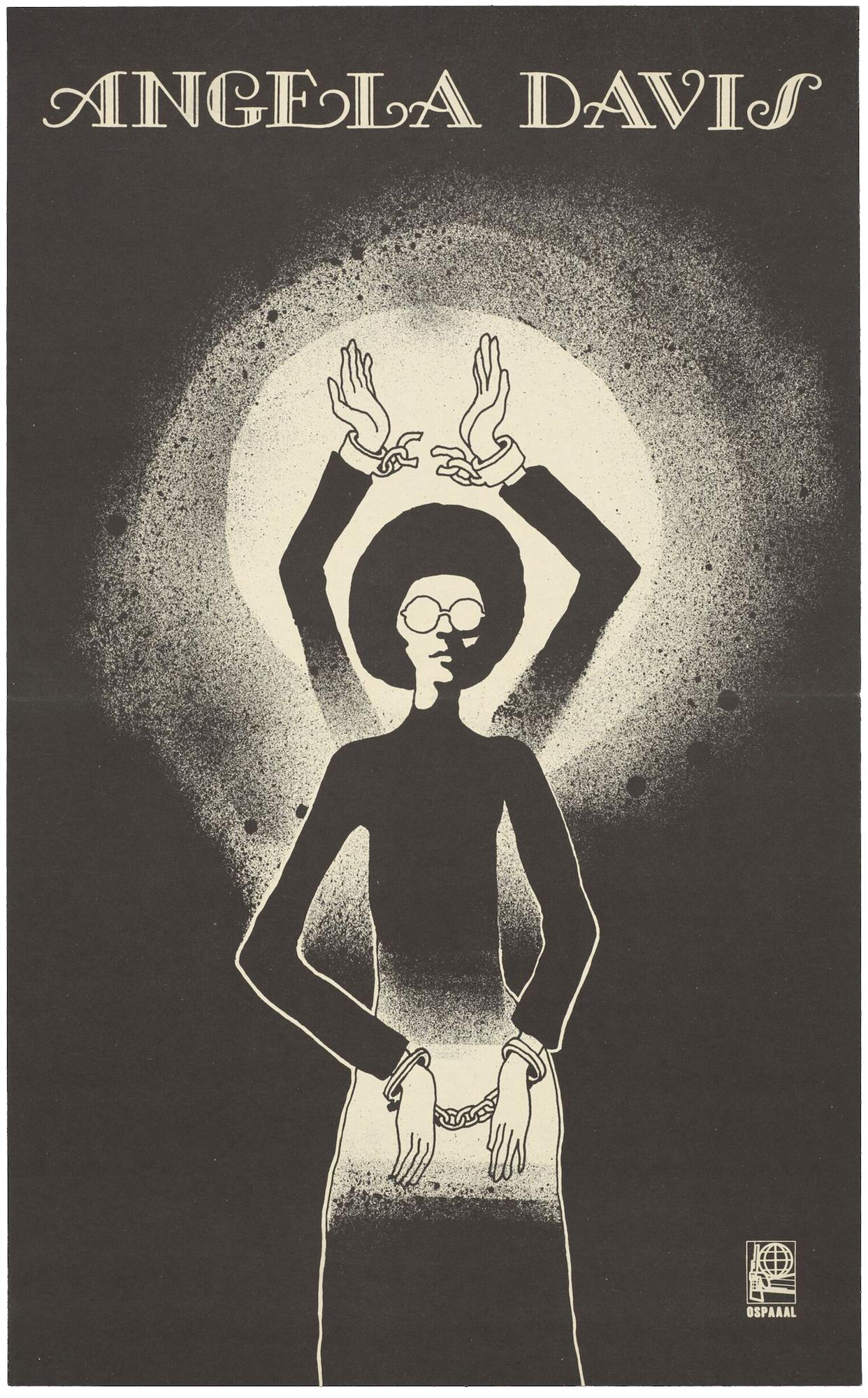
ANGELA DAVIS, 1970
Between the 1960s and 1990s, more than fifty designers worked at OSPAAAL (the Organisation of Solidarity with the People of Africa, Asia and Latin America). Based in Cuba, they made magazines and posters that were sent around the world. Their aim was to promote radical political ideas. Many of their posters celebrate socialist revolutions and liberation movements from the Global South. This poster was designed in support of North American activist and academic Angela Davis. She was arrested in New York City in 1970, accused of supplying arms that were used in a kidnap and murder. She protested her innocence and there was widespread protest at her incarceration. Davis was cleared of all charges in 1972.
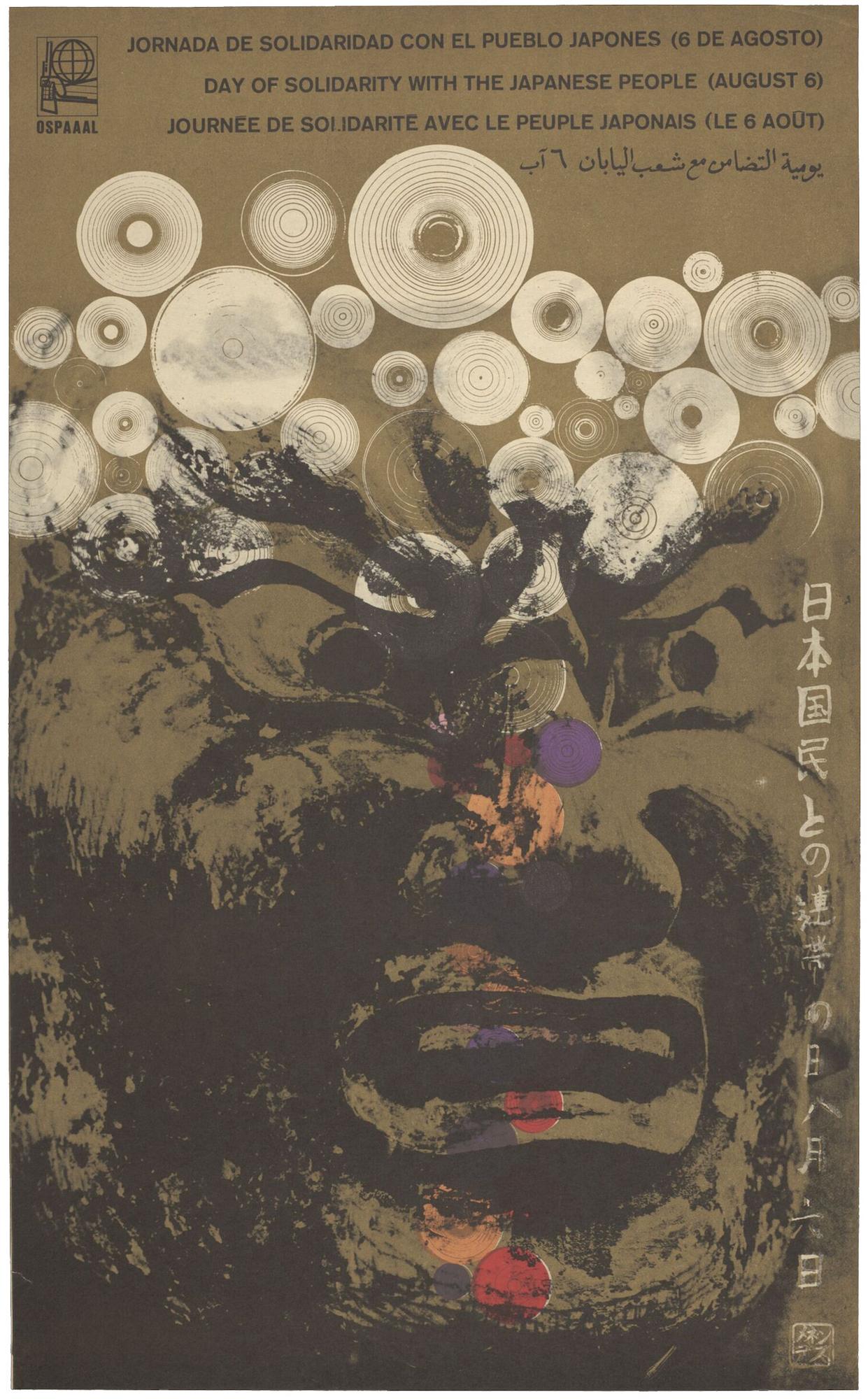
DAY OF SOLIDARITY WITH THE JAPANESE PEOPLE (AUGUST 6), 1968
Between the 1960s and 1990s, more than fifty designers worked at OSPAAAL (the Organisation of Solidarity with the People of Africa, Asia and Latin America). Based in Cuba, they made magazines and posters that were sent around the world. Their aim was to promote radical political ideas. Many of their posters celebrate socialist revolutions and liberation movements from the Global South. OSPAAAL marked the date of the atomic bombing of the city of Hiroshima by the U.S.A. as a day of solidarity with Japanese citizens. The design appears to incorporate a photograph of Raijin, a Japanese god of thunder, lightning and storms.
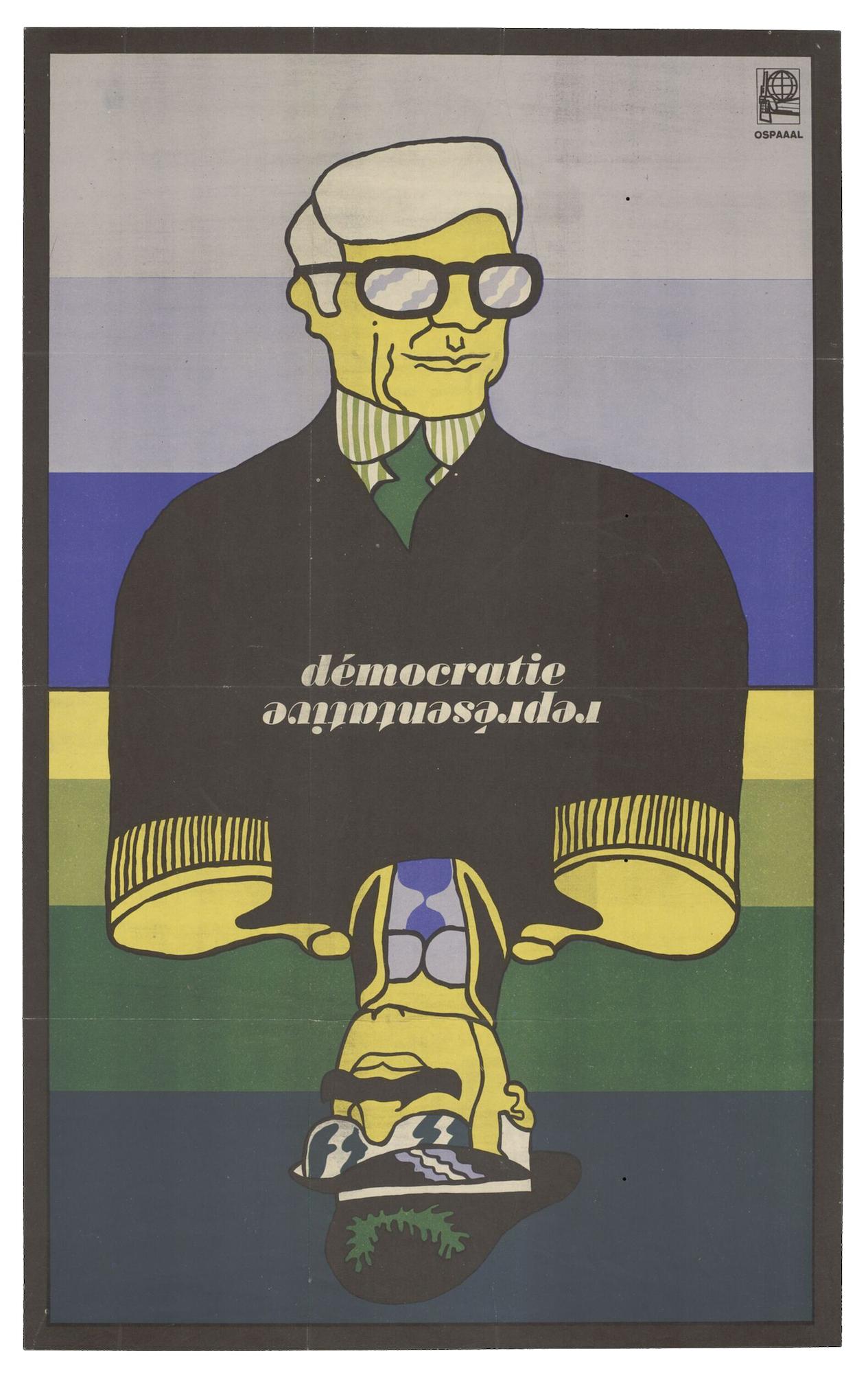
democracy representative, 1968
Between the 1960s and 1990s, more than fifty designers worked at OSPAAAL (the Organisation of Solidarity with the People of Africa, Asia and Latin America). Based in Cuba, they made magazines and posters that were sent around the world. Their aim was to promote radical political ideas. Many of their posters celebrate socialist revolutions and liberation movements from the Global South. Alfredo Rostgaard was OSPAAAL’s creative director from 1966 to 1976. His began his career as a caricaturist for socialist children’s comic Mella. For this poster, he created two linked characters representing a democratic politician and a military dictator.
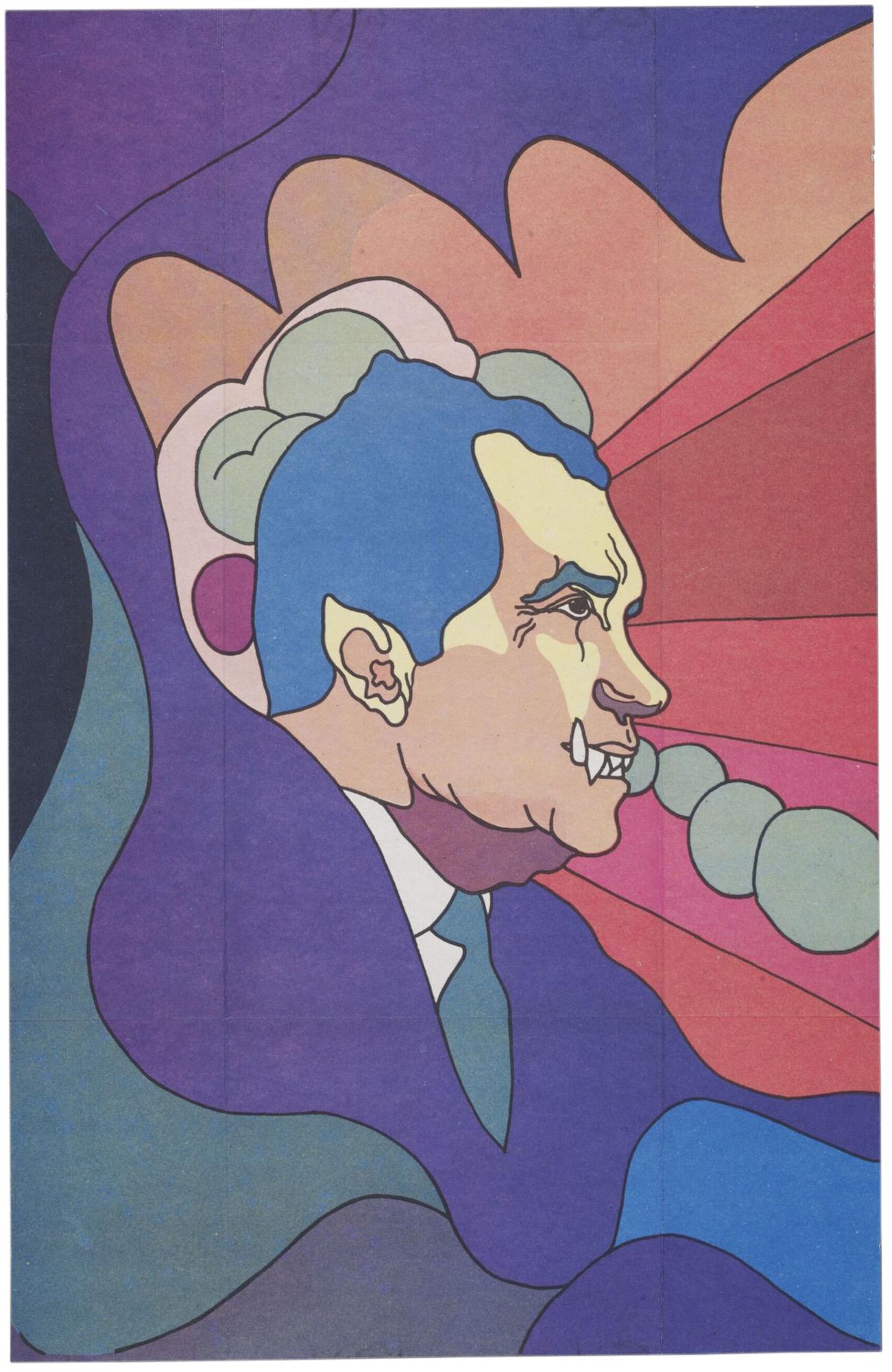
Untitled, 1969
Between the 1960s and 1990s, more than fifty designers worked at OSPAAAL. Based in Cuba, they made magazines and posters that were sent around the world. Their aim was to promote radical political ideas. Many of their posters celebrate socialist revolutions and liberation movements from the Global South. They also criticised the foreign policy of the U.S.A. Alfredo Rostgaard was OSPAAAL’s creative director from 1966 to 1976. His folded poster of US president Richard Nixon unfolds to gradually transform him into a demonic figure.
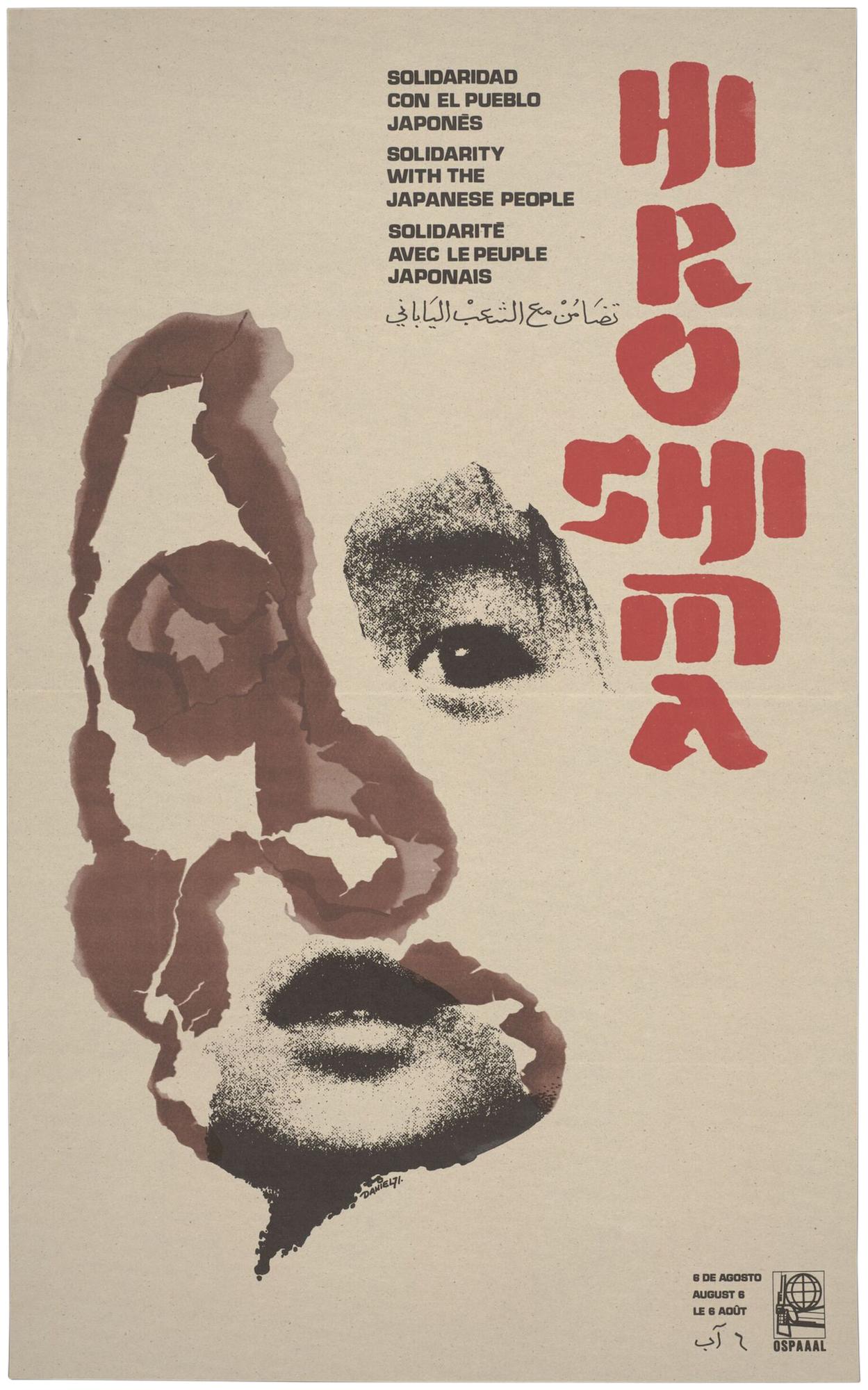
HIROSHIMA - SOLIDARITY WITH THE JAPANESE PEOPLE, 1972
Between the 1960s and 1990s, more than fifty designers worked at OSPAAAL (the Organisation of Solidarity with the People of Africa, Asia and Latin America). Based in Cuba, they made magazines and posters that were sent around the world. Their aim was to promote radical political ideas. Many of their posters celebrate socialist revolutions and liberation movements from the Global South. OSPAAAL marked the date of the atomic bombing of the city of Hiroshima by the U.S.A. as a day of solidarity with Japanese citizens. By collaging fragments of a photograph and burned paper, Daniel García stressed the horrific consequences of deploying nuclear weapons. OSPAAAL’s designers regularly used adapted photographs from the organisation’s news desk. Photographs were sometimes used out of context, with the same photographs appearing in posters and magazine illustrations to represent different themes. The identity of the person in this photograph is not recorded.
Content warning: Injury, burns