Sword
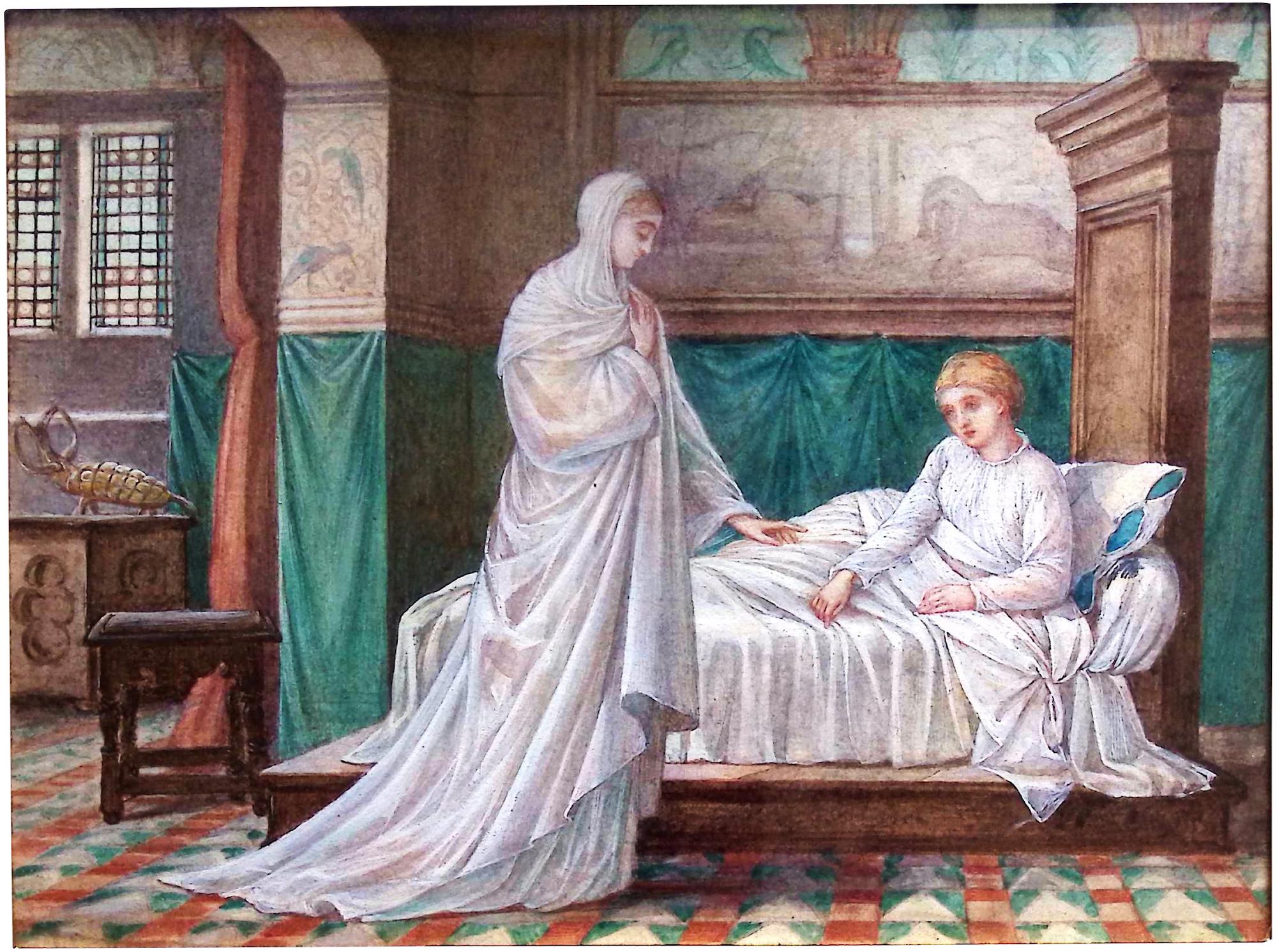
Illustration for Beauty and the Beast (a lady comforting Beauty), c. 1875
Eleanor Vere Boyle (1825 – 1916) illustrated poetry and prose by some of the most popular authors of her time. She regularly drew and painted using ink and watercolour, sketching landscapes, animals and her children from life. She also made drawings from her imagination, often reflecting spiritual themes. This illustration is from Boyle’s 1875 retelling of Beauty and the Beast, a fairy tale where a woman is imprisoned by a monster and falls in love with him. Unlike other illustrated versions before or since, Boyle gave her beast walrus-like tusks and flippers. In several of her illustrations, Boyle used shell gold – a mixture of finely ground gold powder and gum arabic (tree sap) that would have been stored in a shallow seashell. In the final publication, the caption for this illustration reads, "The room where Beauty slept. At dawn, a lady came to comfort her"
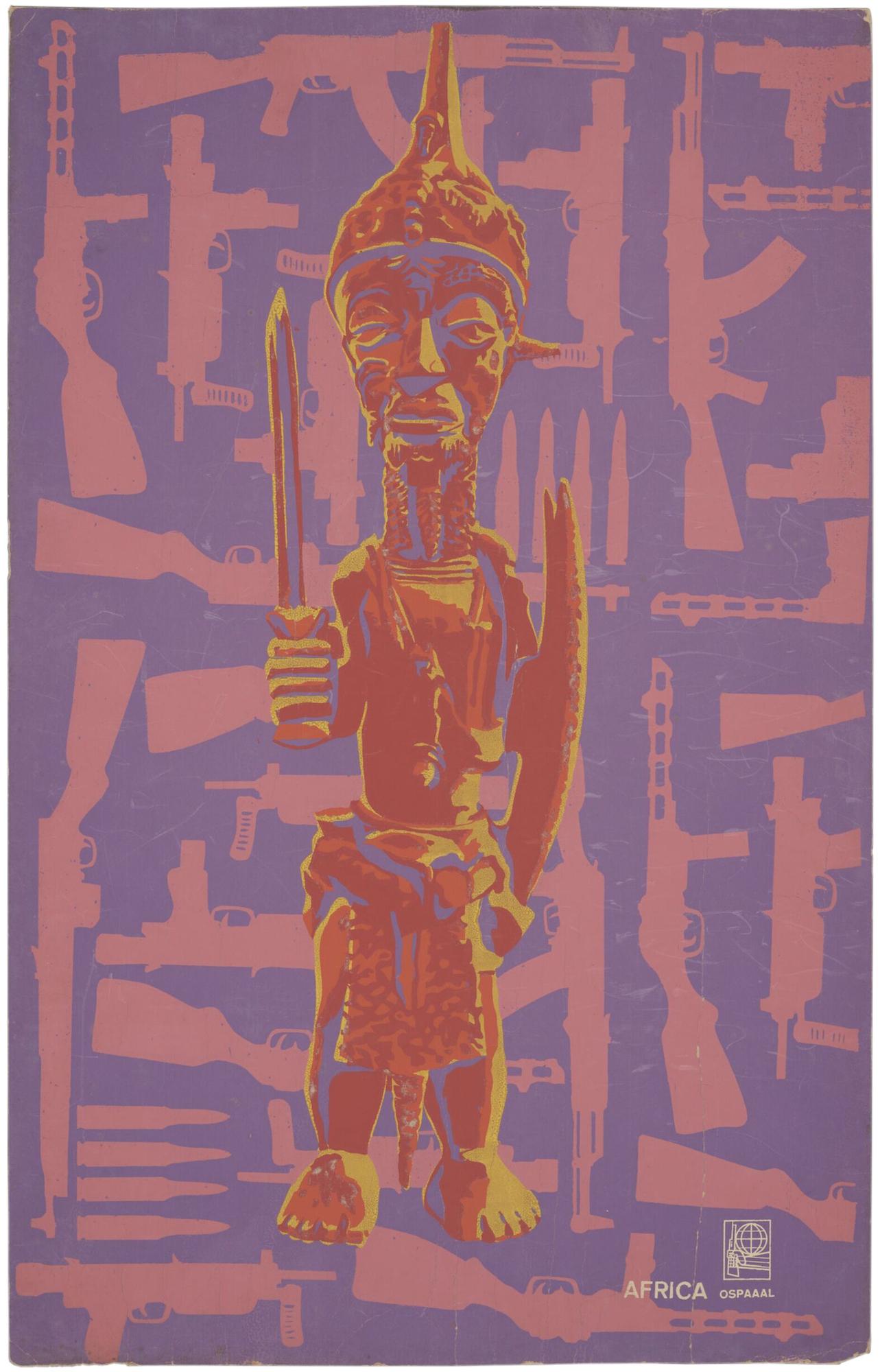
AFRICA, 1969
Between the 1960s and 1990s, more than fifty designers worked at OSPAAAL (the Organisation of Solidarity with the People of Africa, Asia and Latin America). Based in Cuba, they made magazines and posters that were sent around the world. Their aim was to promote radical political ideas. Many of their posters celebrate socialist revolutions and liberation movements from the Global South. Many OSPAAAL designers combined images of Indigenous art and craft with weaponry. Their aim was to argue for the right to self-determination and support liberation movements opposing colonial and imperial powers. However, the designers did not always know the meaning or origin of the iconography they used.
Content warning: weaponry
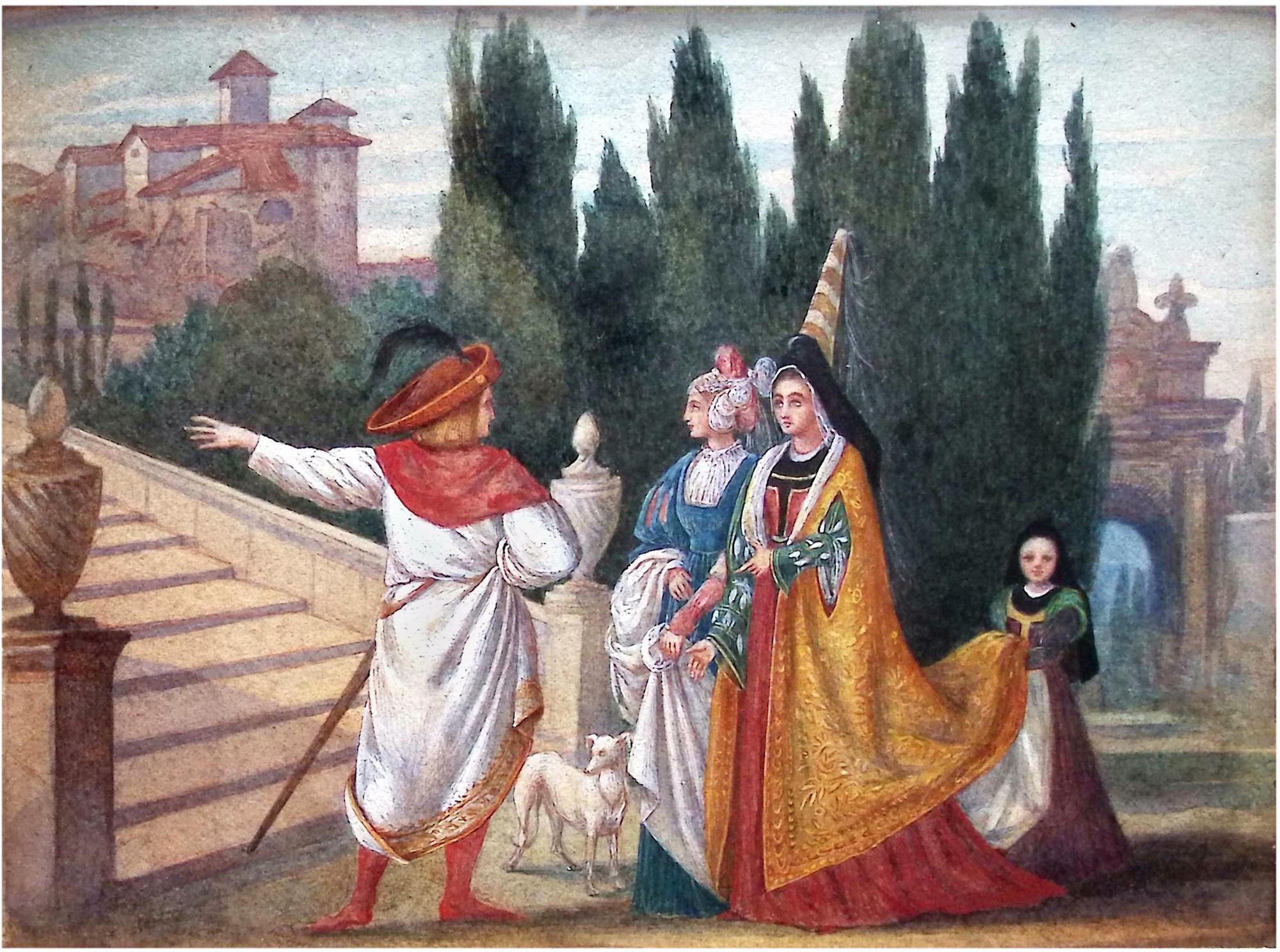
Illustration for Beauty and the Beast (Beauty and her two sisters), c. 1875
Eleanor Vere Boyle (1825 – 1916) illustrated poetry and prose by some of the most popular authors of her time. She regularly drew and painted using ink and watercolour, sketching landscapes, animals and her children from life. She also made drawings from her imagination, often reflecting spiritual themes. This illustration is from Boyle’s 1875 retelling of Beauty and the Beast, a fairy tale where a woman is imprisoned by a monster and falls in love with him. Unlike other illustrated versions before or since, Boyle gave her beast walrus-like tusks and flippers. In several of her illustrations, Boyle used shell gold – a mixture of finely ground gold powder and gum arabic (tree sap) that would have been stored in a shallow seashell. In the final publication, the caption for this illustration reads, "In the King's Garden the feast is ready, and the minstrels wait."
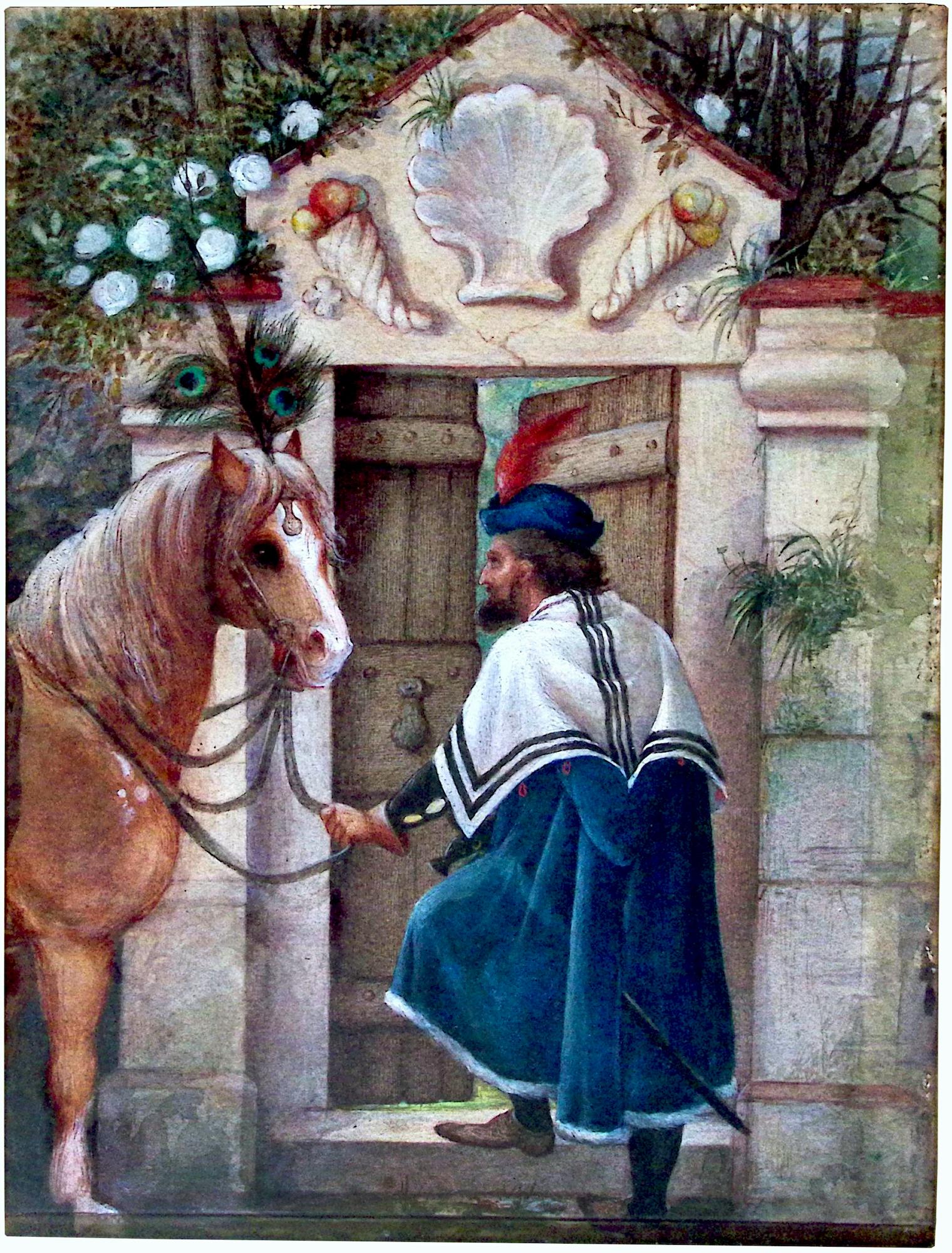
Illustration for Beauty and the Beast (the Merchant entering the Beast's Garden), c. 1875
Eleanor Vere Boyle (1825 – 1916) illustrated poetry and prose by some of the most popular authors of her time. She regularly drew and painted using ink and watercolour, sketching landscapes, animals and her children from life. She also made drawings from her imagination, often reflecting spiritual themes. This illustration is from Boyle’s 1875 retelling of Beauty and the Beast, a fairy tale where a woman is imprisoned by a monster and falls in love with him. Unlike other illustrated versions before or since, Boyle gave her beast walrus-like tusks and flippers. In several of her illustrations, Boyle used shell gold – a mixture of finely ground gold powder and gum arabic (tree sap) that would have been stored in a shallow seashell. In the final publication, the caption for this illustration reads, "The Merchant found a little door in the wall, and he opened it, and went into the Beast's Garden."