Performance
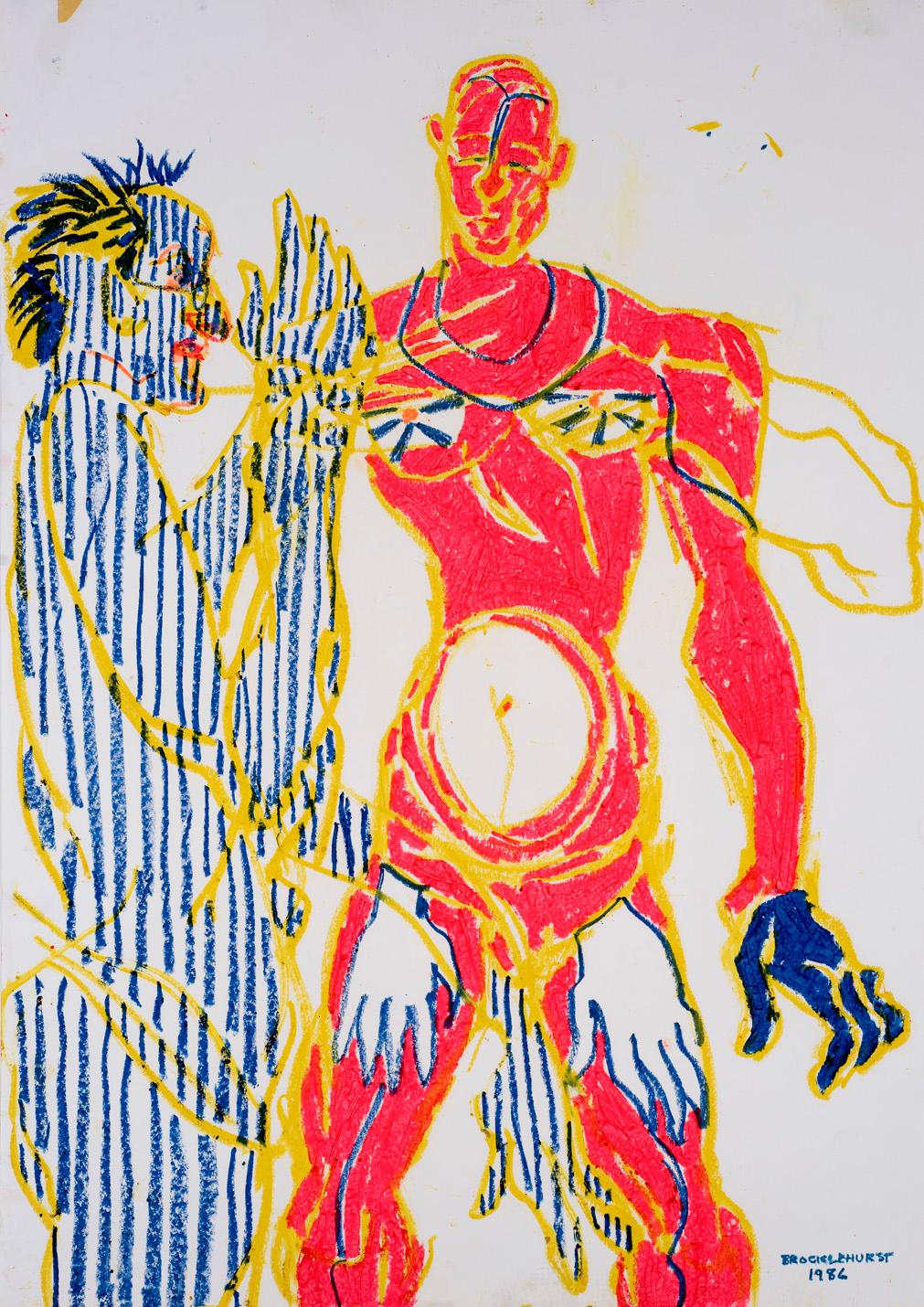
Jo Brocklehurst, Untitled (Karl Oppermann and student at Diskurs festival), 1986
Jo (Josephine) Brocklehurst (1935 - 2006) studied at Central Saint Martins and began her career as a fashion illustrator. She later focused on portraiture, drawing directly from models at her studio in West Hampstead and in nightclubs and theatres in Berlin, London and New York. Her work documents the alternative subcultures of the 1970s, 80s and 90s that went on to shape mainstream fashion and performance scenes. In 1986 Brocklehurst visited the Institute of Applied Theatre Studies in Giessen, Germany during Diskurs Festival. She drew Karl Oppermann and his students performing The Crazy Locomotive, a play written by Stanisław Ignacy Witkiewicz.
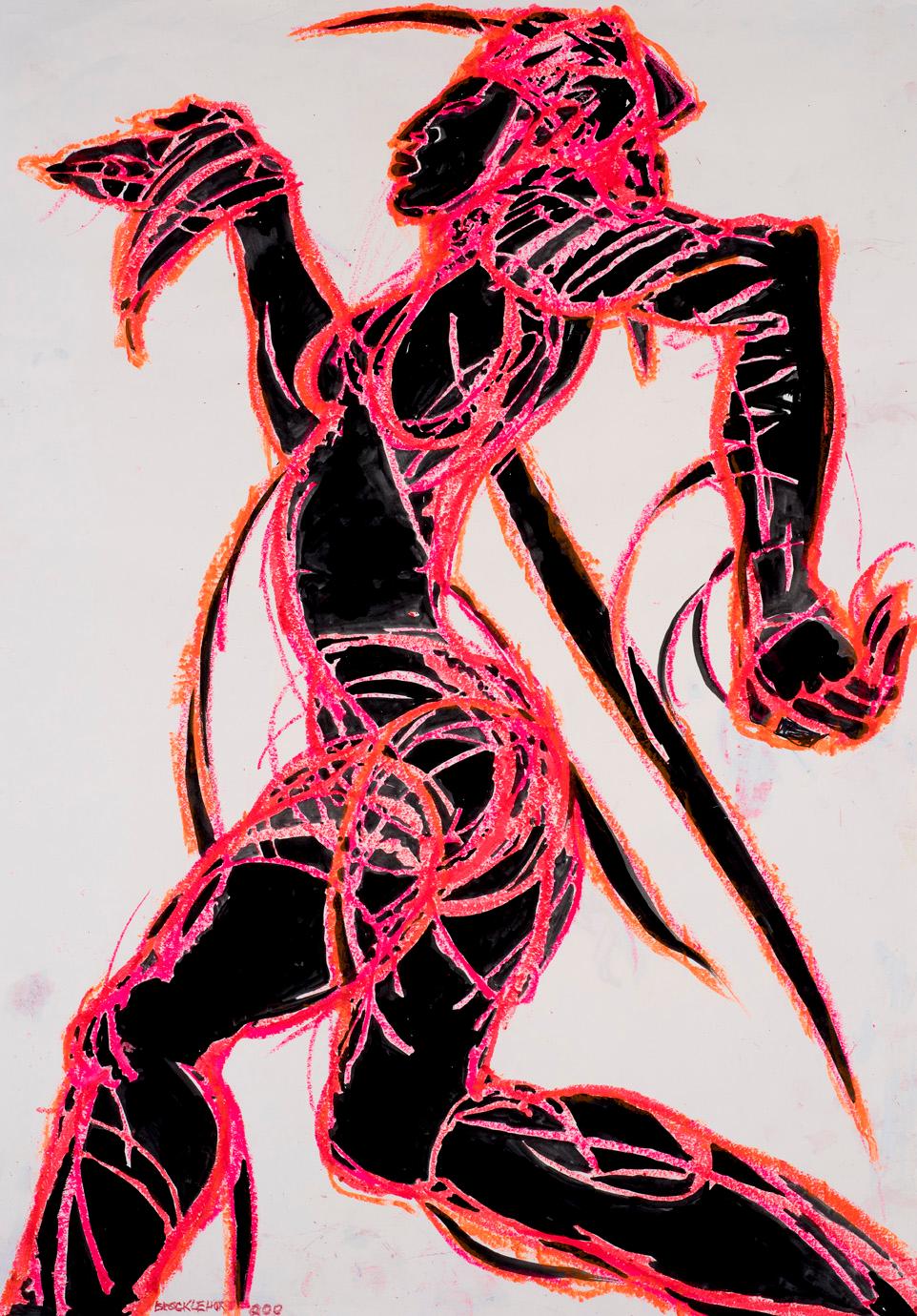
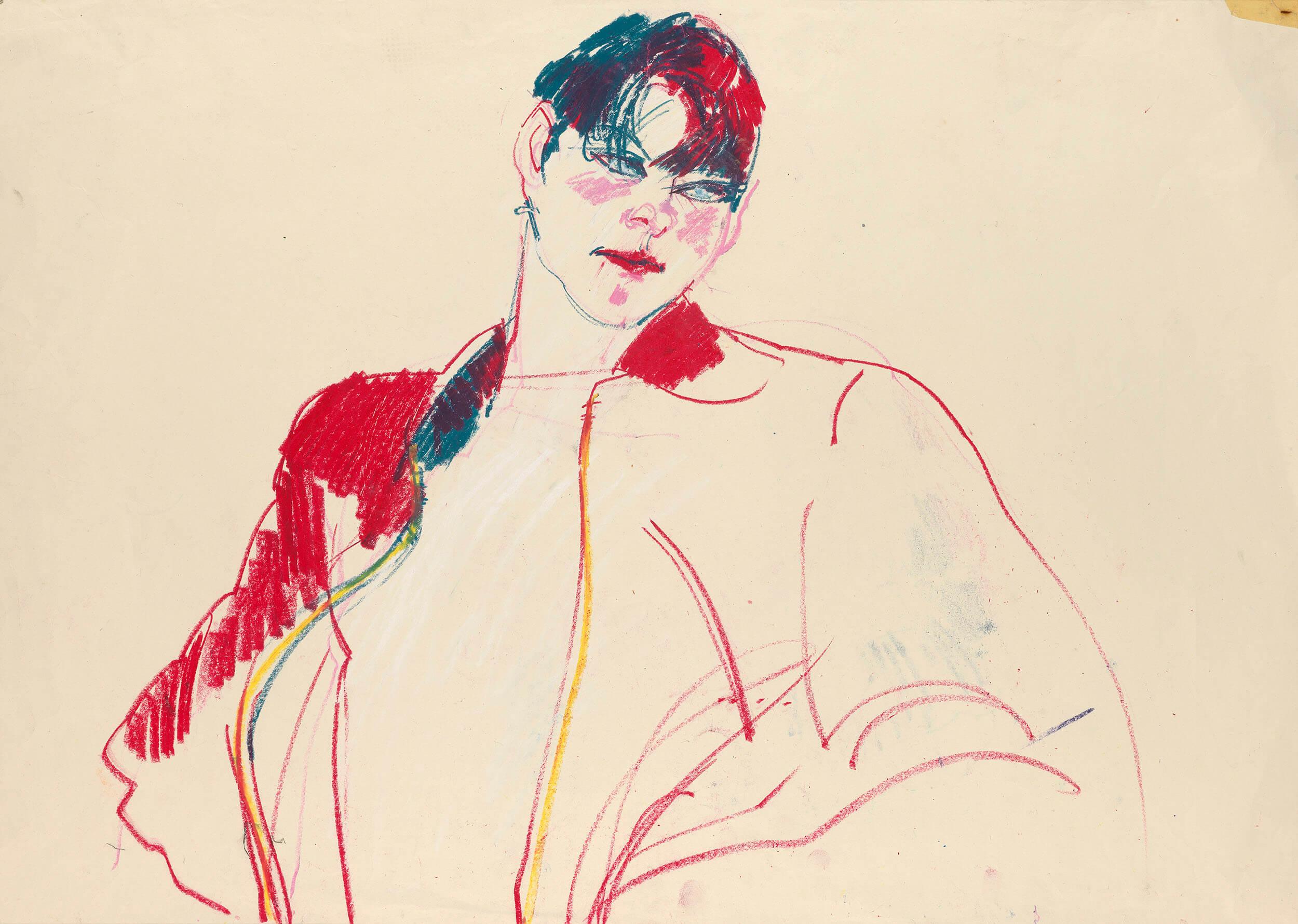
Jo Brocklehurst, Untitled (portrait of Josephine Leask), 2000
Jo (Josephine) Brocklehurst (1935 - 2006) studied at Central Saint Martins and began her career as a fashion illustrator. She later focused on portraiture, drawing directly from models at her studio in West Hampstead and in nightclubs and theatres in Berlin, London and New York. Her work documents the alternative subcultures of the 1970s, 80s and 90s that went on to shape mainstream fashion and performance scenes. In 2000, Brocklehurst created a series of drawings in sessions with dancer Josephine Leask. Leask’s 1999 article Welcome to the Club, published in ballettanz magazine, described the ways that nightclubs were acting as alternative theatres for cutting-edge contemporary dance. These drawings were shown as part of Leask’s lecture-performance on the same theme at the 2000 Salzburg Festival.
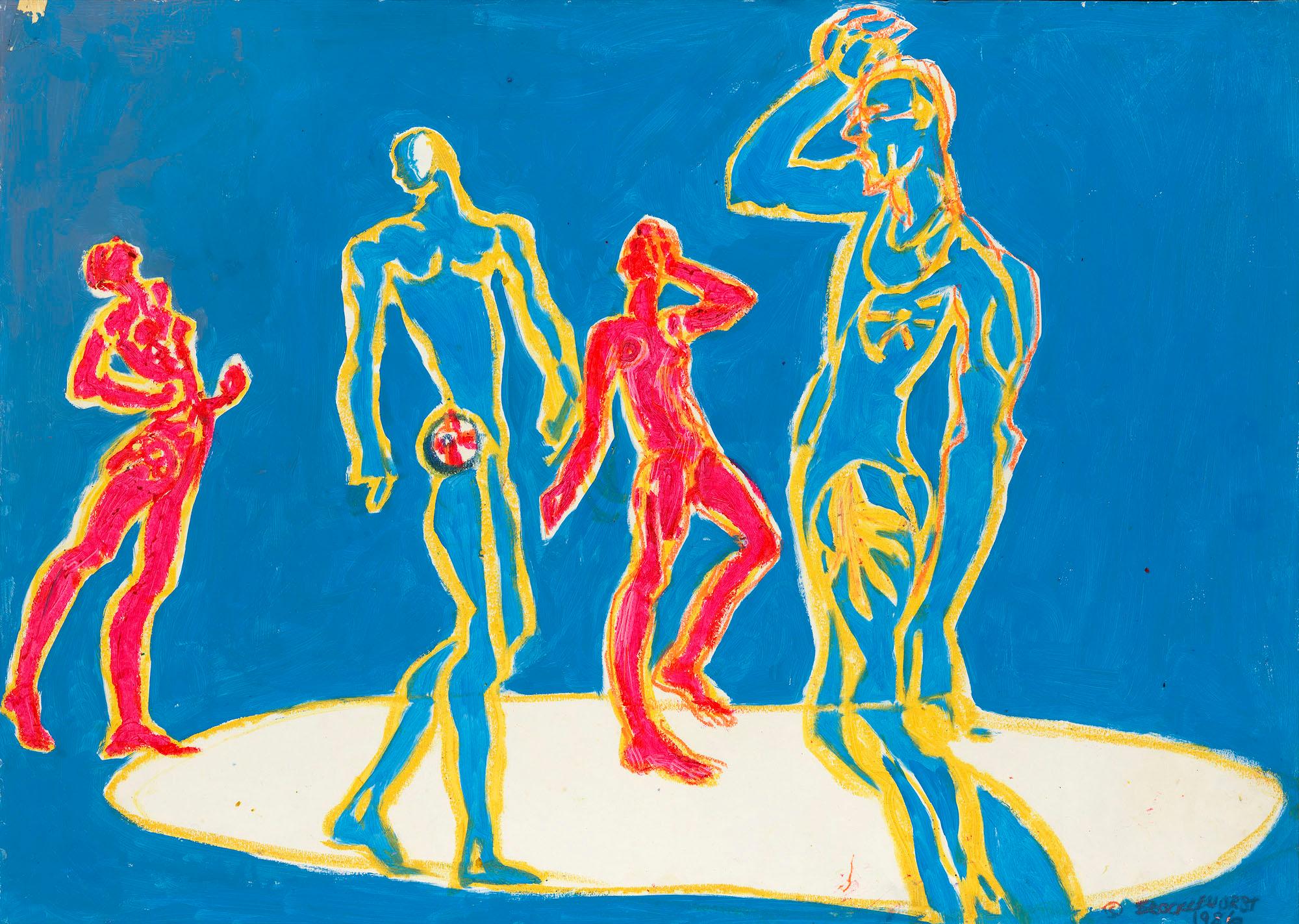
Jo Brocklehurst, Untitled, 1986
Jo (Josephine) Brocklehurst (1935 - 2006) studied at Central Saint Martins and began her career as a fashion illustrator. She later focused on portraiture, drawing directly from models at her studio in West Hampstead and in nightclubs and theatres in Berlin, London and New York. Her work documents the alternative subcultures of the 1970s, 80s and 90s that went on to shape mainstream fashion and performance scenes. In 1986 Brocklehurst visited the Institute of Applied Theatre Studies in Giessen, Germany during Diskurs Festival. She drew Karl Oppermann and his students performing The Crazy Locomotive, a play written by Stanisław Ignacy Witkiewicz.
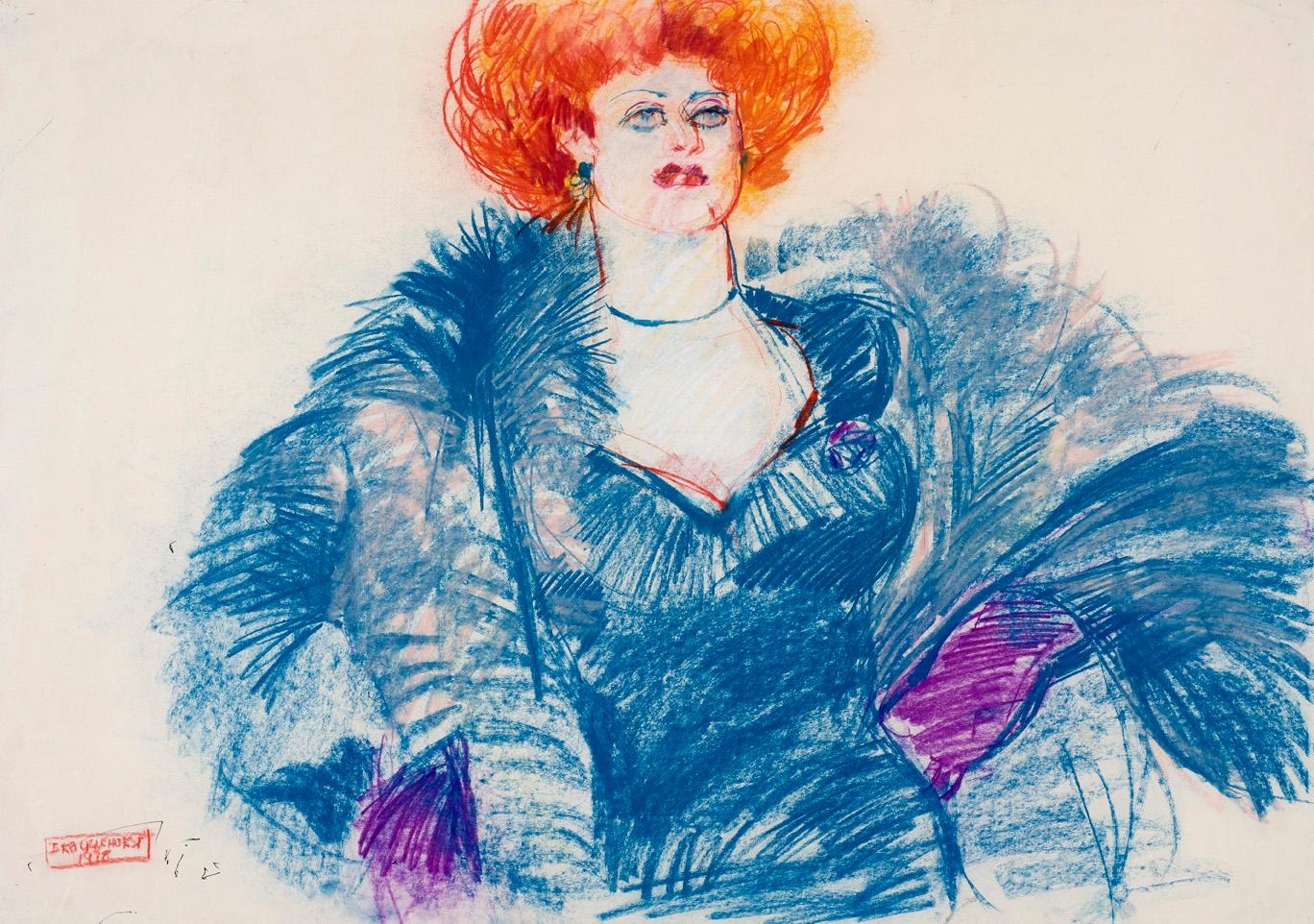
Jo Brocklehurst, Untitled (portrait of Eve Ferret), 1978
Jo (Josephine) Brocklehurst (1935 - 2006) studied at Central Saint Martins and began her career as a fashion illustrator. She later focused on portraiture, drawing directly from models at her studio in West Hampstead and in nightclubs and theatres in Berlin, London and New York. Her work documents the alternative subcultures of the 1970s, 80s and 90s that went on to shape mainstream fashion and performance scenes. This portrait of performer Eve Ferret was made around the time Ferret was performing cabaret at London’s Blitz Club with James ‘Biddie’ Biddlecombe.
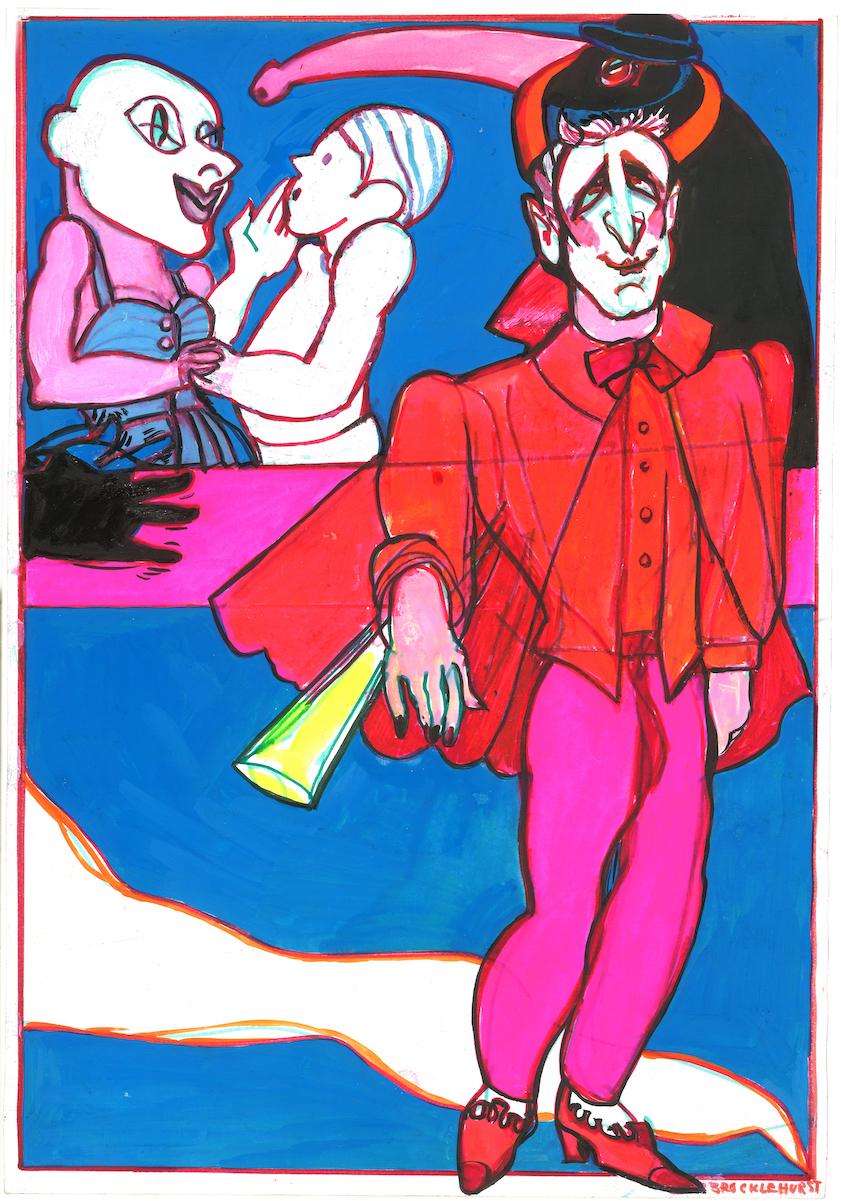
Jo Brocklehurst, Untitled (drawing of Die Eingeborene), 1999
Jo (Josephine) Brocklehurst (1935 - 2006) studied at Central Saint Martins and began her career as a fashion illustrator. She later focused on portraiture, drawing directly from models at her studio in West Hampstead and in nightclubs and theatres in Berlin, London and New York. Her work documents the alternative subcultures of the 1970s, 80s and 90s that went on to shape mainstream fashion and performance scenes. In 1999, Brocklehurst was artist in residence at newspaper Berliner Zeitung during Berliner Theatertreffen, a festival of new German theatre. The paper wanted to revive the Weimar tradition of theatre reviews being accompanied by illustrations, rather than using photographs. Brocklehurst drew behind the scenes and from her seat during performances. This drawing is from a performance of Die Eingeborene.
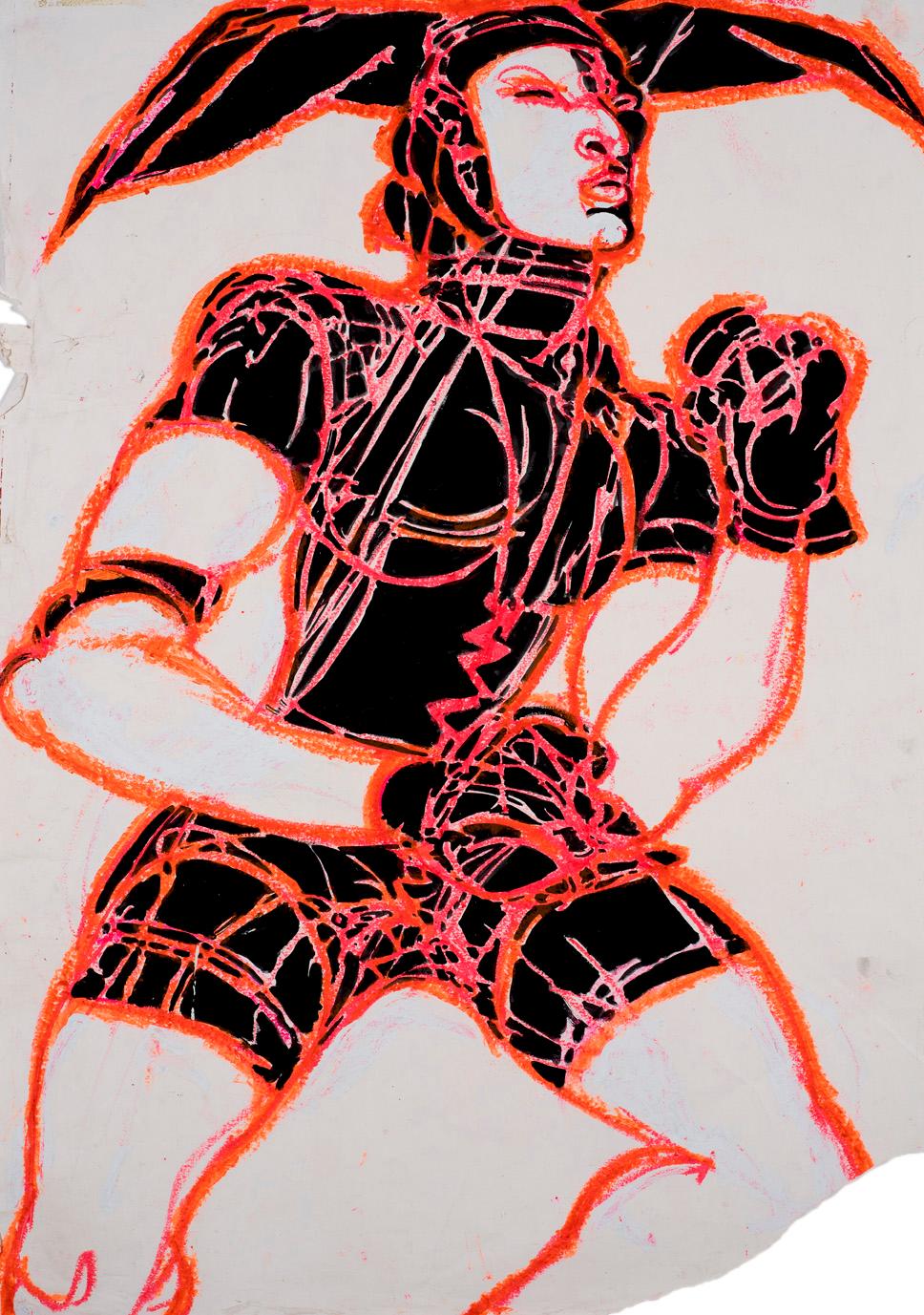
Jo Brocklehurst, Untitled (portrait of Josephine Leask), 2000
Jo (Josephine) Brocklehurst (1935 - 2006) studied at Central Saint Martins and began her career as a fashion illustrator. She later focused on portraiture, drawing directly from models at her studio in West Hampstead and in nightclubs and theatres in Berlin, London and New York. Her work documents the alternative subcultures of the 1970s, 80s and 90s that went on to shape mainstream fashion and performance scenes. In 2000, Brocklehurst created a series of drawings in sessions with dancer Josephine Leask. Leask’s 1999 article Welcome to the Club, published in ballettanz magazine, described the ways that nightclubs were acting as alternative theatres for cutting-edge contemporary dance. These drawings were shown as part of Leask’s lecture-performance on the same theme at the 2000 Salzburg Festival.
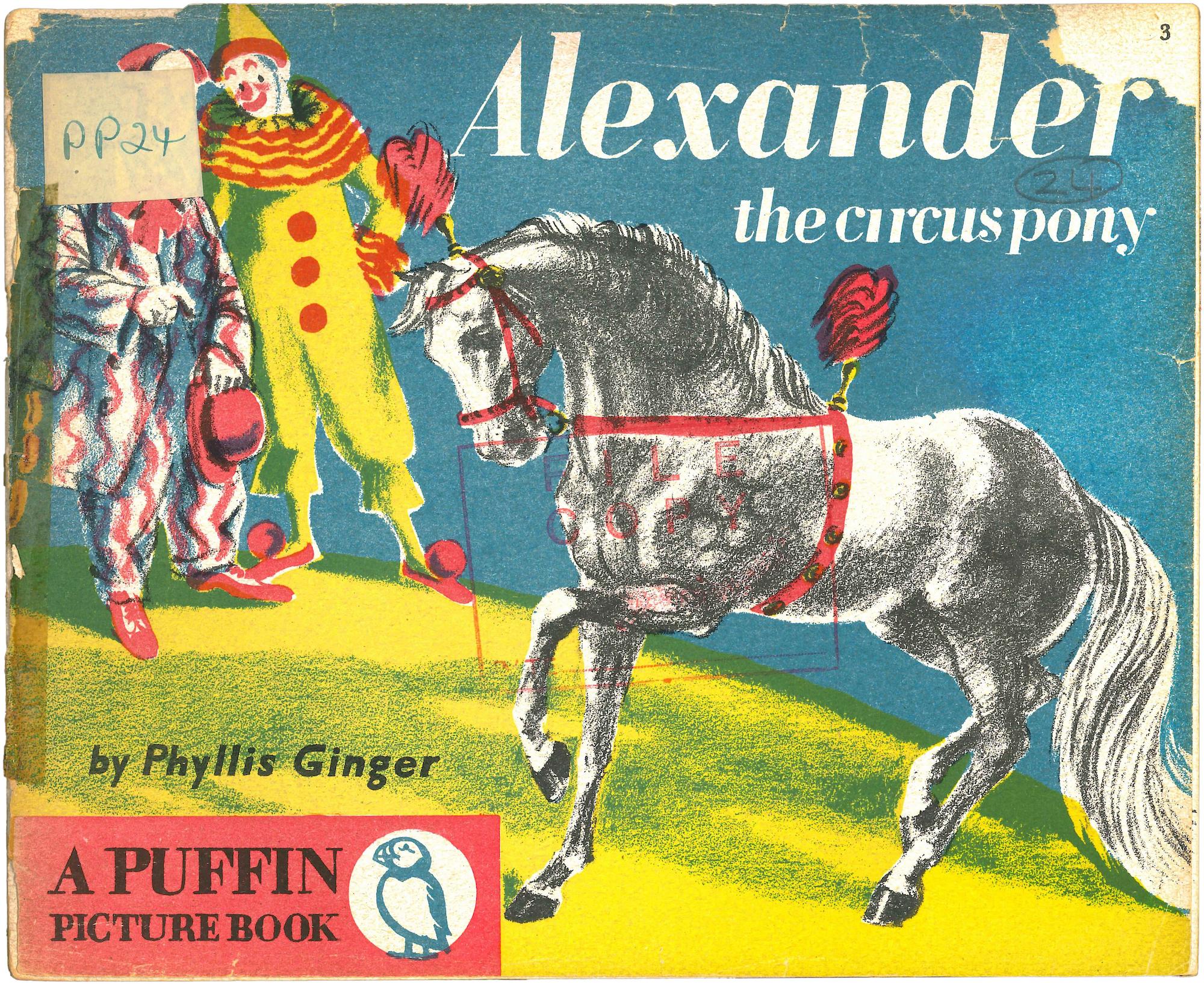
Alexander the circus pony, 1943
The Puffin Picture Books series was established by designer and editor Noel Carrington (1895-1989). In 1933, artist Pearl Binder (1904-1990) sent Carrington a package of Soviet children’s books. “They were produced by the million on very cheap paper, but the drawings were vigorous and the colour delightful” he later remembered. These books inspired Carrington to edit a series of affordable books that would encourage “the child’s awakening interest in its surroundings... I felt that colour was essential, and that artists could... be more successful in books of this nature than the camera”. Many artists and illustrators worked on the series, adapting their ways of working to lithographic printing and the Puffin Picture Book format. Most of the 120 books in the series were printed on one large sheet of paper: one side in colour and one in black-and-white. Each sheet was cut, folded and stapled to create a softcover book.
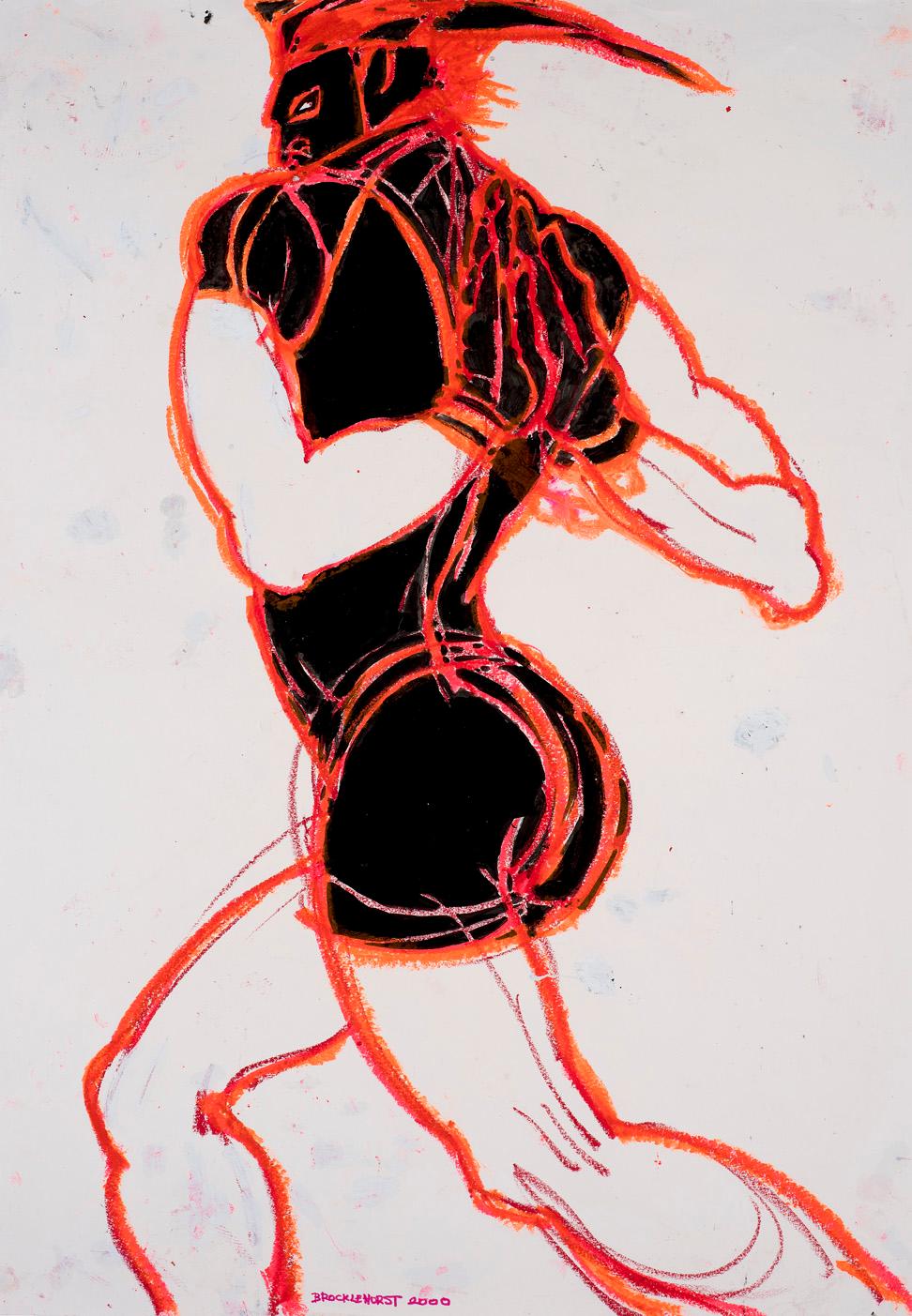
Jo Brocklehurst, Untitled (portrait of Josephine Leask), 2000
Jo (Josephine) Brocklehurst (1935 - 2006) studied at Central Saint Martins and began her career as a fashion illustrator. She later focused on portraiture, drawing directly from models at her studio in West Hampstead and in nightclubs and theatres in Berlin, London and New York. Her work documents the alternative subcultures of the 1970s, 80s and 90s that went on to shape mainstream fashion and performance scenes. In 2000, Brocklehurst created a series of drawings in sessions with dancer Josephine Leask. Leask’s 1999 article Welcome to the Club, published in ballettanz magazine, described the ways that nightclubs were acting as alternative theatres for cutting-edge contemporary dance. These drawings were shown as part of Leask’s lecture-performance on the same theme at the 2000 Salzburg Festival.
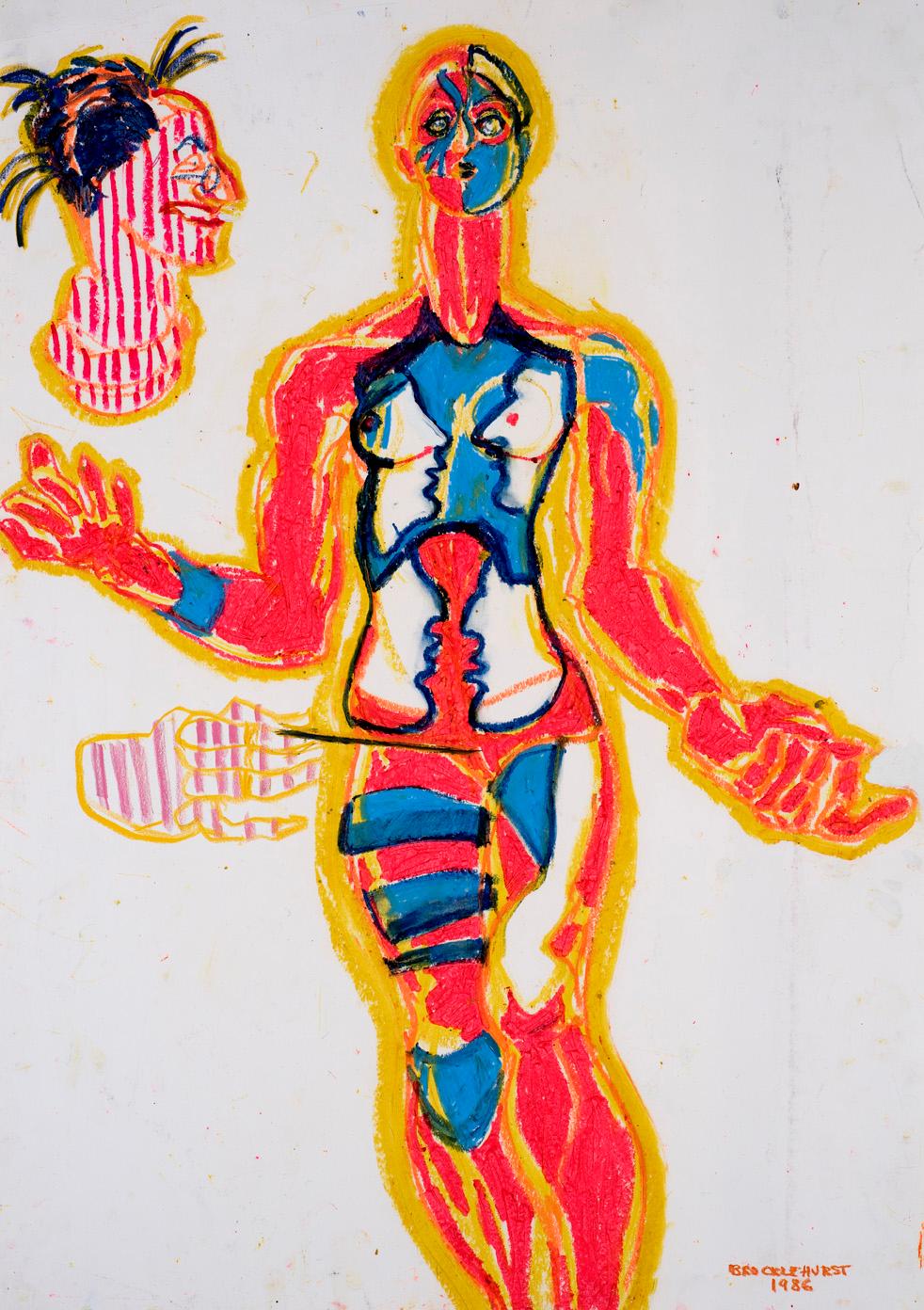
Jo Brocklehurst, Untitled (Karl Oppermann and student at Diskurs festival), 1986
Jo (Josephine) Brocklehurst (1935 - 2006) studied at Central Saint Martins and began her career as a fashion illustrator. She later focused on portraiture, drawing directly from models at her studio in West Hampstead and in nightclubs and theatres in Berlin, London and New York. Her work documents the alternative subcultures of the 1970s, 80s and 90s that went on to shape mainstream fashion and performance scenes. In 1986 Brocklehurst visited the Institute of Applied Theatre Studies in Giessen, Germany during Diskurs Festival. She drew Karl Oppermann and his students performing The Crazy Locomotive, a play written by Stanisław Ignacy Witkiewicz.
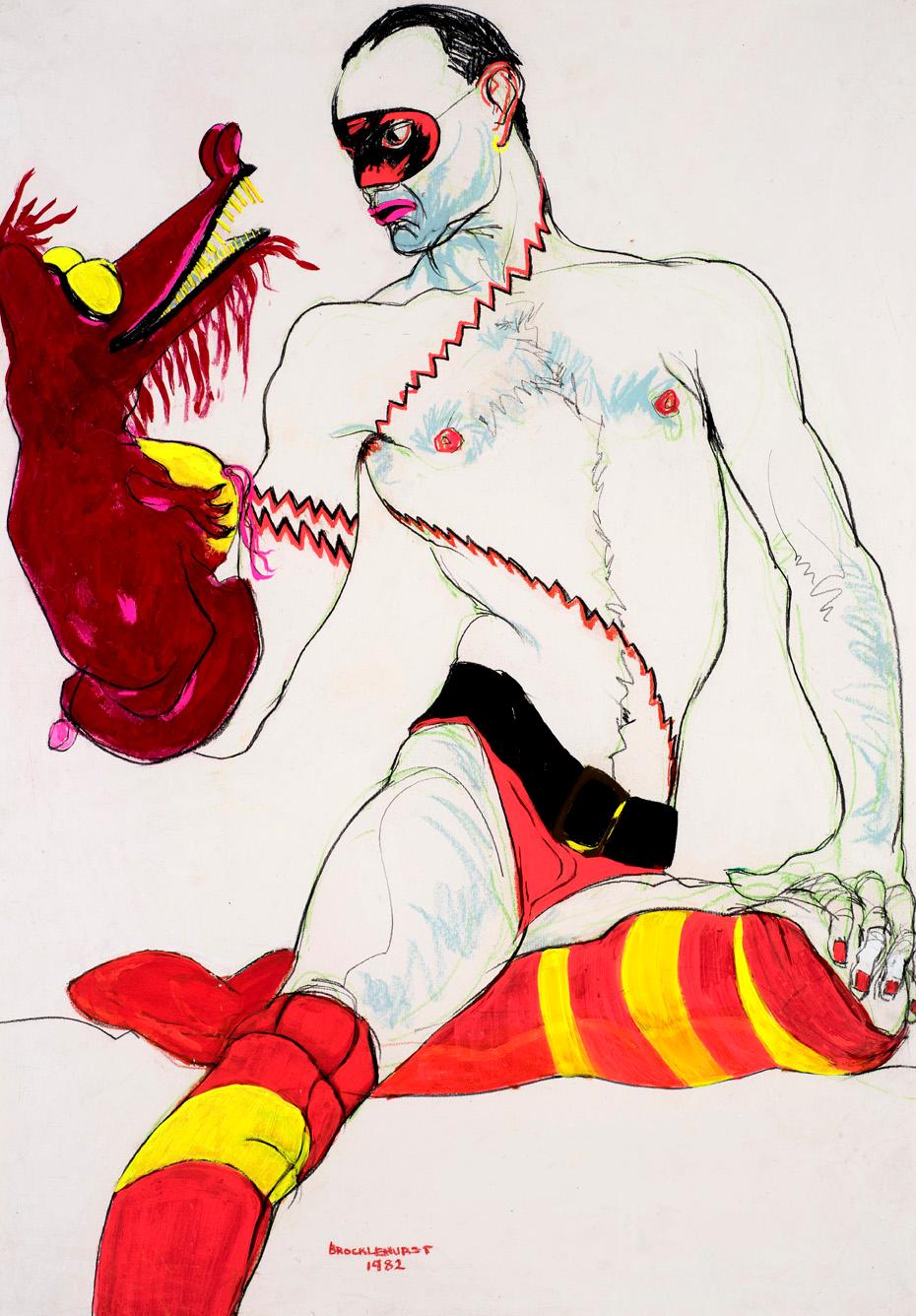
Jo Brocklehurst, Untitled, 1982
Jo (Josephine) Brocklehurst (1935 - 2006) studied at Central Saint Martins and began her career as a fashion illustrator. She later focused on portraiture, drawing directly from models at her studio in West Hampstead and in nightclubs and theatres in Berlin, London and New York. Her work documents the alternative subcultures of the 1970s, 80s and 90s that went on to shape mainstream fashion and performance scenes.
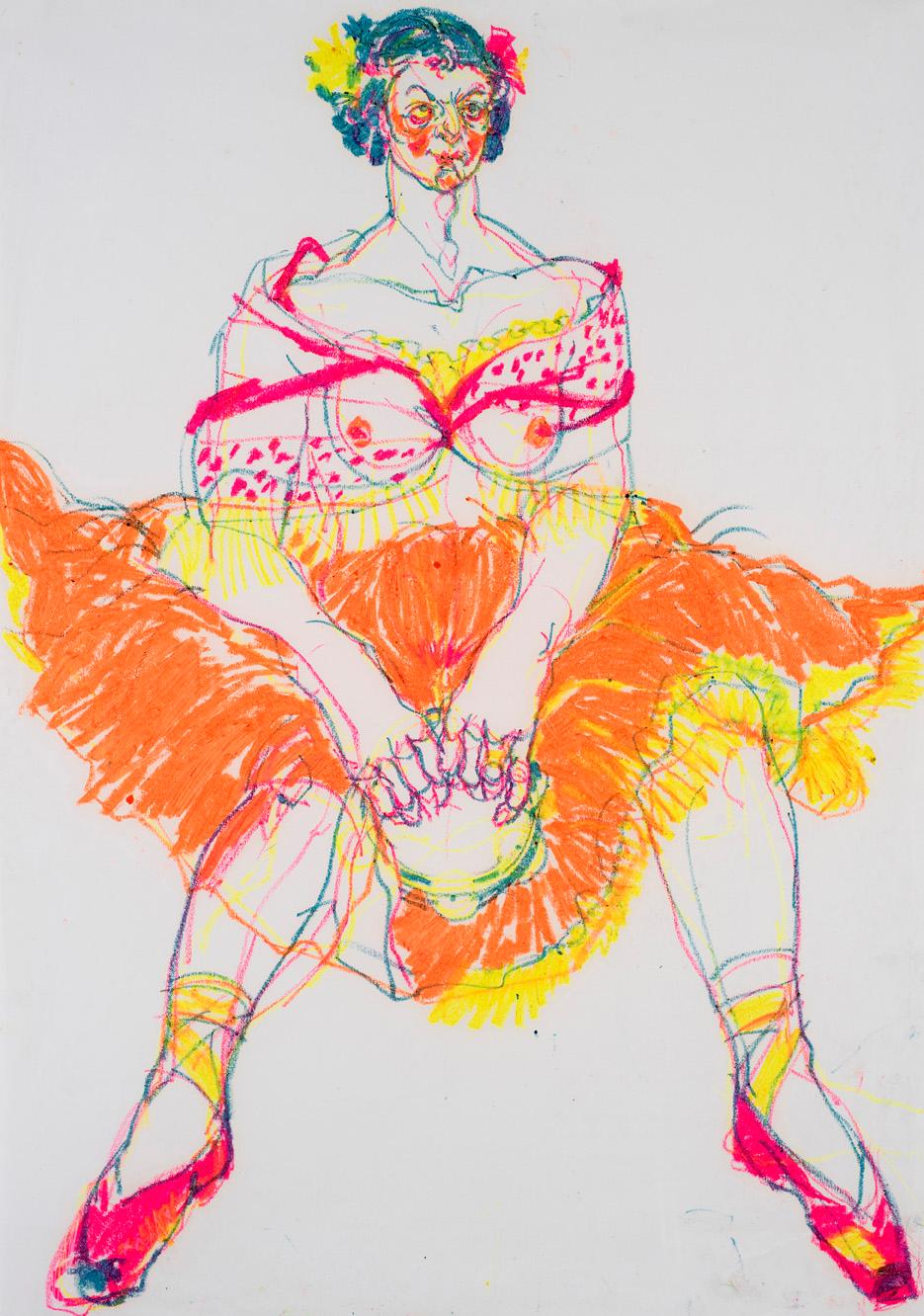
Jo Brocklehurst, Untitled, Date unknown
Jo (Josephine) Brocklehurst (1935 - 2006) studied at Central Saint Martins and began her career as a fashion illustrator. She later focused on portraiture, drawing directly from models at her studio in West Hampstead and in nightclubs and theatres in Berlin, London and New York. Her work documents the alternative subcultures of the 1970s, 80s and 90s that went on to shape mainstream fashion and performance scenes.
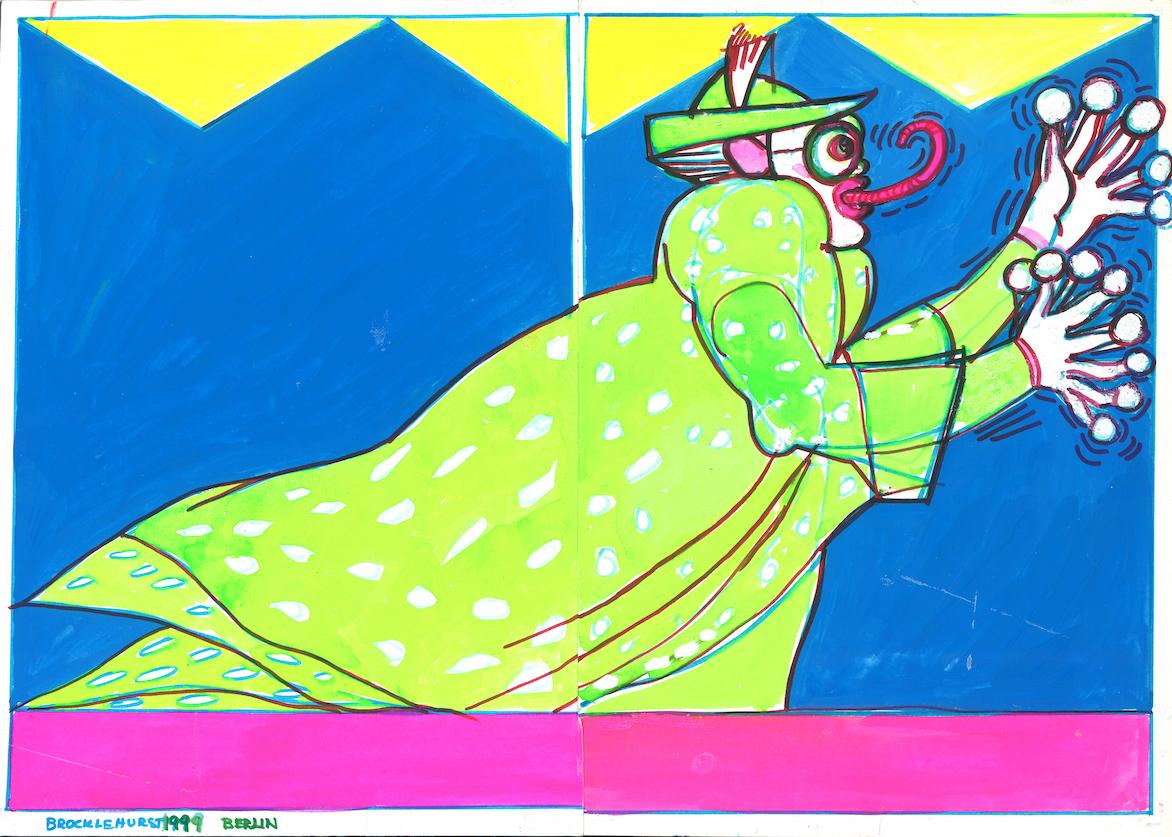
Jo Brocklehurst, Untitled (drawing of Die Eingeborene), 1999
Jo (Josephine) Brocklehurst (1935 - 2006) studied at Central Saint Martins and began her career as a fashion illustrator. She later focused on portraiture, drawing directly from models at her studio in West Hampstead and in nightclubs and theatres in Berlin, London and New York. Her work documents the alternative subcultures of the 1970s, 80s and 90s that went on to shape mainstream fashion and performance scenes. In 1999, Brocklehurst was artist in residence at newspaper Berliner Zeitung during Berliner Theatertreffen, a festival of new German theatre. The paper wanted to revive the Weimar tradition of theatre reviews being accompanied by illustrations, rather than using photographs. Brocklehurst drew behind the scenes and from her seat during performances. This drawing is from a performance of Die Eingeborene.
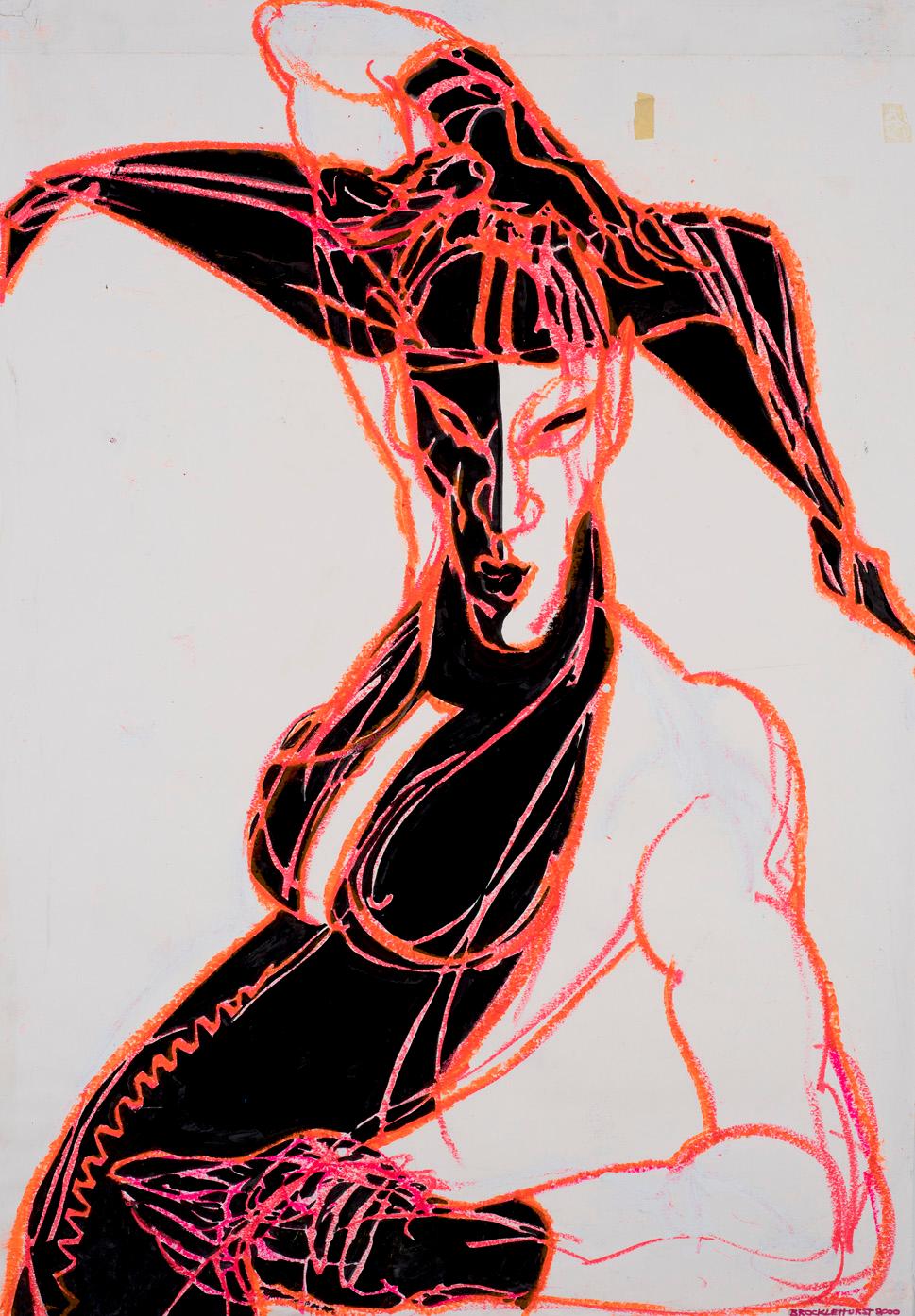
Jo Brocklehurst, Untitled (portrait of Josephine Leask), 2000
Jo (Josephine) Brocklehurst (1935 - 2006) studied at Central Saint Martins and began her career as a fashion illustrator. She later focused on portraiture, drawing directly from models at her studio in West Hampstead and in nightclubs and theatres in Berlin, London and New York. Her work documents the alternative subcultures of the 1970s, 80s and 90s that went on to shape mainstream fashion and performance scenes. In 2000, Brocklehurst created a series of drawings in sessions with dancer Josephine Leask. Leask’s 1999 article Welcome to the Club, published in ballettanz magazine, described the ways that nightclubs were acting as alternative theatres for cutting-edge contemporary dance. These drawings were shown as part of Leask’s lecture-performance on the same theme at the 2000 Salzburg Festival.
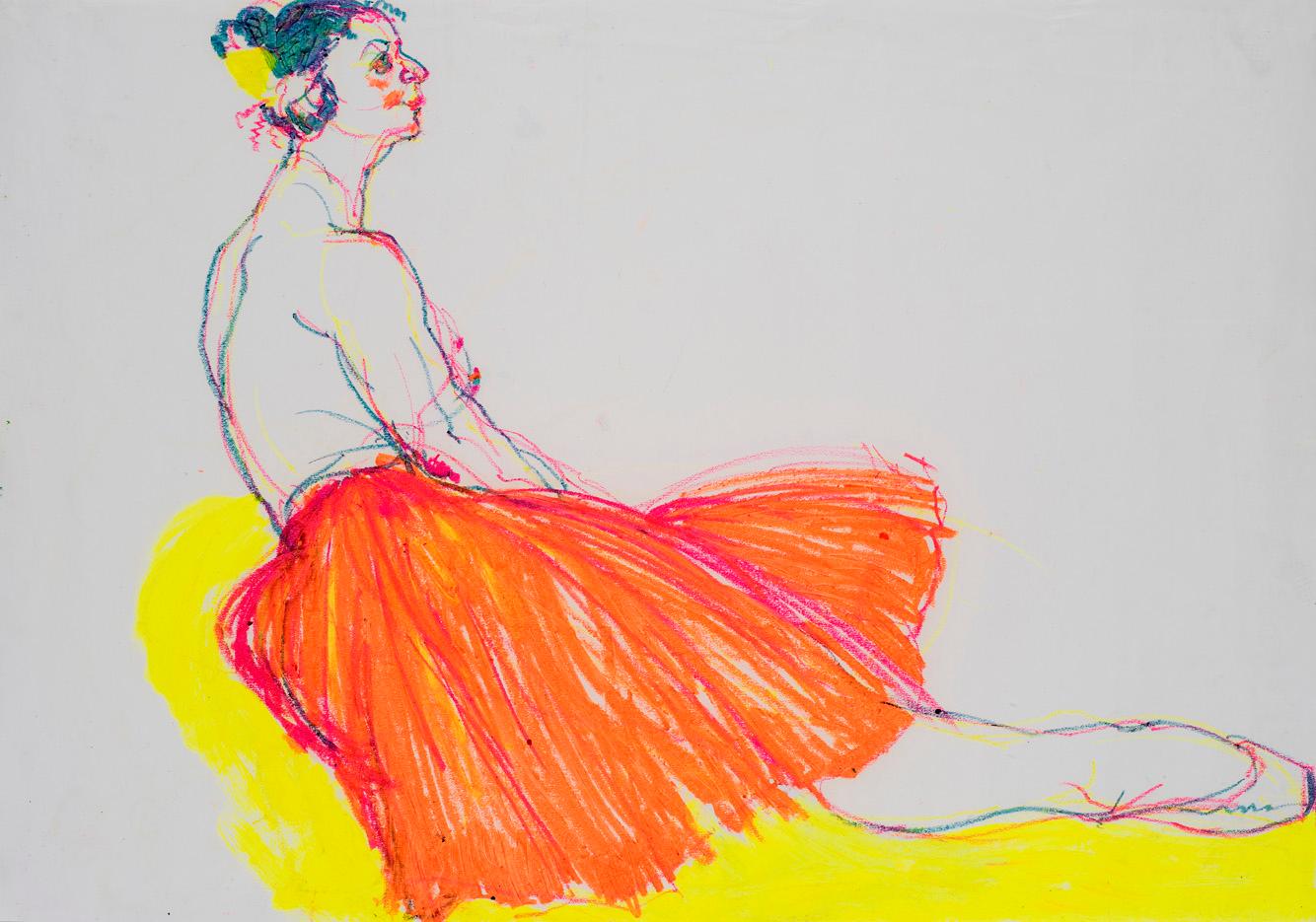
Jo Brocklehurst, Untitled, Unknown
Jo (Josephine) Brocklehurst (1935 - 2006) studied at Central Saint Martins and began her career as a fashion illustrator. She later focused on portraiture, drawing directly from models at her studio in West Hampstead and in nightclubs and theatres in Berlin, London and New York. Her work documents the alternative subcultures of the 1970s, 80s and 90s that went on to shape mainstream fashion and performance scenes.
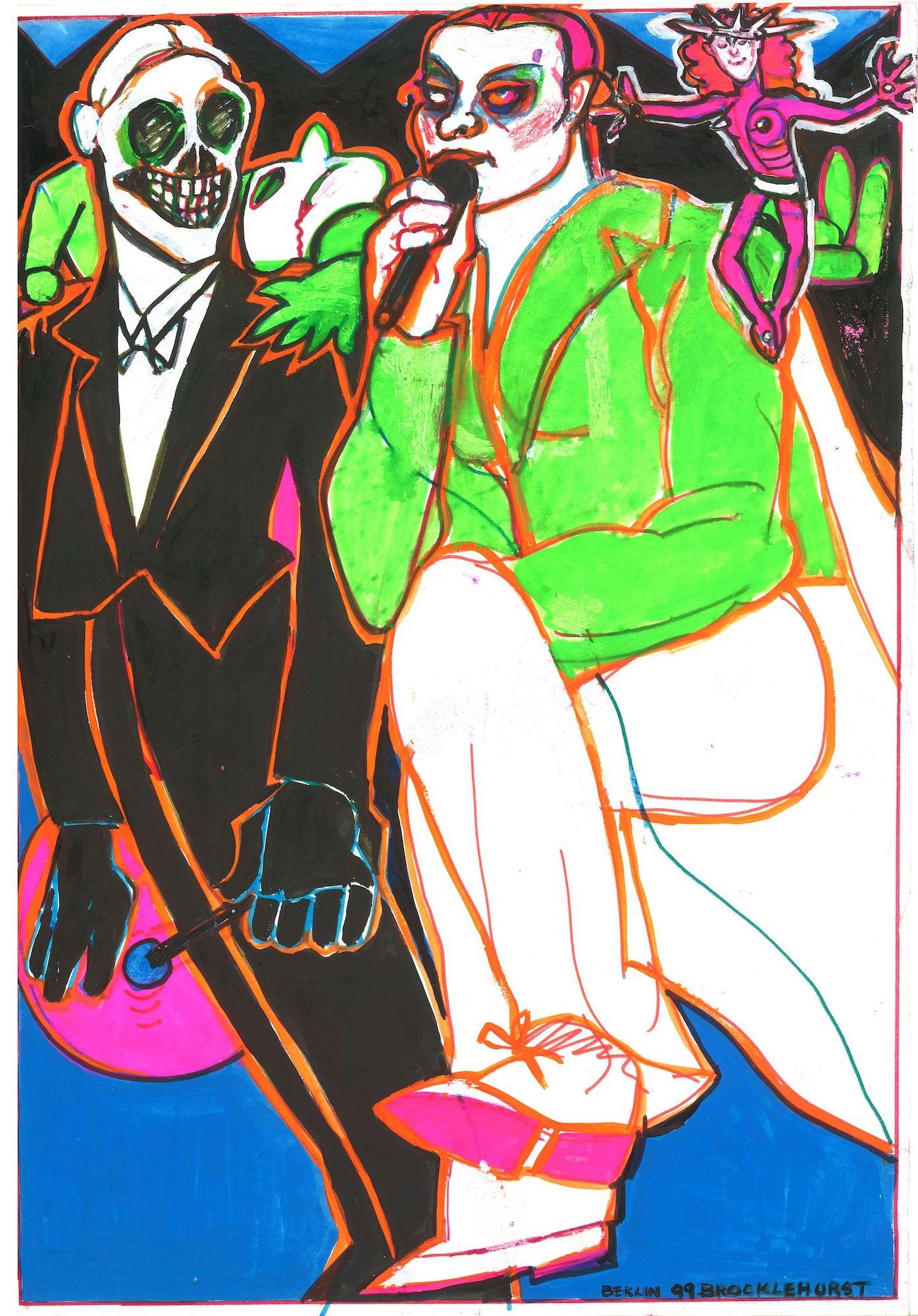
Jo Brocklehurst, Untitled (drawing of Die Eingeborene), 1999
Jo (Josephine) Brocklehurst (1935 - 2006) studied at Central Saint Martins and began her career as a fashion illustrator. She later focused on portraiture, drawing directly from models at her studio in West Hampstead and in nightclubs and theatres in Berlin, London and New York. Her work documents the alternative subcultures of the 1970s, 80s and 90s that went on to shape mainstream fashion and performance scenes. In 1999, Brocklehurst was artist in residence at newspaper Berliner Zeitung during Berliner Theatertreffen, a festival of new German theatre. The paper wanted to revive the Weimar tradition of theatre reviews being accompanied by illustrations, rather than using photographs. Brocklehurst drew behind the scenes and from her seat during performances. This drawing is from a performance of Die Eingeborene.
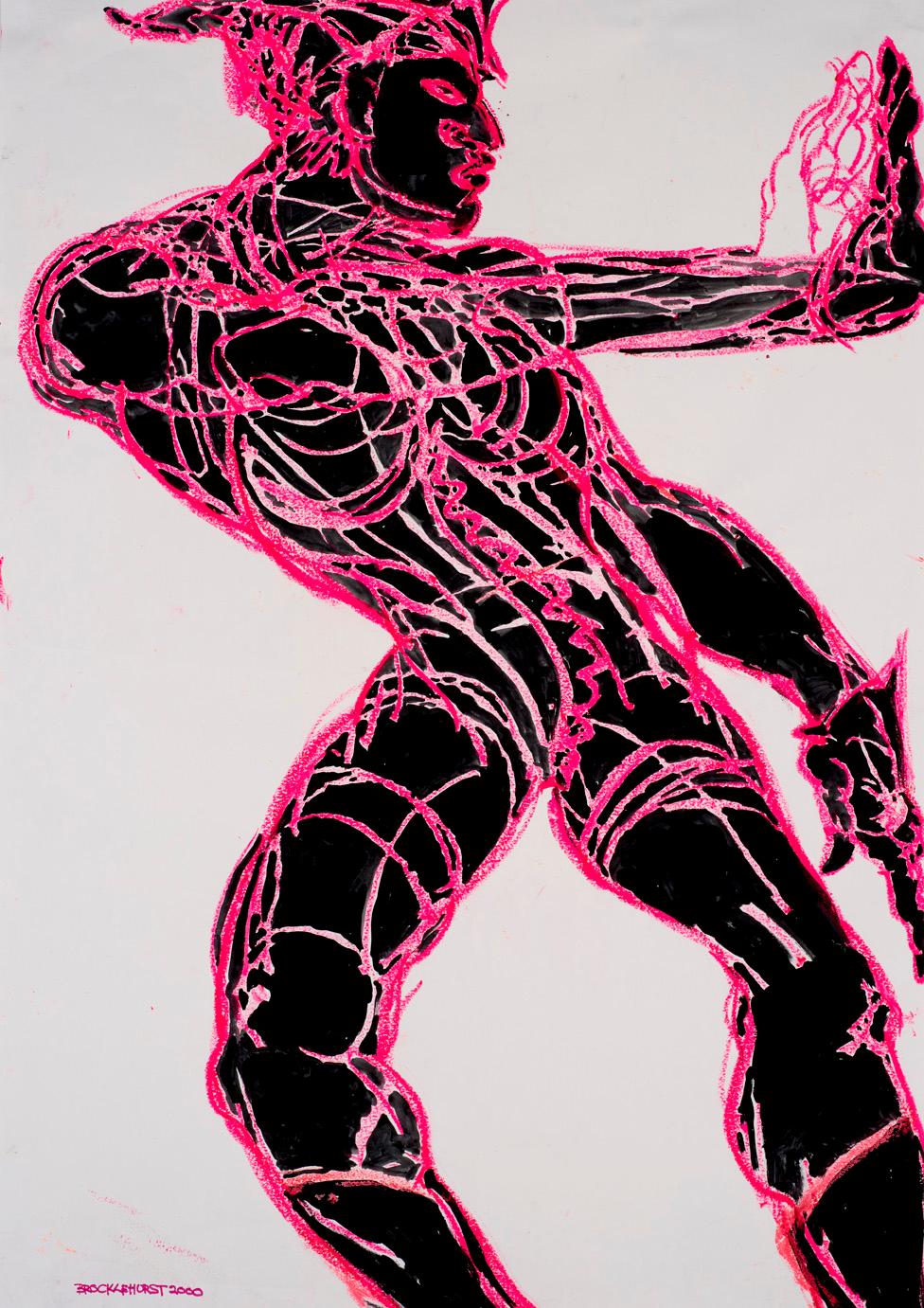
Jo Brocklehurst, Untitled (portrait of Josephine Leask), 2000
Jo (Josephine) Brocklehurst (1935 - 2006) studied at Central Saint Martins and began her career as a fashion illustrator. She later focused on portraiture, drawing directly from models at her studio in West Hampstead and in nightclubs and theatres in Berlin, London and New York. Her work documents the alternative subcultures of the 1970s, 80s and 90s that went on to shape mainstream fashion and performance scenes. In 2000, Brocklehurst created a series of drawings in sessions with dancer Josephine Leask. Leask’s 1999 article Welcome to the Club, published in ballettanz magazine, described the ways that nightclubs were acting as alternative theatres for cutting-edge contemporary dance. These drawings were shown as part of Leask’s lecture-performance on the same theme at the 2000 Salzburg Festival.
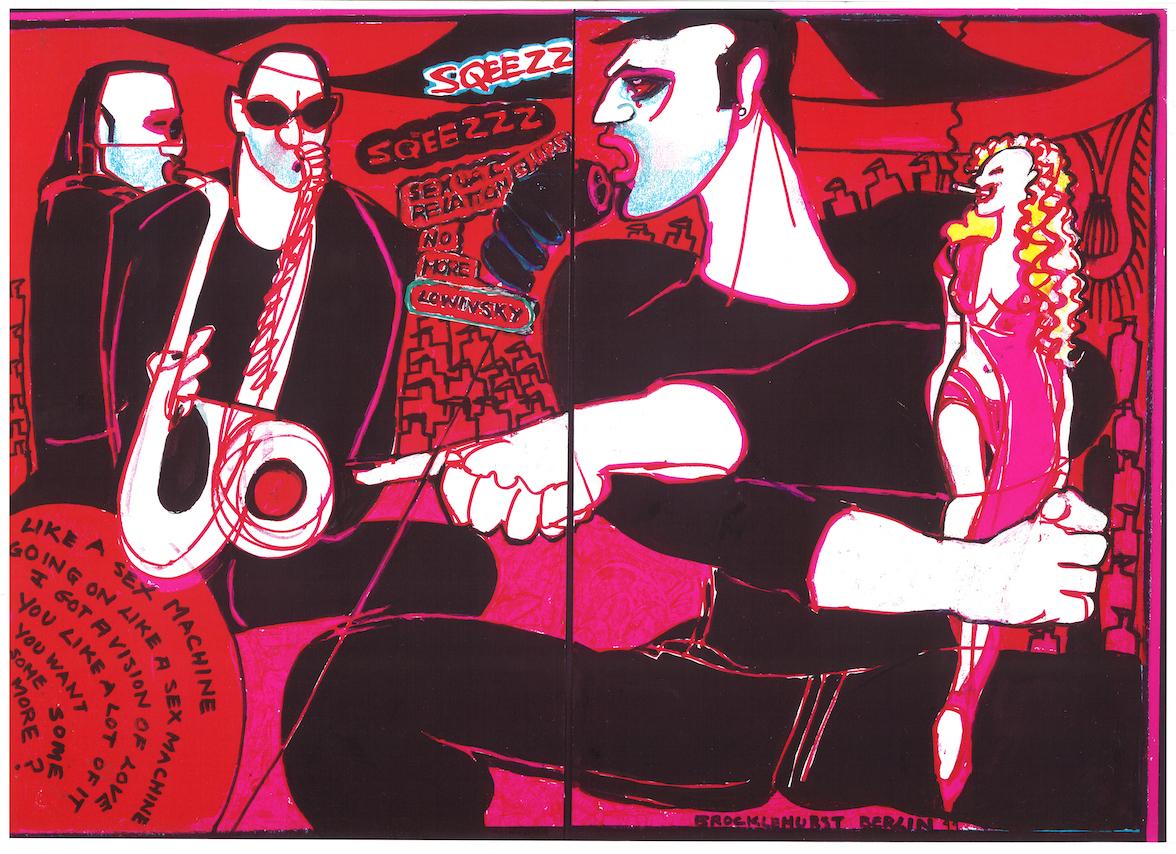
Jo Brocklehurst, Untitled (drawing of “Ich bin ja so allein”: Reflexionen mit und ohne Klavier), 1999
Jo (Josephine) Brocklehurst (1935 - 2006) studied at Central Saint Martins and began her career as a fashion illustrator. She later focused on portraiture, drawing directly from models at her studio in West Hampstead and in nightclubs and theatres in Berlin, London and New York. Her work documents the alternative subcultures of the 1970s, 80s and 90s that went on to shape mainstream fashion and performance scenes. In 1999, Brocklehurst was artist in residence at newspaper Berliner Zeitung during Berliner Theatertreffen, a festival of new German theatre. The paper wanted to revive the Weimar tradition of theatre reviews being accompanied by illustrations, rather than using photographs. Brocklehurst drew behind the scenes and from her seat during performances. This drawing is of a festival event, “Ich bin ja so allein”: Reflexionen mit und ohne Klavier.
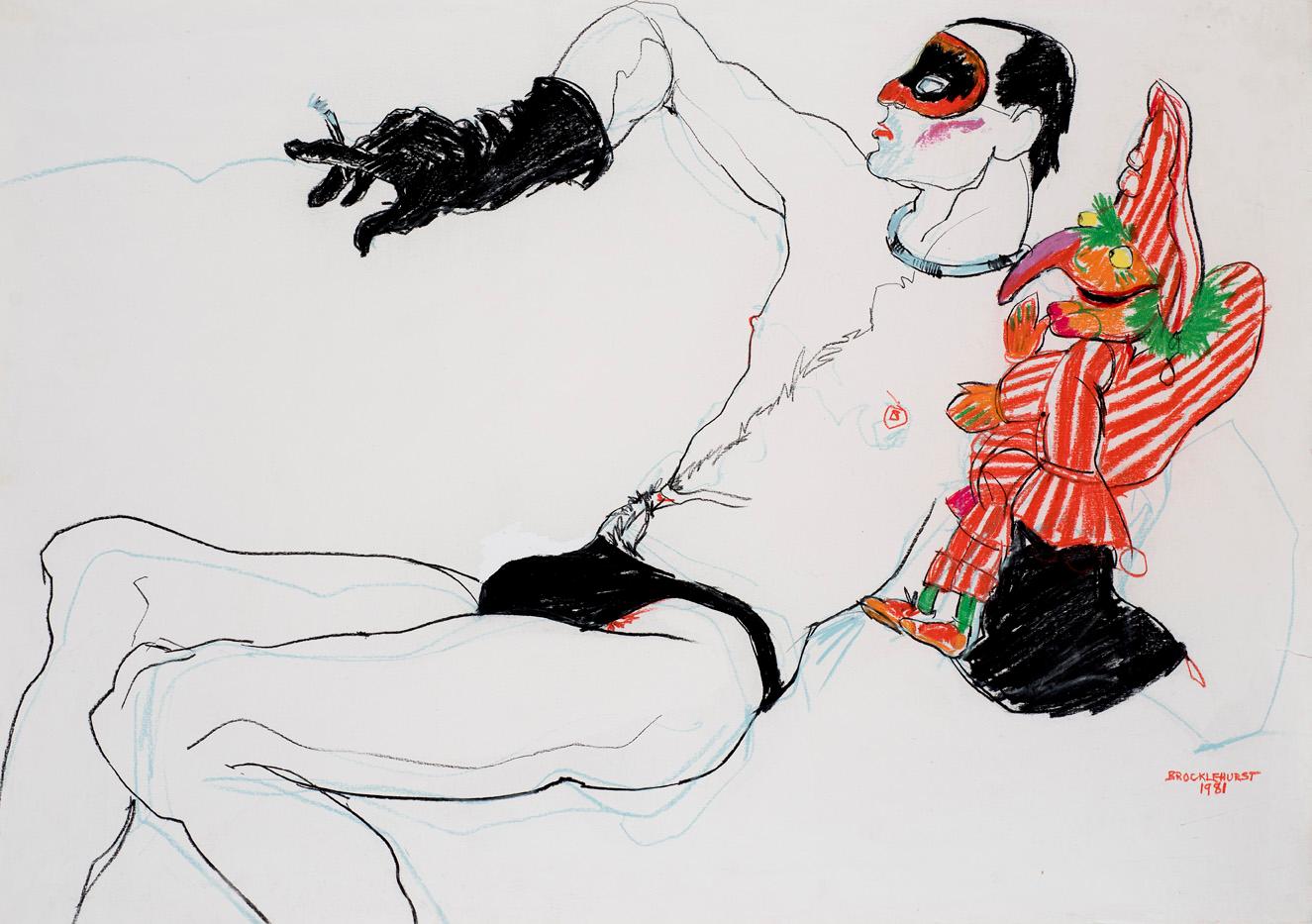
Jo Brocklehurst, Untitled, 1981
Jo (Josephine) Brocklehurst (1935 - 2006) studied at Central Saint Martins and began her career as a fashion illustrator. She later focused on portraiture, drawing directly from models at her studio in West Hampstead and in nightclubs and theatres in Berlin, London and New York. Her work documents the alternative subcultures of the 1970s, 80s and 90s that went on to shape mainstream fashion and performance scenes.
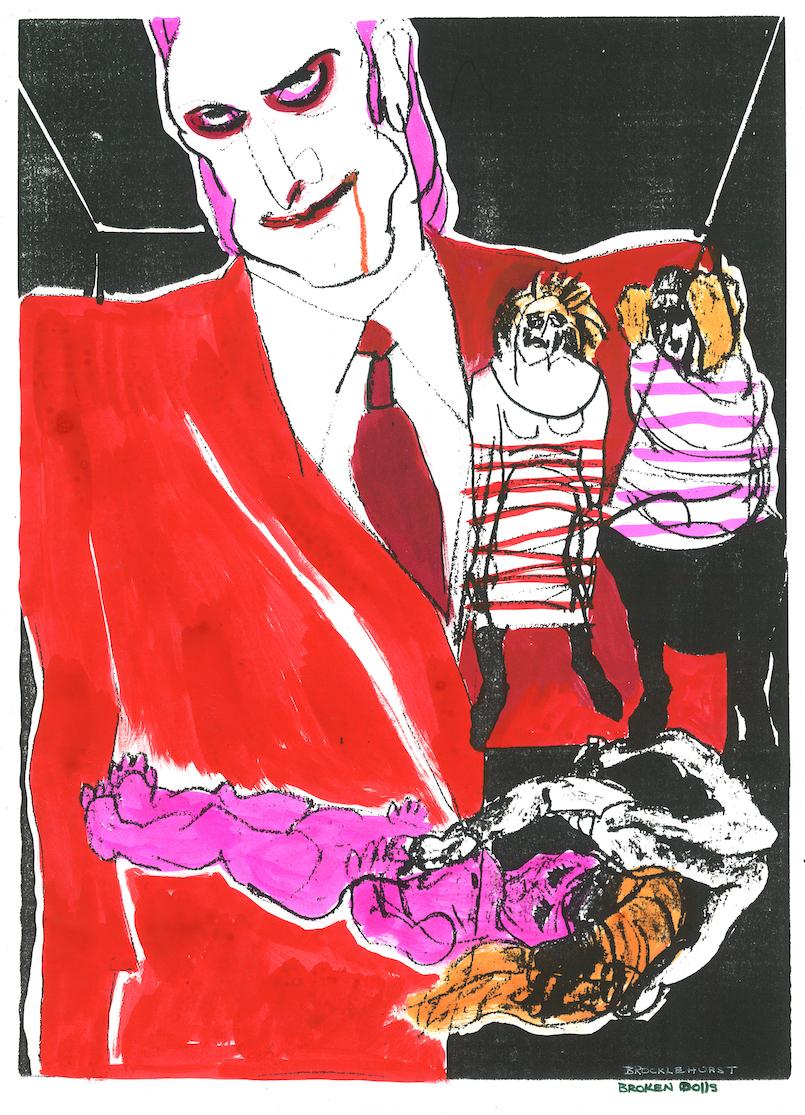
Jo Brocklehurst, Broken Dolls, Date unknown
Jo (Josephine) Brocklehurst (1935 - 2006) studied at Central Saint Martins and began her career as a fashion illustrator. She later focused on portraiture, drawing directly from models at her studio in West Hampstead and in nightclubs and theatres in Berlin, London and New York. Her work documents the alternative subcultures of the 1970s, 80s and 90s that went on to shape mainstream fashion and performance scenes.
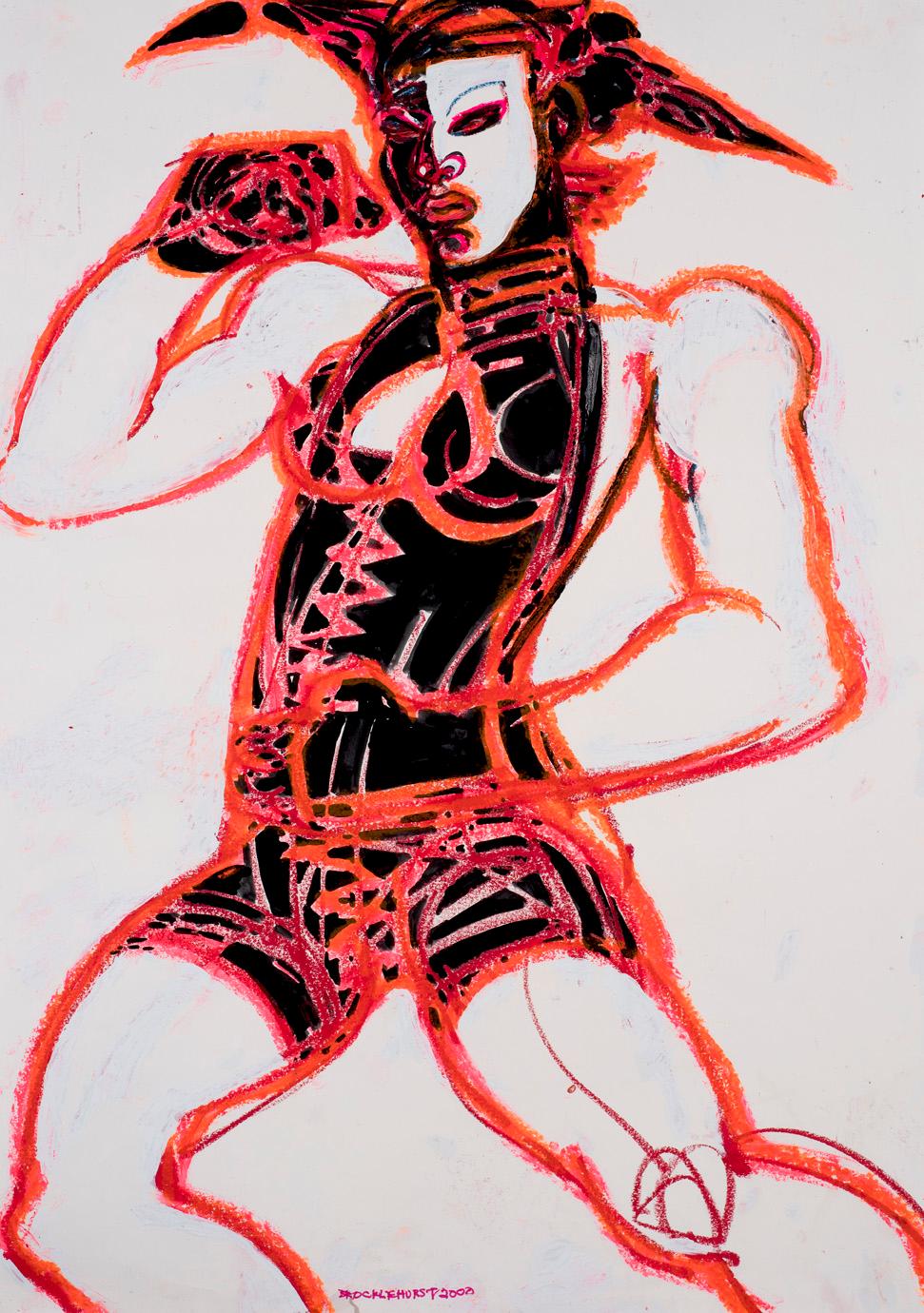
Jo Brocklehurst, Untitled (portrait of Josephine Leask), 2000
Jo (Josephine) Brocklehurst (1935 - 2006) studied at Central Saint Martins and began her career as a fashion illustrator. She later focused on portraiture, drawing directly from models at her studio in West Hampstead and in nightclubs and theatres in Berlin, London and New York. Her work documents the alternative subcultures of the 1970s, 80s and 90s that went on to shape mainstream fashion and performance scenes. In 2000, Brocklehurst created a series of drawings in sessions with dancer Josephine Leask. Leask’s 1999 article Welcome to the Club, published in ballettanz magazine, described the ways that nightclubs were acting as alternative theatres for cutting-edge contemporary dance. These drawings were shown as part of Leask’s lecture-performance on the same theme at the 2000 Salzburg Festival.