LGBT history
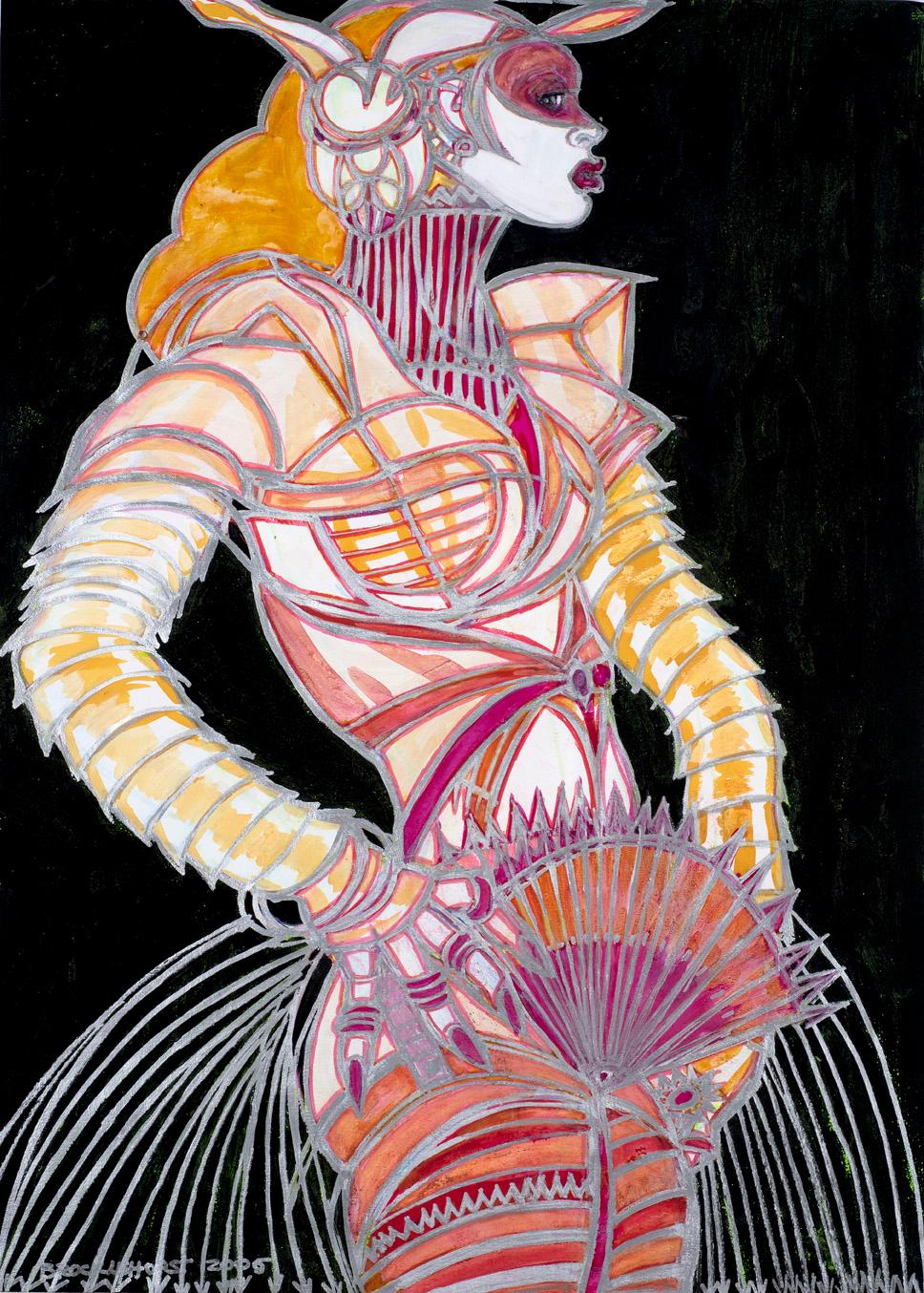
Jo Brocklehurst, Untitled (from Brocklehurst Through the Looking-Glass), 2005
Jo (Josephine) Brocklehurst (1935 - 2006) studied at Central Saint Martins and began her career as a fashion illustrator. She later focused on portraiture, drawing directly from models at her studio in West Hampstead and in nightclubs and theatres in Berlin, London and New York. Her work documents the alternative subcultures of the 1970s, 80s and 90s that went on to shape mainstream fashion and performance scenes. This work is from Brocklehurst Through the Looking-Glass, Brocklehurst’s final series. With an image of herself as a child as the centrepiece, Brocklehurst made hundreds of drawings that re-imagined characters from Lewis Carroll’s Alice novels. Her models were friends and dedicated club-goers who designed and made their own clothes. Works from the series were framed with bright plastic gemstones and hung on every available space at Brocklehurst’s home studio. She used metallic and neon inks that transformed under ultraviolet lights that she switched on for her guests in the evenings.
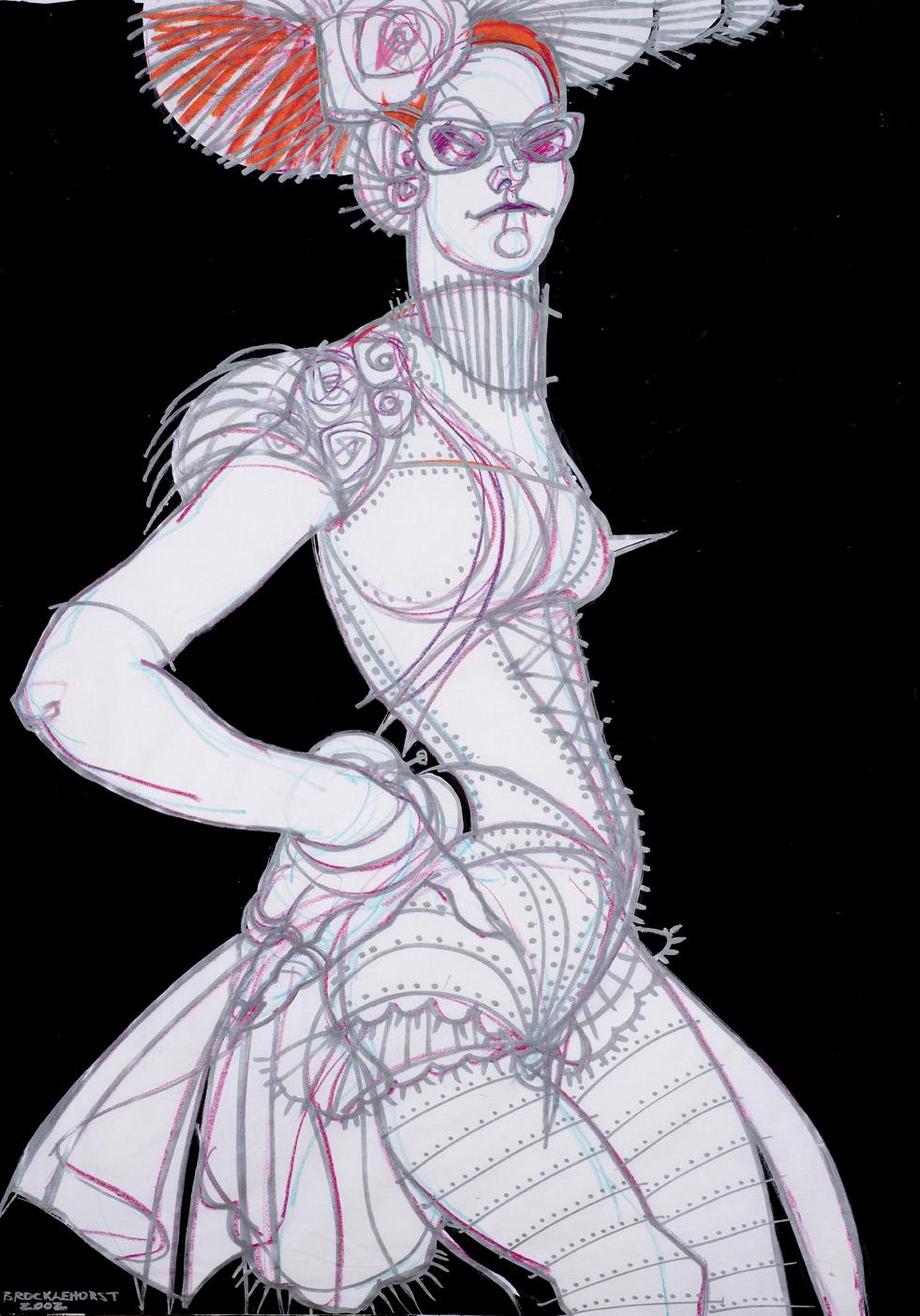
Jo Brocklehurst, Untitled (from Brocklehurst Through the Looking-Glass), 2002
Jo (Josephine) Brocklehurst (1935 - 2006) studied at Central Saint Martins and began her career as a fashion illustrator. She later focused on portraiture, drawing directly from models at her studio in West Hampstead and in nightclubs and theatres in Berlin, London and New York. Her work documents the alternative subcultures of the 1970s, 80s and 90s that went on to shape mainstream fashion and performance scenes. This work is from Brocklehurst Through the Looking-Glass, Brocklehurst’s final series. With an image of herself as a child as the centrepiece, Brocklehurst made hundreds of drawings that re-imagined characters from Lewis Carroll’s Alice novels. Her models were friends and dedicated club-goers who designed and made their own clothes. Brocklehurst’s regular collaborator Isabelle Bricknall was the model for this work. Works from the series were framed with bright plastic gemstones and hung on every available space at Brocklehurst’s home studio. She used metallic and neon inks that transformed under ultraviolet lights that she switched on for her guests in the evenings.
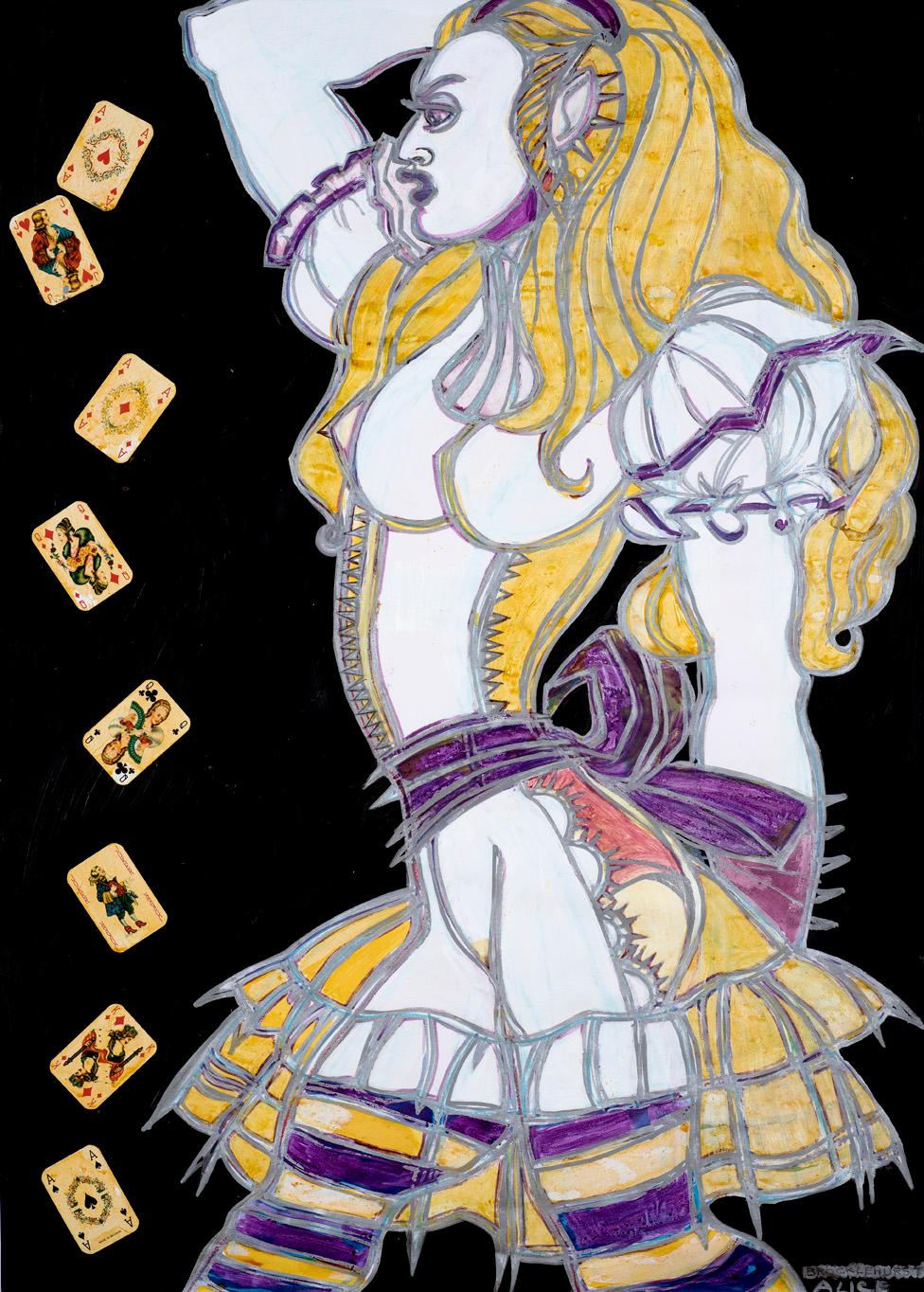
Jo Brocklehurst, Untitled (Alice from Brocklehurst Through the Looking-Glass), 2000s
Jo (Josephine) Brocklehurst (1935 - 2006) studied at Central Saint Martins and began her career as a fashion illustrator. She later focused on portraiture, drawing directly from models at her studio in West Hampstead and in nightclubs and theatres in Berlin, London and New York. Her work documents the alternative subcultures of the 1970s, 80s and 90s that went on to shape mainstream fashion and performance scenes. This work is from Brocklehurst Through the Looking-Glass, Brocklehurst’s final series. With an image of herself as a child as the centrepiece, Brocklehurst made hundreds of drawings that re-imagined characters from Lewis Carroll’s Alice novels. Her models were friends and dedicated club-goers who designed and made their own clothes. Works from the series were framed with bright plastic gemstones and hung on every available space at Brocklehurst’s home studio. She used metallic and neon inks that transformed under ultraviolet lights that she switched on for her guests in the evenings.
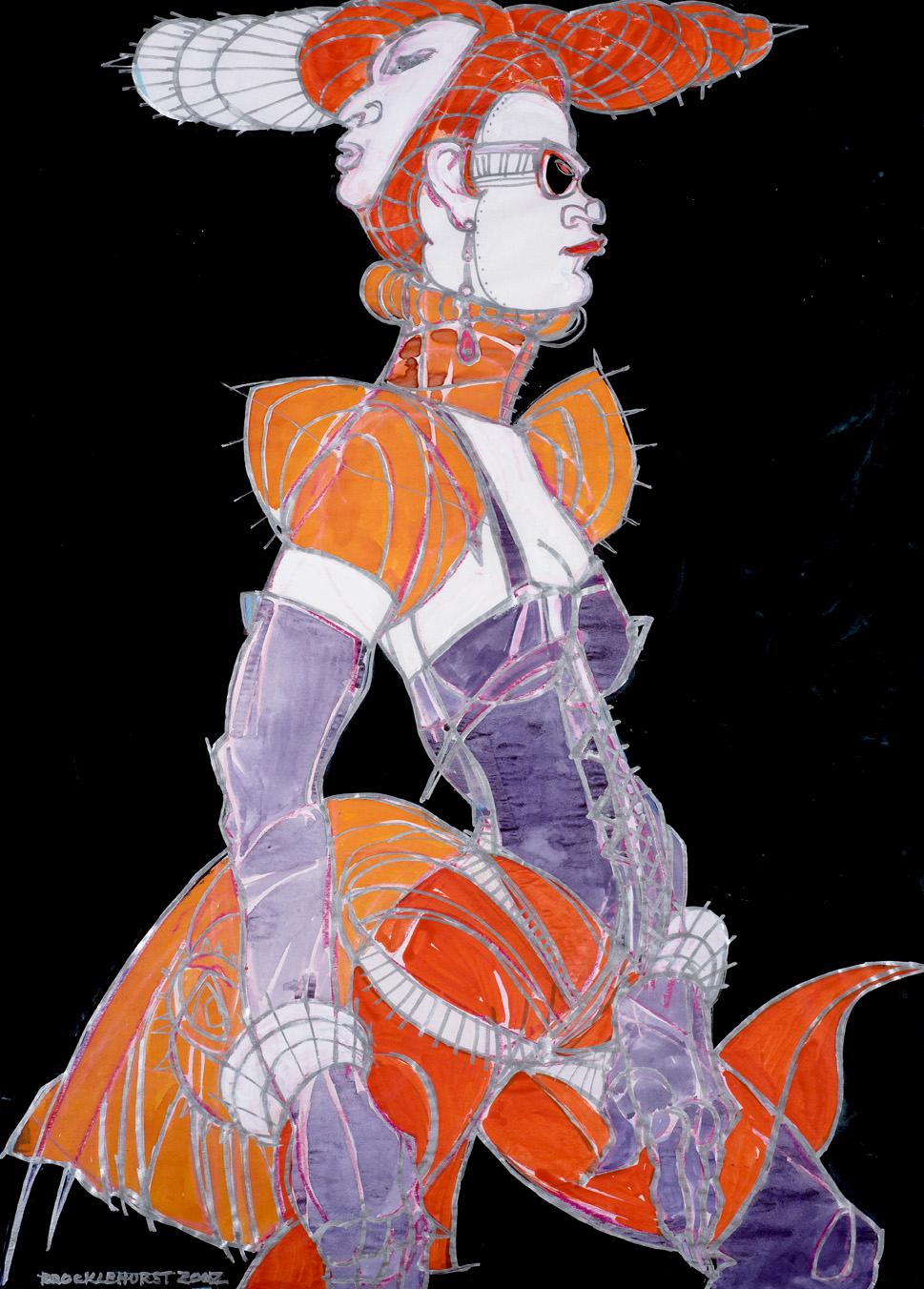
Jo Brocklehurst, Untitled (from Brocklehurst Through the Looking-Glass), 2000s
Jo (Josephine) Brocklehurst (1935 - 2006) studied at Central Saint Martins and began her career as a fashion illustrator. She later focused on portraiture, drawing directly from models at her studio in West Hampstead and in nightclubs and theatres in Berlin, London and New York. Her work documents the alternative subcultures of the 1970s, 80s and 90s that went on to shape mainstream fashion and performance scenes. This work is from Brocklehurst Through the Looking-Glass, Brocklehurst’s final series. With an image of herself as a child as the centrepiece, Brocklehurst made hundreds of drawings that re-imagined characters from Lewis Carroll’s Alice novels. Her models were friends and dedicated club-goers who designed and made their own clothes. Brocklehurst’s regular collaborator Isabelle Bricknall was the model for this work. Works from the series were framed with bright plastic gemstones and hung on every available space at Brocklehurst’s home studio. She used metallic and neon inks that transformed under ultraviolet lights that she switched on for her guests in the evenings.
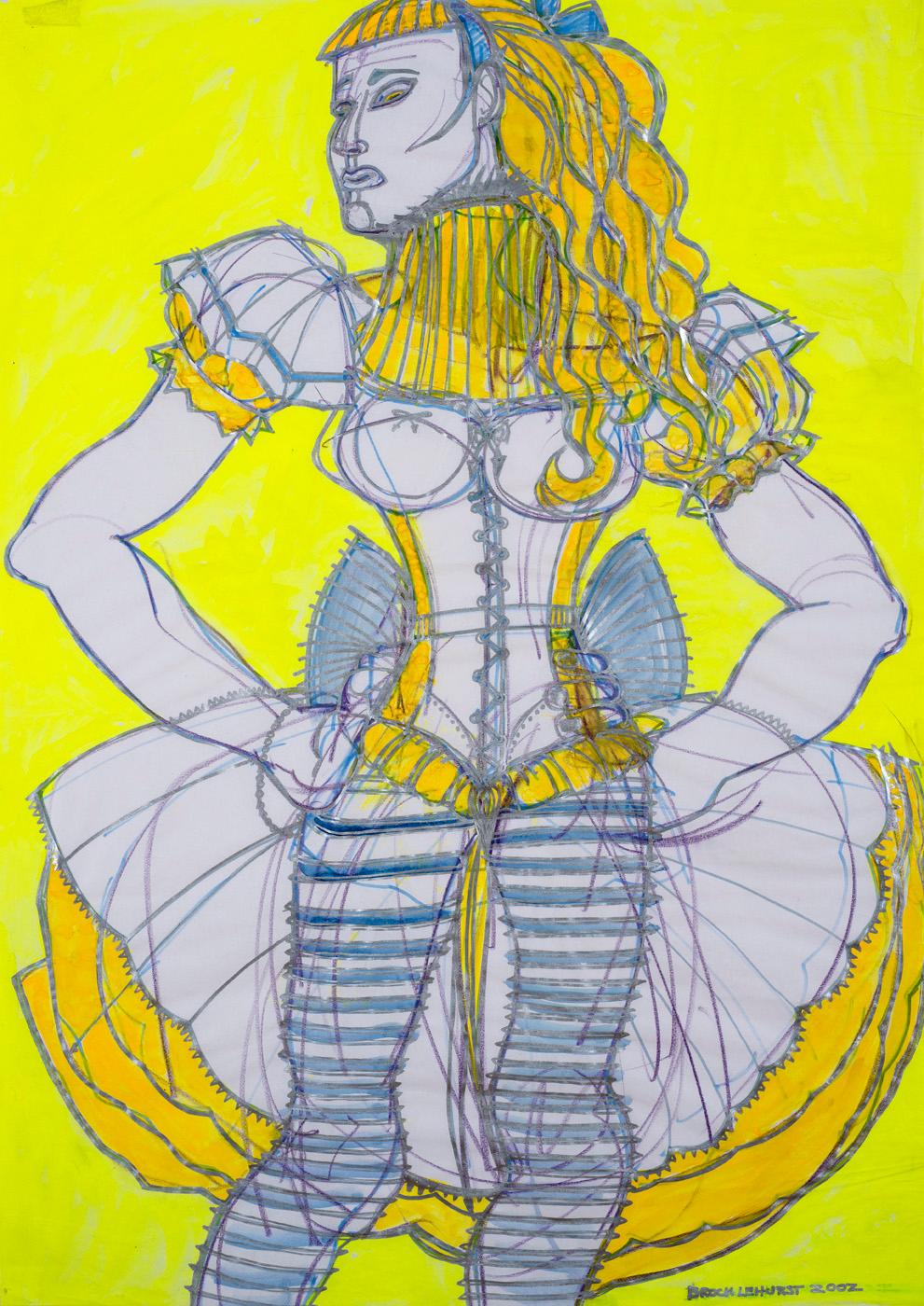
Jo Brocklehurst, Untitled (Alice from Brocklehurst Through the Looking-Glass), 2002
Jo (Josephine) Brocklehurst (1935 - 2006) studied at Central Saint Martins and began her career as a fashion illustrator. She later focused on portraiture, drawing directly from models at her studio in West Hampstead and in nightclubs and theatres in Berlin, London and New York. Her work documents the alternative subcultures of the 1970s, 80s and 90s that went on to shape mainstream fashion and performance scenes. This work is from Brocklehurst Through the Looking-Glass, Brocklehurst’s final series. With an image of herself as a child as the centrepiece, Brocklehurst made hundreds of drawings that re-imagined characters from Lewis Carroll’s Alice novels. Her models were friends and dedicated club-goers who designed and made their own clothes. Works from the series were framed with bright plastic gemstones and hung on every available space at Brocklehurst’s home studio. She used metallic and neon inks that transformed under ultraviolet lights that she switched on for her guests in the evenings.
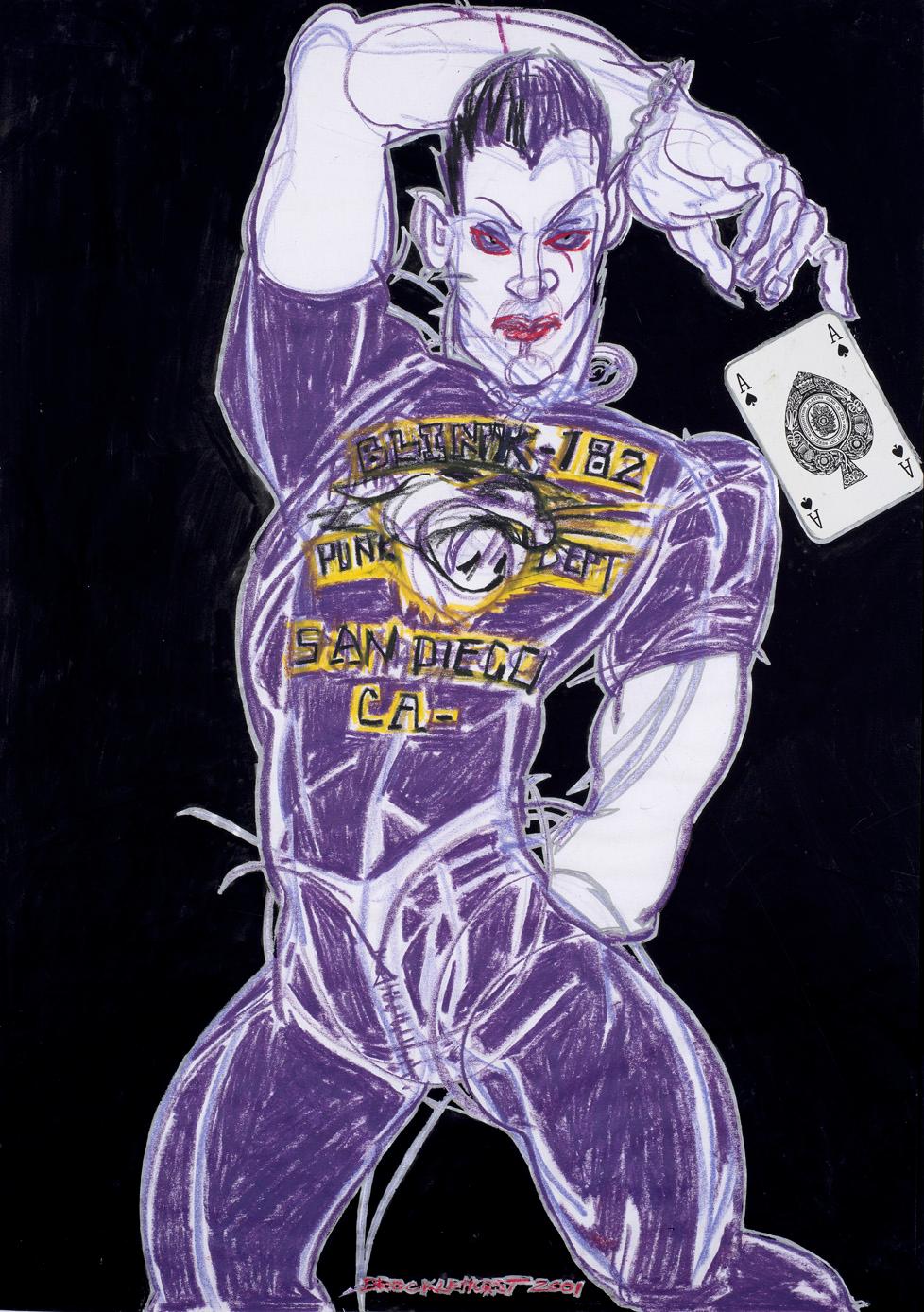
Jo Brocklehurst, Untitled (from Brocklehurst Through the Looking-Glass), 2001
Jo (Josephine) Brocklehurst (1935 - 2006) studied at Central Saint Martins and began her career as a fashion illustrator. She later focused on portraiture, drawing directly from models at her studio in West Hampstead and in nightclubs and theatres in Berlin, London and New York. Her work documents the alternative subcultures of the 1970s, 80s and 90s that went on to shape mainstream fashion and performance scenes. This work is from Brocklehurst Through the Looking-Glass, Brocklehurst’s final series. With an image of herself as a child as the centrepiece, Brocklehurst made hundreds of drawings that re-imagined characters from Lewis Carroll’s Alice novels. Her models were friends and dedicated club-goers who designed and made their own clothes. Works from the series were framed with bright plastic gemstones and hung on every available space at Brocklehurst’s home studio. She used metallic and neon inks that transformed under ultraviolet lights that she switched on for her guests in the evenings.
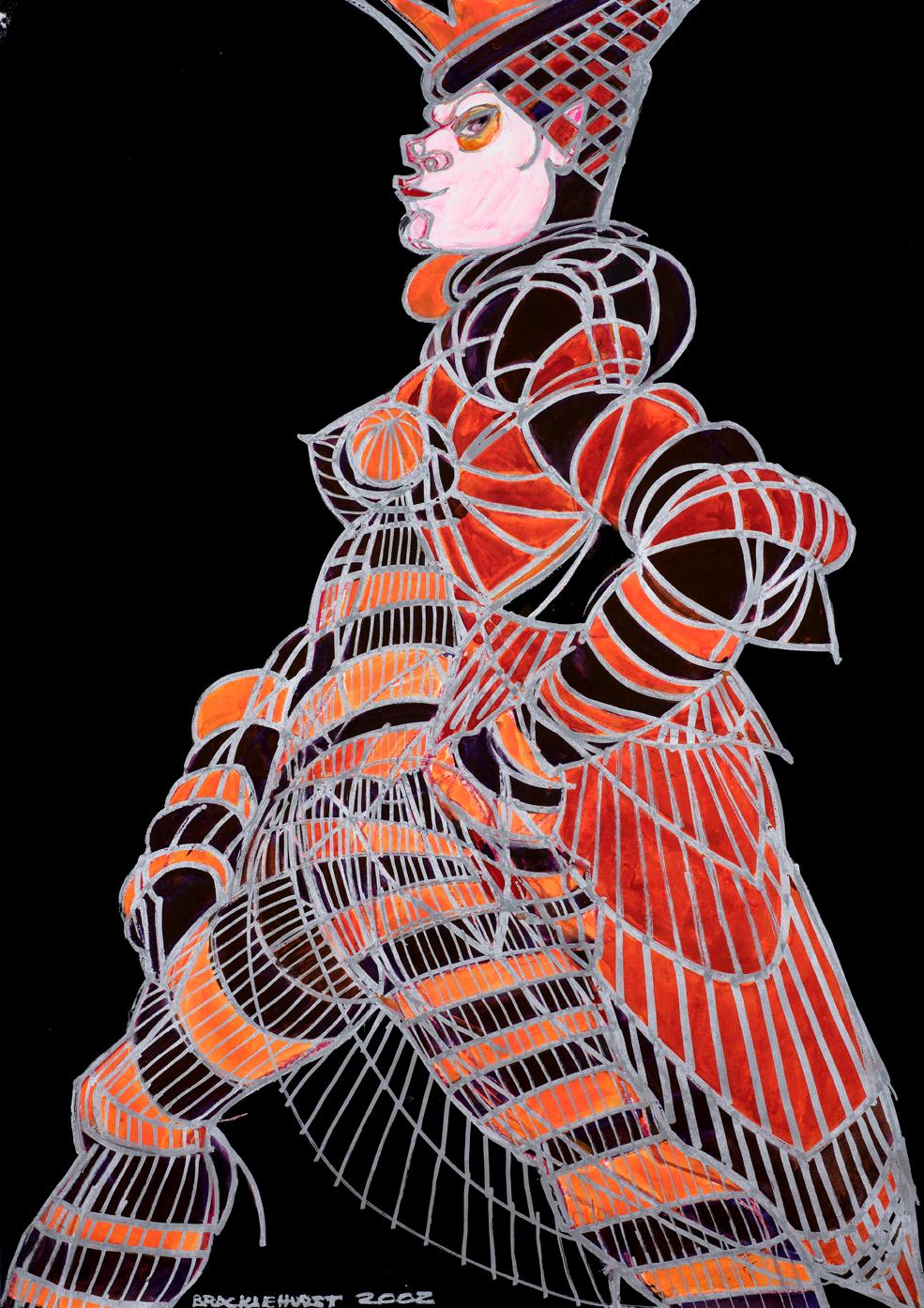
Jo Brocklehurst, Untitled (Red Queen from Brocklehurst Through the Looking-Glass) , 2002
Jo (Josephine) Brocklehurst (1935 - 2006) studied at Central Saint Martins and began her career as a fashion illustrator. She later focused on portraiture, drawing directly from models at her studio in West Hampstead and in nightclubs and theatres in Berlin, London and New York. Her work documents the alternative subcultures of the 1970s, 80s and 90s that went on to shape mainstream fashion and performance scenes. This work is from Brocklehurst Through the Looking-Glass, Brocklehurst’s final series. With an image of herself as a child as the centrepiece, Brocklehurst made hundreds of drawings that re-imagined characters from Lewis Carroll’s Alice novels. Her models were friends and dedicated club-goers who designed and made their own clothes. Brocklehurst’s regular collaborator Isabelle Bricknall was the model for this work. Works from the series were framed with bright plastic gemstones and hung on every available space at Brocklehurst’s home studio. She used metallic and neon inks that transformed under ultraviolet lights that she switched on for her guests in the evenings.
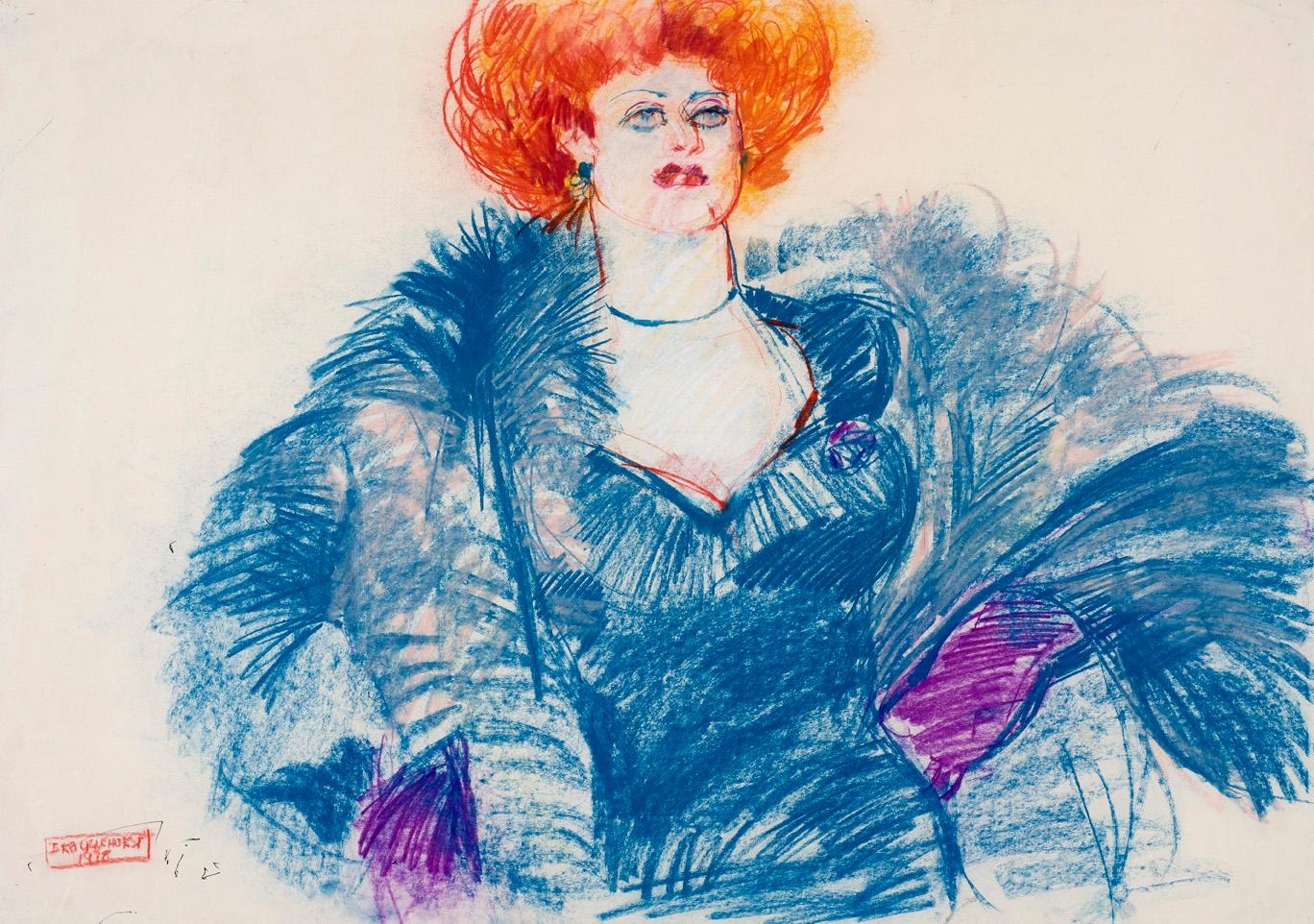
Jo Brocklehurst, Untitled (portrait of Eve Ferret), 1978
Jo (Josephine) Brocklehurst (1935 - 2006) studied at Central Saint Martins and began her career as a fashion illustrator. She later focused on portraiture, drawing directly from models at her studio in West Hampstead and in nightclubs and theatres in Berlin, London and New York. Her work documents the alternative subcultures of the 1970s, 80s and 90s that went on to shape mainstream fashion and performance scenes. This portrait of performer Eve Ferret was made around the time Ferret was performing cabaret at London’s Blitz Club with James ‘Biddie’ Biddlecombe.
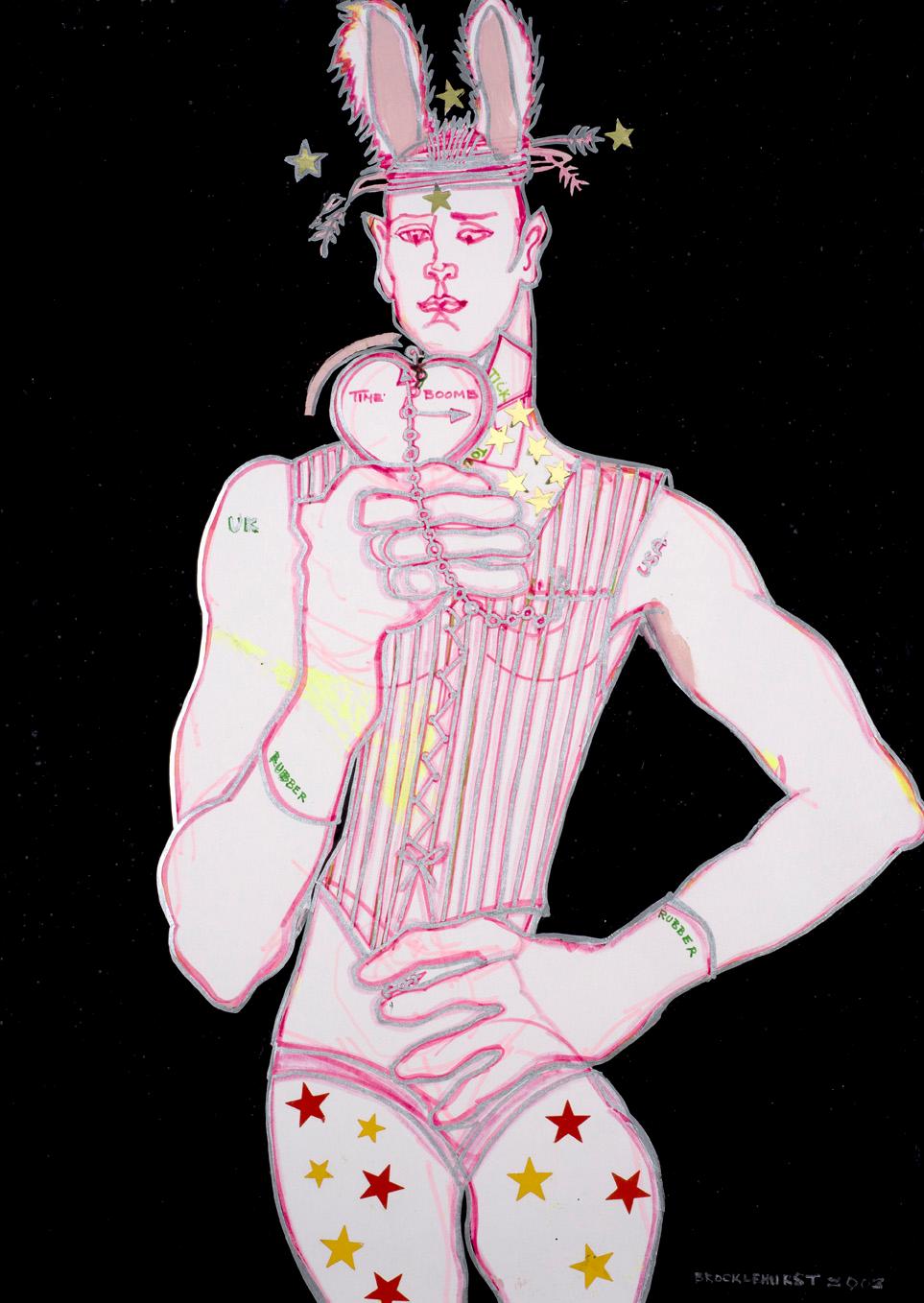
Jo Brocklehurst, Untitled (White Rabbit from Brocklehurst Through the Looking-Glass), 2003
Jo (Josephine) Brocklehurst (1935 - 2006) studied at Central Saint Martins and began her career as a fashion illustrator. She later focused on portraiture, drawing directly from models at her studio in West Hampstead and in nightclubs and theatres in Berlin, London and New York. Her work documents the alternative subcultures of the 1970s, 80s and 90s that went on to shape mainstream fashion and performance scenes. This work is from Brocklehurst Through the Looking-Glass, Brocklehurst’s final series. With an image of herself as a child as the centrepiece, Brocklehurst made hundreds of drawings that re-imagined characters from Lewis Carroll’s Alice novels. Her models were friends and dedicated club-goers who designed and made their own clothes. Works from the series were framed with bright plastic gemstones and hung on every available space at Brocklehurst’s home studio. She used metallic and neon inks that transformed under ultraviolet lights that she switched on for her guests in the evenings.
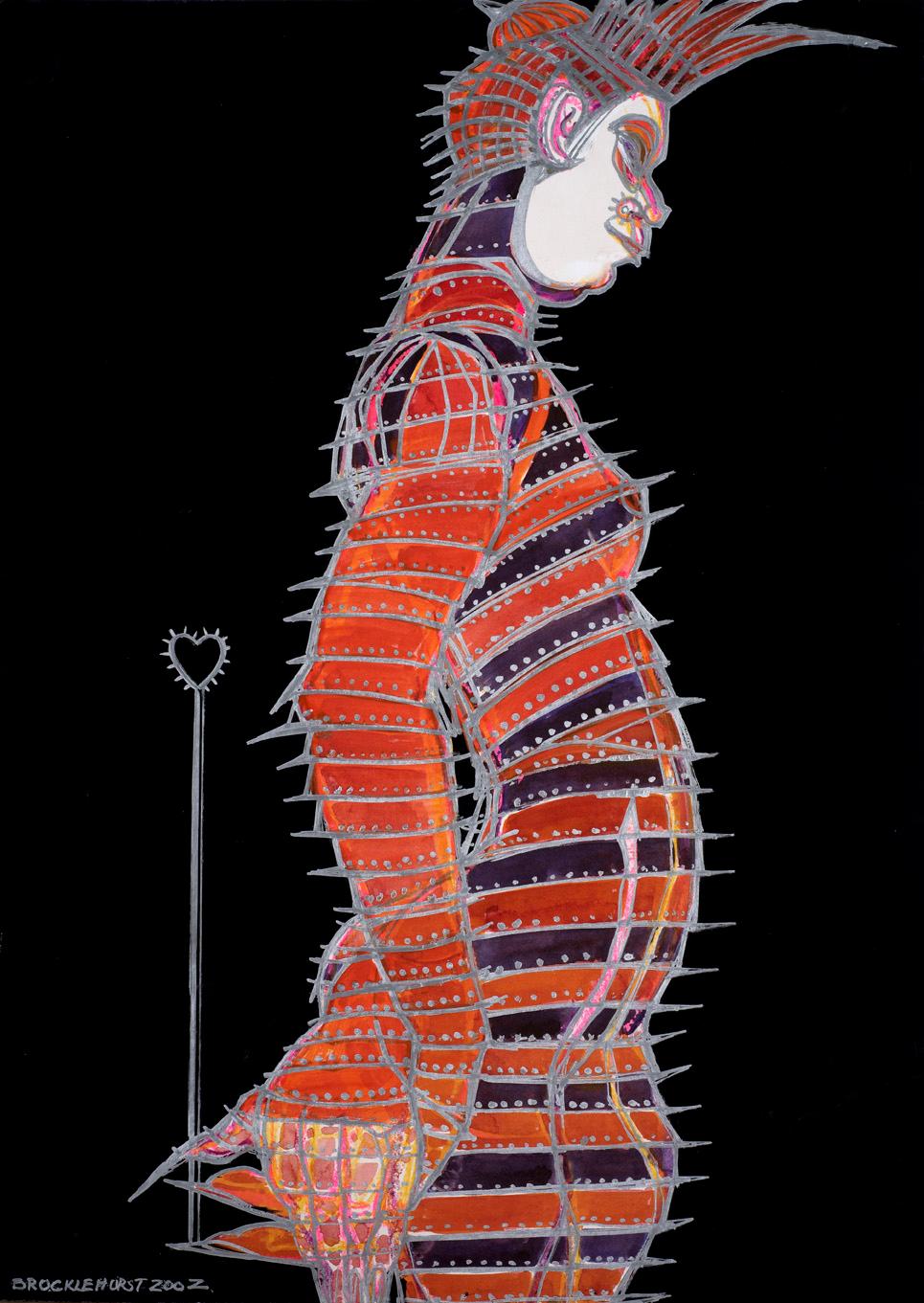
Jo Brocklehurst, Untitled (Red Queen from Brocklehurst Through the Looking-Glass), 2002
Jo (Josephine) Brocklehurst (1935 - 2006) studied at Central Saint Martins and began her career as a fashion illustrator. She later focused on portraiture, drawing directly from models at her studio in West Hampstead and in nightclubs and theatres in Berlin, London and New York. Her work documents the alternative subcultures of the 1970s, 80s and 90s that went on to shape mainstream fashion and performance scenes. This work is from Brocklehurst Through the Looking-Glass, Brocklehurst’s final series. With an image of herself as a child as the centrepiece, Brocklehurst made hundreds of drawings that re-imagined characters from Lewis Carroll’s Alice novels. Her models were friends and dedicated club-goers who designed and made their own clothes. Brocklehurst’s regular collaborator Isabelle Bricknall was the model for this work. Works from the series were framed with bright plastic gemstones and hung on every available space at Brocklehurst’s home studio. She used metallic and neon inks that transformed under ultraviolet lights that she switched on for her guests in the evenings.
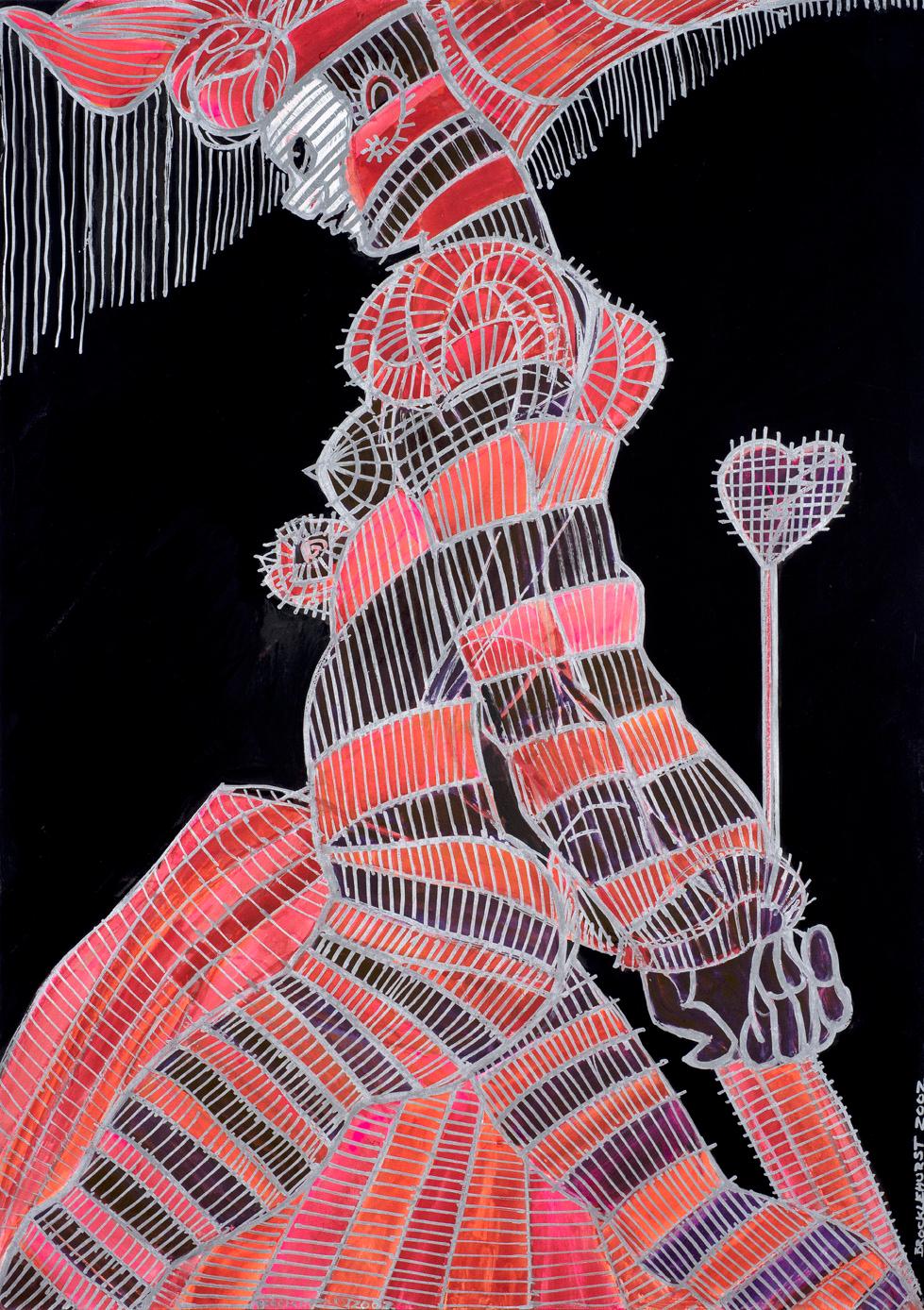
Jo Brocklehurst, Untitled (Red Queen from Brocklehurst Through the Looking-Glass), 2002
Jo (Josephine) Brocklehurst (1935 - 2006) studied at Central Saint Martins and began her career as a fashion illustrator. She later focused on portraiture, drawing directly from models at her studio in West Hampstead and in nightclubs and theatres in Berlin, London and New York. Her work documents the alternative subcultures of the 1970s, 80s and 90s that went on to shape mainstream fashion and performance scenes. This work is from Brocklehurst Through the Looking-Glass, Brocklehurst’s final series. With an image of herself as a child as the centrepiece, Brocklehurst made hundreds of drawings that re-imagined characters from Lewis Carroll’s Alice novels. Her models were friends and dedicated club-goers who designed and made their own clothes. Brocklehurst’s regular collaborator Isabelle Bricknall was the model for this work. Works from the series were framed with bright plastic gemstones and hung on every available space at Brocklehurst’s home studio. She used metallic and neon inks that transformed under ultraviolet lights that she switched on for her guests in the evenings.
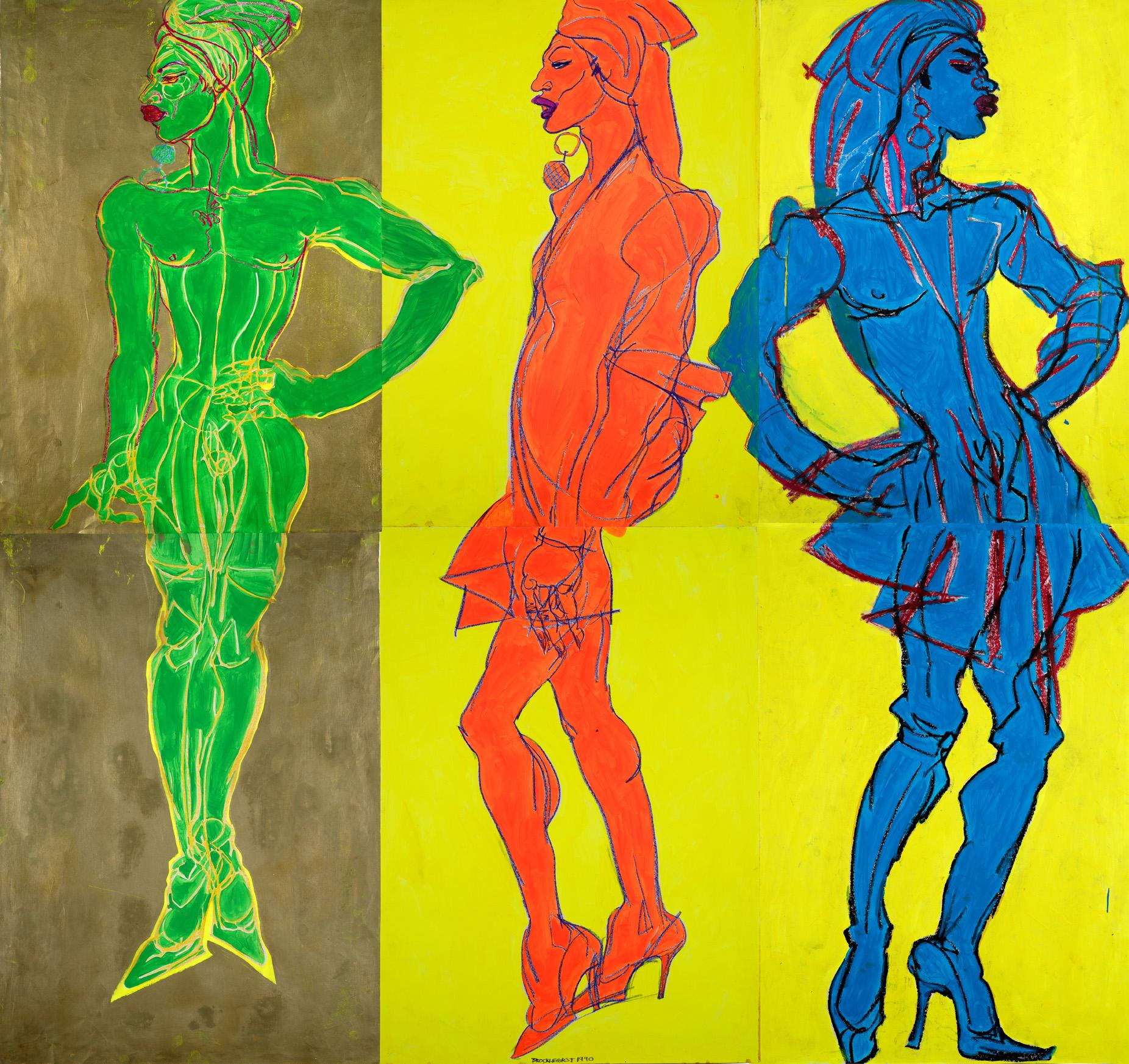
Jo Brocklehurst, Untitled (known as Three Graces), 1988
Jo (Josephine) Brocklehurst (1935 - 2006) studied at Central Saint Martins and began her career as a fashion illustrator. She later focused on portraiture, drawing directly from models at her studio in West Hampstead and in nightclubs and theatres in Berlin, London and New York. Her work documents the alternative subcultures of the 1970s, 80s and 90s that went on to shape mainstream fashion and performance scenes. In the 1990s Brocklehurst returned to Central Saint Martins as a visiting tutor. She led life drawing classes for fashion and textile students, often employing flamboyant performers as models. Brocklehurst encouraged bold use of scale and colour, as demonstrated by this portrait of a drag performer.
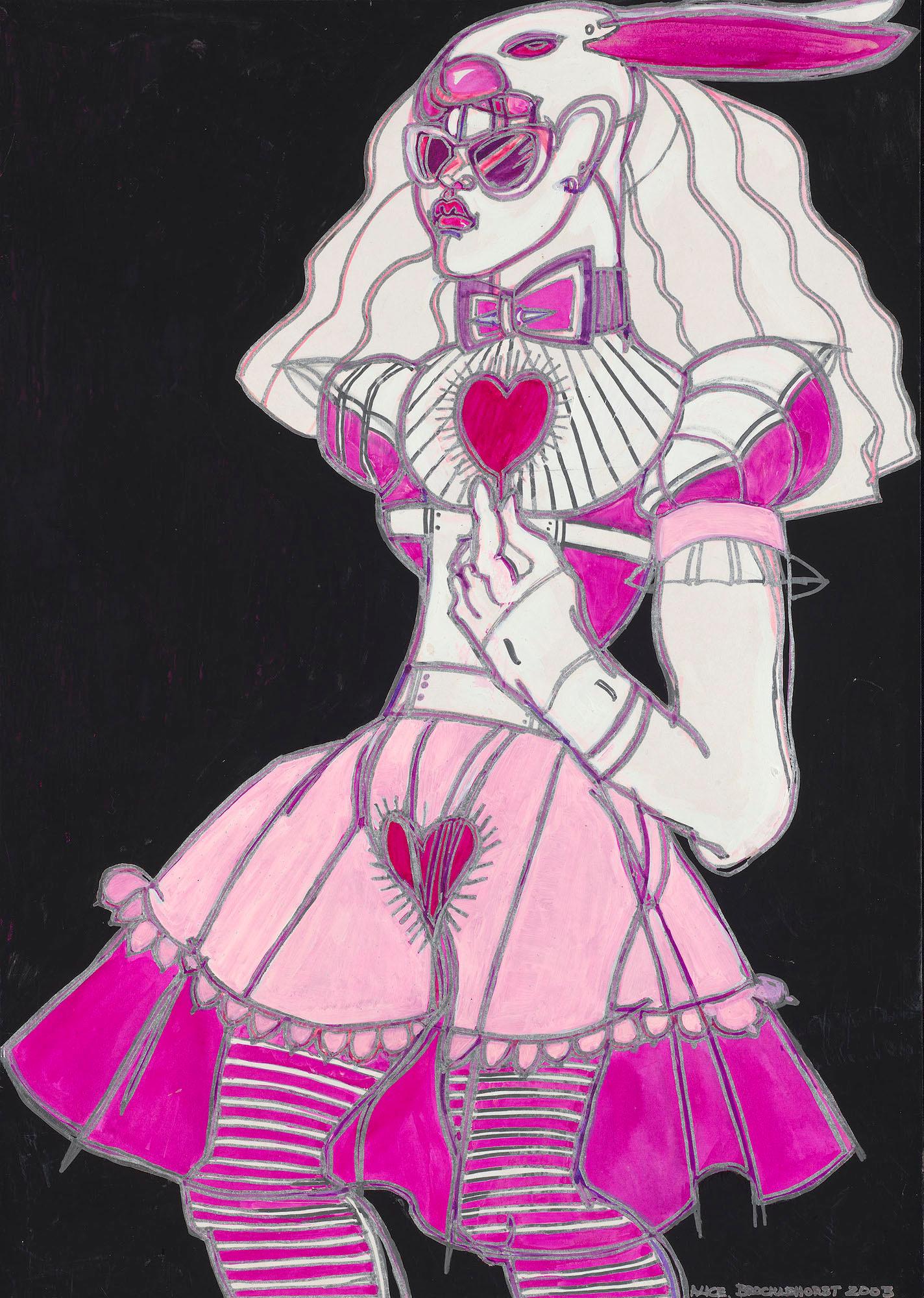
Jo Brocklehurst, Untitled (Alice from Brocklehurst Through the Looking-Glass) , 2003
Jo (Josephine) Brocklehurst (1935 - 2006) studied at Central Saint Martins and began her career as a fashion illustrator. She later focused on portraiture, drawing directly from models at her studio in West Hampstead and in nightclubs and theatres in Berlin, London and New York. Her work documents the alternative subcultures of the 1970s, 80s and 90s that went on to shape mainstream fashion and performance scenes. This work is from Brocklehurst Through the Looking-Glass, Brocklehurst’s final series. With an image of herself as a child as the centrepiece, Brocklehurst made hundreds of drawings that re-imagined characters from Lewis Carroll’s Alice novels. Her models were friends and dedicated club-goers who designed and made their own clothes. Works from the series were framed with bright plastic gemstones and hung on every available space at Brocklehurst’s home studio. She used metallic and neon inks that transformed under ultraviolet lights that she switched on for her guests in the evenings.
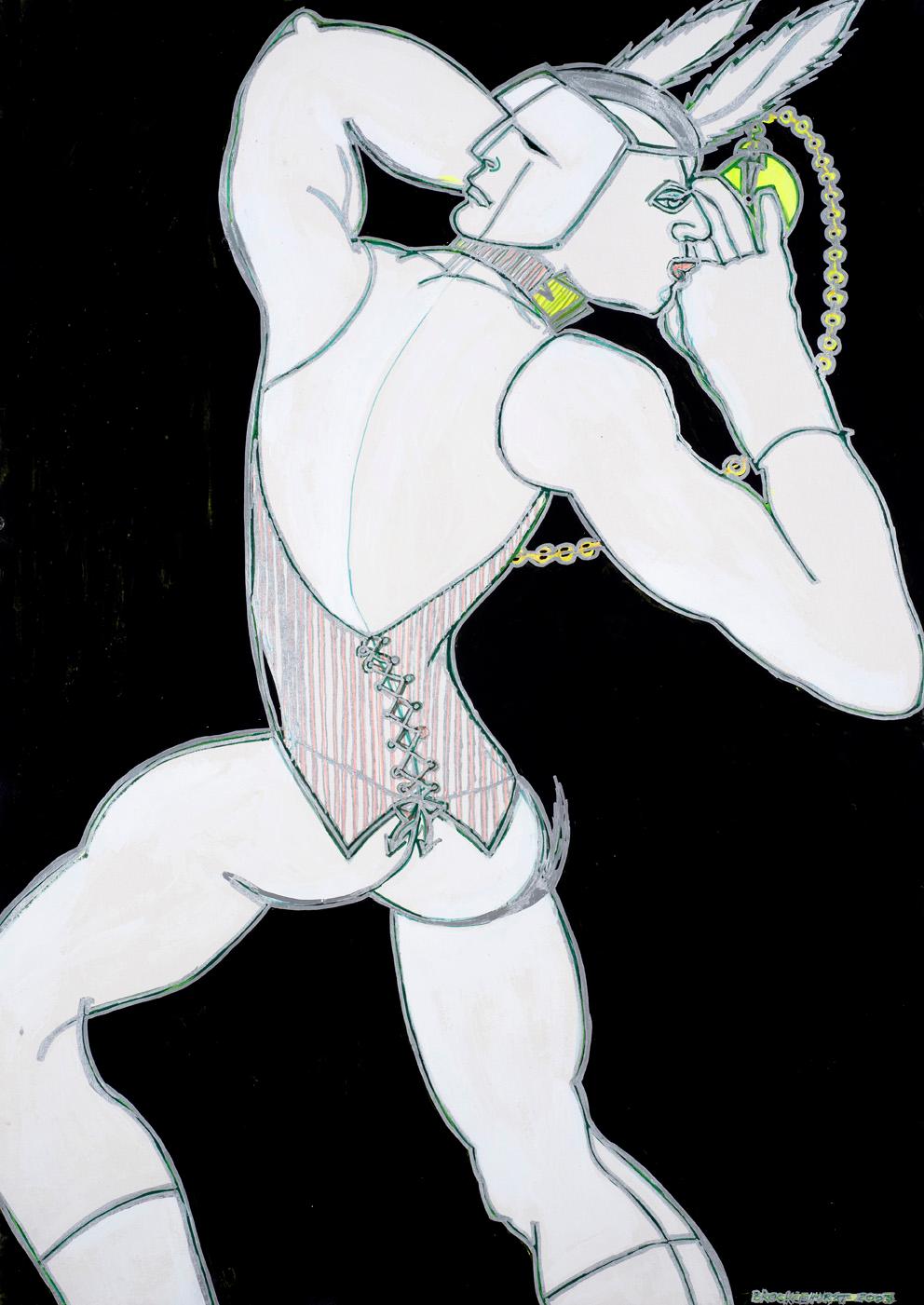
Jo Brocklehurst, Untitled (White Rabbit from Brocklehurst Through the Looking-Glass), 2003
Jo (Josephine) Brocklehurst (1935 - 2006) studied at Central Saint Martins and began her career as a fashion illustrator. She later focused on portraiture, drawing directly from models at her studio in West Hampstead and in nightclubs and theatres in Berlin, London and New York. Her work documents the alternative subcultures of the 1970s, 80s and 90s that went on to shape mainstream fashion and performance scenes. This work is from Brocklehurst Through the Looking-Glass, Brocklehurst’s final series. With an image of herself as a child as the centrepiece, Brocklehurst made hundreds of drawings that re-imagined characters from Lewis Carroll’s Alice novels. Her models were friends and dedicated club-goers who designed and made their own clothes. Works from the series were framed with bright plastic gemstones and hung on every available space at Brocklehurst’s home studio. She used metallic and neon inks that transformed under ultraviolet lights that she switched on for her guests in the evenings.
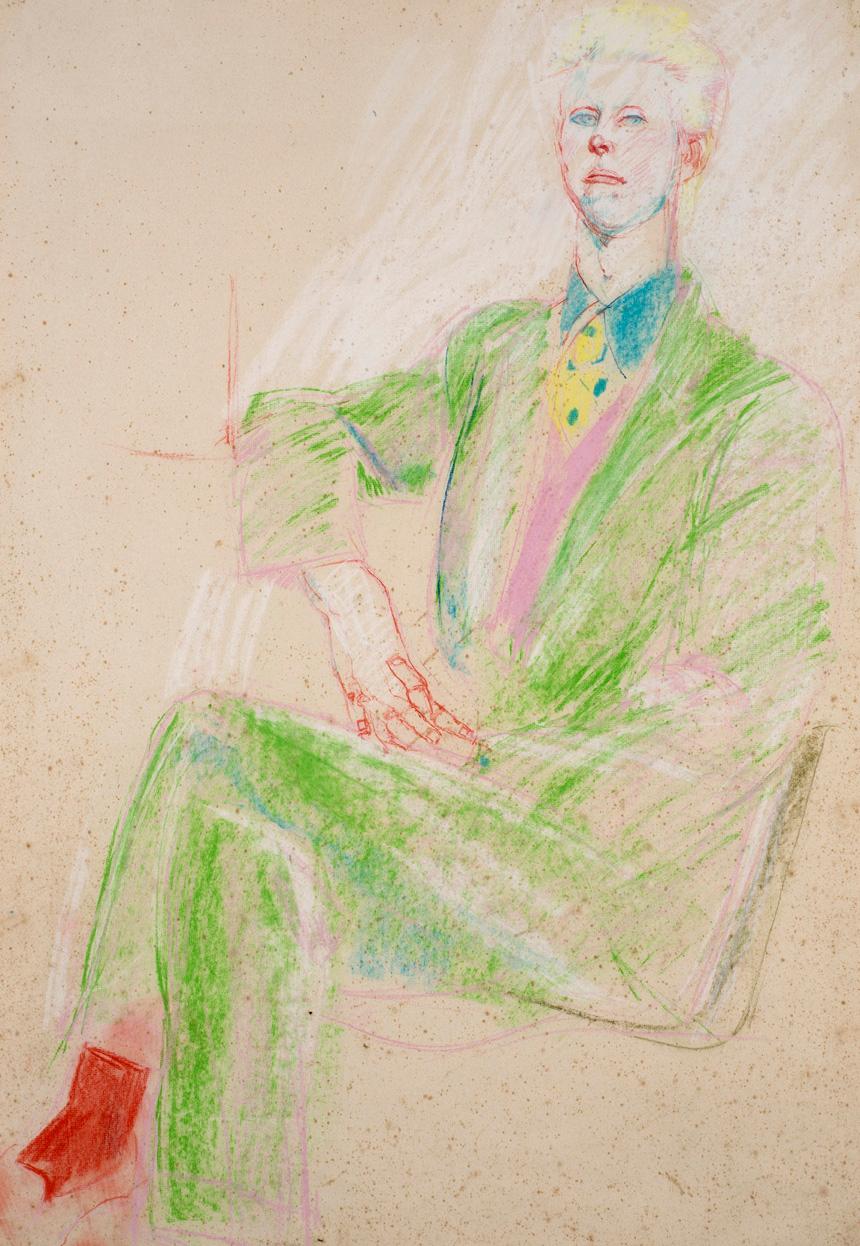
Jo Brocklehurst, Man in a Green Suit (portrait of James ‘Biddie’ Biddlecombe), 1979
Jo (Josephine) Brocklehurst (1935 - 2006) studied at Central Saint Martins and began her career as a fashion illustrator. She later focused on portraiture, drawing directly from models at her studio in West Hampstead and in nightclubs and theatres in Berlin, London and New York. Her work documents the alternative subcultures of the 1970s, 80s and 90s that went on to shape mainstream fashion and performance scenes. Man in a Green Suit is a portrait of performer James ‘Biddie’ Biddlecombe around the time he was performing cabaret at London’s Blitz Club with Eve Ferret. In 1980 it was shown in the ICA exhibition Women’s Images of Men.
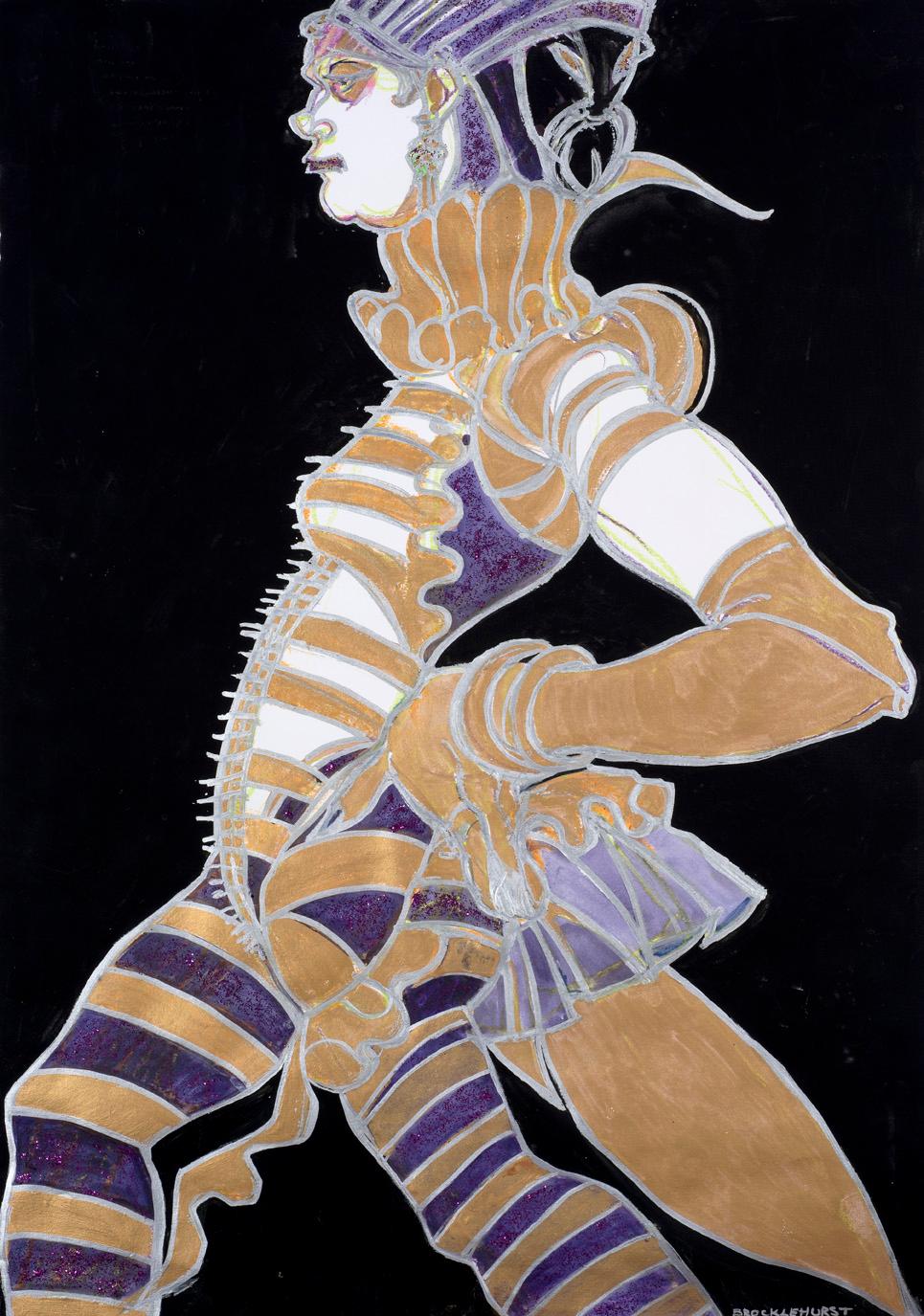
Jo Brocklehurst, Untitled (from Brocklehurst Through the Looking-Glass), 2000s
Jo (Josephine) Brocklehurst (1935 - 2006) studied at Central Saint Martins and began her career as a fashion illustrator. She later focused on portraiture, drawing directly from models at her studio in West Hampstead and in nightclubs and theatres in Berlin, London and New York. Her work documents the alternative subcultures of the 1970s, 80s and 90s that went on to shape mainstream fashion and performance scenes. This work is from Brocklehurst Through the Looking-Glass, Brocklehurst’s final series. With an image of herself as a child as the centrepiece, Brocklehurst made hundreds of drawings that re-imagined characters from Lewis Carroll’s Alice novels. Her models were friends and dedicated club-goers who designed and made their own clothes. Brocklehurst’s regular collaborator Isabelle Bricknall was the model for this work. Works from the series were framed with bright plastic gemstones and hung on every available space at Brocklehurst’s home studio. She used metallic and neon inks that transformed under ultraviolet lights that she switched on for her guests in the evenings.
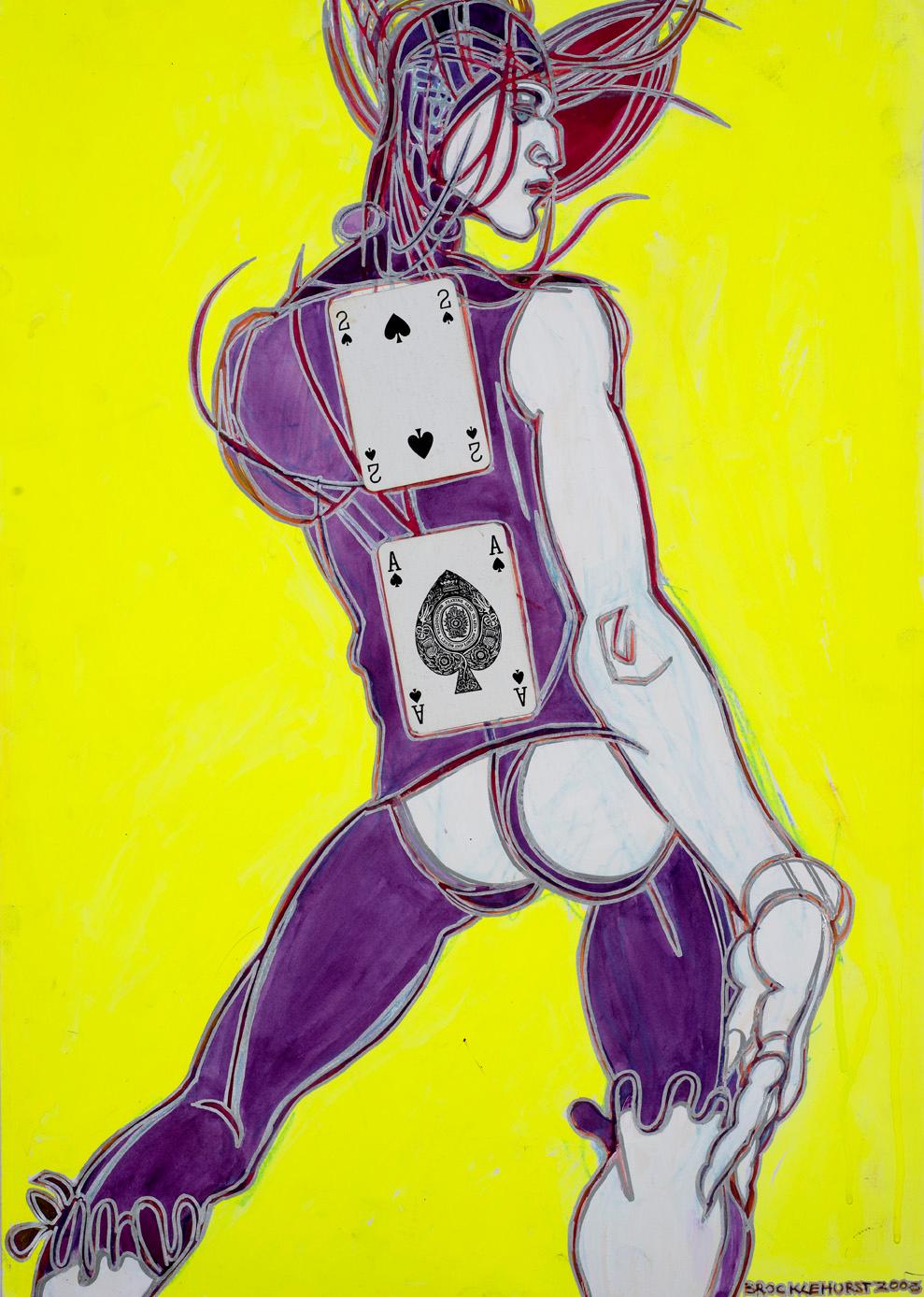
Jo Brocklehurst, Untitled (from Brocklehurst Through the Looking-Glass), 2002
Jo (Josephine) Brocklehurst (1935 - 2006) studied at Central Saint Martins and began her career as a fashion illustrator. She later focused on portraiture, drawing directly from models at her studio in West Hampstead and in nightclubs and theatres in Berlin, London and New York. Her work documents the alternative subcultures of the 1970s, 80s and 90s that went on to shape mainstream fashion and performance scenes. This work is from Brocklehurst Through the Looking-Glass, Brocklehurst’s final series. With an image of herself as a child as the centrepiece, Brocklehurst made hundreds of drawings that re-imagined characters from Lewis Carroll’s Alice novels. Her models were friends and dedicated club-goers who designed and made their own clothes. Works from the series were framed with bright plastic gemstones and hung on every available space at Brocklehurst’s home studio. She used metallic and neon inks that transformed under ultraviolet lights that she switched on for her guests in the evenings.
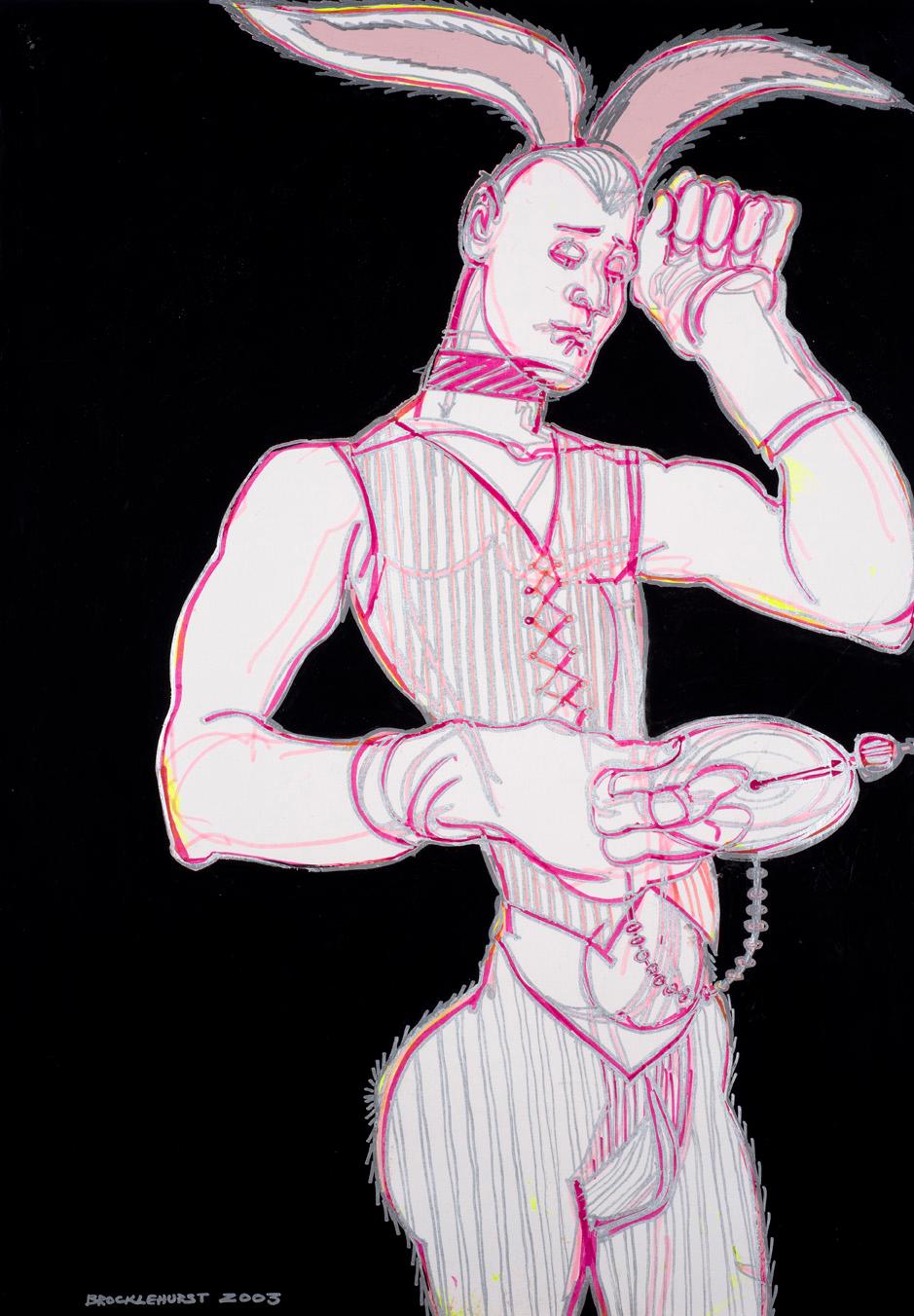
Jo Brocklehurst, Untitled (White Rabbit from Brocklehurst Through the Looking-Glass), 2000s
Jo (Josephine) Brocklehurst (1935 - 2006) studied at Central Saint Martins and began her career as a fashion illustrator. She later focused on portraiture, drawing directly from models at her studio in West Hampstead and in nightclubs and theatres in Berlin, London and New York. Her work documents the alternative subcultures of the 1970s, 80s and 90s that went on to shape mainstream fashion and performance scenes. This work is from Brocklehurst Through the Looking-Glass, Brocklehurst’s final series. With an image of herself as a child as the centrepiece, Brocklehurst made hundreds of drawings that re-imagined characters from Lewis Carroll’s Alice novels. Her models were friends and dedicated club-goers who designed and made their own clothes. Works from the series were framed with bright plastic gemstones and hung on every available space at Brocklehurst’s home studio. She used metallic and neon inks that transformed under ultraviolet lights that she switched on for her guests in the evenings.
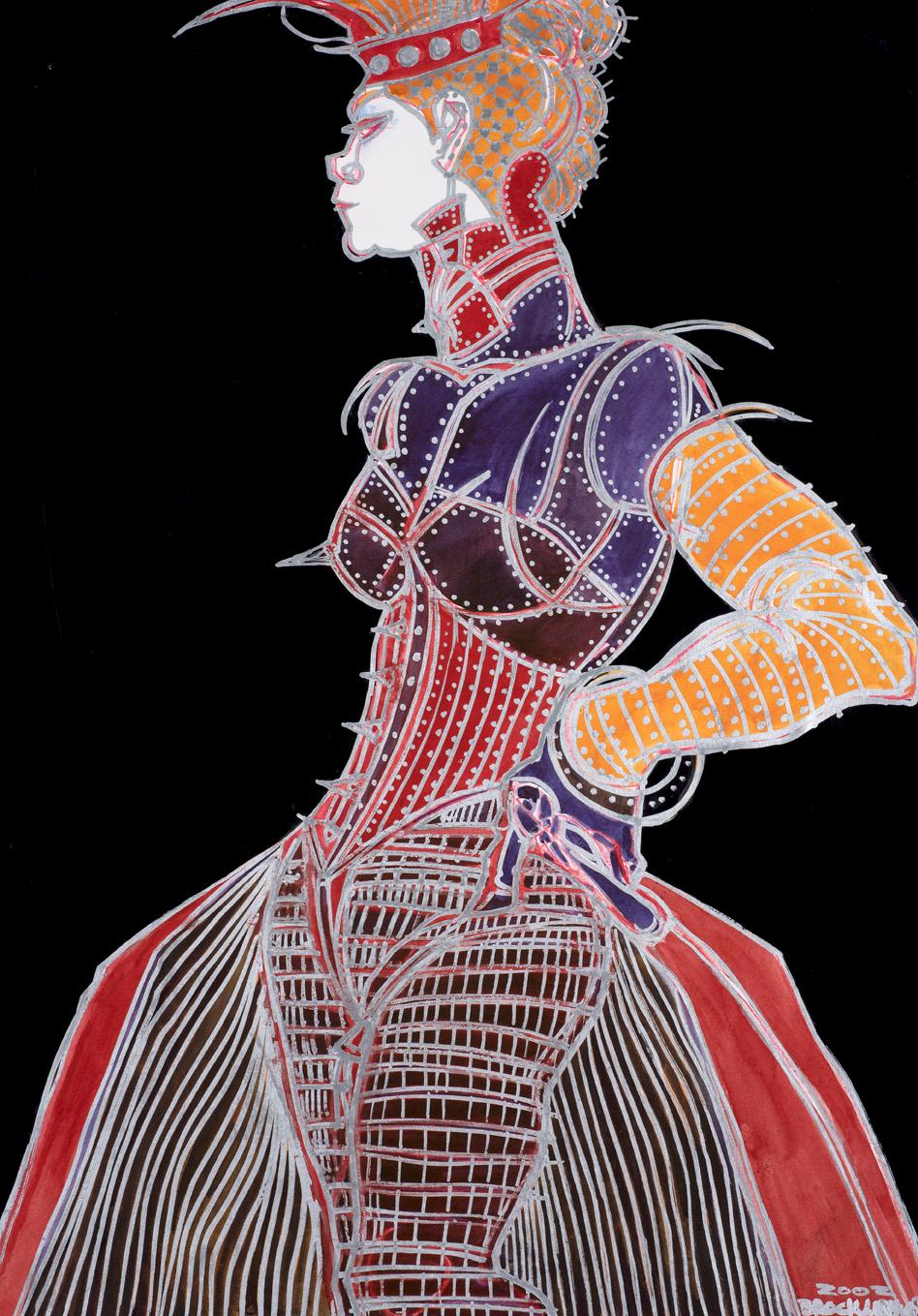
Jo Brocklehurst, Untitled (from Brocklehurst Through the Looking-Glass), 2002
Jo (Josephine) Brocklehurst (1935 - 2006) studied at Central Saint Martins and began her career as a fashion illustrator. She later focused on portraiture, drawing directly from models at her studio in West Hampstead and in nightclubs and theatres in Berlin, London and New York. Her work documents the alternative subcultures of the 1970s, 80s and 90s that went on to shape mainstream fashion and performance scenes. This work is from Brocklehurst Through the Looking-Glass, Brocklehurst’s final series. With an image of herself as a child as the centrepiece, Brocklehurst made hundreds of drawings that re-imagined characters from Lewis Carroll’s Alice novels. Her models were friends and dedicated club-goers who designed and made their own clothes. Brocklehurst’s regular collaborator Isabelle Bricknall was the model for this work. Works from the series were framed with bright plastic gemstones and hung on every available space at Brocklehurst’s home studio. She used metallic and neon inks that transformed under ultraviolet lights that she switched on for her guests in the evenings.
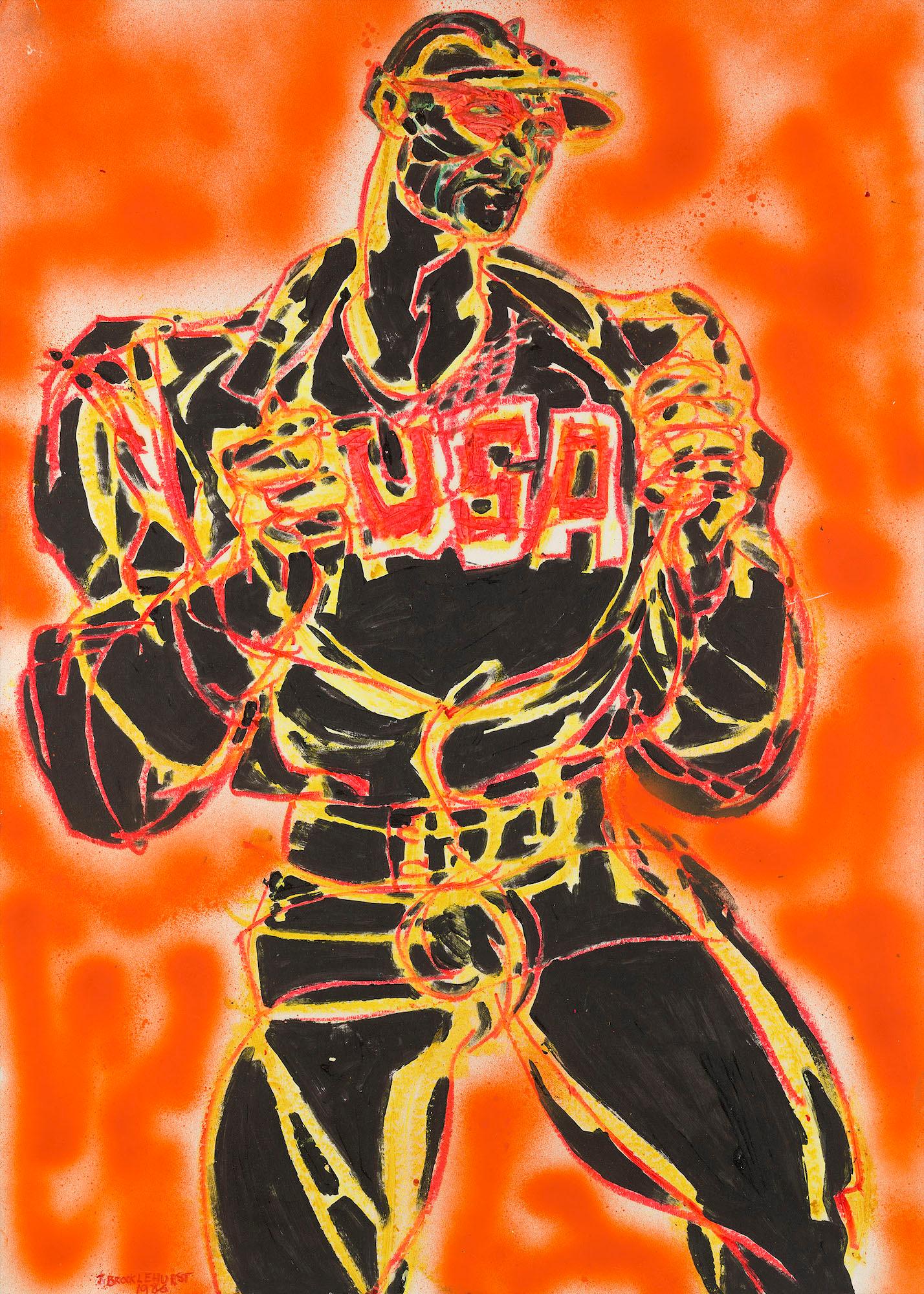
Jo Brocklehurst, Untitled, 1986
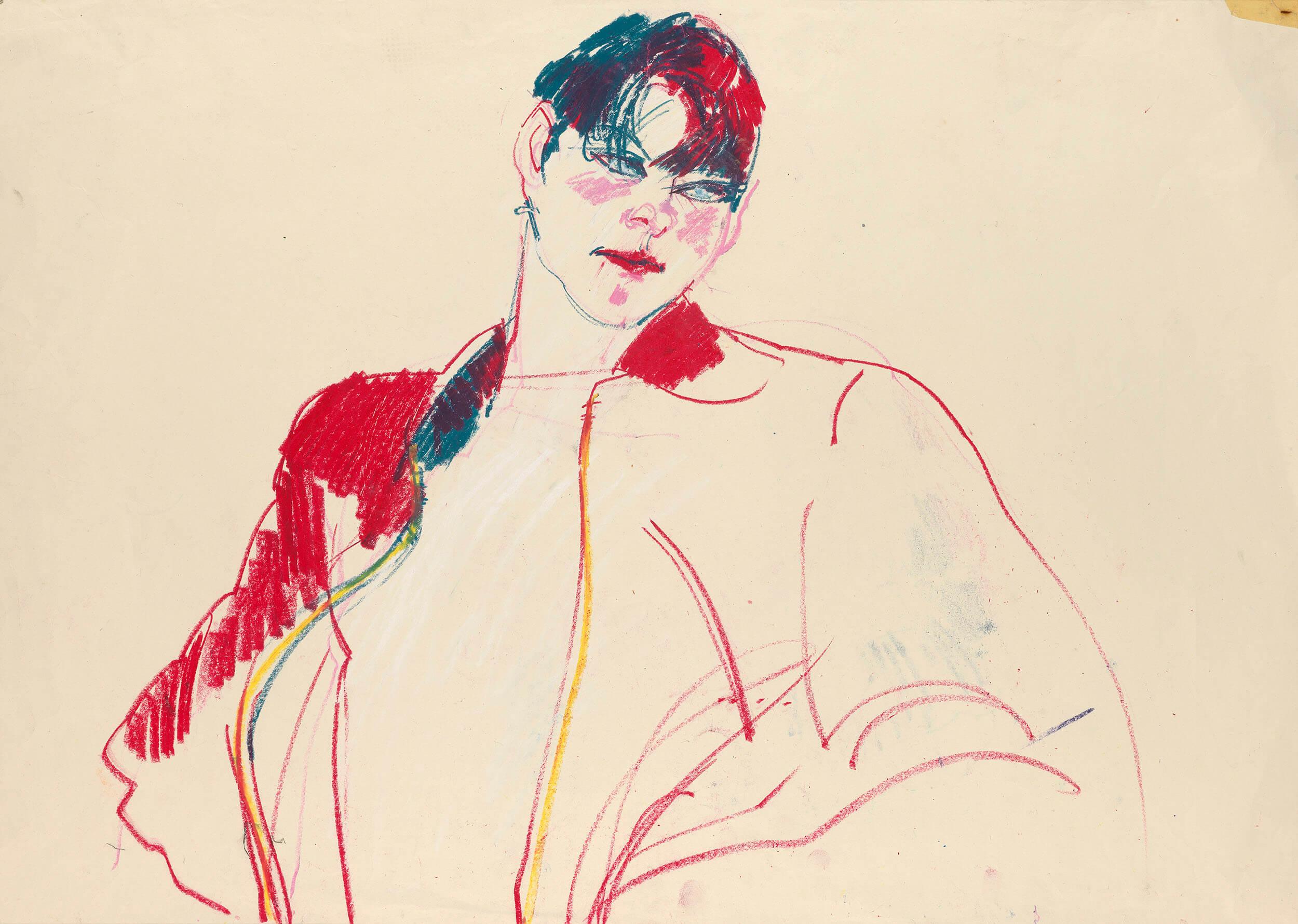
Jo (Josephine) Brocklehurst (1935 - 2006) studied at Central Saint Martins and began her career as a fashion illustrator. She later focused on portraiture, drawing directly from models at her studio in West Hampstead and in nightclubs and theatres in Berlin, London and New York. Her work documents the alternative subcultures of the 1970s, 80s and 90s that went on to shape mainstream fashion and performance scenes. Brocklehurst began working in New York following an exhibition of her work there in 1983. She took paper and materials to the gay nightclubs of the Meatpacking District, drawing clubgoers like this one. Brocklehurst used neon inks that she could see under the ultraviolet lights.
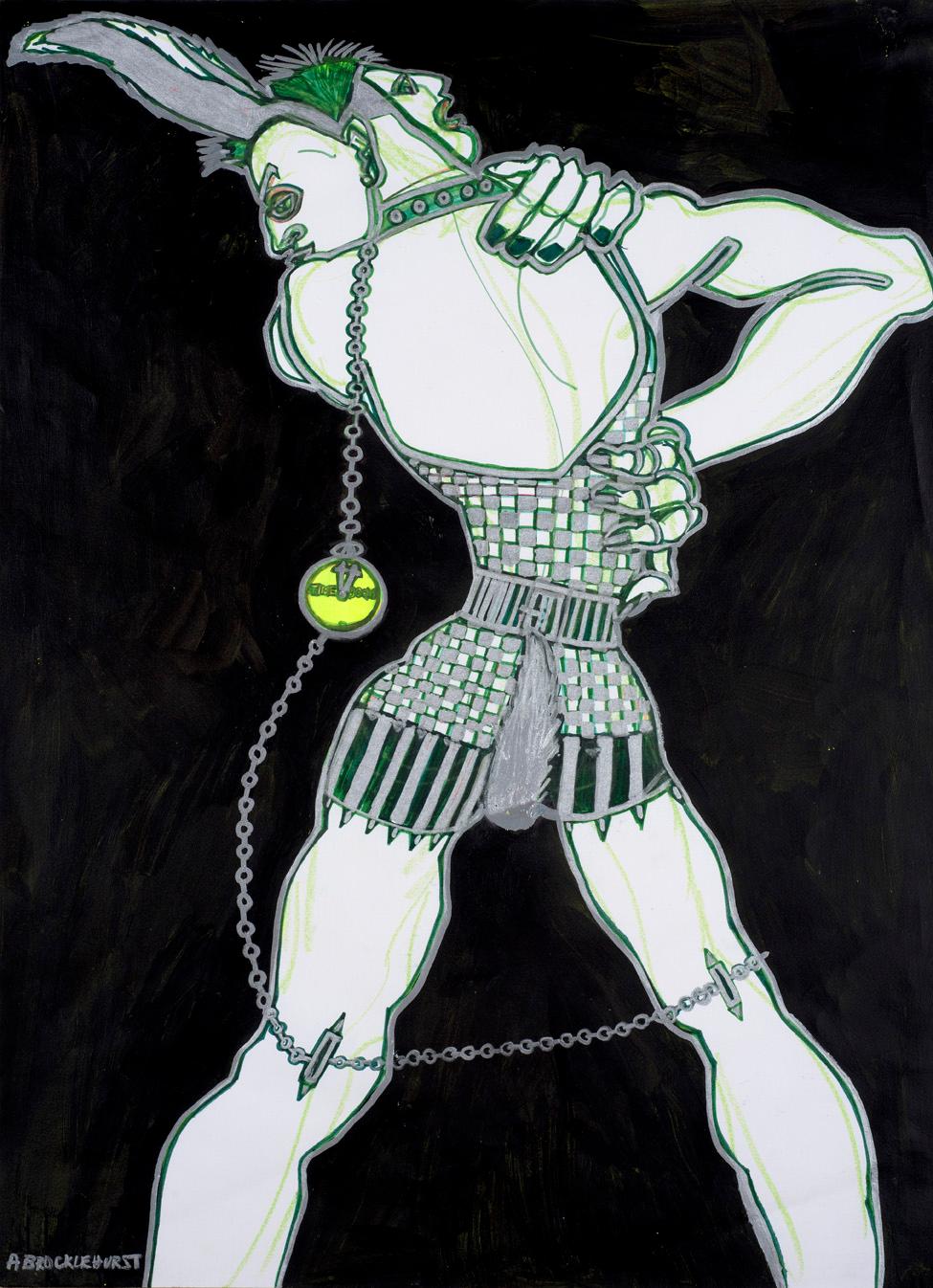
Jo Brocklehurst, Untitled (White Rabbit from Brocklehurst Through the Looking-Glass), 2000s
Jo (Josephine) Brocklehurst (1935 - 2006) studied at Central Saint Martins and began her career as a fashion illustrator. She later focused on portraiture, drawing directly from models at her studio in West Hampstead and in nightclubs and theatres in Berlin, London and New York. Her work documents the alternative subcultures of the 1970s, 80s and 90s that went on to shape mainstream fashion and performance scenes. This work is from Brocklehurst Through the Looking-Glass, Brocklehurst’s final series. With an image of herself as a child as the centrepiece, Brocklehurst made hundreds of drawings that re-imagined characters from Lewis Carroll’s Alice novels. Her models were friends and dedicated club-goers who designed and made their own clothes. Works from the series were framed with bright plastic gemstones and hung on every available space at Brocklehurst’s home studio. She used metallic and neon inks that transformed under ultraviolet lights that she switched on for her guests in the evenings.
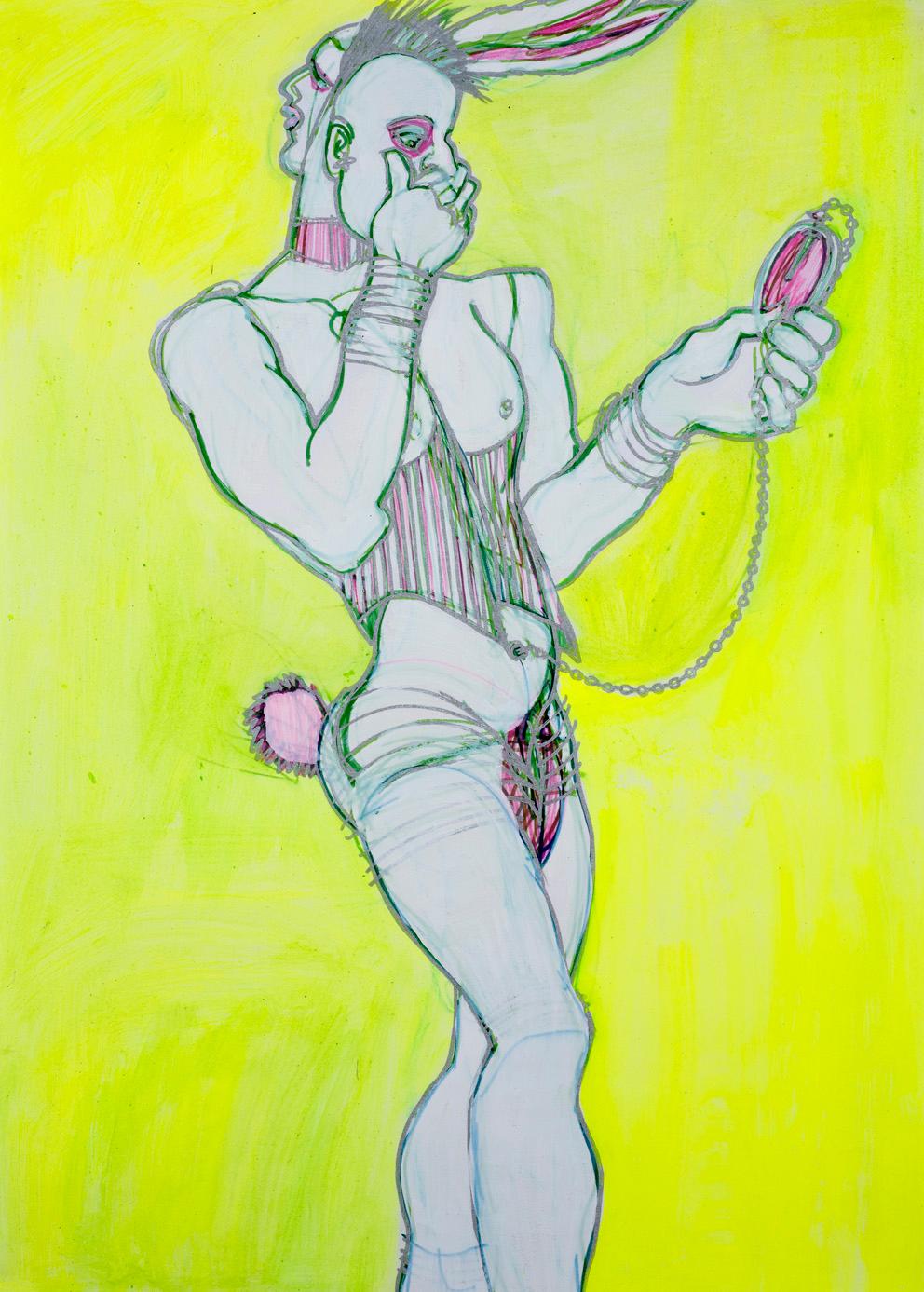
Jo Brocklehurst, Untitled (White Rabbit from Brocklehurst Through the Looking-Glass), 2000s
Jo (Josephine) Brocklehurst (1935 - 2006) studied at Central Saint Martins and began her career as a fashion illustrator. She later focused on portraiture, drawing directly from models at her studio in West Hampstead and in nightclubs and theatres in Berlin, London and New York. Her work documents the alternative subcultures of the 1970s, 80s and 90s that went on to shape mainstream fashion and performance scenes. This work is from Brocklehurst Through the Looking-Glass, Brocklehurst’s final series. With an image of herself as a child as the centrepiece, Brocklehurst made hundreds of drawings that re-imagined characters from Lewis Carroll’s Alice novels. Her models were friends and dedicated club-goers who designed and made their own clothes. Works from the series were framed with bright plastic gemstones and hung on every available space at Brocklehurst’s home studio. She used metallic and neon inks that transformed under ultraviolet lights that she switched on for her guests in the evenings.
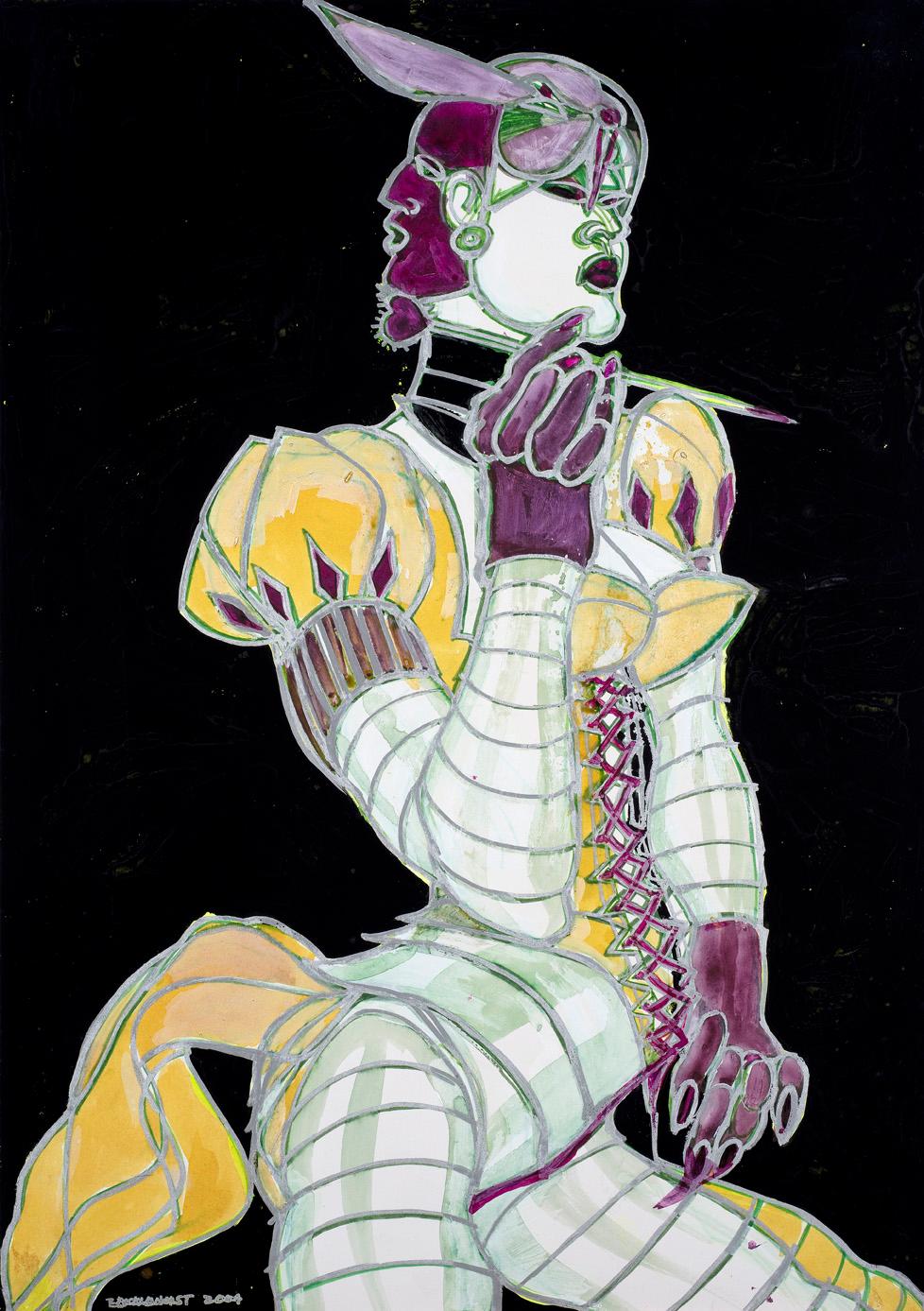
Jo Brocklehurst, Untitled (from Brocklehurst Through the Looking-Glass), 2004
Jo (Josephine) Brocklehurst (1935 - 2006) studied at Central Saint Martins and began her career as a fashion illustrator. She later focused on portraiture, drawing directly from models at her studio in West Hampstead and in nightclubs and theatres in Berlin, London and New York. Her work documents the alternative subcultures of the 1970s, 80s and 90s that went on to shape mainstream fashion and performance scenes. This work is from Brocklehurst Through the Looking-Glass, Brocklehurst’s final series. With an image of herself as a child as the centrepiece, Brocklehurst made hundreds of drawings that re-imagined characters from Lewis Carroll’s Alice novels. Her models were friends and dedicated club-goers who designed and made their own clothes. Works from the series were framed with bright plastic gemstones and hung on every available space at Brocklehurst’s home studio. She used metallic and neon inks that transformed under ultraviolet lights that she switched on for her guests in the evenings.
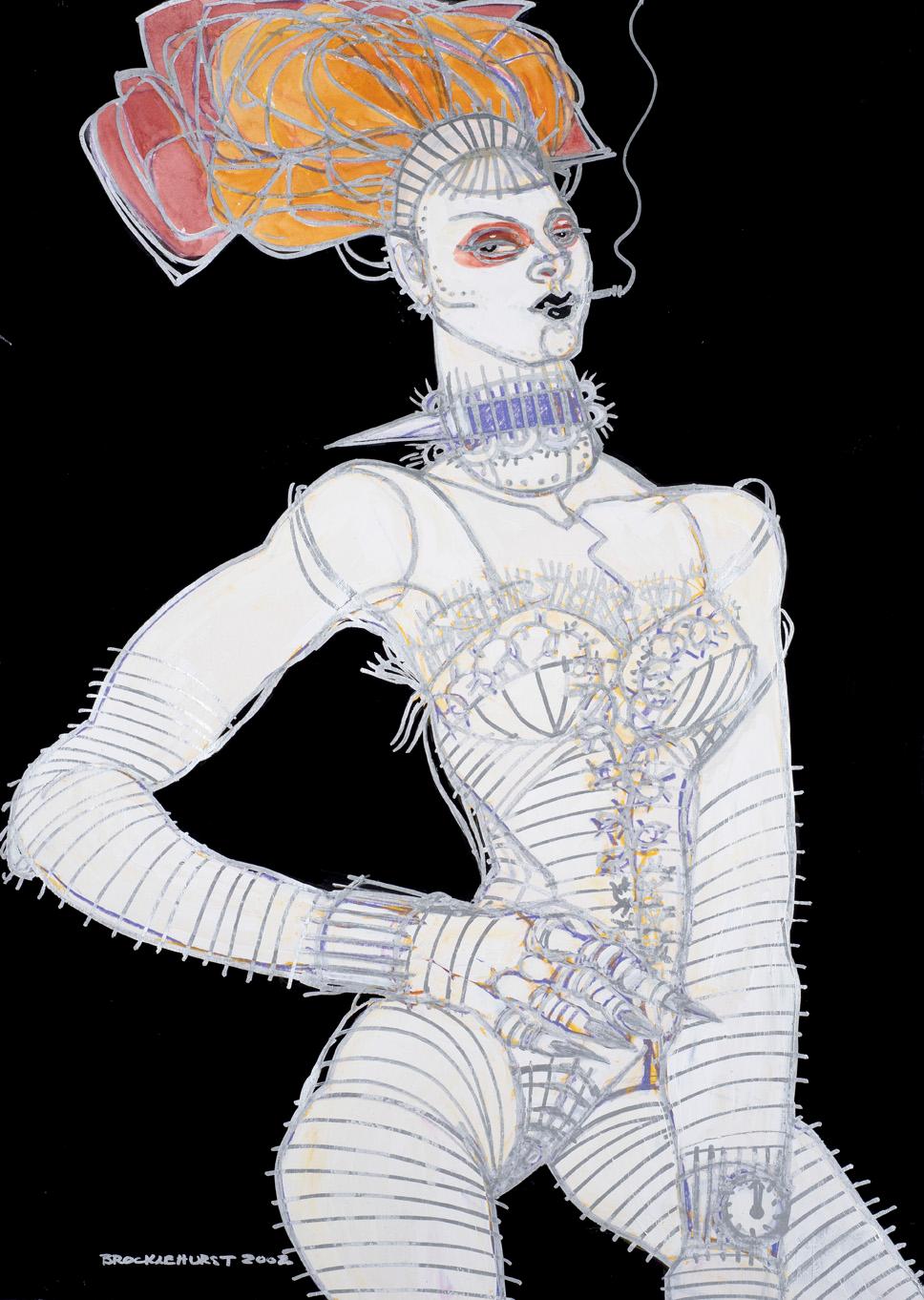
Jo Brocklehurst, Untitled (Duchess from Brocklehurst Through the Looking-Glass), 2002
Jo (Josephine) Brocklehurst (1935 - 2006) studied at Central Saint Martins and began her career as a fashion illustrator. She later focused on portraiture, drawing directly from models at her studio in West Hampstead and in nightclubs and theatres in Berlin, London and New York. Her work documents the alternative subcultures of the 1970s, 80s and 90s that went on to shape mainstream fashion and performance scenes. This work is from Brocklehurst Through the Looking-Glass, Brocklehurst’s final series. With an image of herself as a child as the centrepiece, Brocklehurst made hundreds of drawings that re-imagined characters from Lewis Carroll’s Alice novels. Her models were friends and dedicated club-goers who designed and made their own clothes. Works from the series were framed with bright plastic gemstones and hung on every available space at Brocklehurst’s home studio. She used metallic and neon inks that transformed under ultraviolet lights that she switched on for her guests in the evenings.
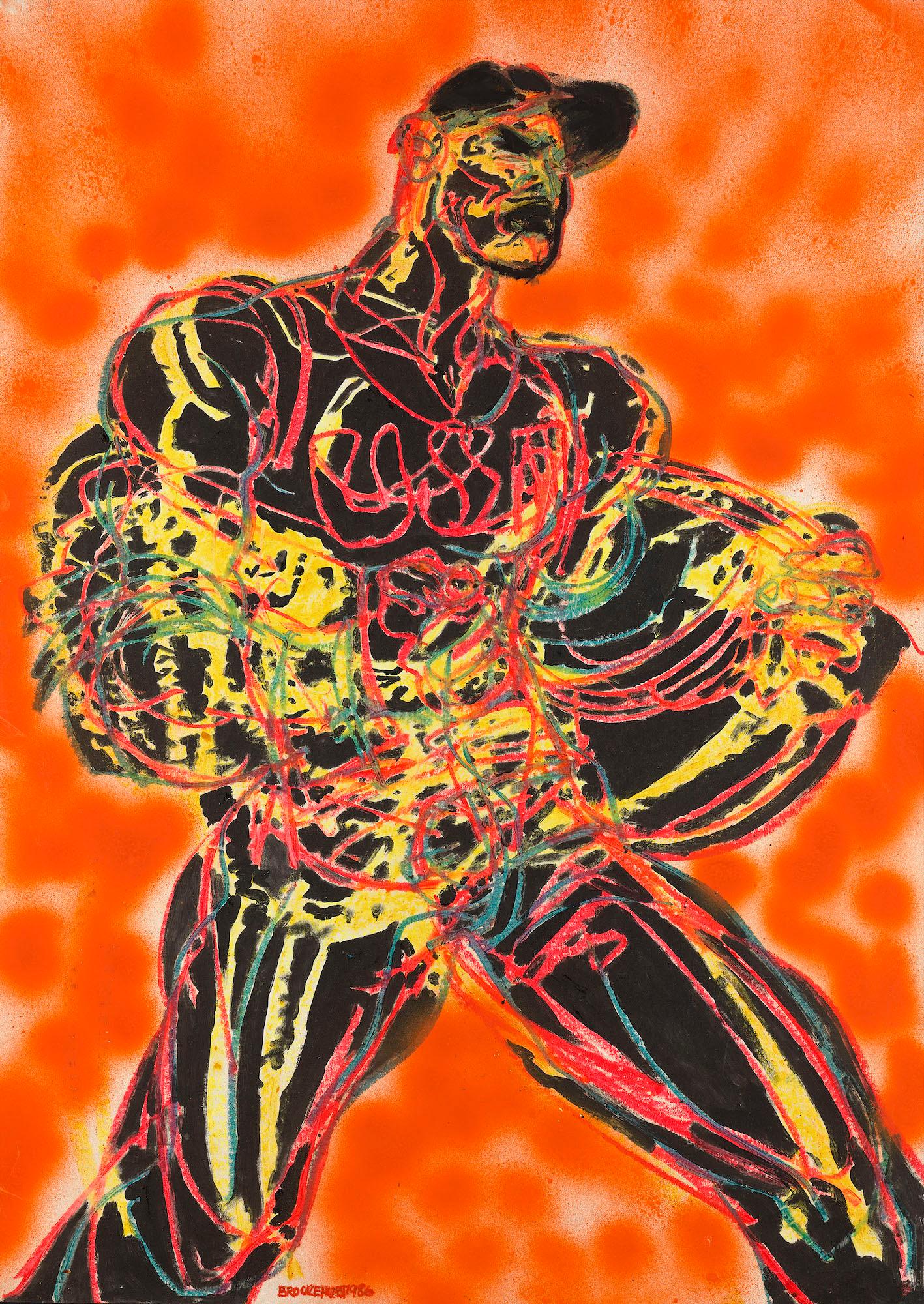
Jo Brocklehurst, Untitled, 1986
Jo (Josephine) Brocklehurst (1935 - 2006) studied at Central Saint Martins and began her career as a fashion illustrator. She later focused on portraiture, drawing directly from models at her studio in West Hampstead and in nightclubs and theatres in Berlin, London and New York. Her work documents the alternative subcultures of the 1970s, 80s and 90s that went on to shape mainstream fashion and performance scenes. Brocklehurst began working in New York following an exhibition of her work there in 1983. She took paper and materials to the gay nightclubs of the Meatpacking District, drawing clubgoers like this one. Brocklehurst used neon inks that she could see under the ultraviolet lights.
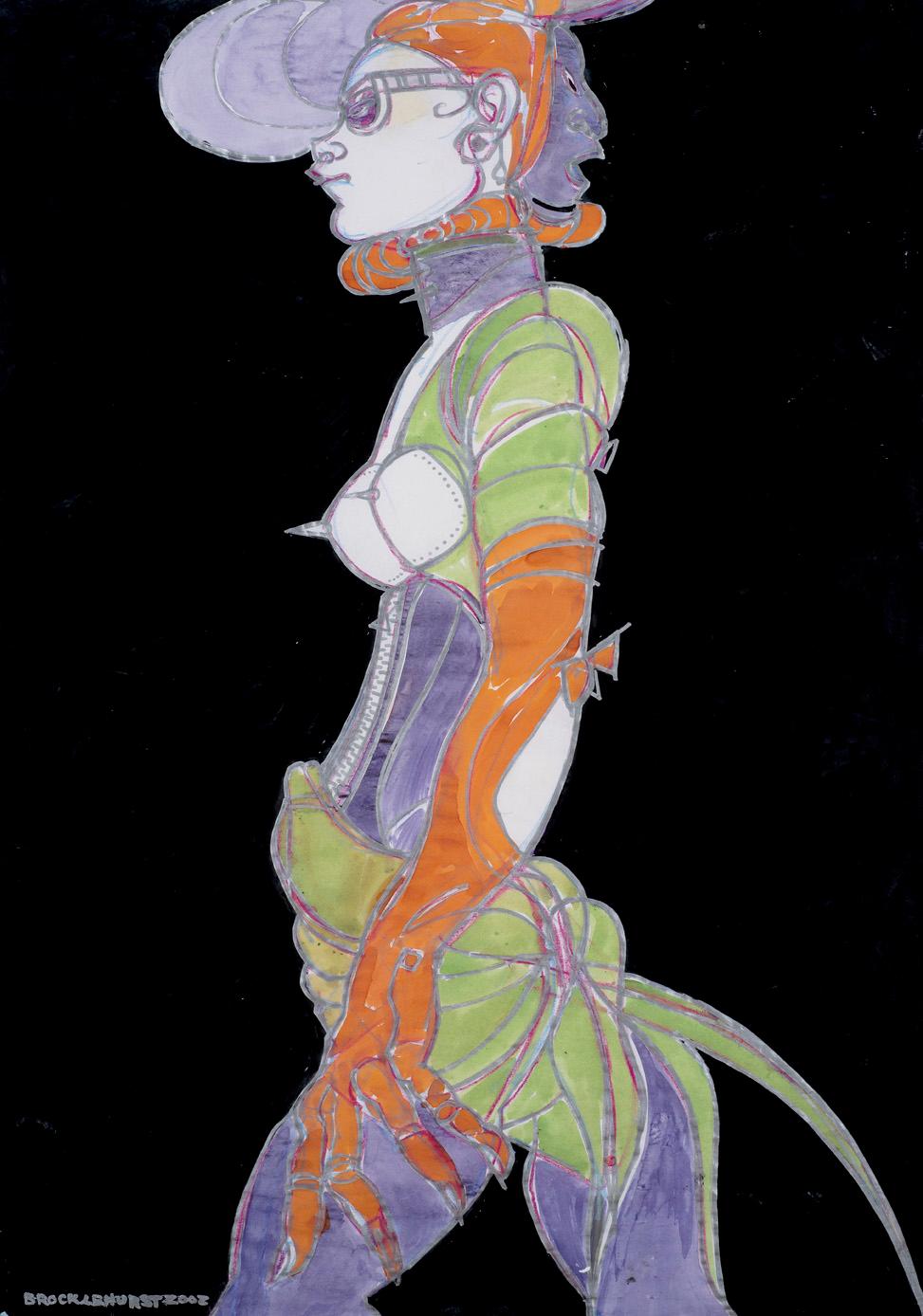
Jo Brocklehurst, Untitled (from Brocklehurst Through the Looking-Glass), 2002
Jo (Josephine) Brocklehurst (1935 - 2006) studied at Central Saint Martins and began her career as a fashion illustrator. She later focused on portraiture, drawing directly from models at her studio in West Hampstead and in nightclubs and theatres in Berlin, London and New York. Her work documents the alternative subcultures of the 1970s, 80s and 90s that went on to shape mainstream fashion and performance scenes. This work is from Brocklehurst Through the Looking-Glass, Brocklehurst’s final series. With an image of herself as a child as the centrepiece, Brocklehurst made hundreds of drawings that re-imagined characters from Lewis Carroll’s Alice novels. Her models were friends and dedicated club-goers who designed and made their own clothes. Brocklehurst’s regular collaborator Isabelle Bricknall was the model for this work. Works from the series were framed with bright plastic gemstones and hung on every available space at Brocklehurst’s home studio. She used metallic and neon inks that transformed under ultraviolet lights that she switched on for her guests in the evenings.
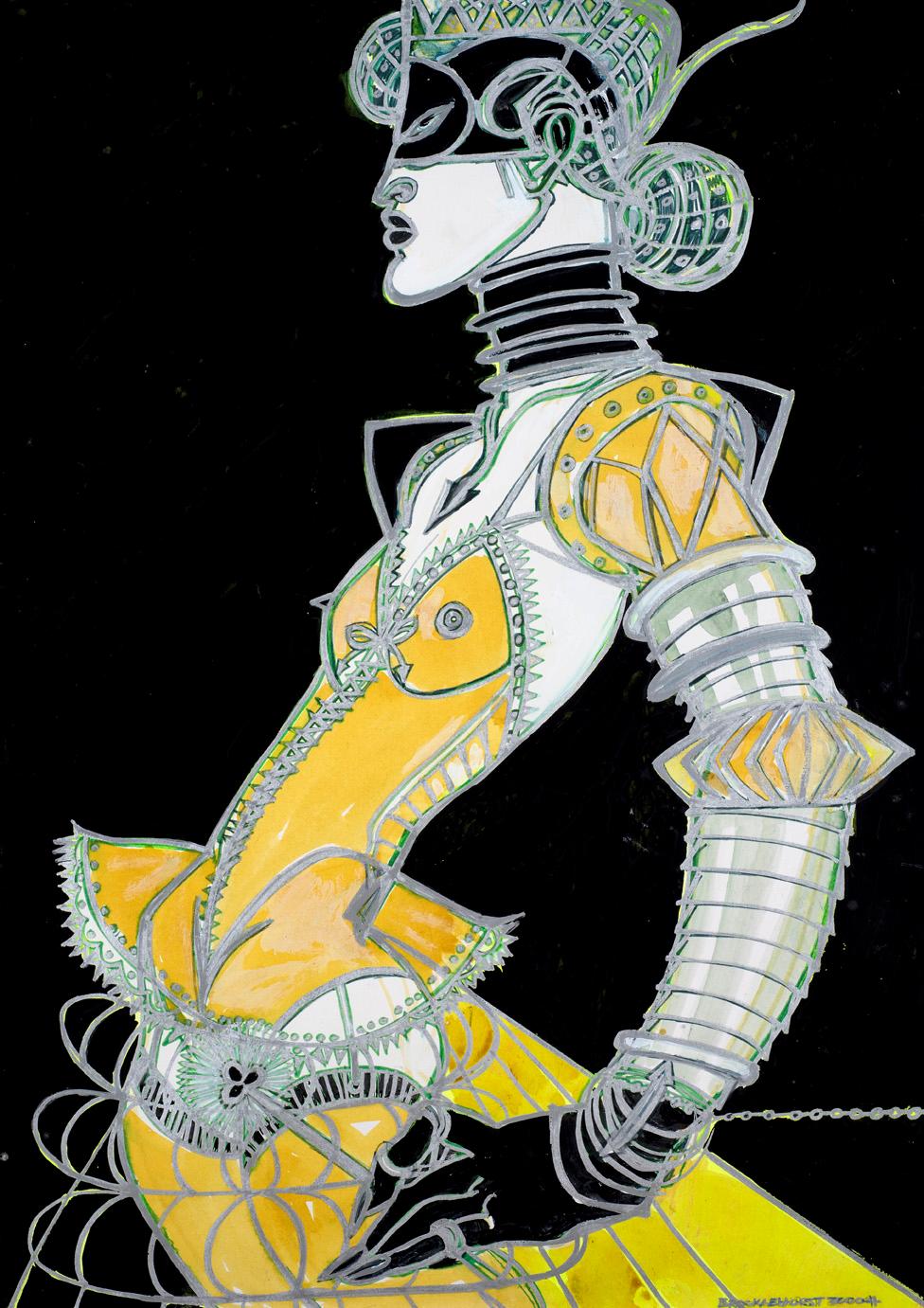
Jo Brocklehurst, Untitled (from Brocklehurst Through the Looking-Glass), 2004
Jo (Josephine) Brocklehurst (1935 - 2006) studied at Central Saint Martins and began her career as a fashion illustrator. She later focused on portraiture, drawing directly from models at her studio in West Hampstead and in nightclubs and theatres in Berlin, London and New York. Her work documents the alternative subcultures of the 1970s, 80s and 90s that went on to shape mainstream fashion and performance scenes. This work is from Brocklehurst Through the Looking-Glass, Brocklehurst’s final series. With an image of herself as a child as the centrepiece, Brocklehurst made hundreds of drawings that re-imagined characters from Lewis Carroll’s Alice novels. Her models were friends and dedicated club-goers who designed and made their own clothes. Works from the series were framed with bright plastic gemstones and hung on every available space at Brocklehurst’s home studio. She used metallic and neon inks that transformed under ultraviolet lights that she switched on for her guests in the evenings.
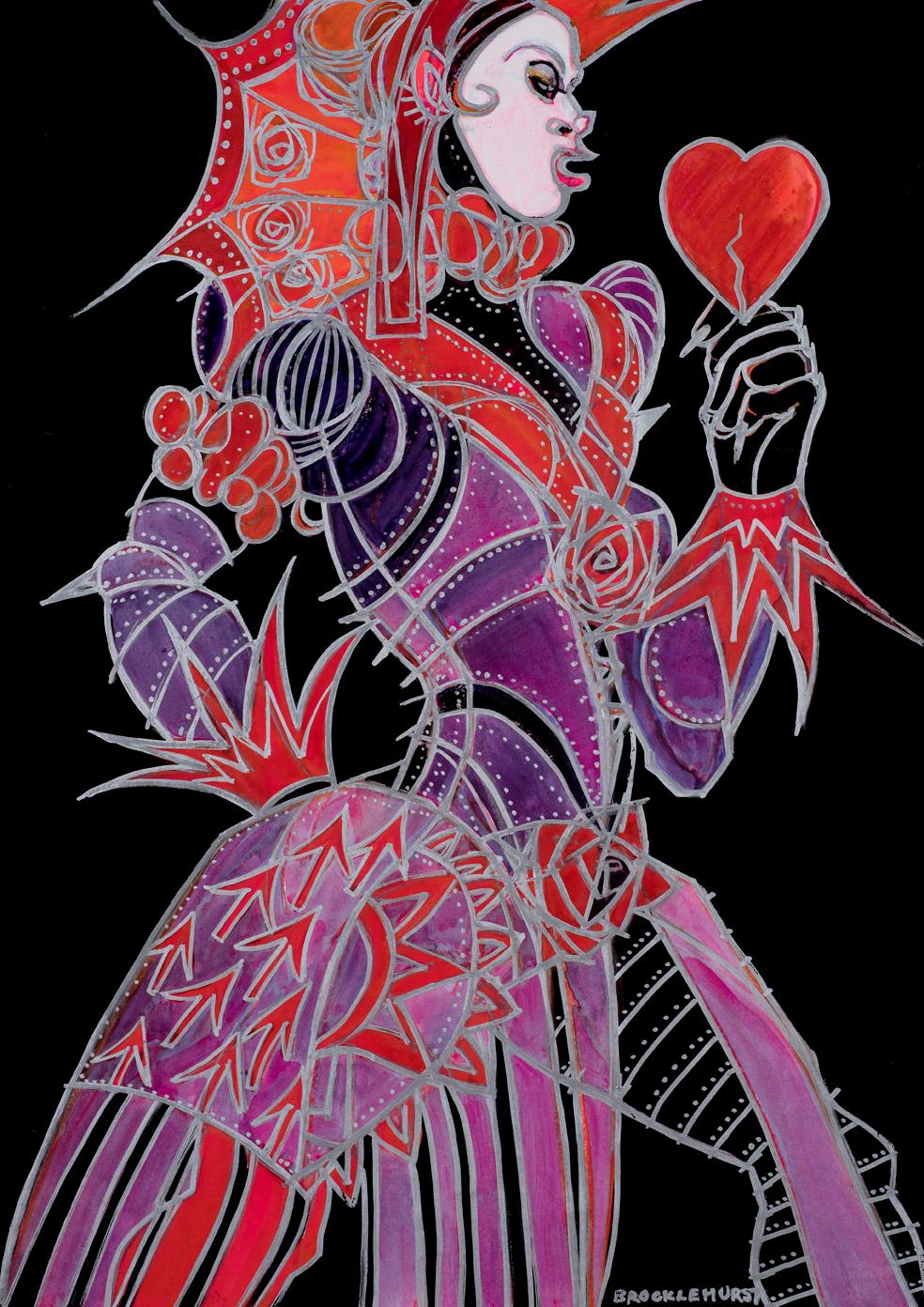
Jo Brocklehurst, Untitled (Red Queen from Brocklehurst Through the Looking-Glass) , 2000s
Jo (Josephine) Brocklehurst (1935 - 2006) studied at Central Saint Martins and began her career as a fashion illustrator. She later focused on portraiture, drawing directly from models at her studio in West Hampstead and in nightclubs and theatres in Berlin, London and New York. Her work documents the alternative subcultures of the 1970s, 80s and 90s that went on to shape mainstream fashion and performance scenes. This work is from Brocklehurst Through the Looking-Glass, Brocklehurst’s final series. With an image of herself as a child as the centrepiece, Brocklehurst made hundreds of drawings that re-imagined characters from Lewis Carroll’s Alice novels. Her models were friends and dedicated club-goers who designed and made their own clothes. Brocklehurst’s regular collaborator Isabelle Bricknall was the model for this work. Works from the series were framed with bright plastic gemstones and hung on every available space at Brocklehurst’s home studio. She used metallic and neon inks that transformed under ultraviolet lights that she switched on for her guests in the evenings.
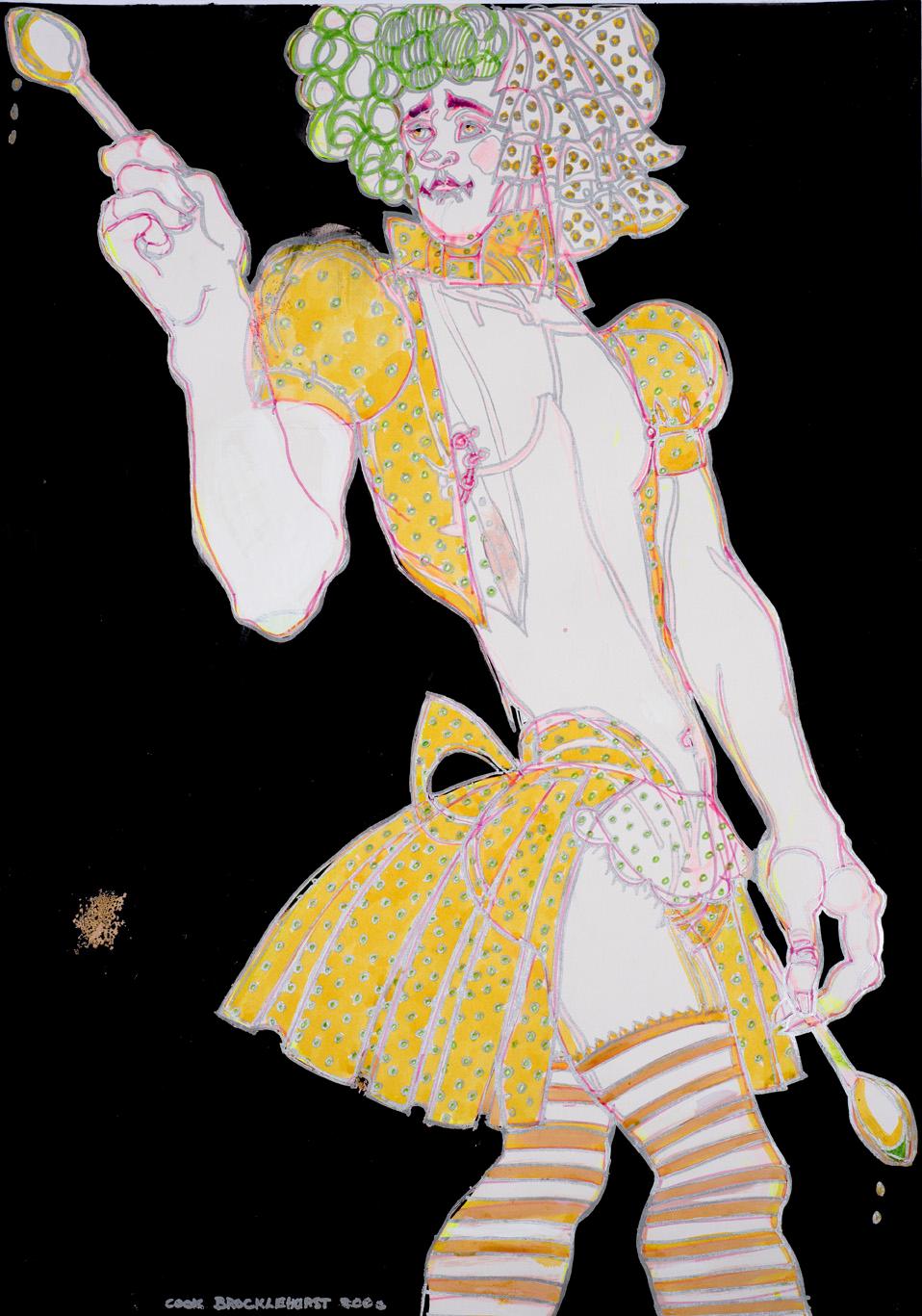
Jo Brocklehurst, Cook (from Brocklehurst Through the Looking-Glass), 2003
Jo (Josephine) Brocklehurst (1935 - 2006) studied at Central Saint Martins and began her career as a fashion illustrator. She later focused on portraiture, drawing directly from models at her studio in West Hampstead and in nightclubs and theatres in Berlin, London and New York. Her work documents the alternative subcultures of the 1970s, 80s and 90s that went on to shape mainstream fashion and performance scenes. This work is from Brocklehurst Through the Looking-Glass, Brocklehurst’s final series. With an image of herself as a child as the centrepiece, Brocklehurst made hundreds of drawings that re-imagined characters from Lewis Carroll’s Alice novels. Her models were friends and dedicated club-goers who designed and made their own clothes. Works from the series were framed with bright plastic gemstones and hung on every available space at Brocklehurst’s home studio. She used metallic and neon inks that transformed under ultraviolet lights that she switched on for her guests in the evenings.