Conflict
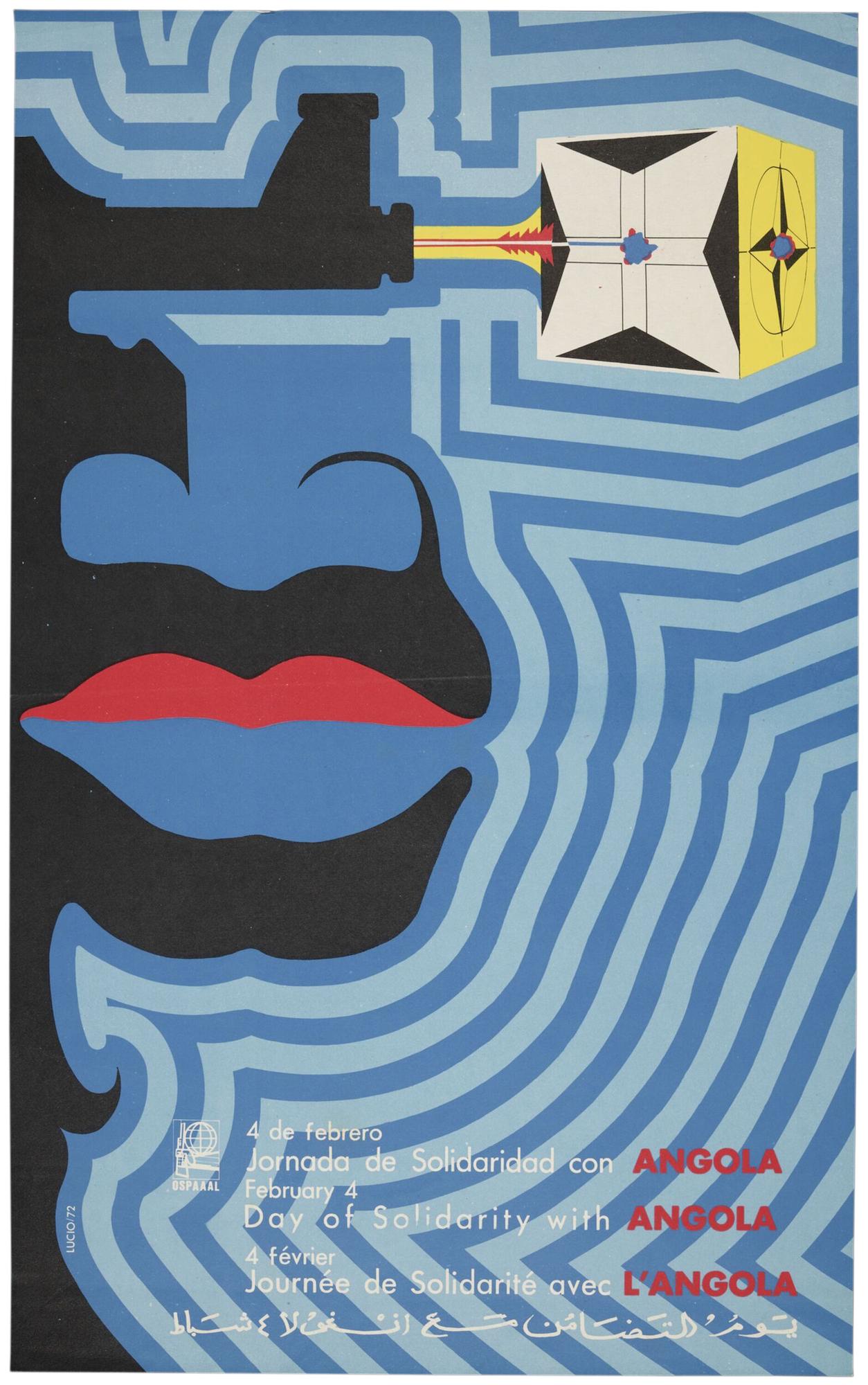
February 4 - Day of Solidarity with ANGOLA, 1972
Between the 1960s and 1990s, more than fifty designers worked at OSPAAAL. Based in Cuba, they made magazines and posters that were sent around the world. Their aim was to promote radical political ideas. Many of their posters celebrated socialist revolutions and liberation movements from the Global South. This poster commemorates the beginning of the Angolan War of Independence on 4 February 1961.
Content warning: weaponry
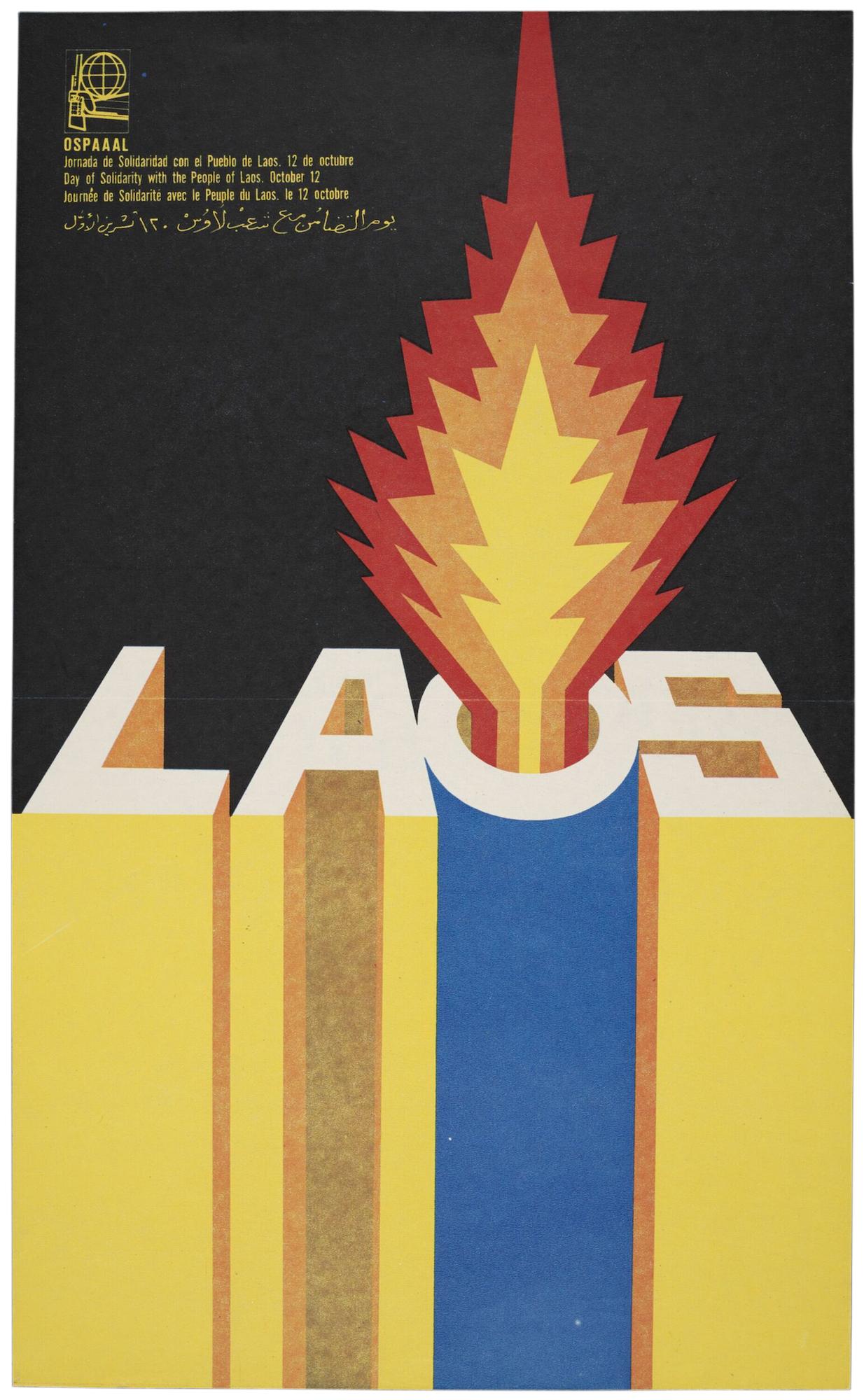
Day of Soldarity With The People Of Laos - October 12, 1970
Between the 1960s and 1990s, more than fifty designers worked at OSPAAAL. Based in Cuba, they made magazines and posters that were sent around the world. Their aim was to promote radical political ideas. Many of their posters celebrate socialist revolutions and liberation movements from the Global South. This design encouraged solidarity with Laotian people on the same date as the founding of the nationalist movement Lao Issara (‘Free Laos’) on 12 October 1945.
Content warning: weaponry
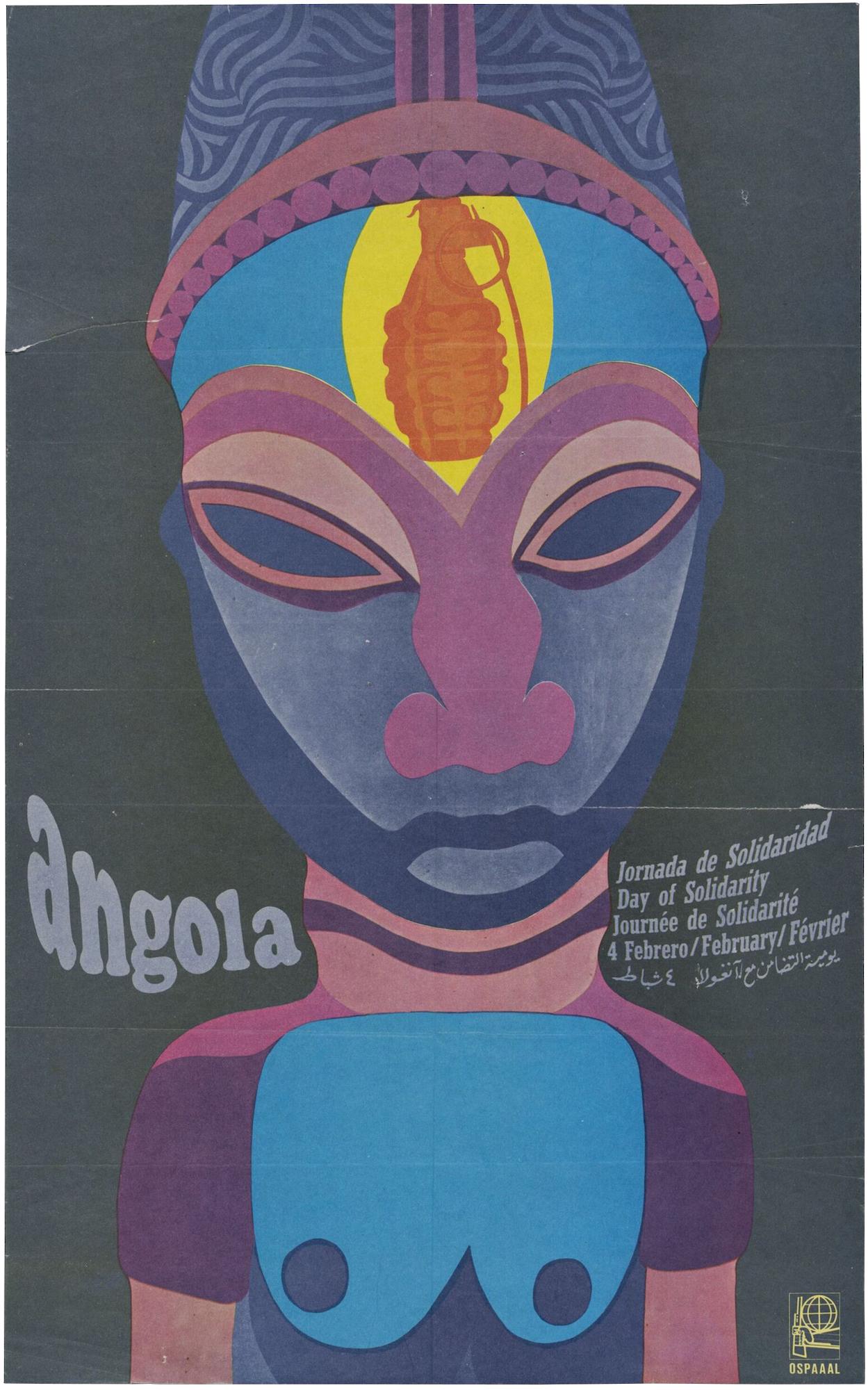
angola - Day of Solidarity - 4 February, 1969
Between the 1960s and 1990s, more than fifty designers worked at OSPAAAL. Based in Cuba, they made magazines and posters that were sent around the world. Their aim was to promote radical political ideas. Many of their posters celebrate socialist revolutions and liberation movements from the Global South. This poster commemorates the beginning of the Angolan War of Independence on 4 February 1961.
Content warning: weaponry

Untitled, 1969
Between the 1960s and 1990s, more than fifty designers worked at OSPAAAL (the Organisation of Solidarity with the People of Africa, Asia and Latin America). Based in Cuba, they made magazines and posters that were sent around the world. Their aim was to promote radical political ideas. Many of their posters celebrate socialist revolutions and liberation movements from the Global South. Alfredo Rostgaard’s poster depicts Jesus Christ carrying a rifle on his back. On the reverse of the poster is a quote from Camilo Torres, a Roman Catholic priest and guerrilla who fought with the revolutionary Colombian National Liberation Army. Torres combined his religious faith with Marxist politics and believed that “If Jesus were alive today, he would be a guerrillero”.
Content warning: weaponry
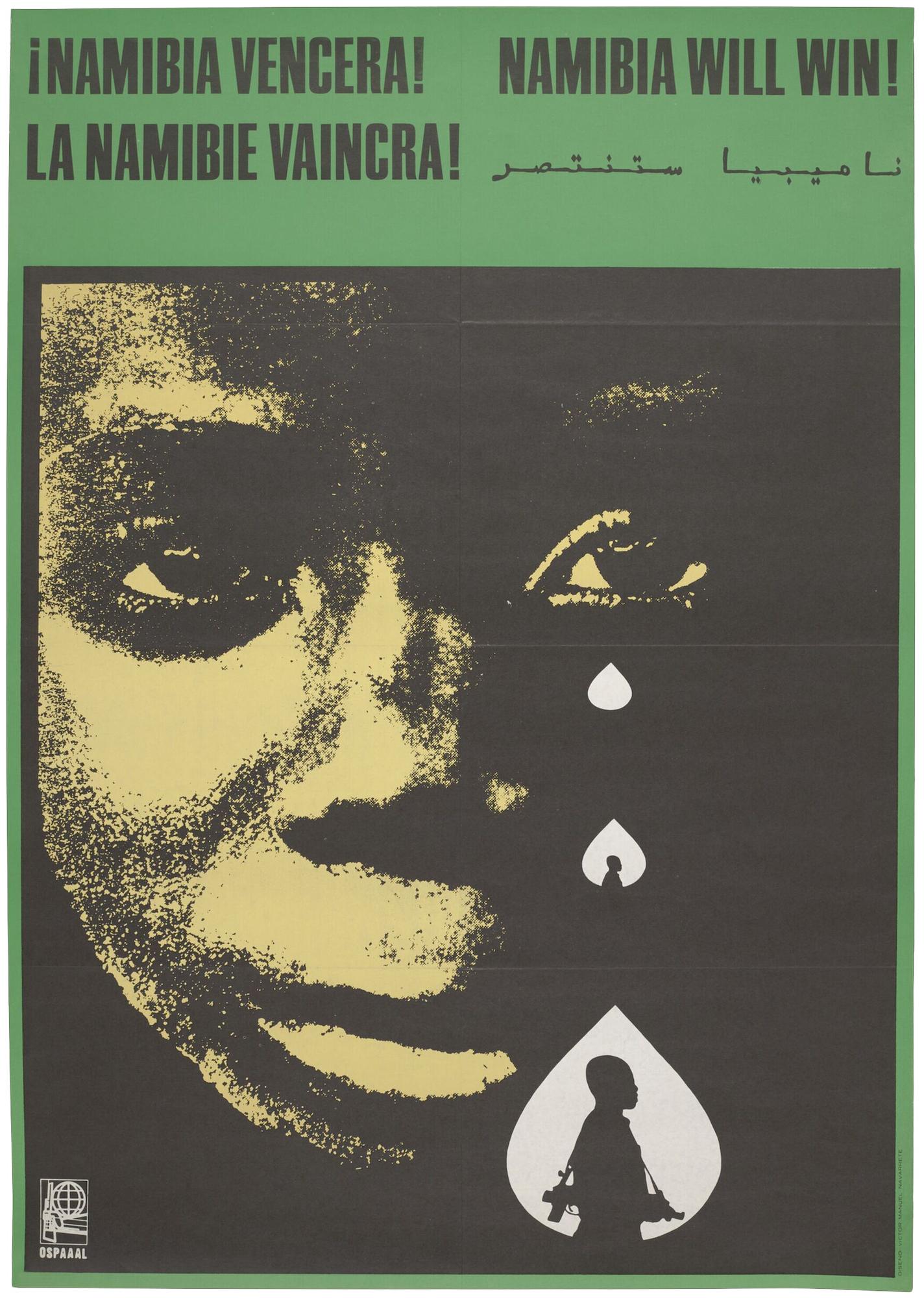
NAMIBIA WILL WIN!, 1977
Between the 1960s and 1990s, more than fifty designers worked at OSPAAAL (the Organisation of Solidarity with the People of Africa, Asia and Latin America). Based in Cuba, they made magazines and posters that were sent around the world. Their aim was to promote radical political ideas. Many of their posters celebrate socialist revolutions and liberation movements from the Global South. This poster was made in support of Namibia’s movement for independence from South African rule. OSPAAAL’s designers regularly used adapted photographs from the organisation’s news desk. Photographs were sometimes used out of context, with the same photographs appearing in posters and magazine illustrations to represent different themes. The identity of the child in this poster is not known.
Content warning: weaponry
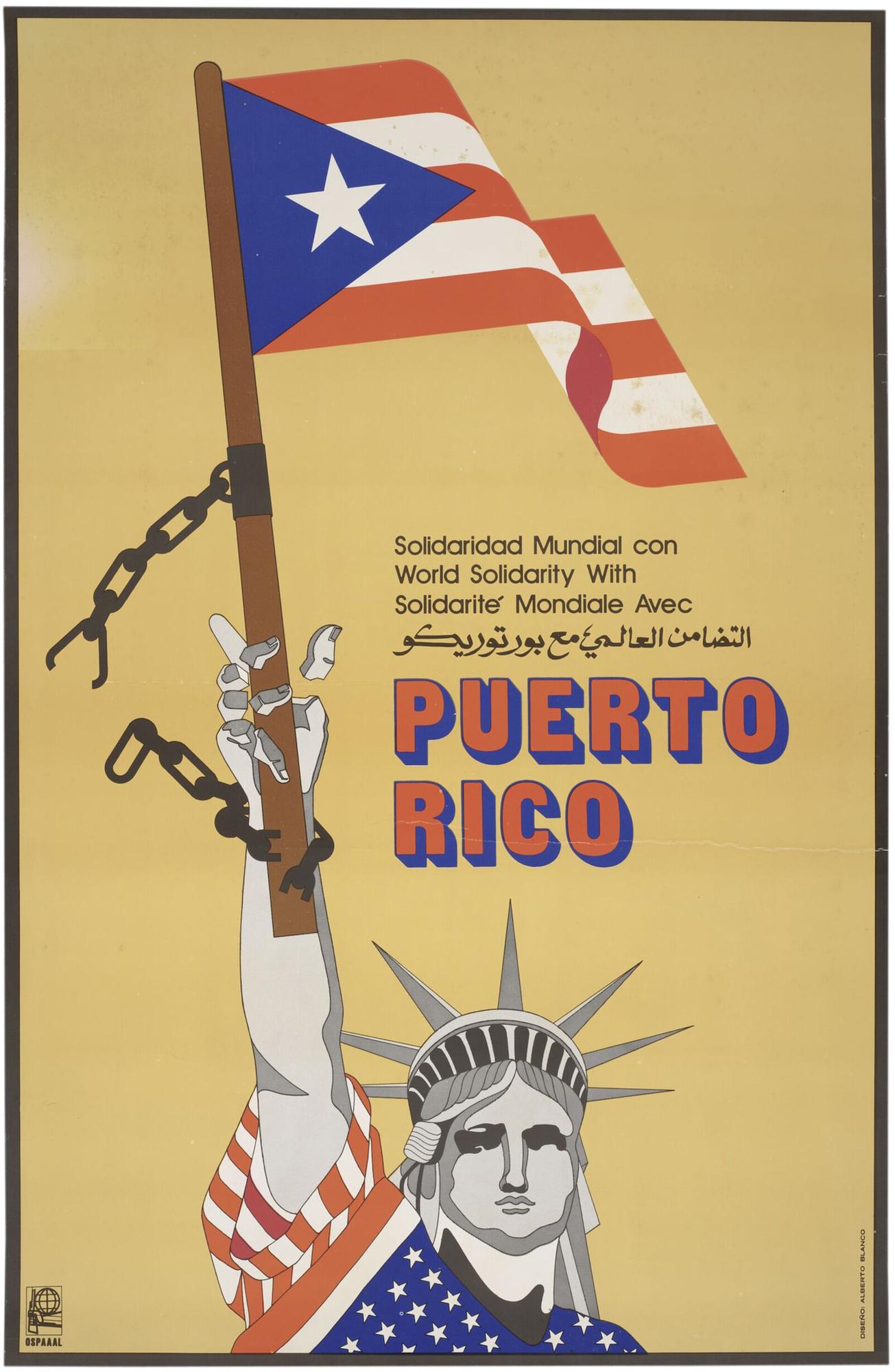
World Solidarity With PUERTO RICO, 1981
Between the 1960s and 1990s, more than fifty designers worked at OSPAAAL (the Organisation of Solidarity with the People of Africa, Asia and Latin America). Based in Cuba, they made magazines and posters that were sent around the world. Their aim was to promote radical political ideas. Many of their posters celebrate socialist revolutions and liberation movements from the Global South. They also criticised the foreign policy of the U.S.A., often using US icons as part of visual metaphors. This poster advocates for Puerto Rican independence from the U.S.A. The Statue of Liberty represents the U.S.A. Its crumbling hand releases the Puerto Rican flag.
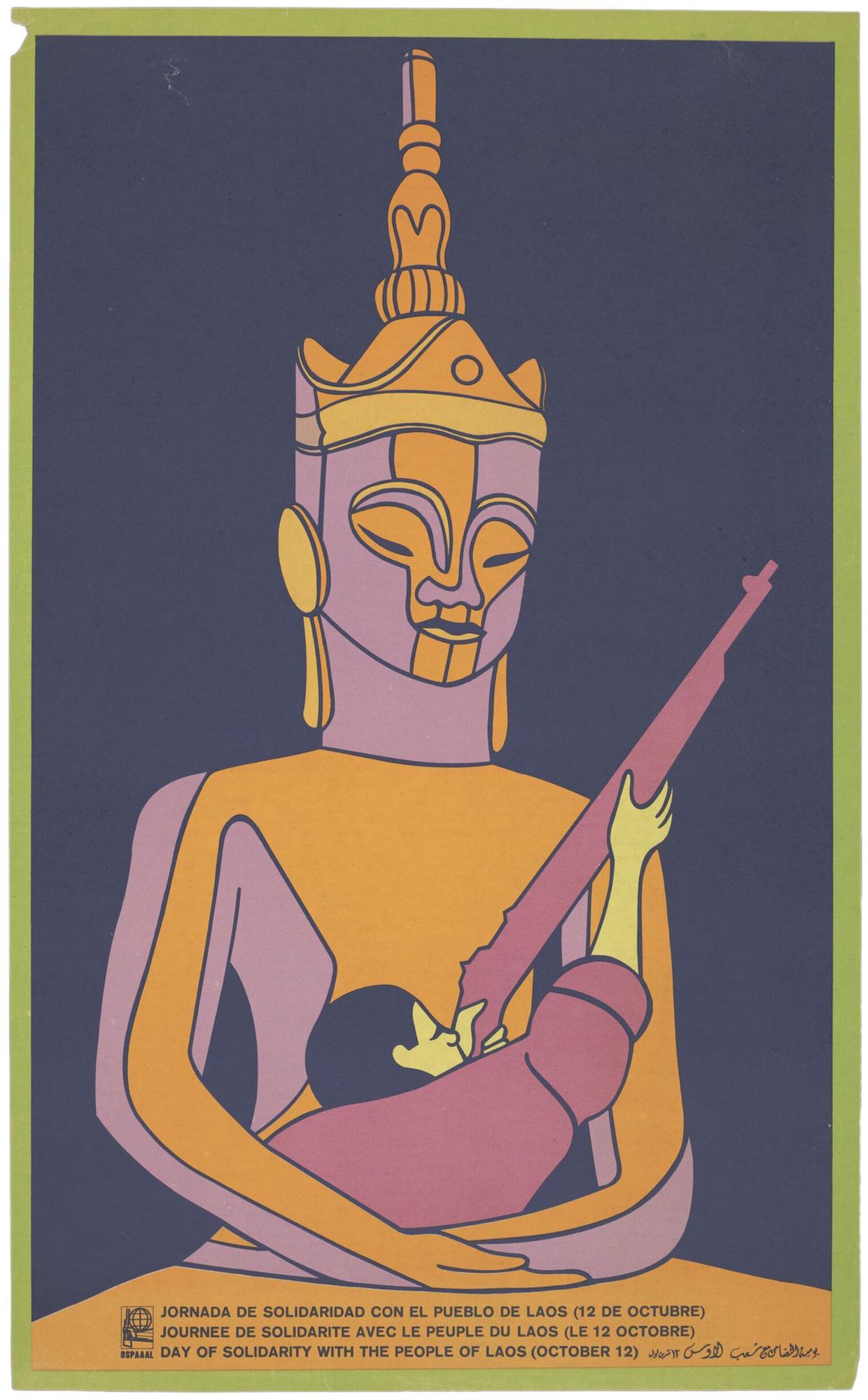
DAY OF SOLIDARITY WITH THE PEOPLE OF LAOS (OCTOBER 12), 1969
Between the 1960s and 1990s, more than fifty designers worked at OSPAAAL. Based in Cuba, they made magazines and posters that were sent around the world. Their aim was to promote radical political ideas. Many of their posters celebrate socialist revolutions and liberation movements from the Global South. This design encouraged solidarity with Laotian people on the same date as the founding of the nationalist movement Lao Issara (‘Free Laos’) on 12 October 1945.
Content warning: weaponry and religious iconography
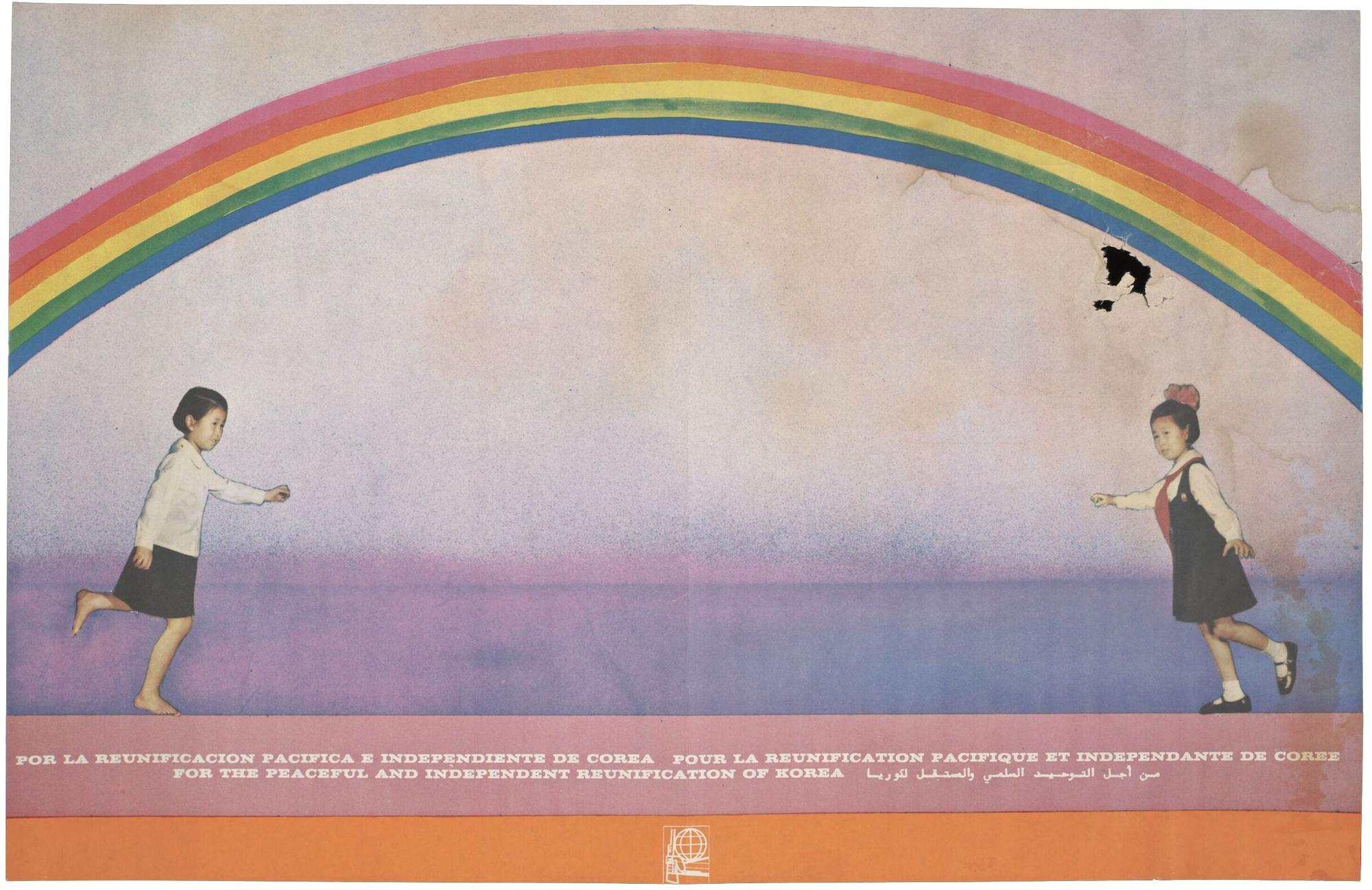
FOR THE PEACEFUL AND INDEPENDENT REUNIFICATION OF KOREA, 1969
Between the 1960s and 1990s, more than fifty designers worked at OSPAAAL (the Organisation of Solidarity with the People of Africa, Asia and Latin America). Based in Cuba, they made magazines and posters that were sent around the world. Their aim was to promote radical political ideas. Many of their posters celebrate socialist revolutions and liberation movements from the Global South. This poster advocates for the reunification of the Republic of Korea (known as South Korea), represented by the child on the left, and the Democratic People’s Republic of Korea (known as North Korea) represented by the child on the right. During the 1960s, the governments of Cuba and the Democratic People’s Republic of Korea formed close ties based on a shared opposition to the U.S.A. OSPAAAL’s designers regularly used adapted photographs from the organisation’s news desk. Photographs were sometimes used out of context, with the same photographs appearing in posters and magazine illustrations to represent different themes. The identity of the children in this photograph is not known.
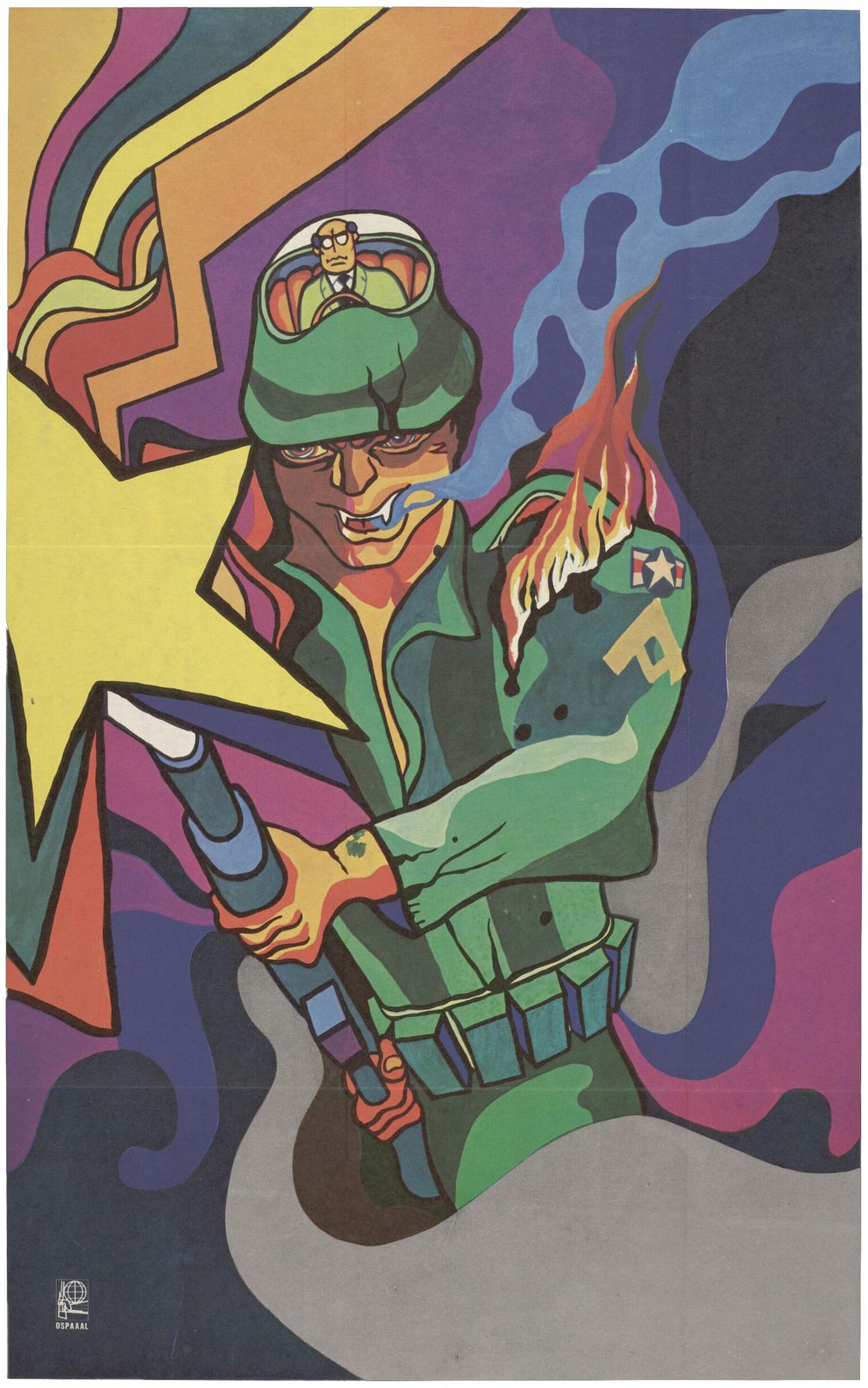
Untitled, 1969
Between the 1960s and 1990s, more than fifty designers worked at OSPAAAL. Based in Cuba, they made magazines and posters that were sent around the world. Their aim was to promote radical political ideas. Many of their posters celebrate socialist revolutions and liberation movements from the Global South. Alfredo Rostgaard was OSPAAAL’s creative director from 1966 to 1976. His began his career as a caricaturist for socialist children’s comic Mella. Rostgaard’s vampire-like US Air Force soldier is being driven like a machine. His design was used by OSPAAAL to criticise US military action.
Content warning: weaponry
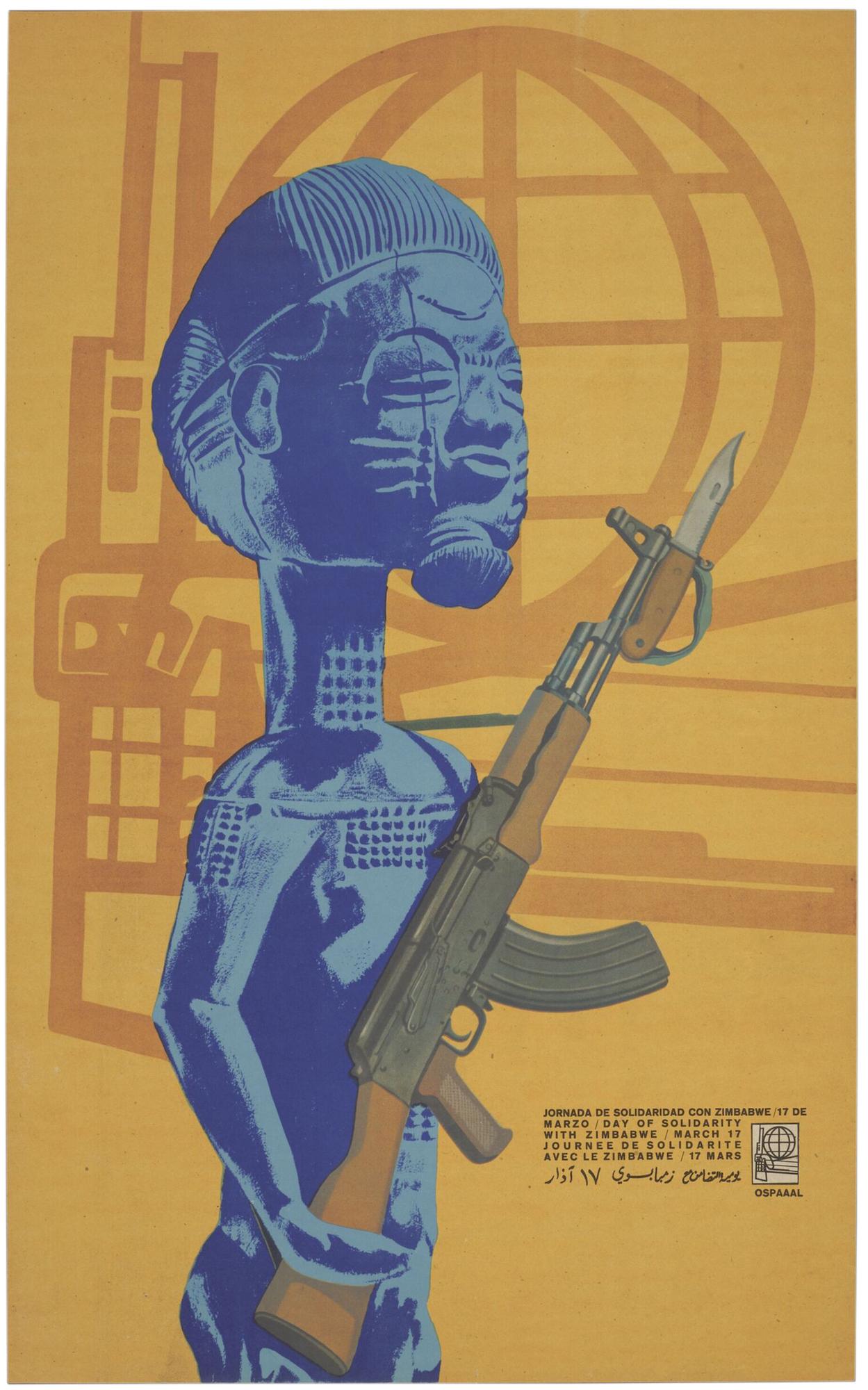
DAY OF SOLIDARITY WITH ZIMBABWE - MARCH 17, 1969
Between the 1960s and 1990s, more than fifty designers worked at OSPAAAL. Based in Cuba, they made magazines and posters that were sent around the world. Their aim was to promote radical political ideas. Many of their posters celebrate socialist revolutions and liberation movements from the Global South. Many OSPAAAL designers combined images of Indigenous art and craft with weaponry. Their aim was to argue for the right to self-determination and support liberation movements opposing colonial and imperial powers. However, the designers did not always know the meaning or origin of the iconography they used.
Content warning: weaponry