Book design
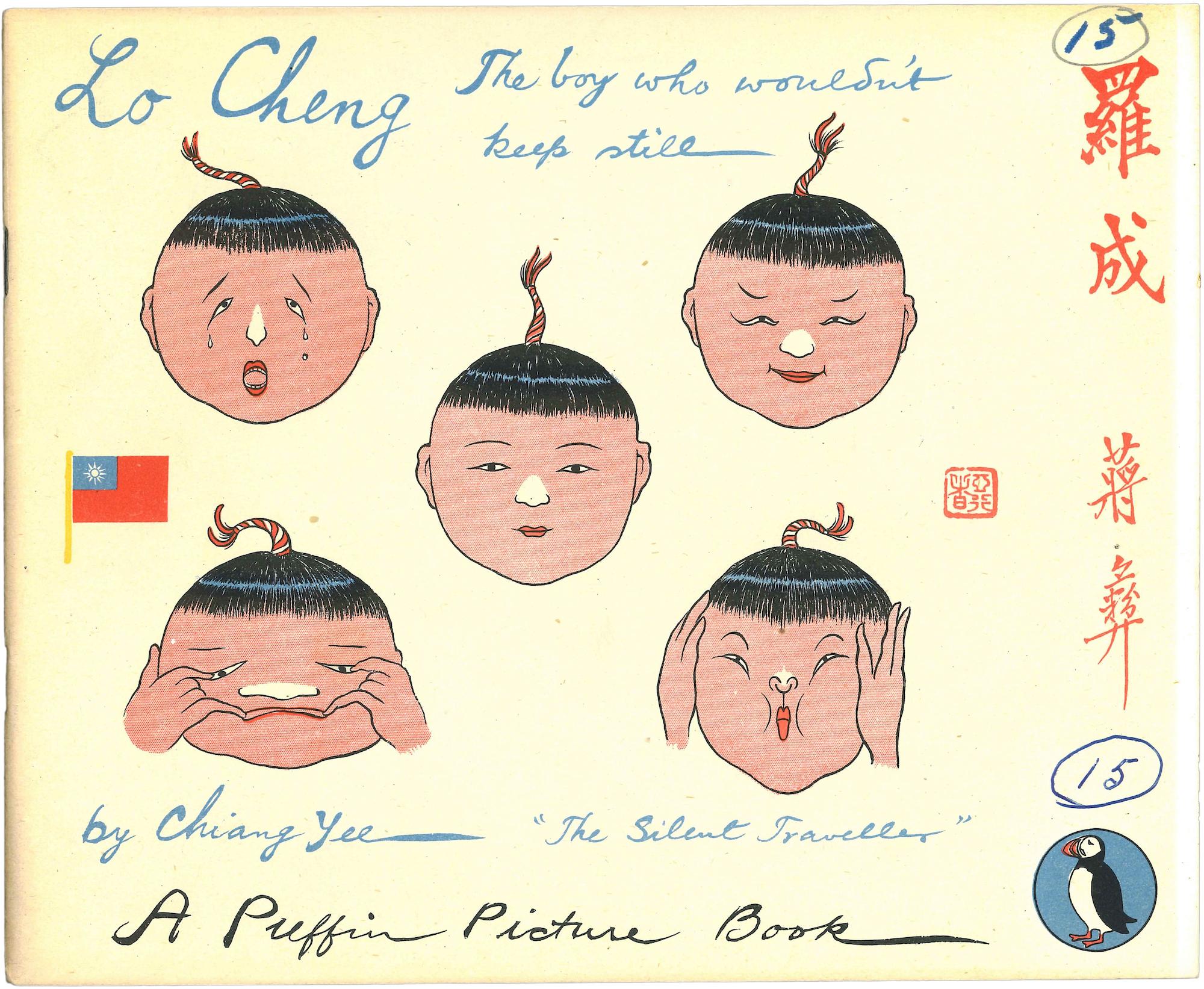
Lo Cheng, The boy who wouldn’t keep still, 1942
The Puffin Picture Books series was established by designer and editor Noel Carrington (1895-1989). In 1933, artist Pearl Binder (1904-1990) sent Carrington a package of Soviet children’s books. “They were produced by the million on very cheap paper, but the drawings were vigorous and the colour delightful” he later remembered. These books inspired Carrington to edit a series of affordable books that would encourage “the child’s awakening interest in its surroundings... I felt that colour was essential, and that artists could... be more successful in books of this nature than the camera”. Many artists and illustrators worked on the series, adapting their ways of working to lithographic printing and the Puffin Picture Book format. Most of the 120 books in the series were printed on one large sheet of paper: one side in colour and one in black-and-white. Each sheet was cut, folded and stapled to create a softcover book.
![Teremok [The cabin]](https://cdn.sanity.io/images/n83t80i6/production/f9ec00295d1de824a94cc9766b91be8edf5b57ff-1624x2000.jpg?auto=format&fit=max&q=75&w=1624)
Evgenii Charushin , Teremok [The cabin], 1931
Evgenii Charushin (1901-1965) was an illustrator and author, known for his children’s books on nature and animals. He said, “More than anything else, I love to depict young animals, touching in their helplessness and interesting, because within them one can already see signs of the full-grown beast.” This book is a cumulative story about a hole in an oak tree that is inhabited by a series of different animals as it gets bigger. It was published in Leningrad (Saint Petersburg), Russia at a time when children’s books became a mass media phenomenon. Over a ten-year period, almost 10,000 titles were published in several editions of up to 200,000. Many of these books took experimental approaches to storytelling, design and layout.
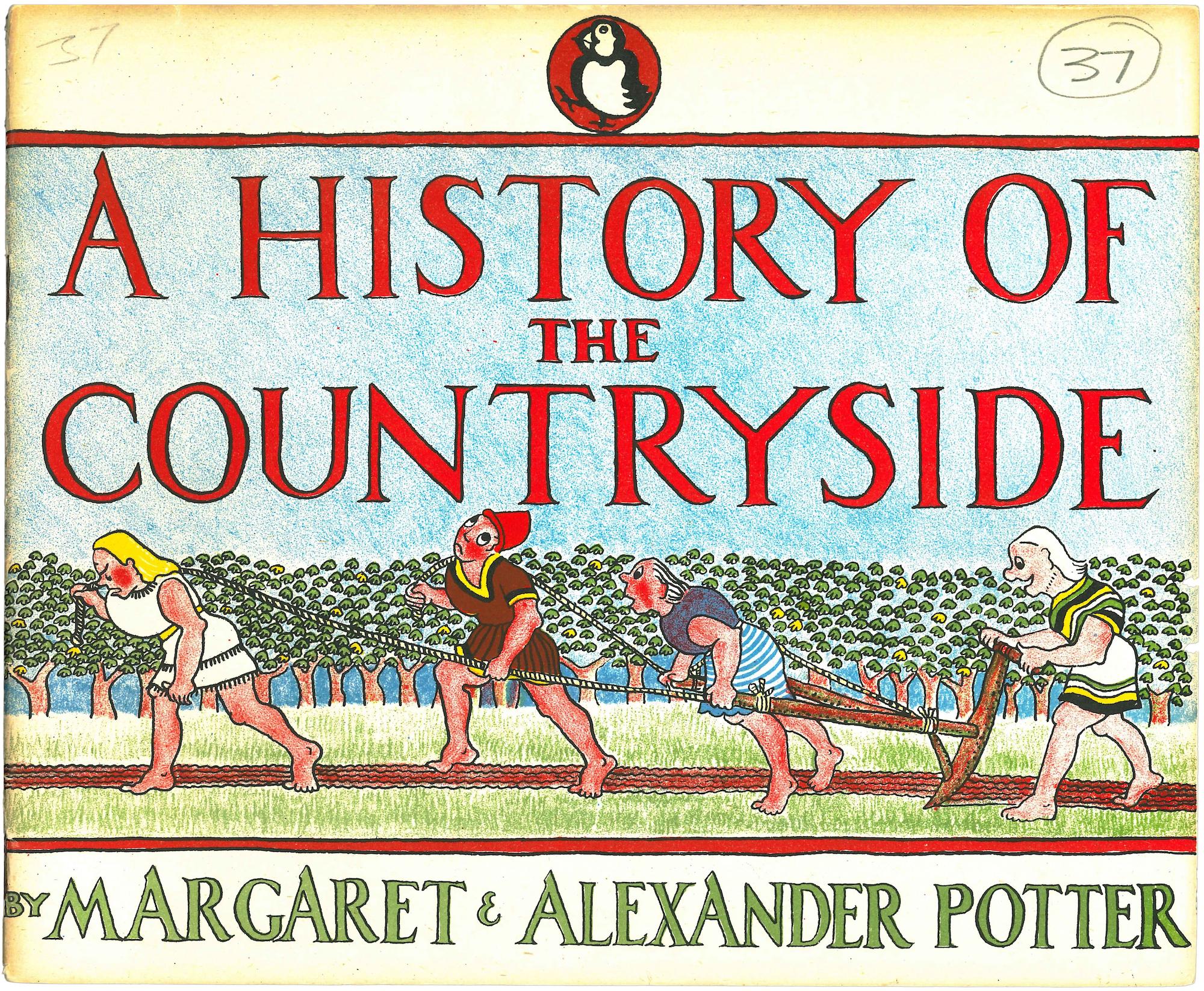
A History of the Countryside, 1944
The Puffin Picture Books series was established by designer and editor Noel Carrington (1895-1989). In 1933, artist Pearl Binder (1904-1990) sent Carrington a package of Soviet children’s books. “They were produced by the million on very cheap paper, but the drawings were vigorous and the colour delightful” he later remembered. These books inspired Carrington to edit a series of affordable books that would encourage “the child’s awakening interest in its surroundings... I felt that colour was essential, and that artists could... be more successful in books of this nature than the camera”. Many artists and illustrators worked on the series, adapting their ways of working to lithographic printing and the Puffin Picture Book format. Most of the 120 books in the series were printed on one large sheet of paper: one side in colour and one in black-and-white. Each sheet was cut, folded and stapled to create a softcover book.
![Raznye Zveri [Different Beasts]](https://cdn.sanity.io/images/n83t80i6/production/4842f601d9ba1427cd6013f75b3d855946b271f9-1795x2381.jpg?auto=format&fit=max&q=75&w=1795)
Evgenii Charushin , Raznye Zveri [Different Beasts], 1931
Evgenii Charushin (1901-1965) was an illustrator and author, known for his children’s books on nature and animals. He said, “More than anything else, I love to depict young animals, touching in their helplessness and interesting, because within them one can already see signs of the full-grown beast.” This book shows a series of animals found in Russia. It was published in Leningrad (Saint Petersburg) at a time when children’s books became a mass media phenomenon. Over a ten-year period, almost 10,000 titles were published in several editions of up to 200,000. Many of these books took experimental approaches to storytelling, design and layout.
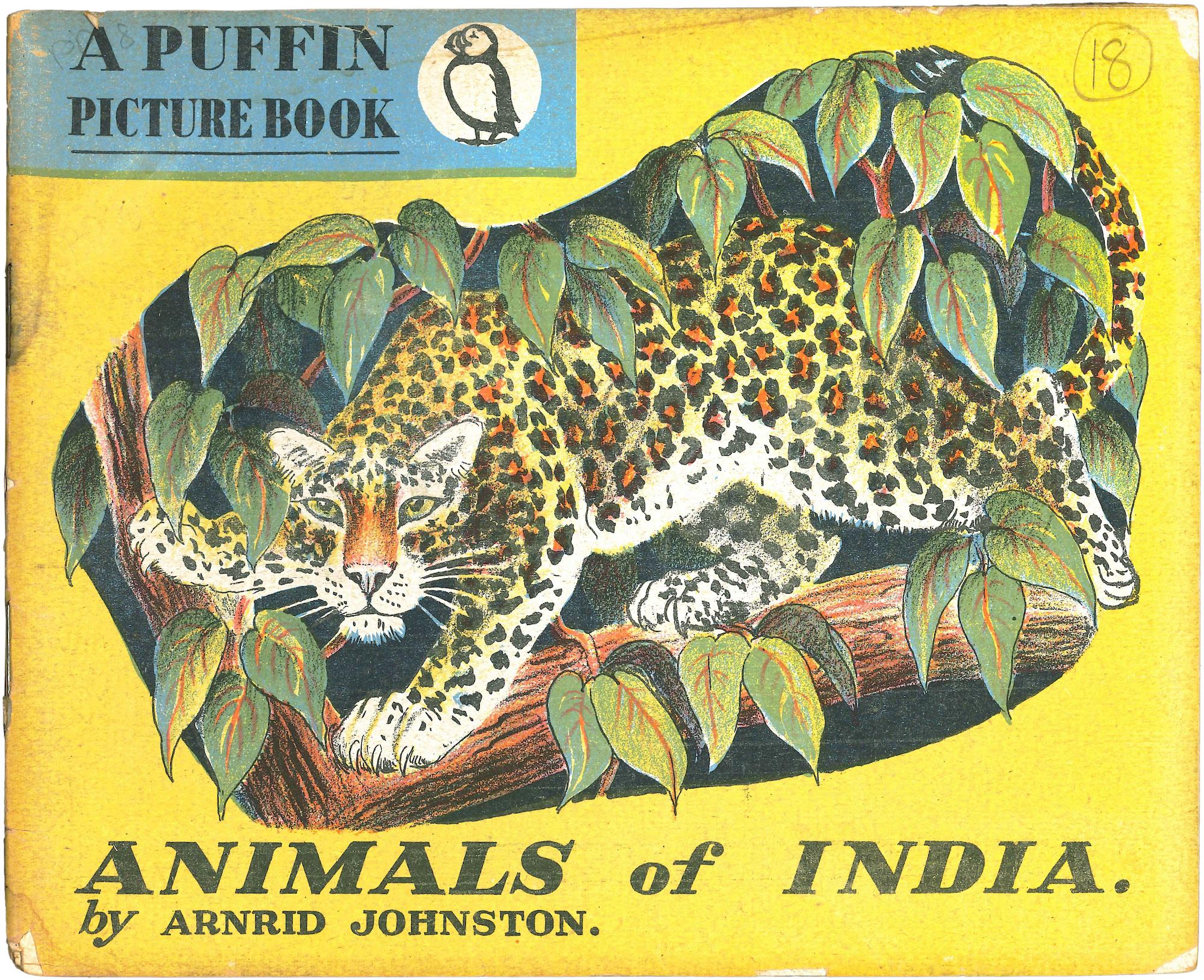
Animals of India, 1942
The Puffin Picture Books series was established by designer and editor Noel Carrington (1895-1989). In 1933, artist Pearl Binder (1904-1990) sent Carrington a package of Soviet children’s books. “They were produced by the million on very cheap paper, but the drawings were vigorous and the colour delightful” he later remembered. These books inspired Carrington to edit a series of affordable books that would encourage “the child’s awakening interest in its surroundings... I felt that colour was essential, and that artists could... be more successful in books of this nature than the camera”. Many artists and illustrators worked on the series, adapting their ways of working to lithographic printing and the Puffin Picture Book format. Most of the 120 books in the series were printed on one large sheet of paper: one side in colour and one in black-and-white. Each sheet was cut, folded and stapled to create a softcover book.
![Snezhnaia kniga [The Snow Book]](https://cdn.sanity.io/images/n83t80i6/production/ac7aa5362234ac30d32360d4ee86c8ab5be0d685-2000x2732.jpg?auto=format&fit=max&q=75&w=2000)
Nikolai Tyrsa, Snezhnaia kniga [The Snow Book], 1926
Nikolai Tyrsa (1887-1942) was an illustrator and designer. This book follows a hare evading a fox, only to be caught by an owl. It was published in Leningrad (Saint Petersburg), Russia at a time when children’s books became a mass media phenomenon. Over a ten-year period, almost 10,000 titles were published in several editions of up to 200,000. Many of these books took experimental approaches to storytelling, design and layout.
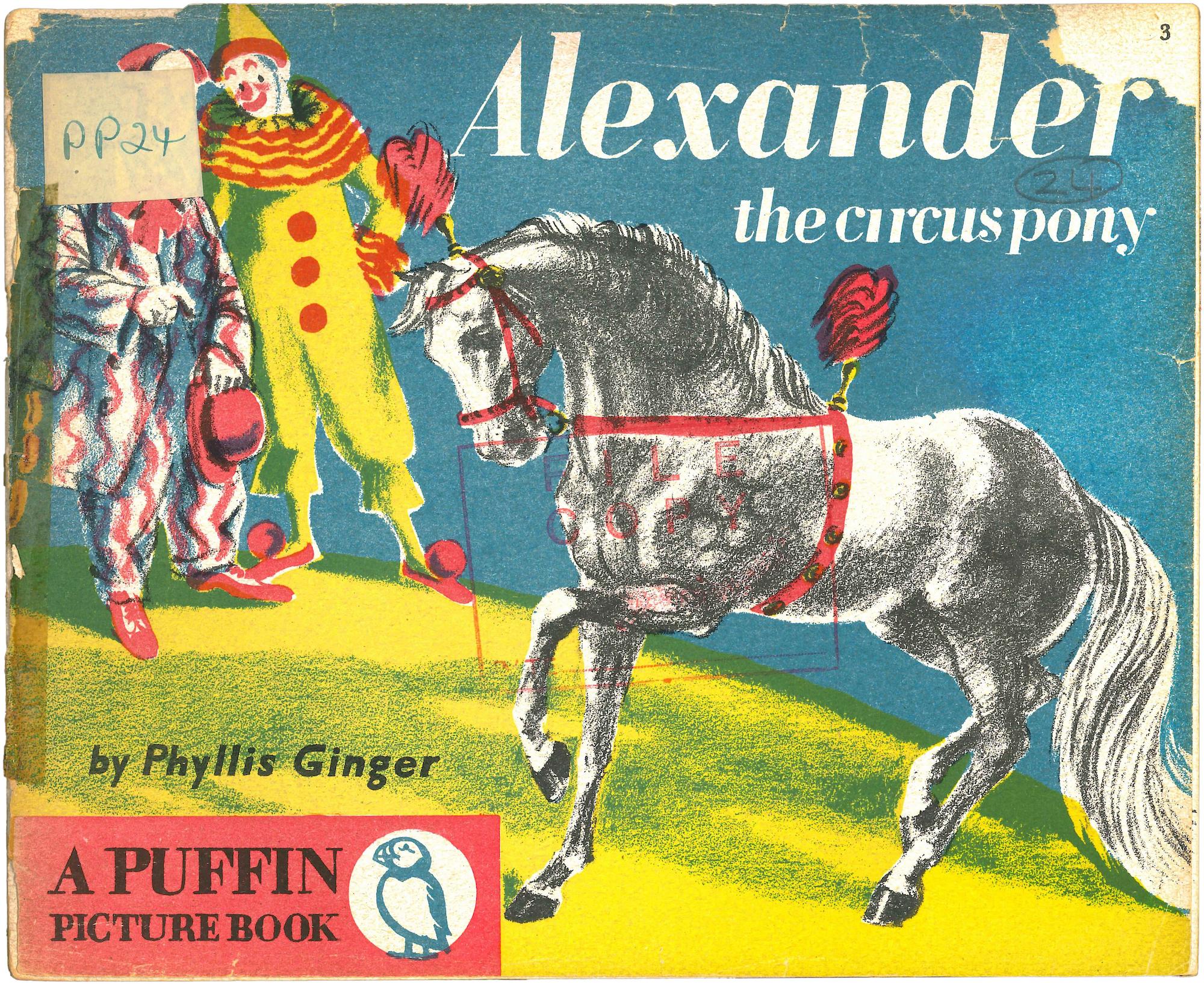
Alexander the circus pony, 1943
The Puffin Picture Books series was established by designer and editor Noel Carrington (1895-1989). In 1933, artist Pearl Binder (1904-1990) sent Carrington a package of Soviet children’s books. “They were produced by the million on very cheap paper, but the drawings were vigorous and the colour delightful” he later remembered. These books inspired Carrington to edit a series of affordable books that would encourage “the child’s awakening interest in its surroundings... I felt that colour was essential, and that artists could... be more successful in books of this nature than the camera”. Many artists and illustrators worked on the series, adapting their ways of working to lithographic printing and the Puffin Picture Book format. Most of the 120 books in the series were printed on one large sheet of paper: one side in colour and one in black-and-white. Each sheet was cut, folded and stapled to create a softcover book.
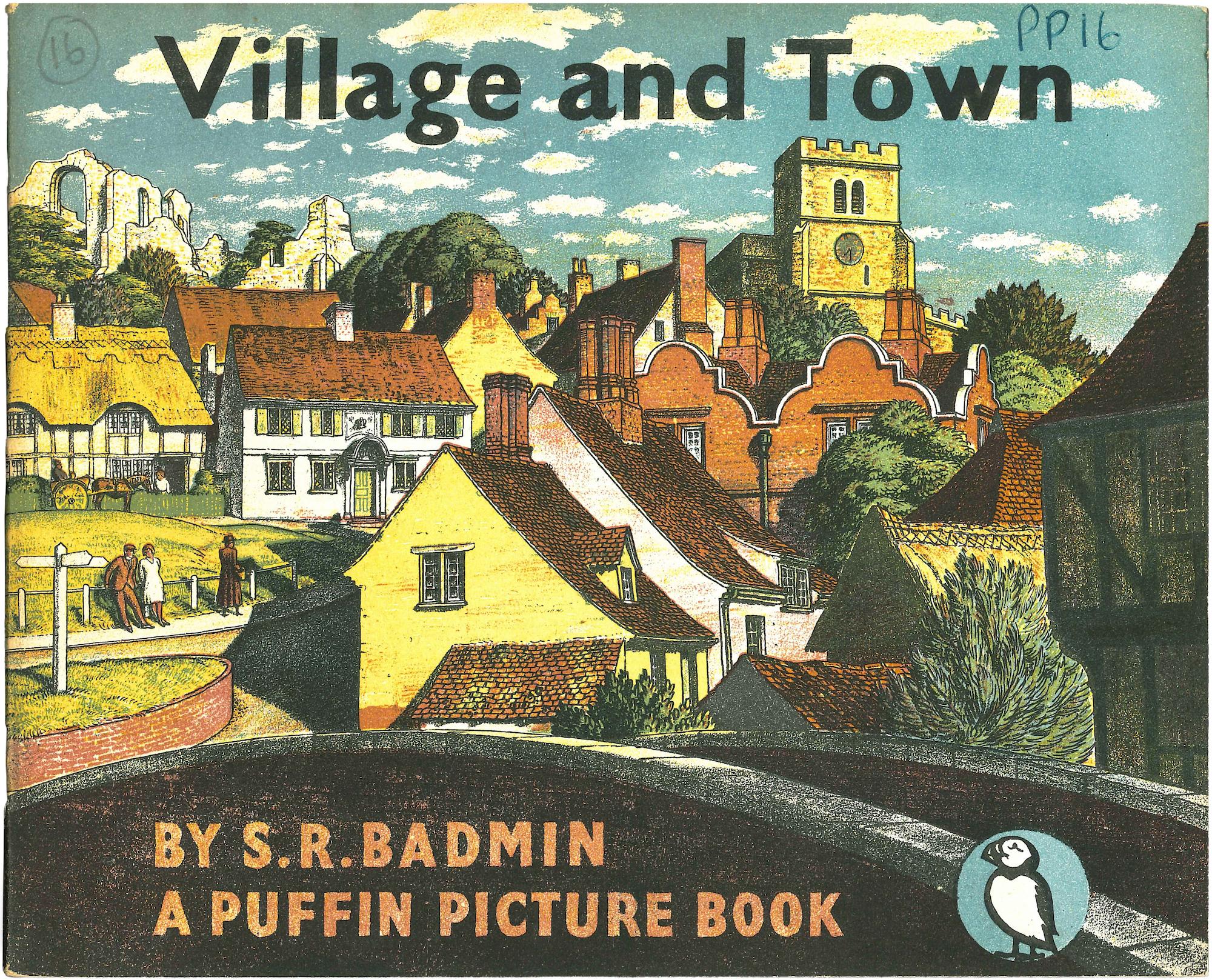
Village and Town, 1942
The Puffin Picture Books series was established by designer and editor Noel Carrington (1895-1989). In 1933, artist Pearl Binder (1904-1990) sent Carrington a package of Soviet children’s books. “They were produced by the million on very cheap paper, but the drawings were vigorous and the colour delightful” he later remembered. These books inspired Carrington to edit a series of affordable books that would encourage “the child’s awakening interest in its surroundings... I felt that colour was essential, and that artists could... be more successful in books of this nature than the camera”. Many artists and illustrators worked on the series, adapting their ways of working to lithographic printing and the Puffin Picture Book format. Most of the 120 books in the series were printed on one large sheet of paper: one side in colour and one in black-and-white. Each sheet was cut, folded and stapled to create a softcover book.
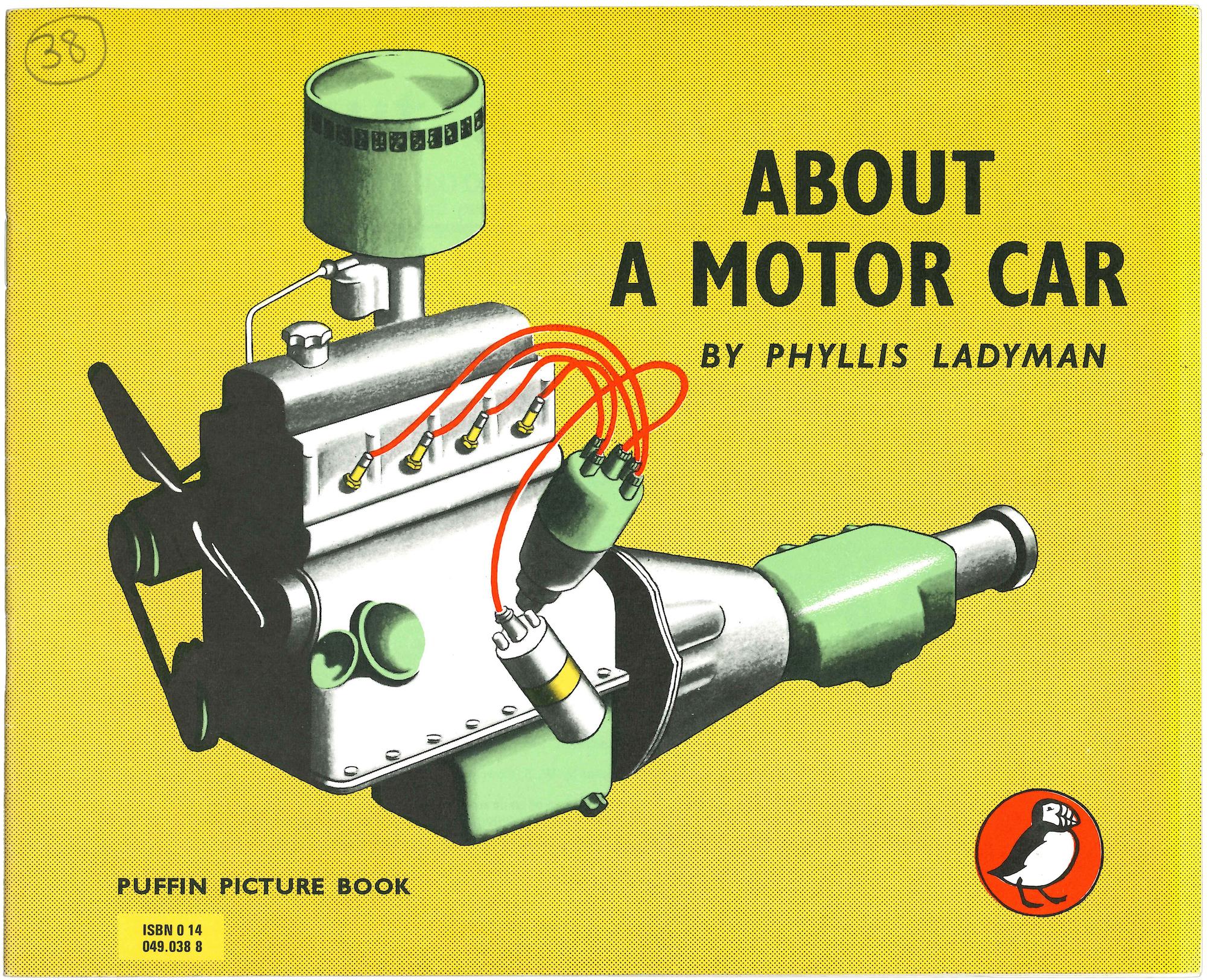
About a Motor Car, 1946
The Puffin Picture Books series was established by designer and editor Noel Carrington (1895-1989). In 1933, artist Pearl Binder (1904-1990) sent Carrington a package of Soviet children’s books. “They were produced by the million on very cheap paper, but the drawings were vigorous and the colour delightful” he later remembered. These books inspired Carrington to edit a series of affordable books that would encourage “the child’s awakening interest in its surroundings... I felt that colour was essential, and that artists could... be more successful in books of this nature than the camera”. Many artists and illustrators worked on the series, adapting their ways of working to lithographic printing and the Puffin Picture Book format. Most of the 120 books in the series were printed on one large sheet of paper: one side in colour and one in black-and-white. Each sheet was cut, folded and stapled to create a softcover book.
![Dve sobaki [Two Dogs]](https://cdn.sanity.io/images/n83t80i6/production/4360e5391cd88c1f1dd88bc65b8c1072128540f4-1474x2000.jpg?auto=format&fit=max&q=75&w=1474)
Vera Ermolaeva, Dve sobaki [Two Dogs], 1930
Vera Ermolaeva (1893-1937) was an illustrator and painter. In 1918 she founded Segodnia [Today] collective in Petrograd; the first Soviet children’s book publisher. She illustrated children’s books throughout the 1920s and 30s for Detgiz, The State Children’s Publishing House in Russia. This book is one of a series of 12 fables by Ivan Krylov illustrated by Ermolaeva. Two dogs with the same owner discuss their different lives living indoors and out in the yard. It was published in Leningrad (Saint Petersburg), Russia at a time when children’s books became a mass media phenomenon. Over a ten-year period, almost 10,000 titles were published in several editions of up to 200,000. Many of these books took experimental approaches to storytelling, design and layout.
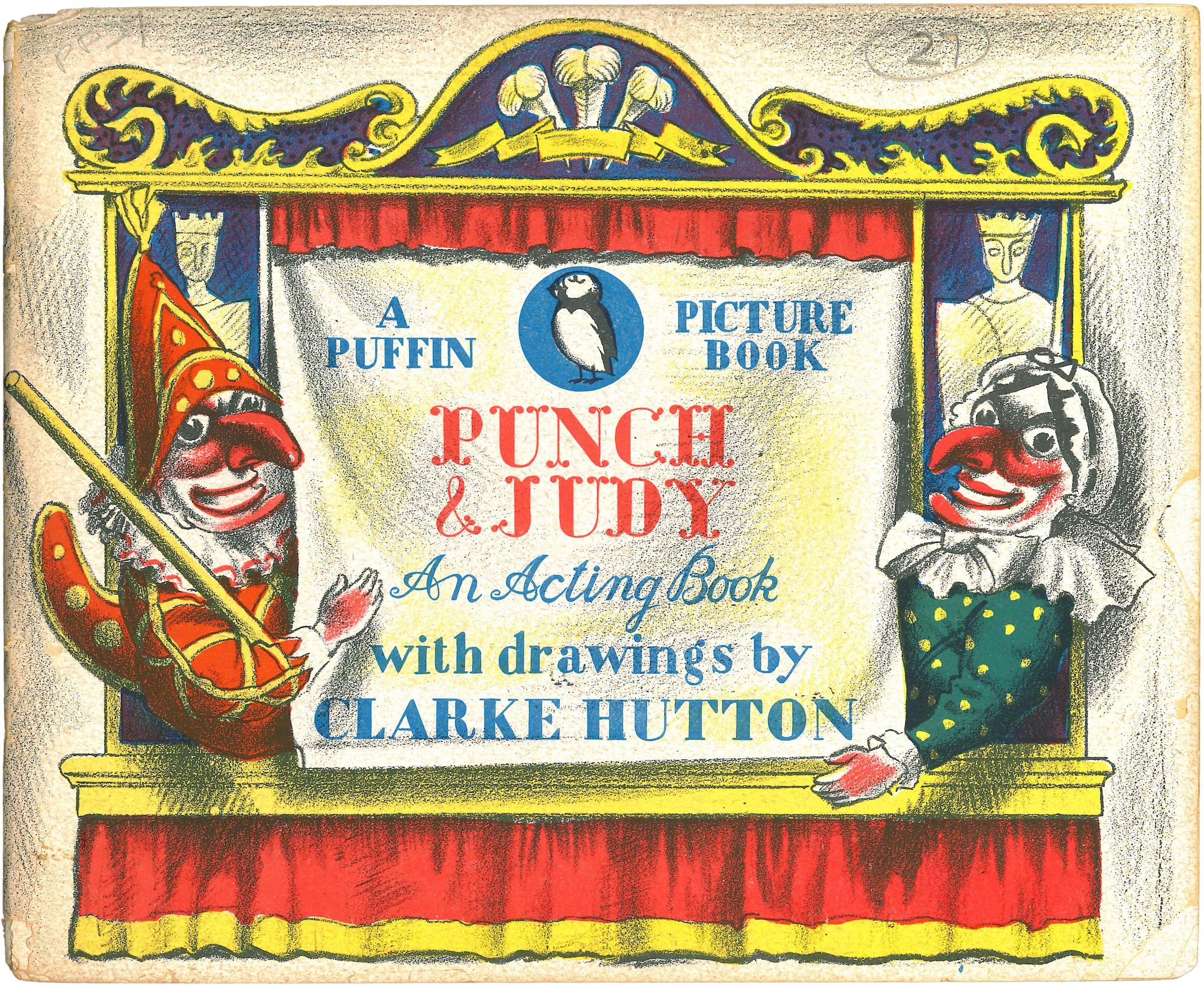
Punch & Judy, 1942
The Puffin Picture Books series was established by designer and editor Noel Carrington (1895-1989). In 1933, artist Pearl Binder (1904-1990) sent Carrington a package of Soviet children’s books. “They were produced by the million on very cheap paper, but the drawings were vigorous and the colour delightful” he later remembered. These books inspired Carrington to edit a series of affordable books that would encourage “the child’s awakening interest in its surroundings... I felt that colour was essential, and that artists could... be more successful in books of this nature than the camera”. Many artists and illustrators worked on the series, adapting their ways of working to lithographic printing and the Puffin Picture Book format. Most of the 120 books in the series were printed on one large sheet of paper: one side in colour and one in black-and-white. Each sheet was cut, folded and stapled to create a softcover book.
![Zagadki [Riddles]](https://cdn.sanity.io/images/n83t80i6/production/32f82c0fdcc37913f780c6ed76a28e7382036e3f-1328x1670.jpg?auto=format&fit=max&q=75&w=1328)
Lev Mordvinov, Zagadki [Riddles], 1929
In this book, a series of riddles about household objects are paired with illustrations of them. It was published in Leningrad (Saint Petersburg), Russia at a time when children’s books became a mass media phenomenon. Over a ten-year period, almost 10,000 titles were published in several editions of up to 200,000. Many of these books took experimental approaches to storytelling, design and layout.
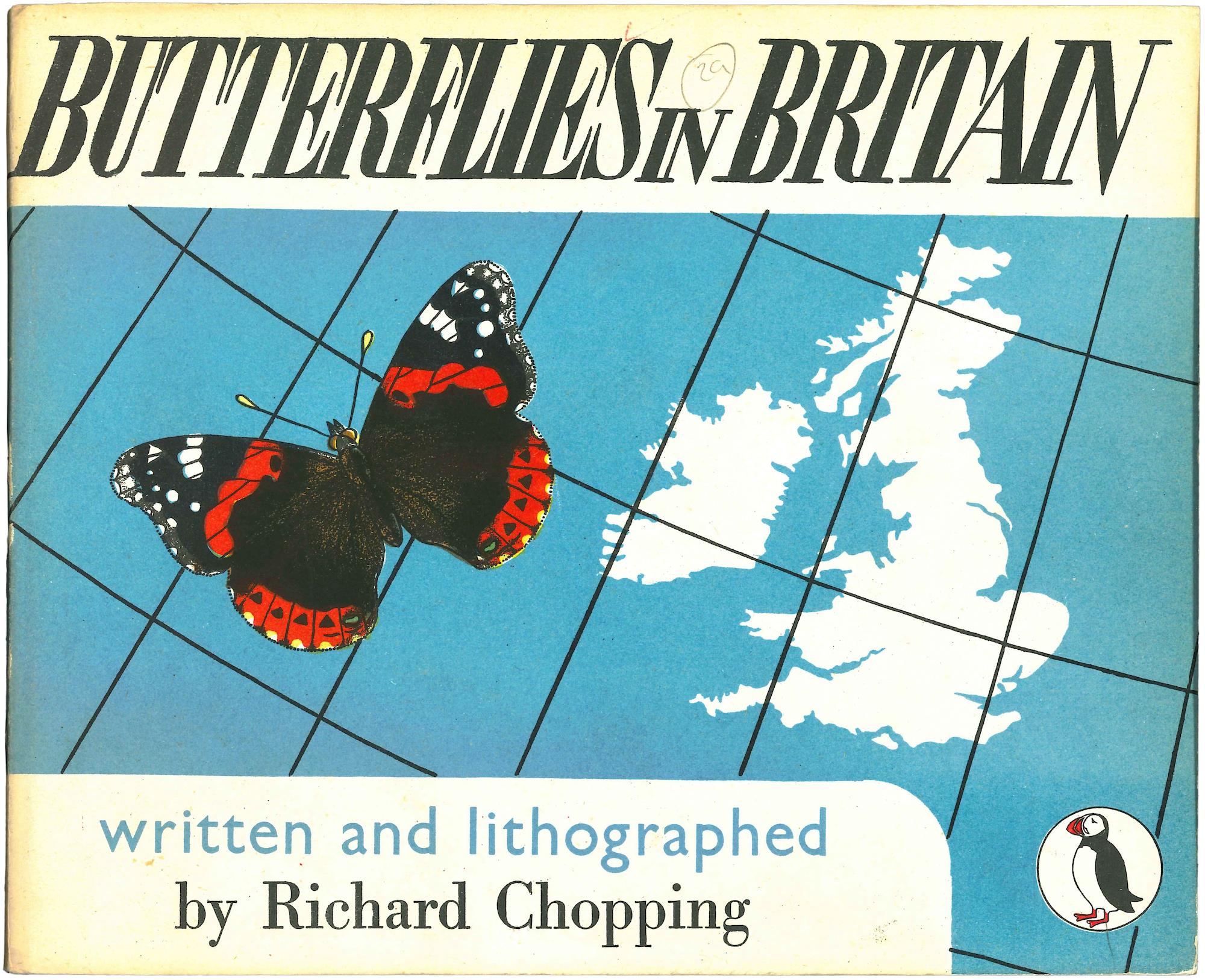
Butterflies in Britain, 1943
The Puffin Picture Books series was established by designer and editor Noel Carrington (1895-1989). In 1933, artist Pearl Binder (1904-1990) sent Carrington a package of Soviet children’s books. “They were produced by the million on very cheap paper, but the drawings were vigorous and the colour delightful” he later remembered. These books inspired Carrington to edit a series of affordable books that would encourage “the child’s awakening interest in its surroundings... I felt that colour was essential, and that artists could... be more successful in books of this nature than the camera”. Many artists and illustrators worked on the series, adapting their ways of working to lithographic printing and the Puffin Picture Book format. Most of the 120 books in the series were printed on one large sheet of paper: one side in colour and one in black-and-white. Each sheet was cut, folded and stapled to create a softcover book.
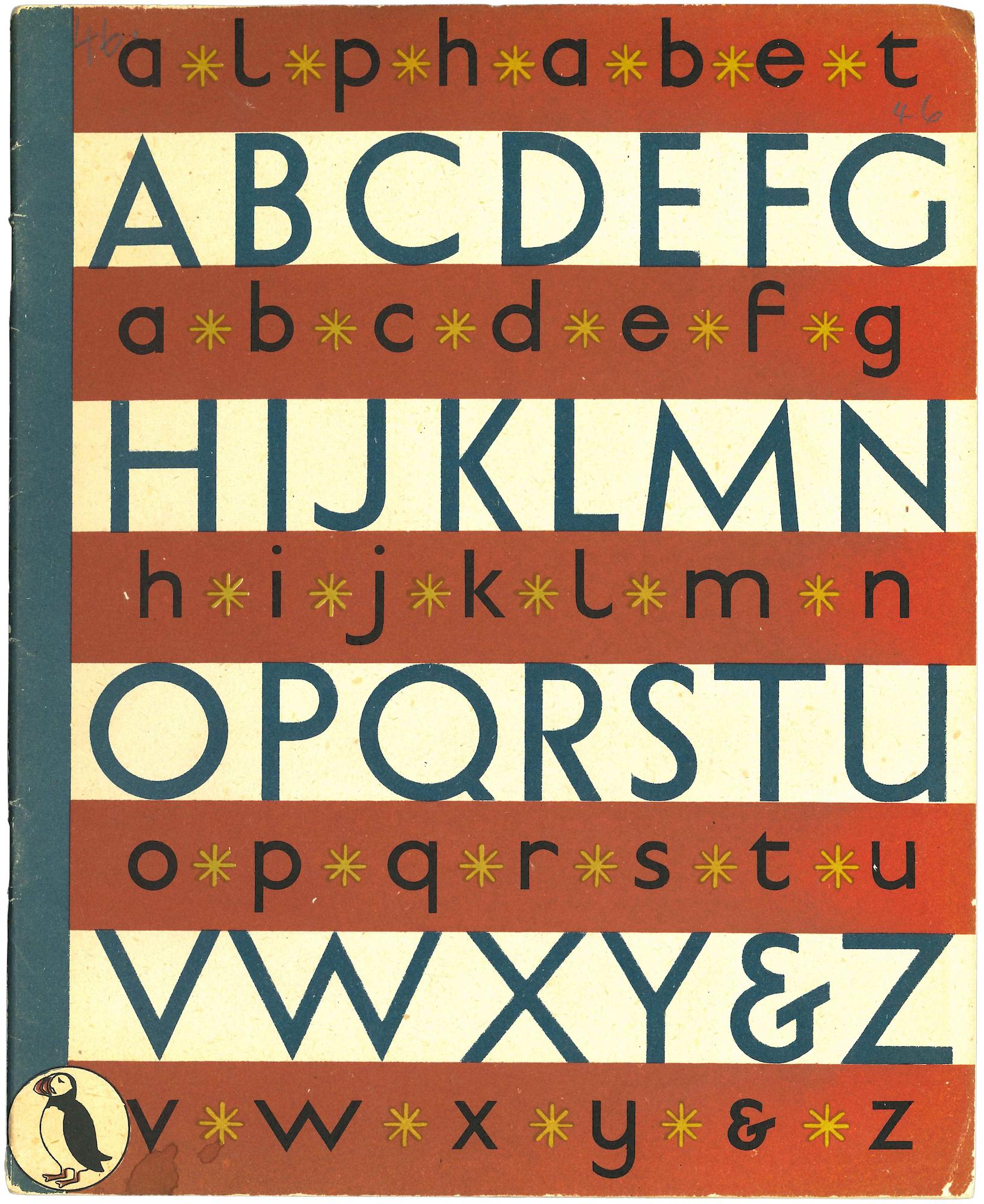
A Child’s Alphabet, 1945
The Puffin Picture Books series was established by designer and editor Noel Carrington (1895-1989). In 1933, artist Pearl Binder (1904-1990) sent Carrington a package of Soviet children’s books. “They were produced by the million on very cheap paper, but the drawings were vigorous and the colour delightful” he later remembered. These books inspired Carrington to edit a series of affordable books that would encourage “the child’s awakening interest in its surroundings... I felt that colour was essential, and that artists could... be more successful in books of this nature than the camera”. Many artists and illustrators worked on the series, adapting their ways of working to lithographic printing and the Puffin Picture Book format. Most of the 120 books in the series were printed on one large sheet of paper: one side in colour and one in black-and-white. Each sheet was cut, folded and stapled to create a softcover book.
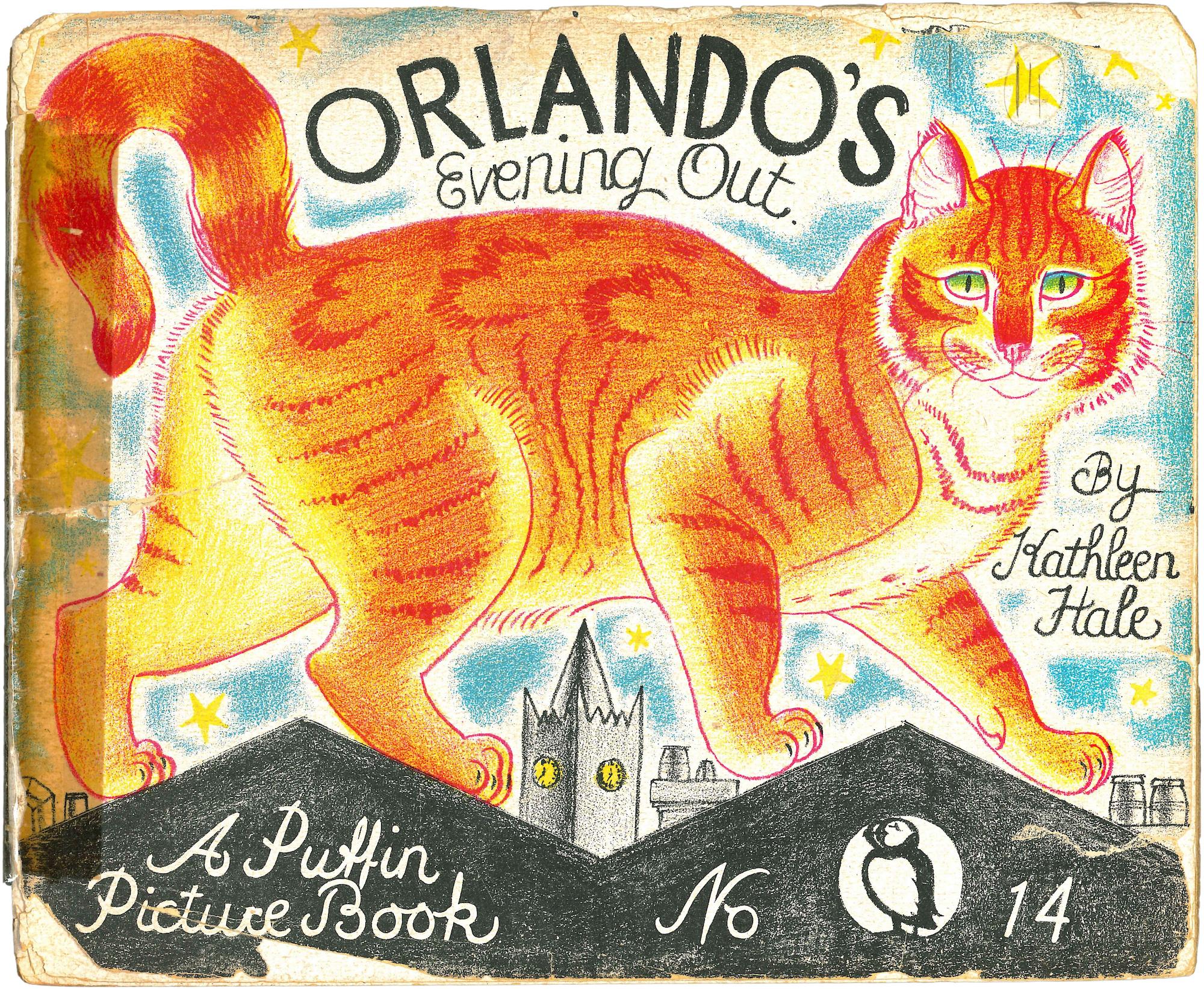
Orlando’s Evening Out, 1944
The Puffin Picture Books series was established by designer and editor Noel Carrington (1895-1989). In 1933, artist Pearl Binder (1904-1990) sent Carrington a package of Soviet children’s books. “They were produced by the million on very cheap paper, but the drawings were vigorous and the colour delightful” he later remembered. These books inspired Carrington to edit a series of affordable books that would encourage “the child’s awakening interest in its surroundings... I felt that colour was essential, and that artists could... be more successful in books of this nature than the camera”. Many artists and illustrators worked on the series, adapting their ways of working to lithographic printing and the Puffin Picture Book format. Most of the 120 books in the series were printed on one large sheet of paper: one side in colour and one in black-and-white. Each sheet was cut, folded and stapled to create a softcover book.
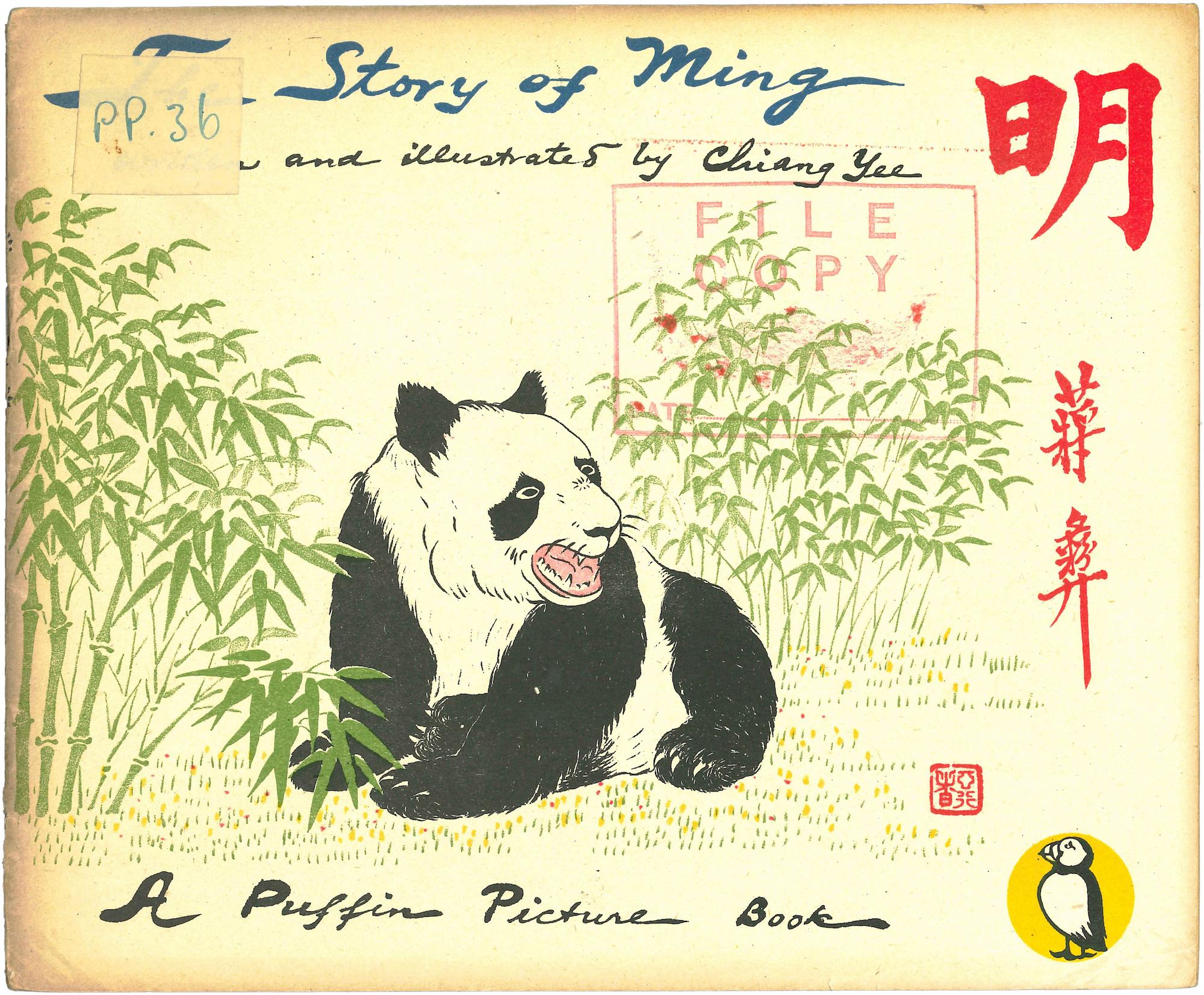
The Story of Ming, 1944
The Puffin Picture Books series was established by designer and editor Noel Carrington (1895-1989). In 1933, artist Pearl Binder (1904-1990) sent Carrington a package of Soviet children’s books. “They were produced by the million on very cheap paper, but the drawings were vigorous and the colour delightful” he later remembered. These books inspired Carrington to edit a series of affordable books that would encourage “the child’s awakening interest in its surroundings... I felt that colour was essential, and that artists could... be more successful in books of this nature than the camera”. Many artists and illustrators worked on the series, adapting their ways of working to lithographic printing and the Puffin Picture Book format. Most of the 120 books in the series were printed on one large sheet of paper: one side in colour and one in black-and-white. Each sheet was cut, folded and stapled to create a softcover book.

A Book of Swimming, 1945
The Puffin Picture Books series was established by designer and editor Noel Carrington (1895-1989). In 1933, artist Pearl Binder (1904-1990) sent Carrington a package of Soviet children’s books. “They were produced by the million on very cheap paper, but the drawings were vigorous and the colour delightful” he later remembered. These books inspired Carrington to edit a series of affordable books that would encourage “the child’s awakening interest in its surroundings... I felt that colour was essential, and that artists could... be more successful in books of this nature than the camera”. Many artists and illustrators worked on the series, adapting their ways of working to lithographic printing and the Puffin Picture Book format. Most of the 120 books in the series were printed on one large sheet of paper: one side in colour and one in black-and-white. Each sheet was cut, folded and stapled to create a softcover book.
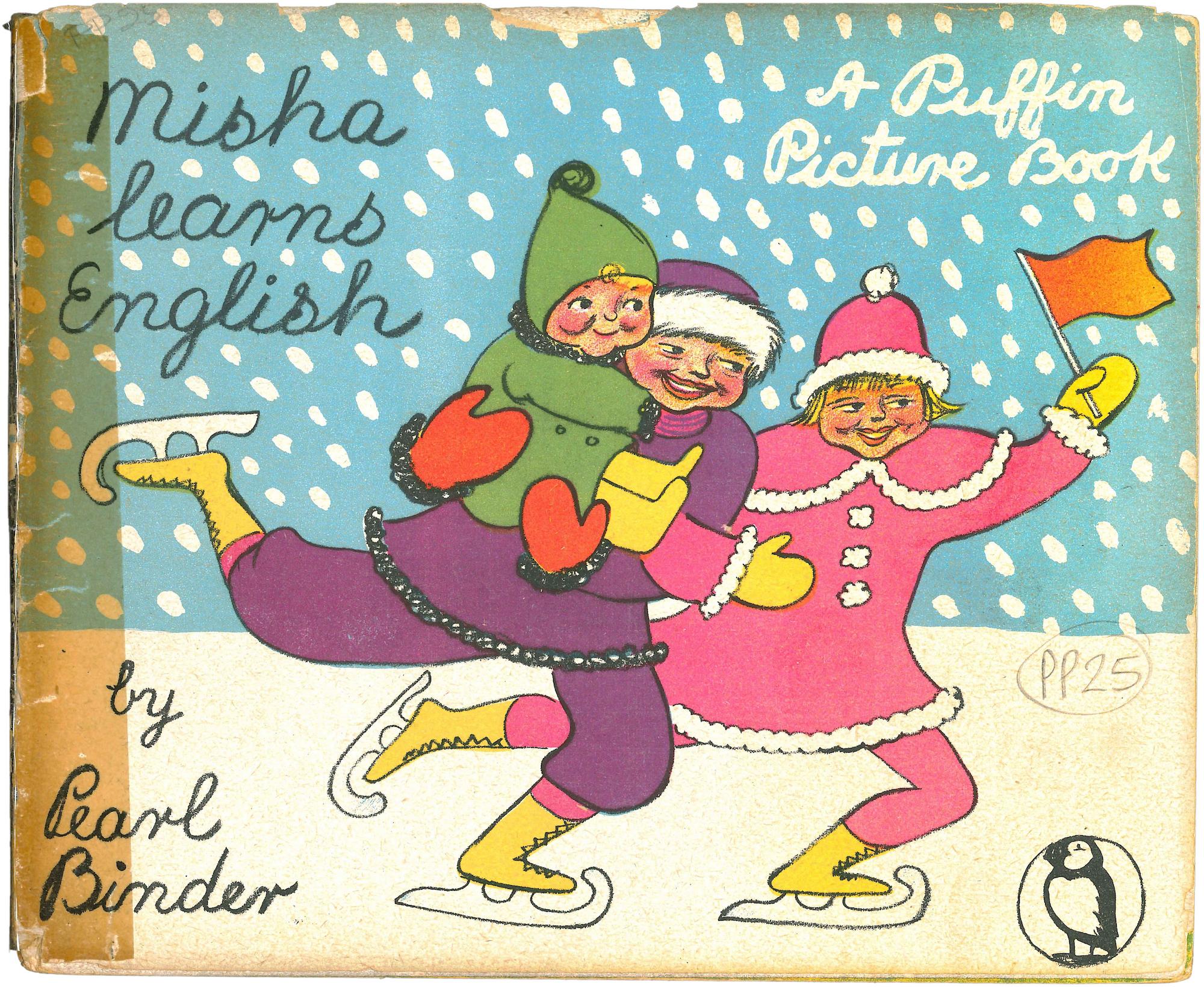
Misha learns English, 1942
The Puffin Picture Books series was established by designer and editor Noel Carrington (1895-1989). In 1933, artist Pearl Binder (1904-1990) sent Carrington a package of Soviet children’s books. “They were produced by the million on very cheap paper, but the drawings were vigorous and the colour delightful” he later remembered. These books inspired Carrington to edit a series of affordable books that would encourage “the child’s awakening interest in its surroundings... I felt that colour was essential, and that artists could... be more successful in books of this nature than the camera”. Many artists and illustrators worked on the series, adapting their ways of working to lithographic printing and the Puffin Picture Book format. Most of the 120 books in the series were printed on one large sheet of paper: one side in colour and one in black-and-white. Each sheet was cut, folded and stapled to create a softcover book.