1986
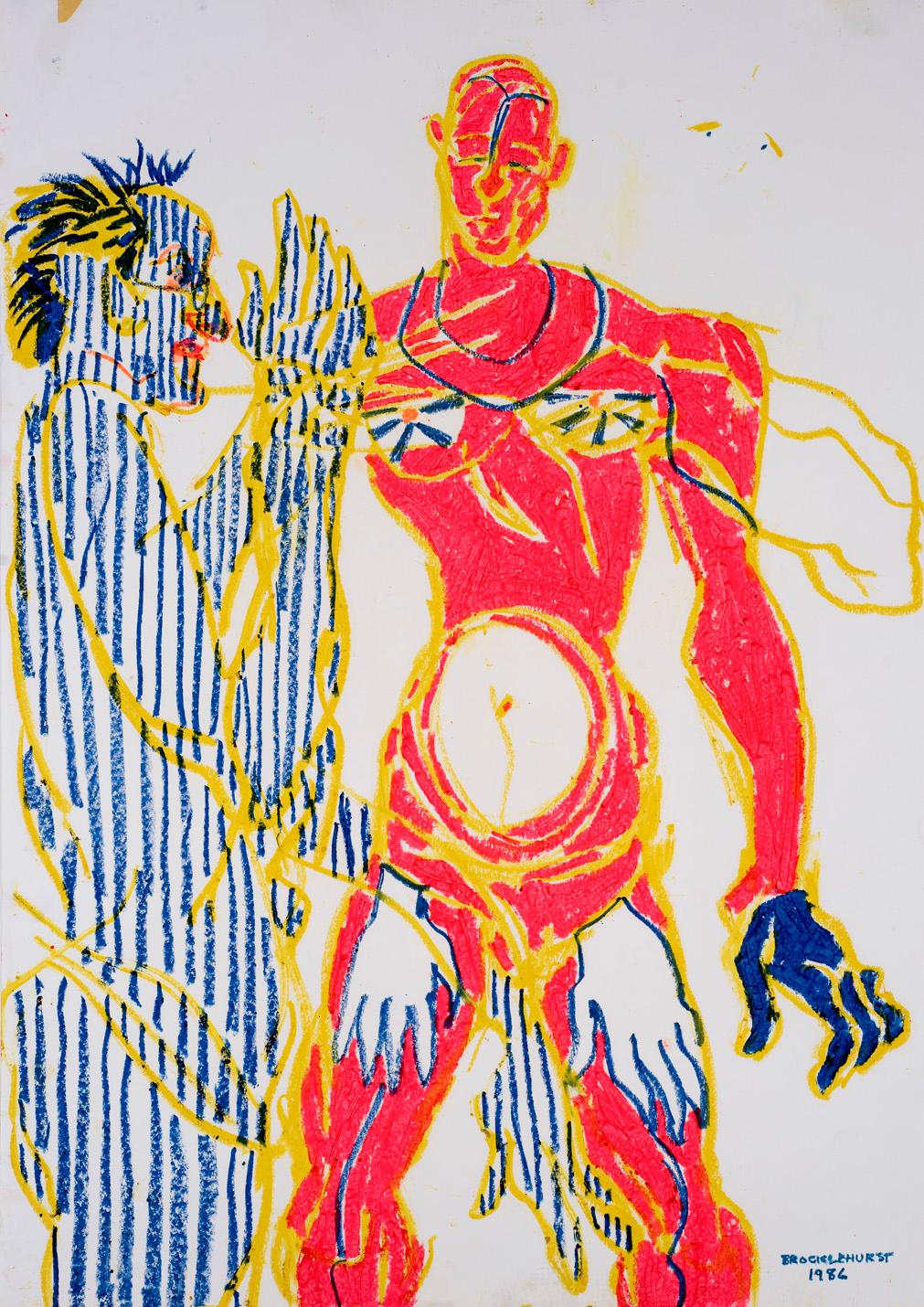
Jo Brocklehurst, Untitled (Karl Oppermann and student at Diskurs festival), 1986
Jo (Josephine) Brocklehurst (1935 - 2006) studied at Central Saint Martins and began her career as a fashion illustrator. She later focused on portraiture, drawing directly from models at her studio in West Hampstead and in nightclubs and theatres in Berlin, London and New York. Her work documents the alternative subcultures of the 1970s, 80s and 90s that went on to shape mainstream fashion and performance scenes. In 1986 Brocklehurst visited the Institute of Applied Theatre Studies in Giessen, Germany during Diskurs Festival. She drew Karl Oppermann and his students performing The Crazy Locomotive, a play written by Stanisław Ignacy Witkiewicz.
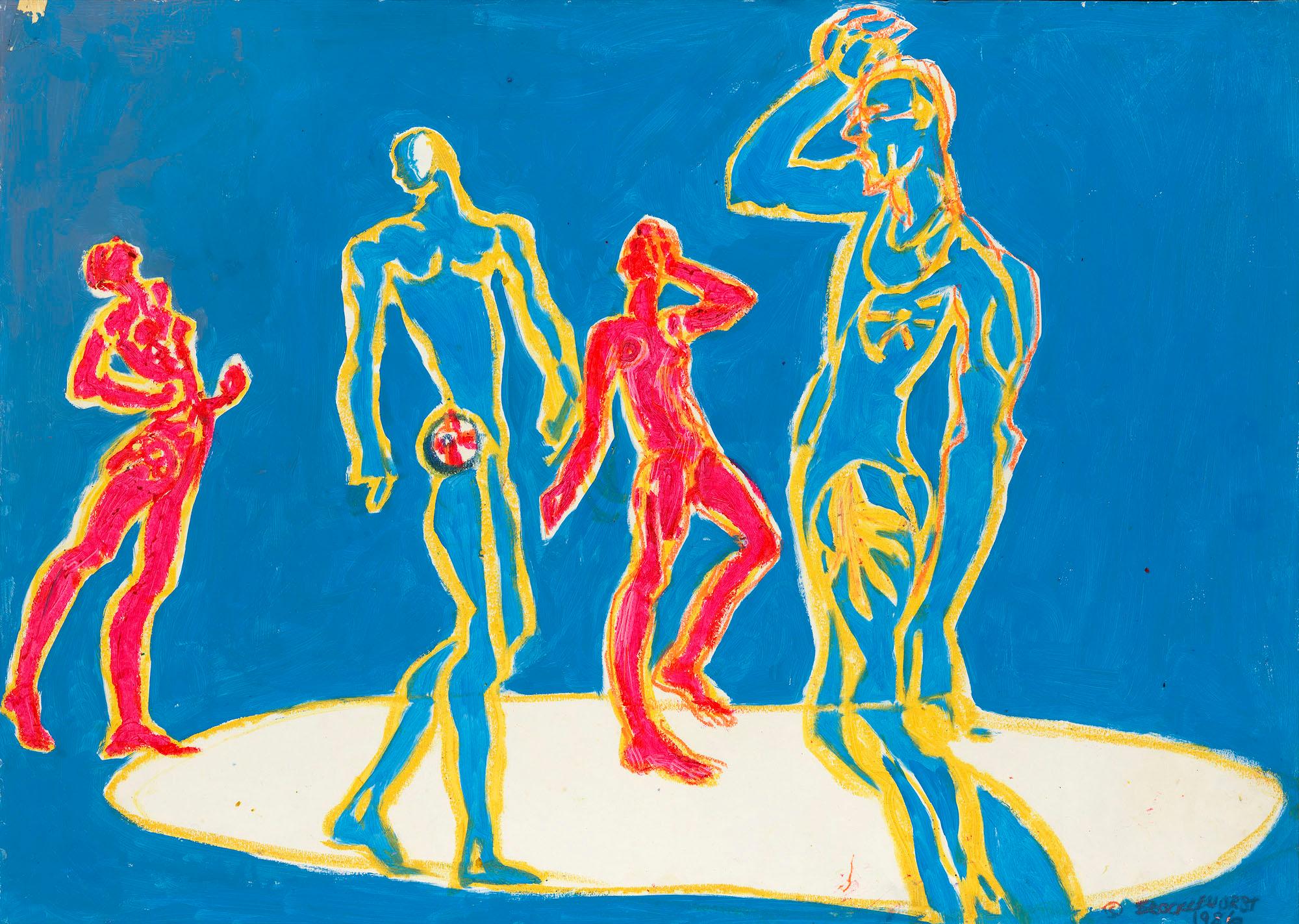
Jo Brocklehurst, Untitled, 1986
Jo (Josephine) Brocklehurst (1935 - 2006) studied at Central Saint Martins and began her career as a fashion illustrator. She later focused on portraiture, drawing directly from models at her studio in West Hampstead and in nightclubs and theatres in Berlin, London and New York. Her work documents the alternative subcultures of the 1970s, 80s and 90s that went on to shape mainstream fashion and performance scenes. In 1986 Brocklehurst visited the Institute of Applied Theatre Studies in Giessen, Germany during Diskurs Festival. She drew Karl Oppermann and his students performing The Crazy Locomotive, a play written by Stanisław Ignacy Witkiewicz.
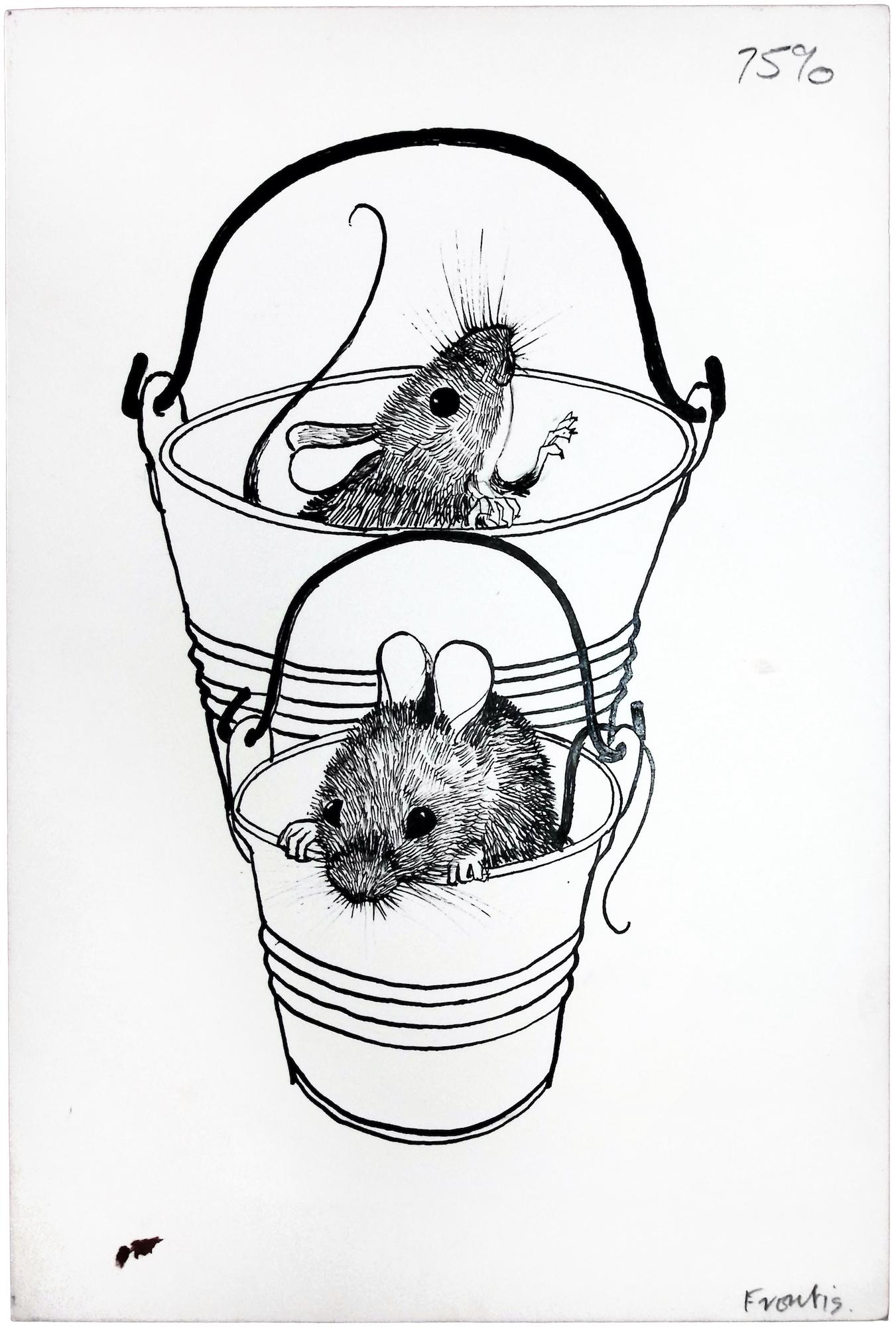
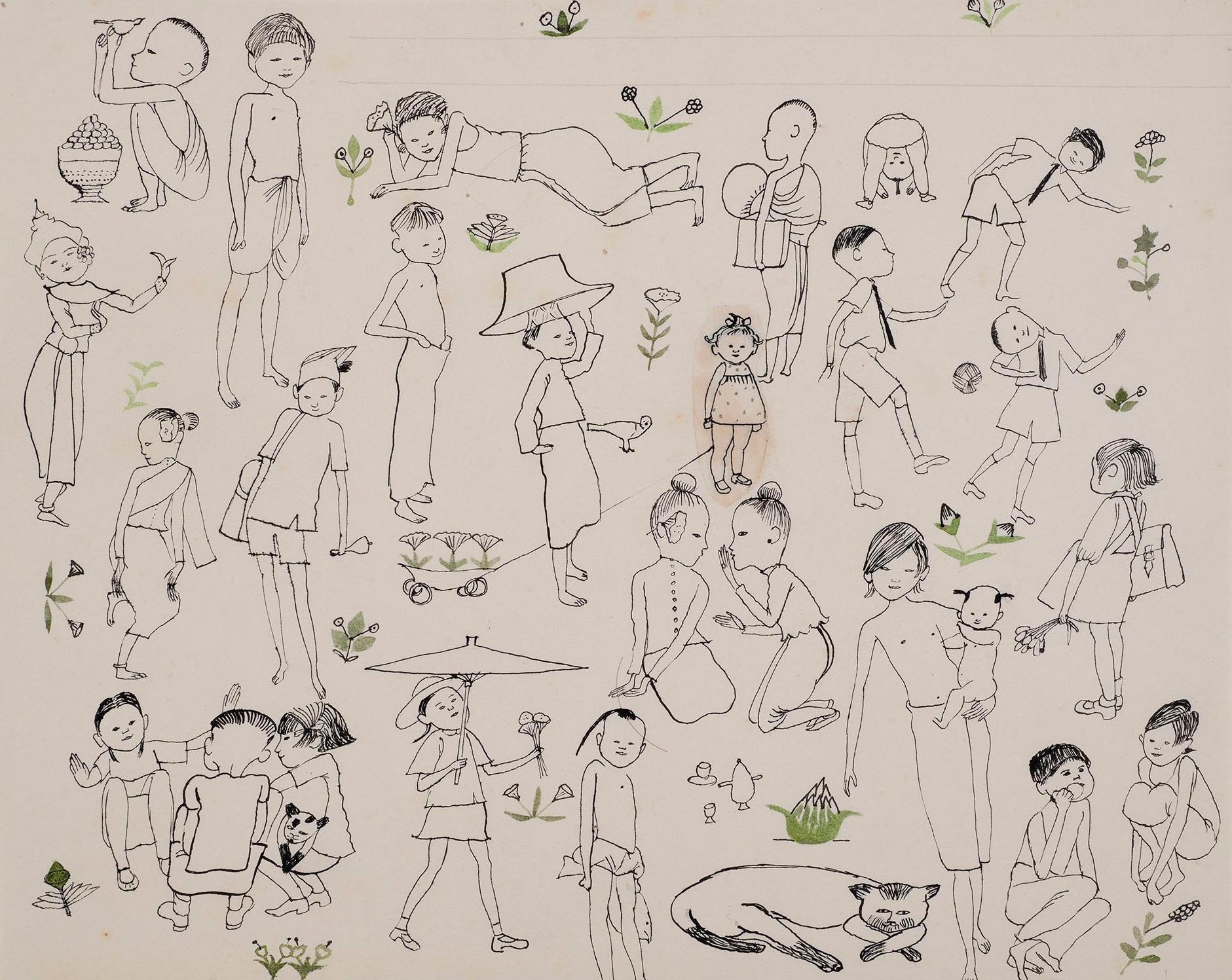
Untitled, c. 1986
British illustrator Janina Ede (1937-2018) created covers and illustrations for over 100 books from the 1950s to the 1980s. Many of her illustrations feature animals, which she drew from life.
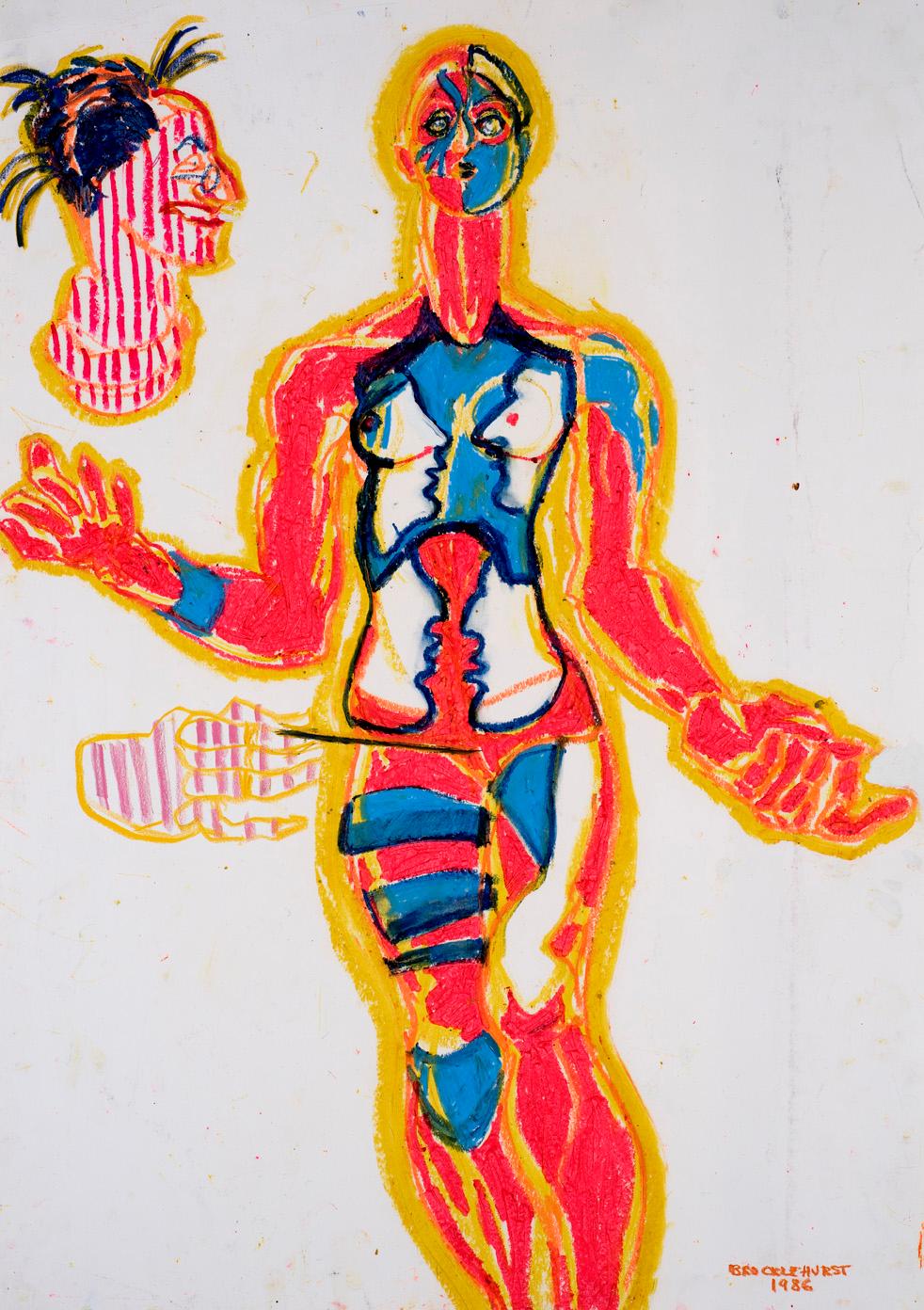
Jo Brocklehurst, Untitled (Karl Oppermann and student at Diskurs festival), 1986
Jo (Josephine) Brocklehurst (1935 - 2006) studied at Central Saint Martins and began her career as a fashion illustrator. She later focused on portraiture, drawing directly from models at her studio in West Hampstead and in nightclubs and theatres in Berlin, London and New York. Her work documents the alternative subcultures of the 1970s, 80s and 90s that went on to shape mainstream fashion and performance scenes. In 1986 Brocklehurst visited the Institute of Applied Theatre Studies in Giessen, Germany during Diskurs Festival. She drew Karl Oppermann and his students performing The Crazy Locomotive, a play written by Stanisław Ignacy Witkiewicz.
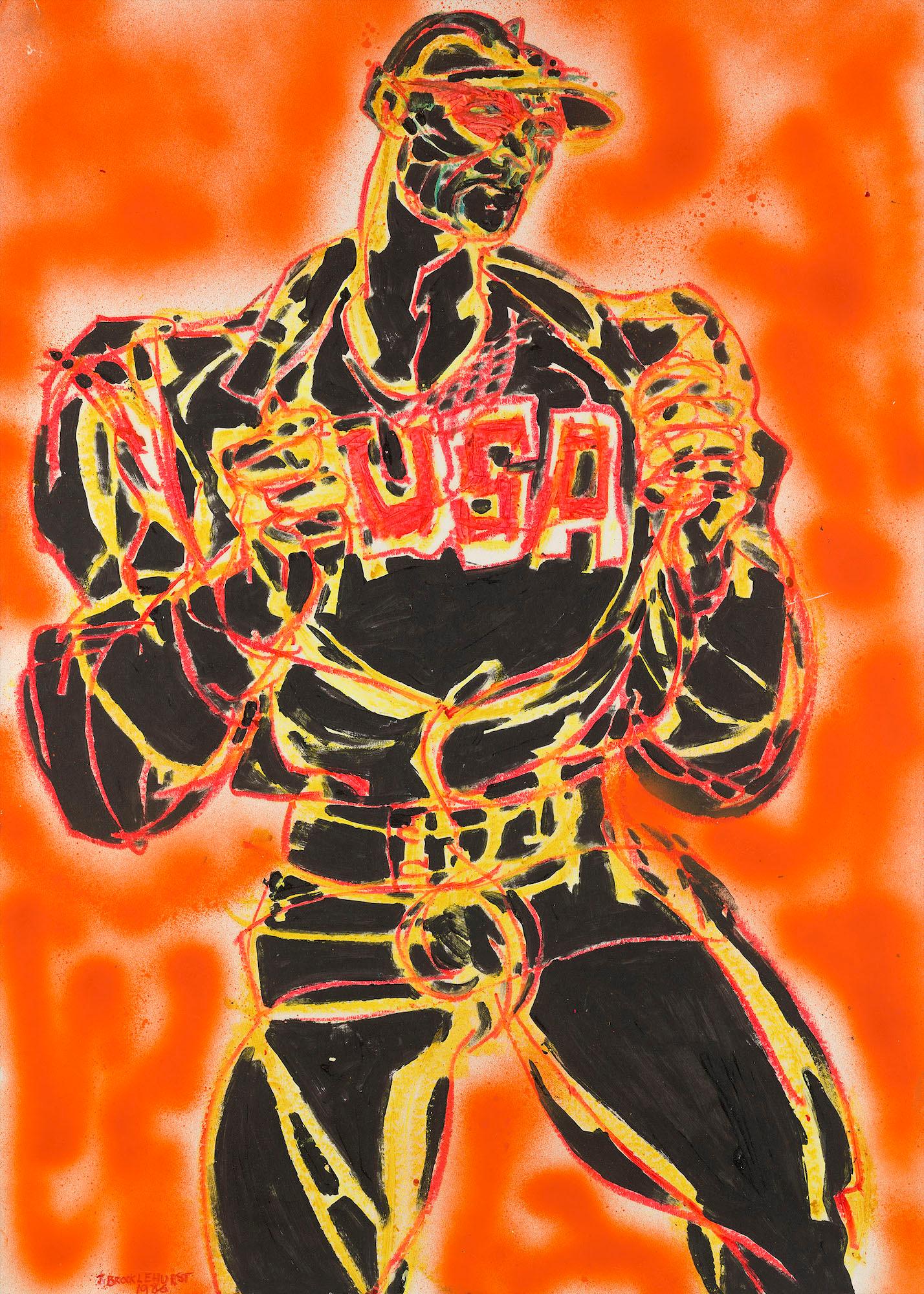
Jo Brocklehurst, Untitled, 1986
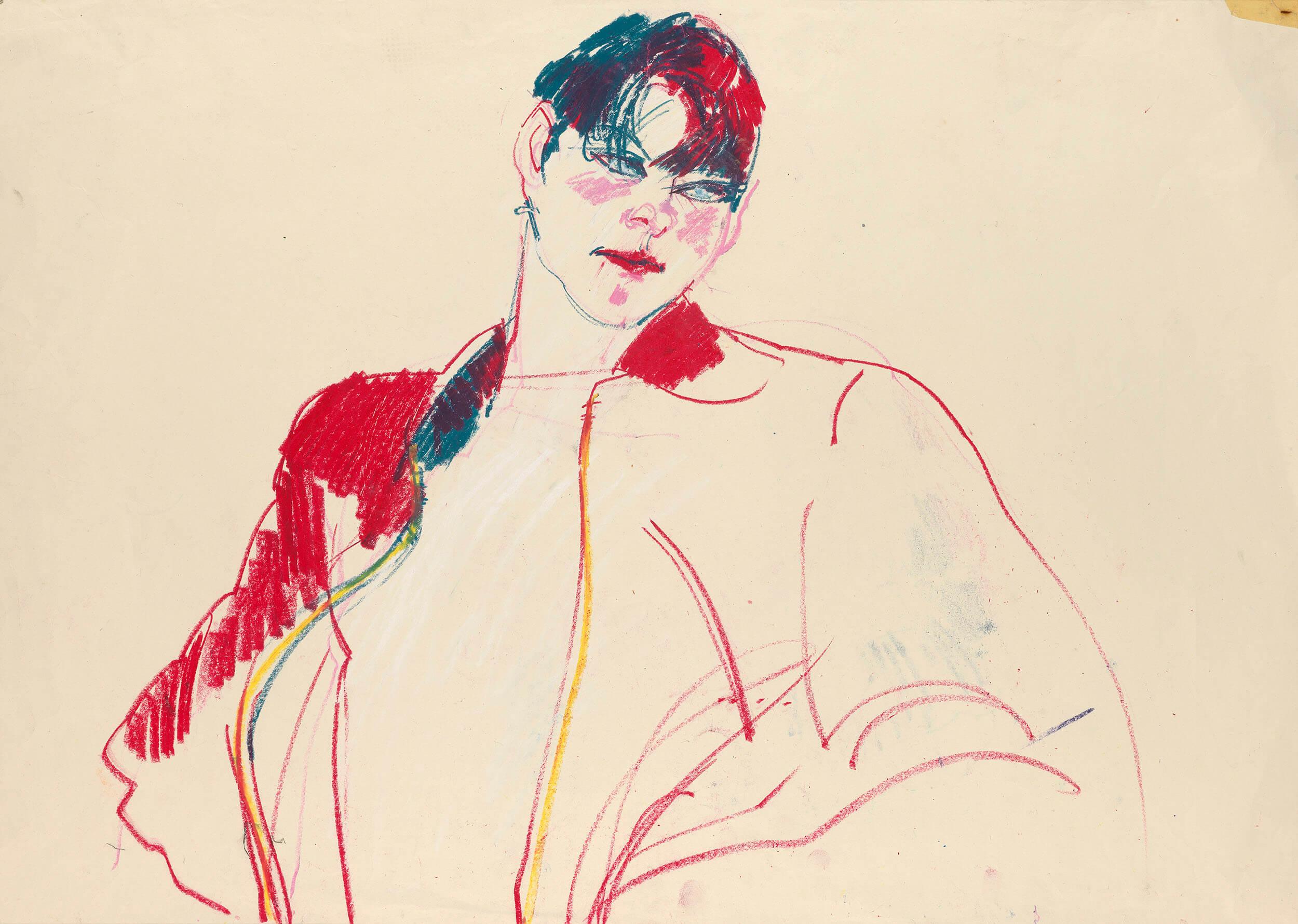
Jo (Josephine) Brocklehurst (1935 - 2006) studied at Central Saint Martins and began her career as a fashion illustrator. She later focused on portraiture, drawing directly from models at her studio in West Hampstead and in nightclubs and theatres in Berlin, London and New York. Her work documents the alternative subcultures of the 1970s, 80s and 90s that went on to shape mainstream fashion and performance scenes. Brocklehurst began working in New York following an exhibition of her work there in 1983. She took paper and materials to the gay nightclubs of the Meatpacking District, drawing clubgoers like this one. Brocklehurst used neon inks that she could see under the ultraviolet lights.
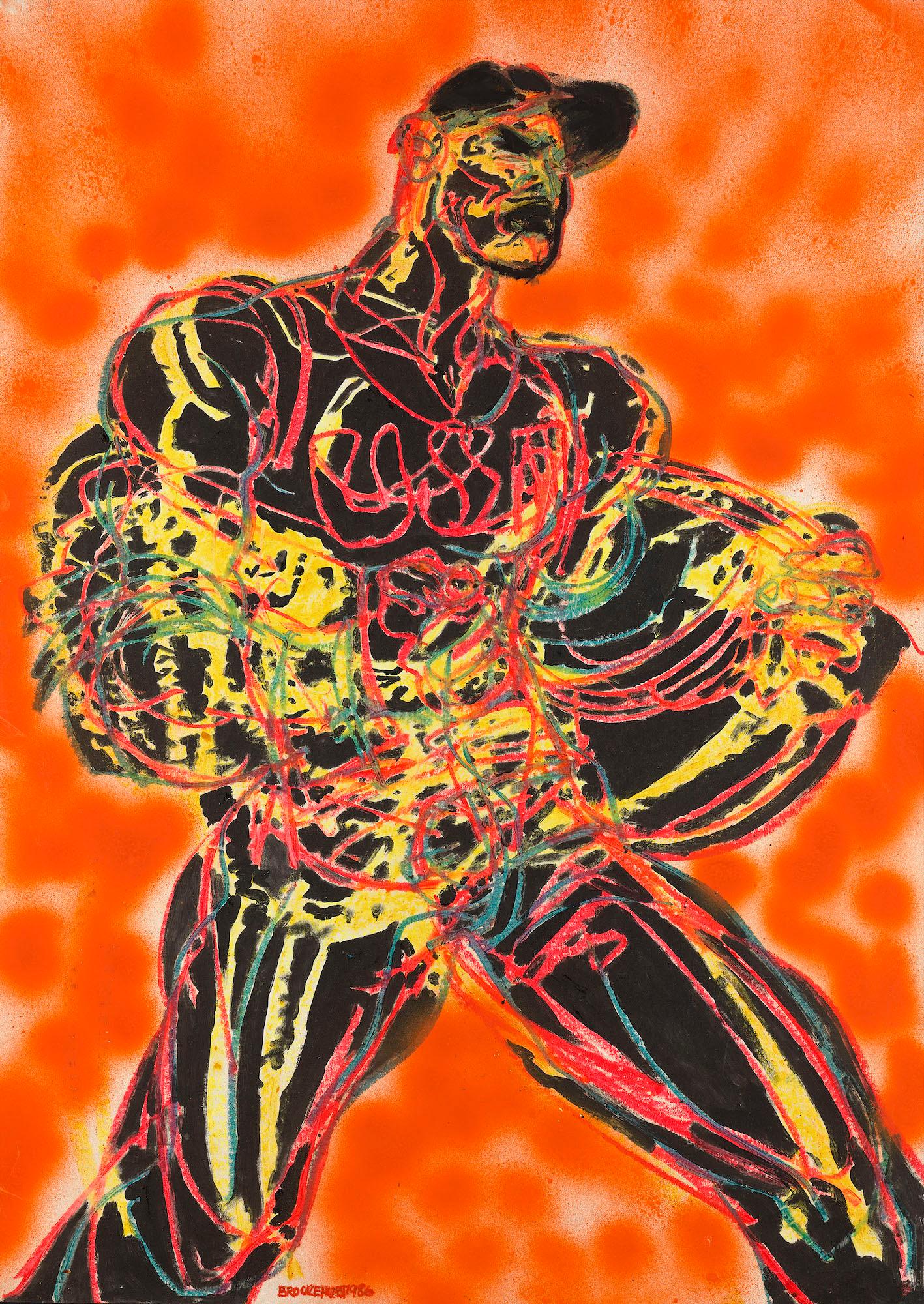
Jo Brocklehurst, Untitled, 1986
Jo (Josephine) Brocklehurst (1935 - 2006) studied at Central Saint Martins and began her career as a fashion illustrator. She later focused on portraiture, drawing directly from models at her studio in West Hampstead and in nightclubs and theatres in Berlin, London and New York. Her work documents the alternative subcultures of the 1970s, 80s and 90s that went on to shape mainstream fashion and performance scenes. Brocklehurst began working in New York following an exhibition of her work there in 1983. She took paper and materials to the gay nightclubs of the Meatpacking District, drawing clubgoers like this one. Brocklehurst used neon inks that she could see under the ultraviolet lights.
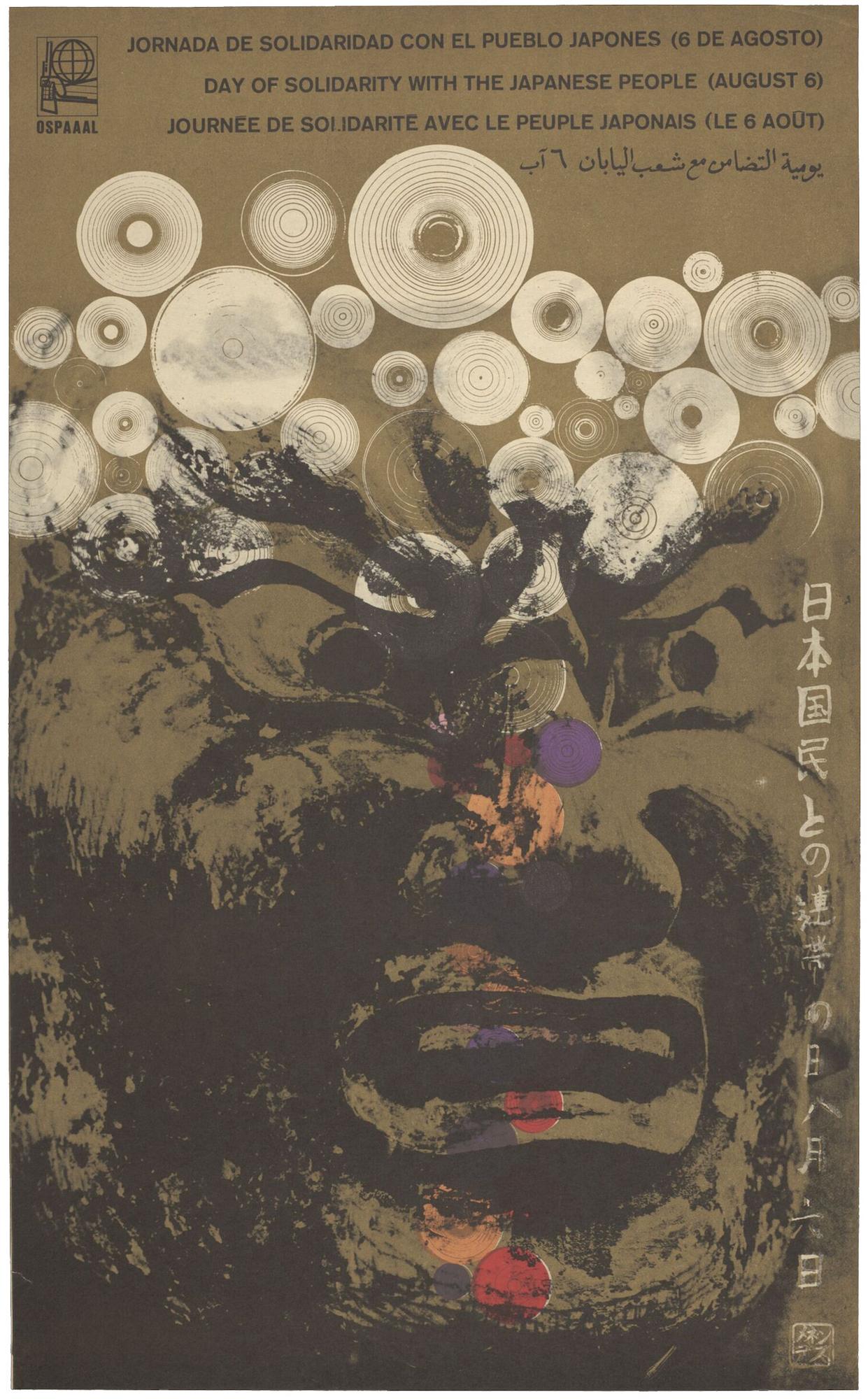
DAY OF SOLIDARITY WITH THE JAPANESE PEOPLE (AUGUST 6), 1968
Between the 1960s and 1990s, more than fifty designers worked at OSPAAAL (the Organisation of Solidarity with the People of Africa, Asia and Latin America). Based in Cuba, they made magazines and posters that were sent around the world. Their aim was to promote radical political ideas. Many of their posters celebrate socialist revolutions and liberation movements from the Global South. OSPAAAL marked the date of the atomic bombing of the city of Hiroshima by the U.S.A. as a day of solidarity with Japanese citizens. The design appears to incorporate a photograph of Raijin, a Japanese god of thunder, lightning and storms.