1980
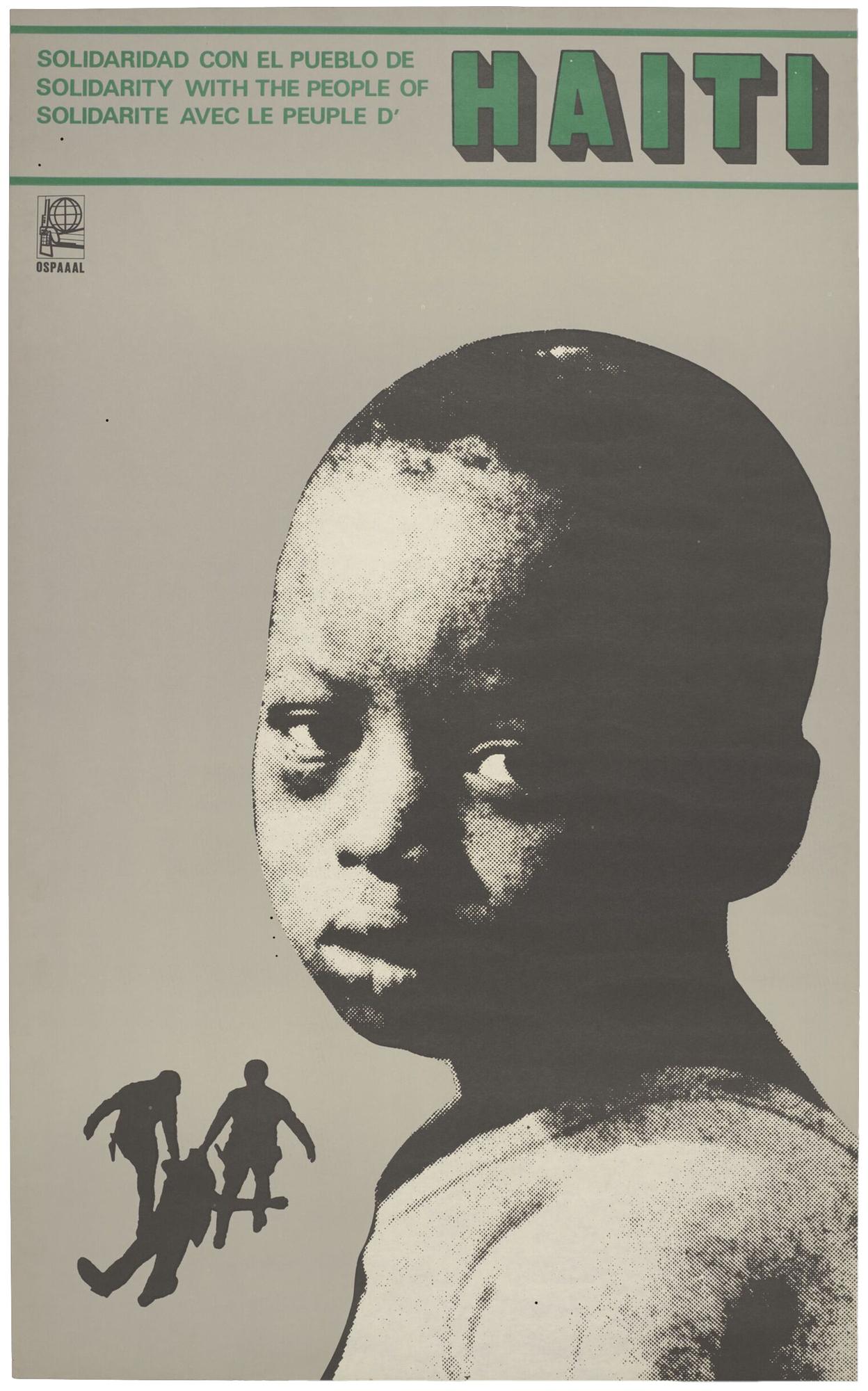
SOLIDARITY WITH THE PEOPLE OF HAITI, 1980
Between the 1960s and 1990s, more than fifty designers worked at OSPAAAL. Based in Cuba, they made magazines and posters that were sent around the world. Their aim was to promote radical political ideas. Many of their posters celebrate socialist revolutions and liberation movements from the Global South. To show support for people in Haiti experiencing state-sponsored violence, Rafael Enríquez Vega contrasted a silhouette of a limp body being dragged away with a photograph of a child by fellow designer Víctor Manuel Navarrete. The identity of the child is not recorded as part of the design.
Content warning: violence
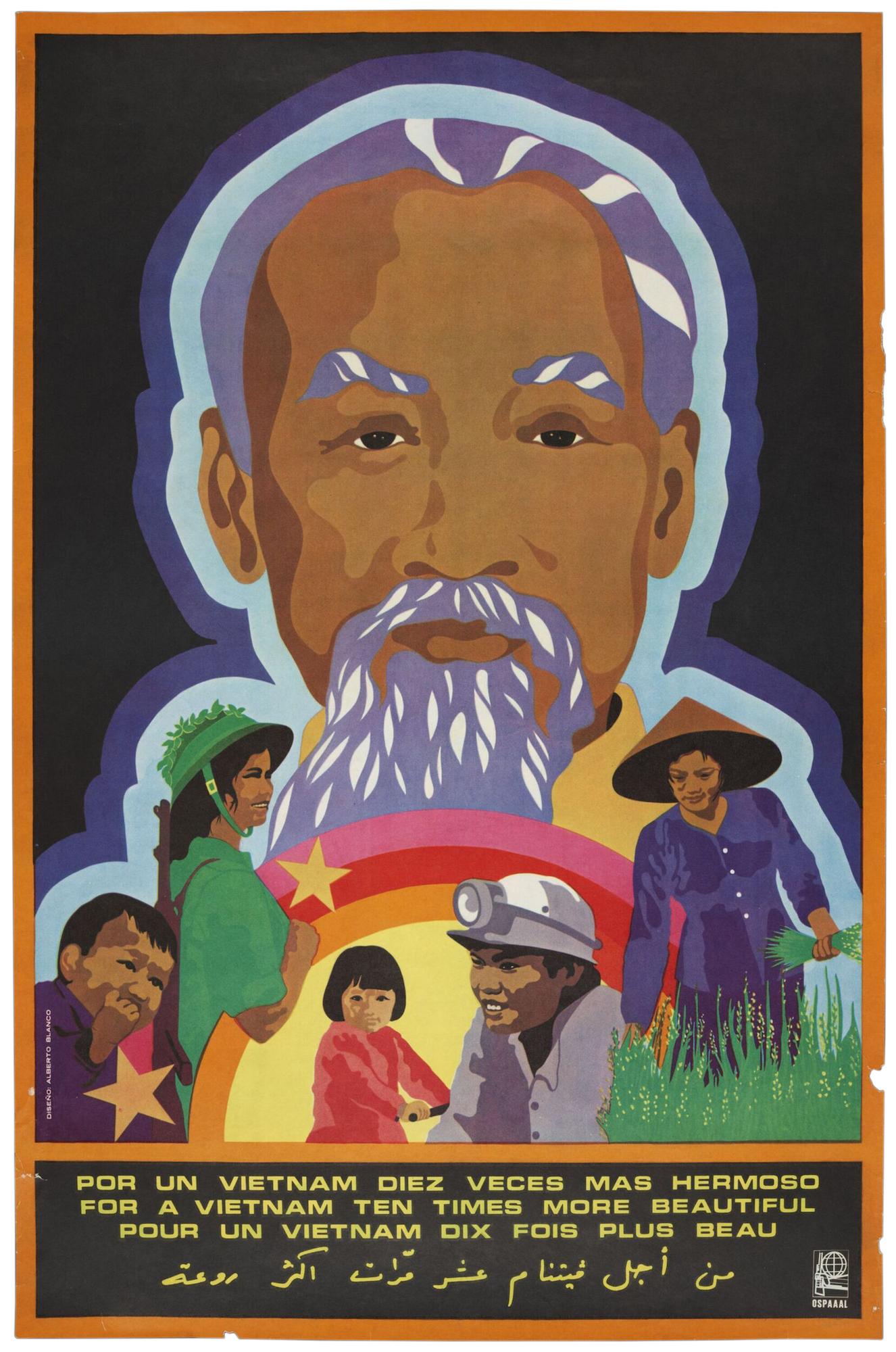
FOR A VIETNAM TEN TIMES MORE BEAUTIFUL, 1980
Between the 1960s and 1990s, more than fifty designers worked at OSPAAAL (the Organisation of Solidarity with the People of Africa, Asia and Latin America). Based in Cuba, they made magazines and posters that were sent around the world. Their aim was to promote radical political ideas. Many of their posters celebrate socialist revolutions and liberation movements from the Global South. President Hồ Chí Minh promised that a country “ten times more beautiful” would be rebuilt after the destruction caused by the war between North Vietnam and South Vietnam, allied with the U.S.A. (known as the ‘Vietnam War’ and ‘War Against the Americans to Save the Nation’).. This posthumous portrait of the leader pictures Vietnamese citizens in the socialist realist style used in propaganda posters from the Soviet Union and People’s Republic of China.
Content warning: weaponry
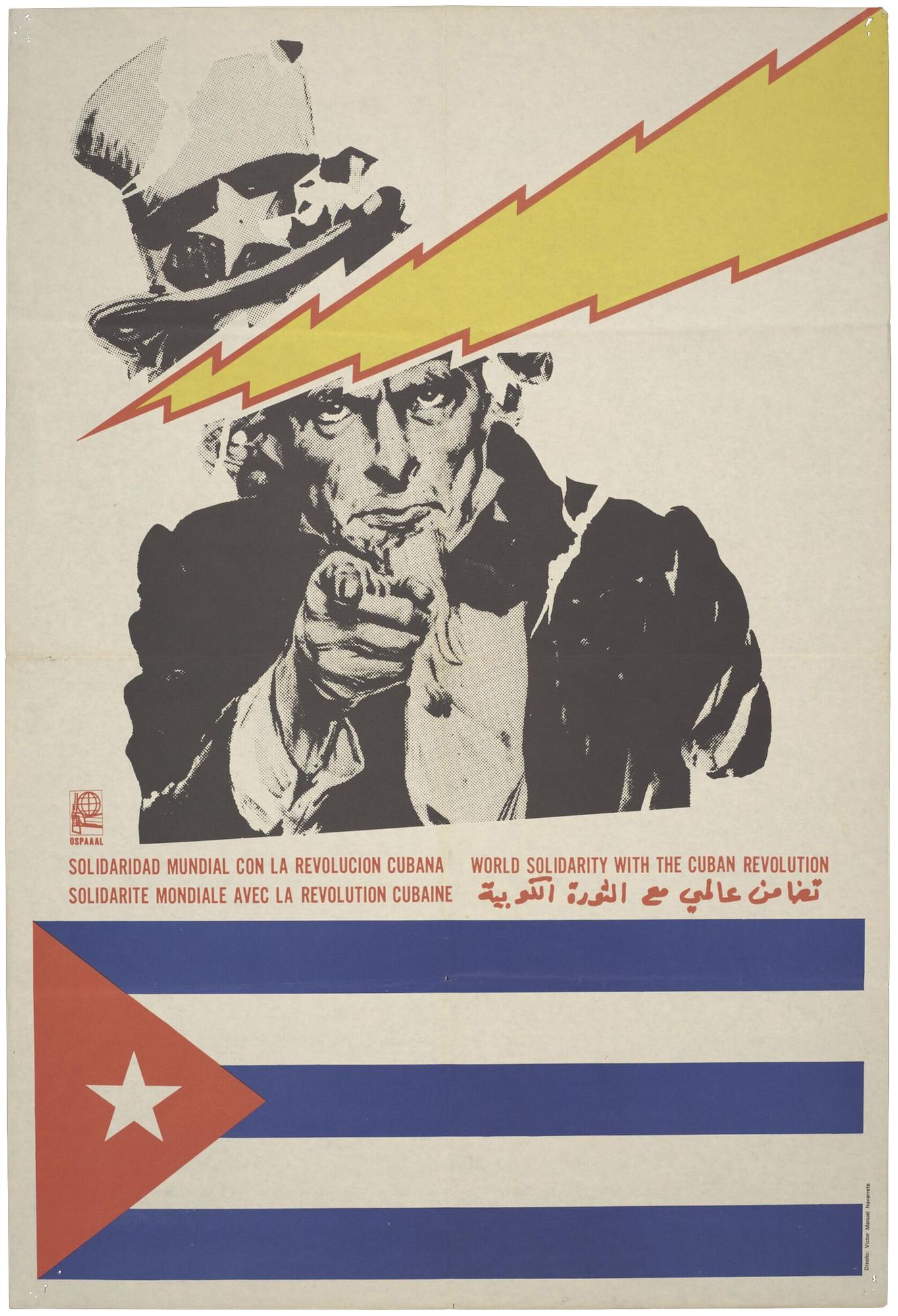
WORLD SOLIDARITY WITH THE CUBAN REVOLUTION, 1980
Between the 1960s and 1990s, more than fifty designers worked at OSPAAAL. Based in Cuba, they made magazines and posters that were sent around the world. Their aim was to promote radical political ideas. Many of their posters celebrate socialist revolutions and liberation movements from the Global South. Víctor Manuel Navarrete’s design uses an image of ‘Uncle Sam’ from a 1917 US army recruitment poster. In the U.S.A., Uncle Sam was a widely used character representing the government and national pride. OSPAAAL’s designers often distorted images of Uncle Sam to criticise or mock the U.S.A.
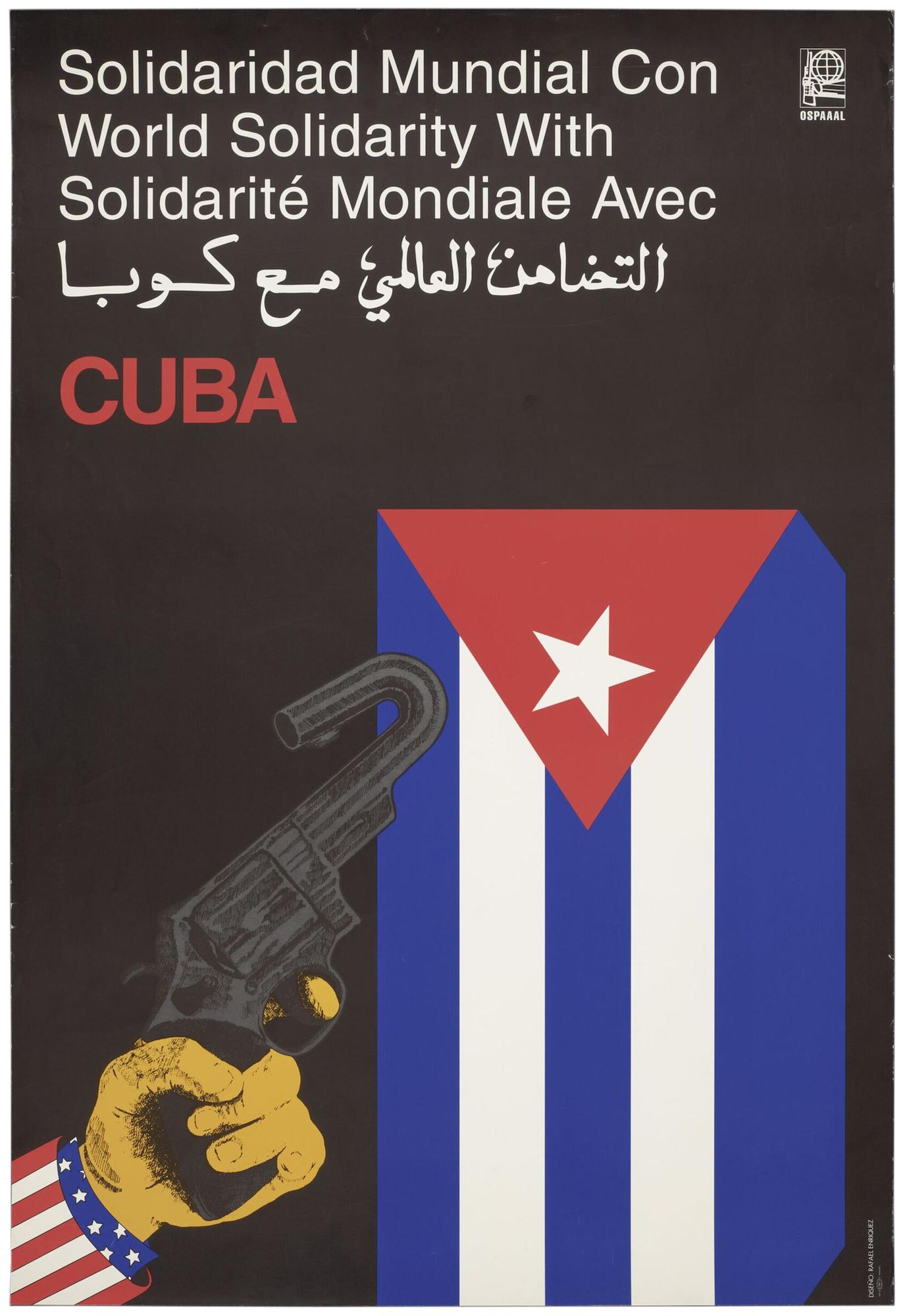
World Solidarity With CUBA, 1980
Between the 1960s and 1990s, more than fifty designers worked at OSPAAAL (the Organisation of Solidarity with the People of Africa, Asia and Latin America). Based in Cuba, they made magazines and posters that were sent around the world. Their aim was to promote radical political ideas. Many of their posters celebrate socialist revolutions and liberation movements from the Global South. They also criticised the foreign policy of the U.S.A. In this design, the Cuban flag represents the Cuban revolution repelling the U.S. military, represented by the hand of fictional character Uncle Sam.
Content warning: weaponry
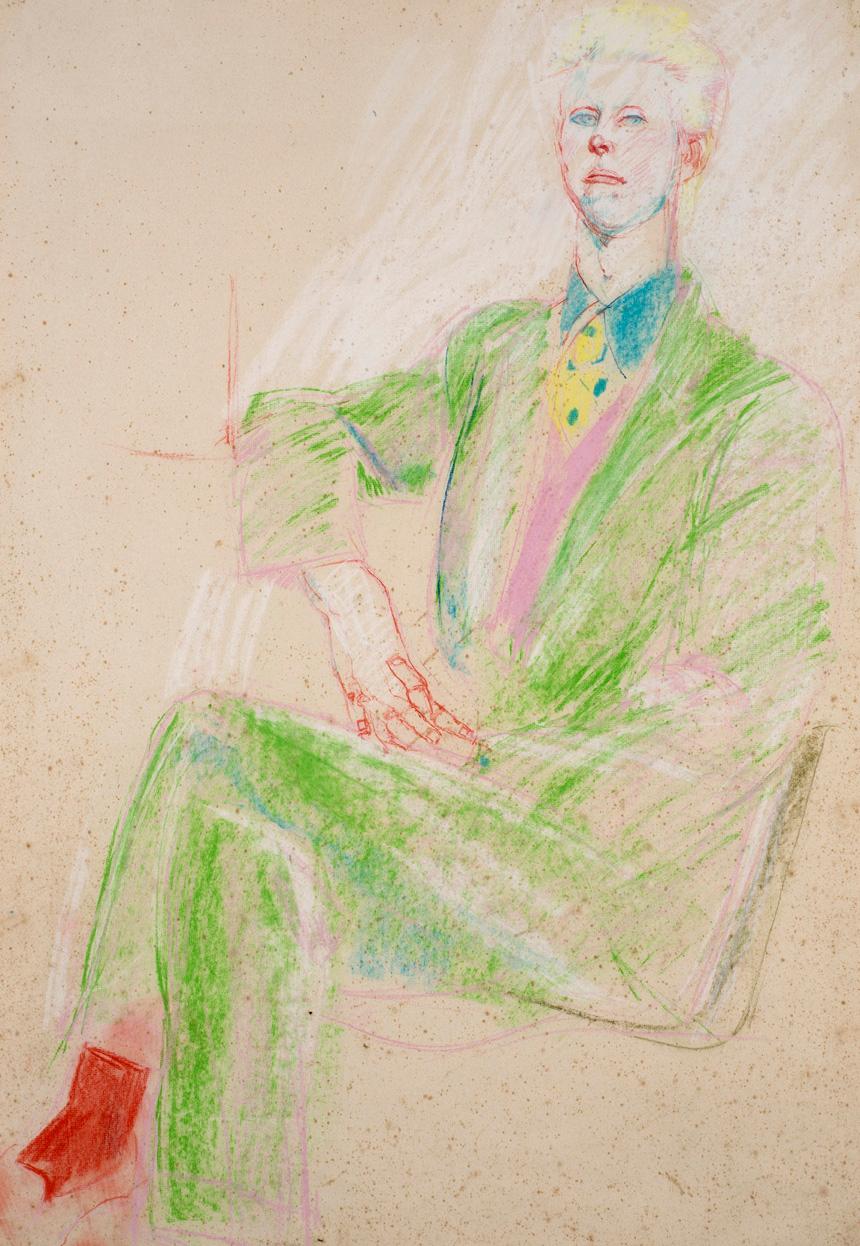
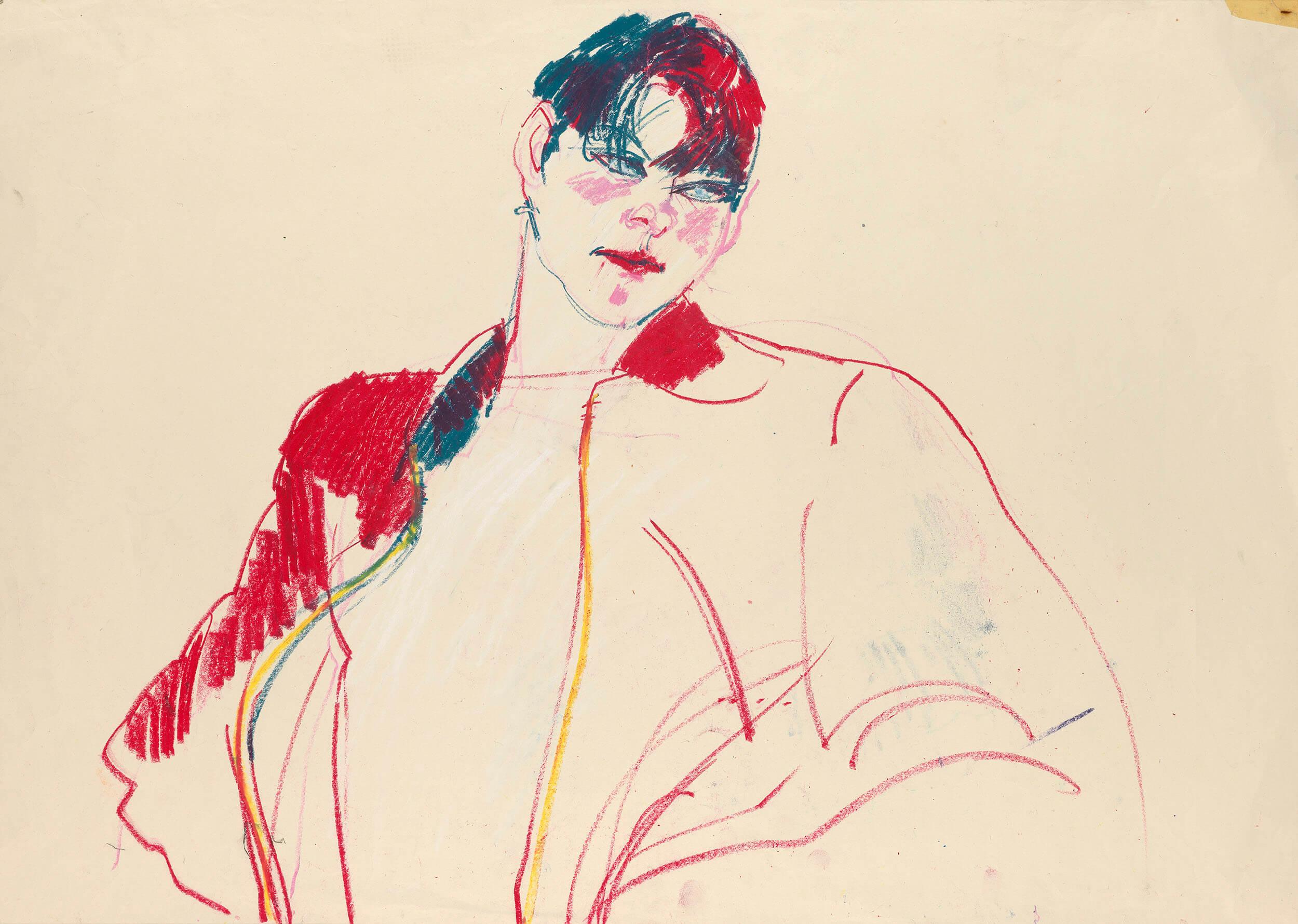
Jo Brocklehurst, Man in a Green Suit (portrait of James ‘Biddie’ Biddlecombe), 1979
Jo (Josephine) Brocklehurst (1935 - 2006) studied at Central Saint Martins and began her career as a fashion illustrator. She later focused on portraiture, drawing directly from models at her studio in West Hampstead and in nightclubs and theatres in Berlin, London and New York. Her work documents the alternative subcultures of the 1970s, 80s and 90s that went on to shape mainstream fashion and performance scenes. Man in a Green Suit is a portrait of performer James ‘Biddie’ Biddlecombe around the time he was performing cabaret at London’s Blitz Club with Eve Ferret. In 1980 it was shown in the ICA exhibition Women’s Images of Men.