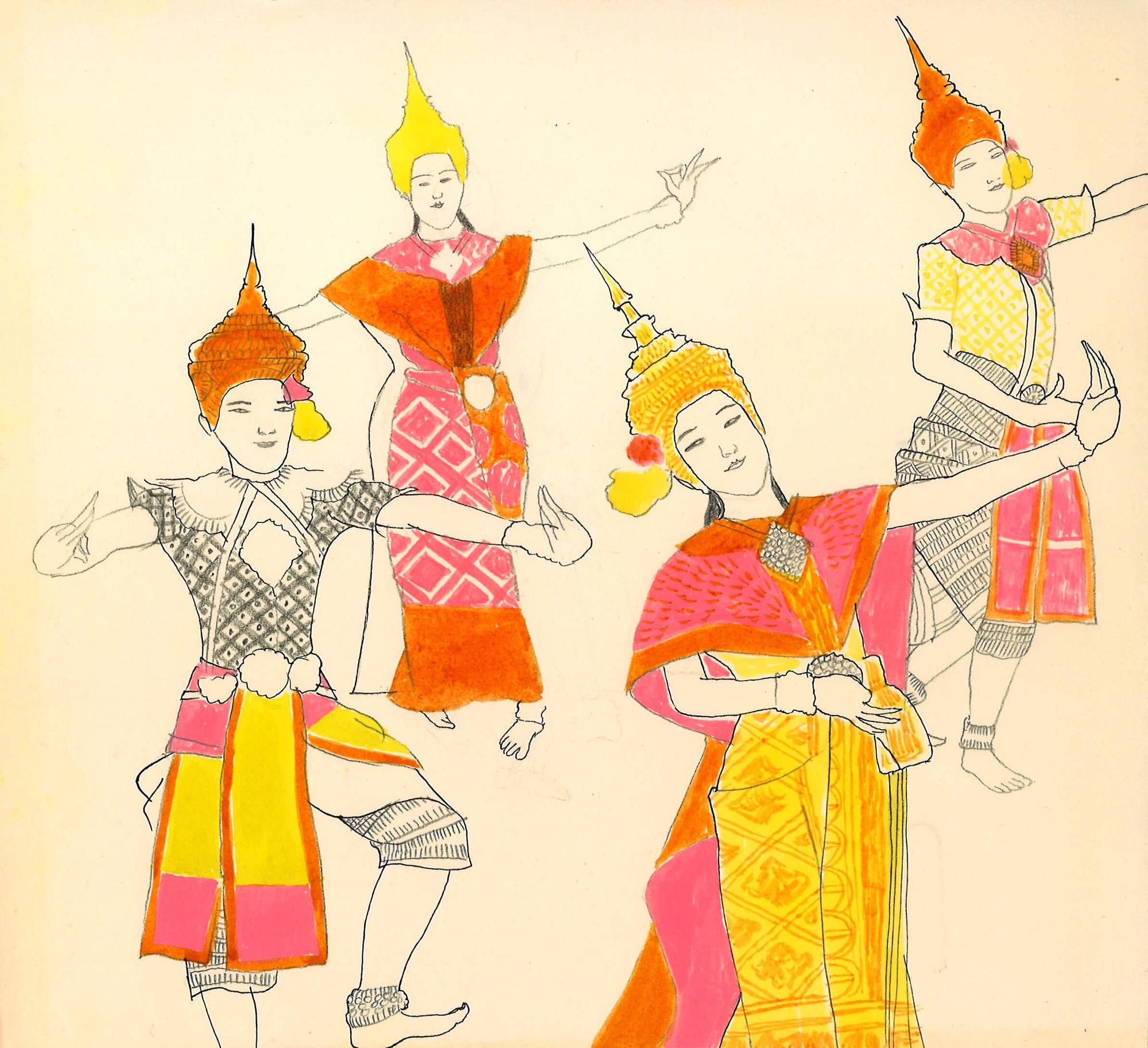
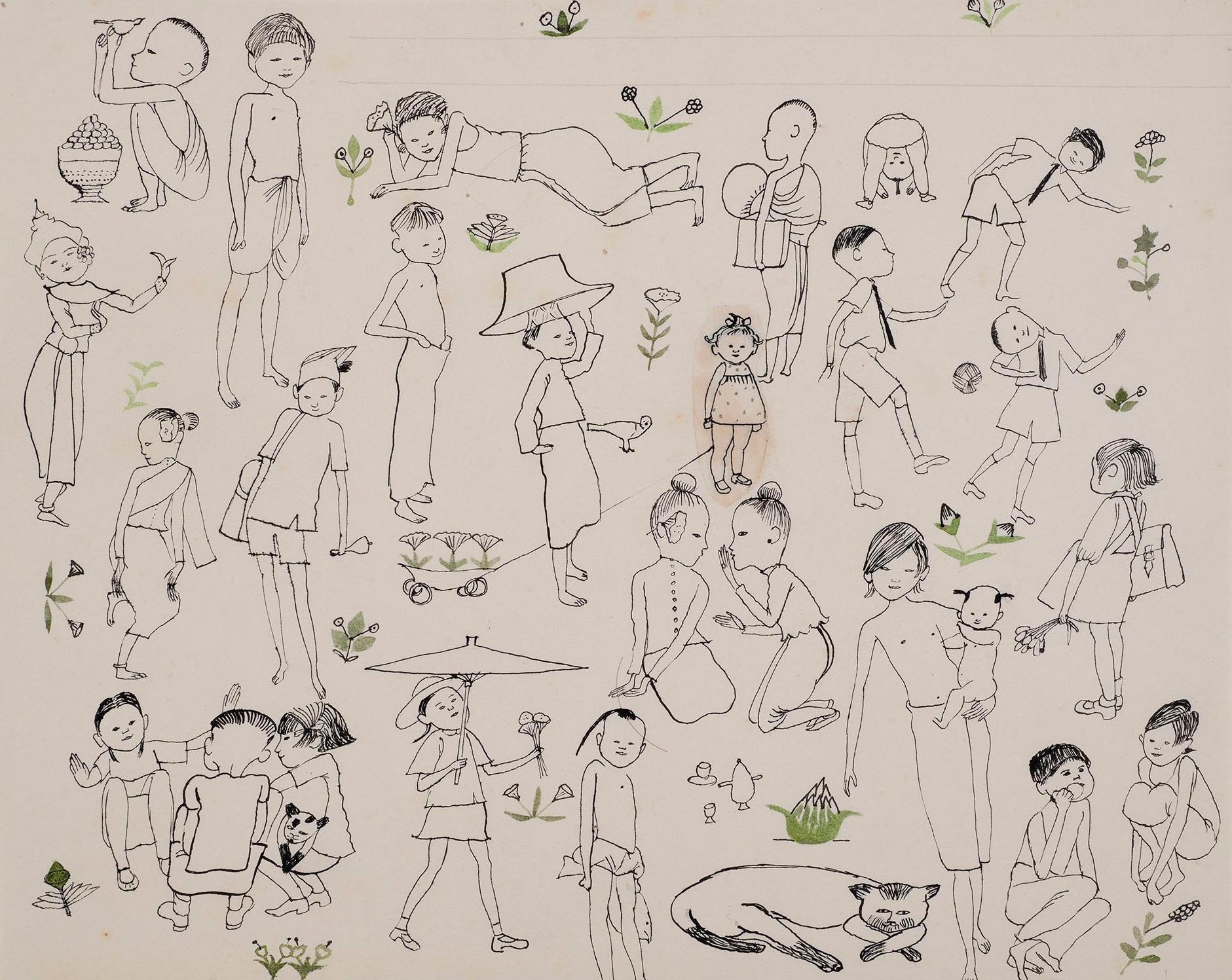
1966
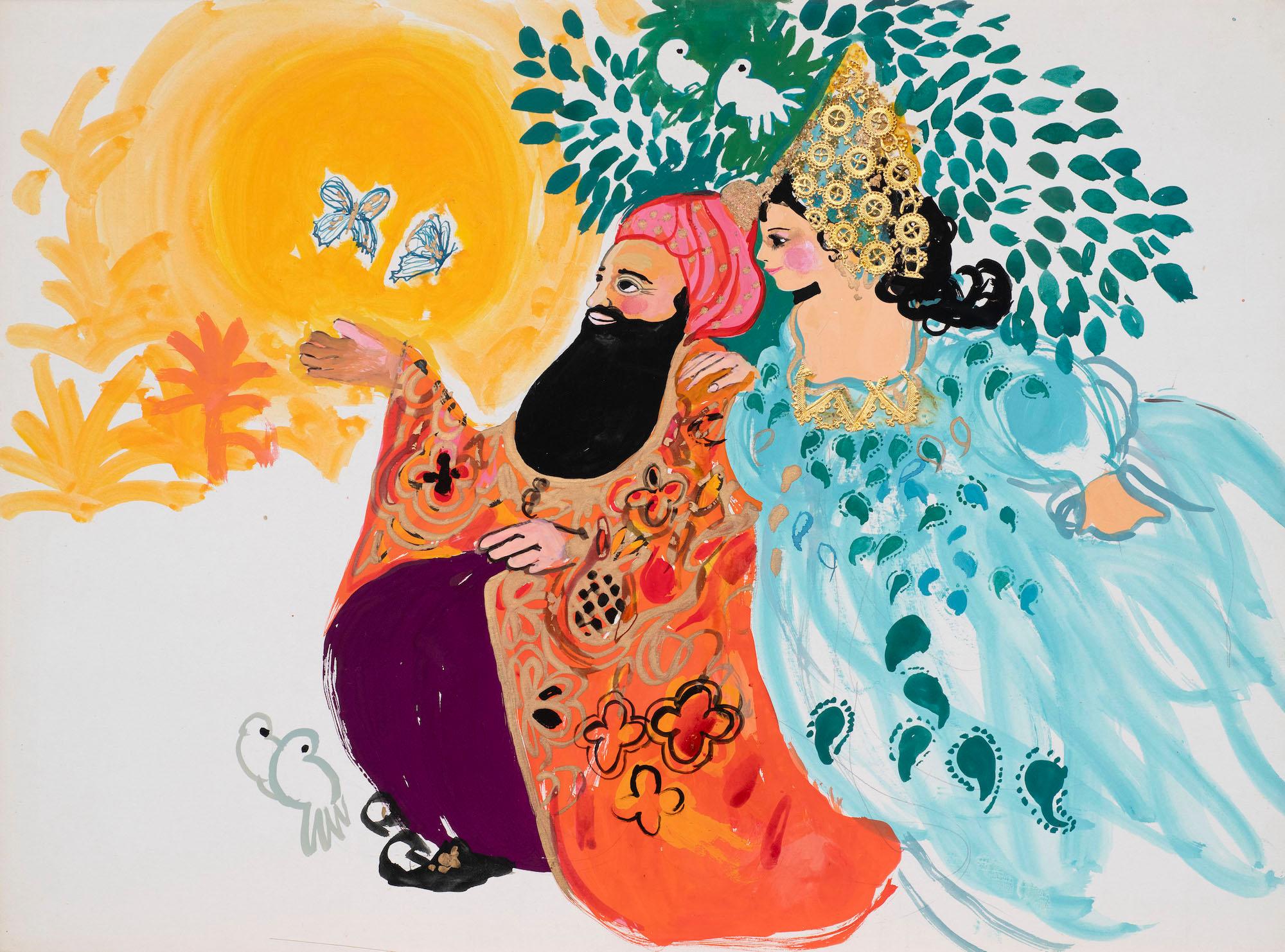
Untitled illustration for Jackanory (Just So Stories: The Butterfly who Stamped) , 1973
Janina Ede (1937-2018) created covers and illustrations for over 100 books in the 1960s, 70s and 80s. Many of her illustrations feature animals, which she drew from life. In the 1970s, Ede was commissioned to create large colourful illustrations for the BBC children’s television series, Jackanory. Each episode was dedicated to a story read by an actor, while specially commissioned illustrations were shown on screen during each programme. Some of these illustrations were for programmes featuring stories by author Rudyard Kipling. His ‘Just So’ stories were short tales that imagined how various animals attained their distinguishing features. Kipling set the stories in parts of India, West Asia and Africa. His descriptions of places and people included racist and exoticised stereotypes. Ede’s illustrations draw extensively on Kipling’s descriptions, and therefore reflect the racism in his work, as well as the prevailing stereotypical views that existed in 1970s Britain. Her own personal views are not documented. This storyboard illustration was produced by Janina Ede for Jackanory episode #1453, 'Just So Stories - The Butterfly that Stamped'. It aired on 4 January 1973.
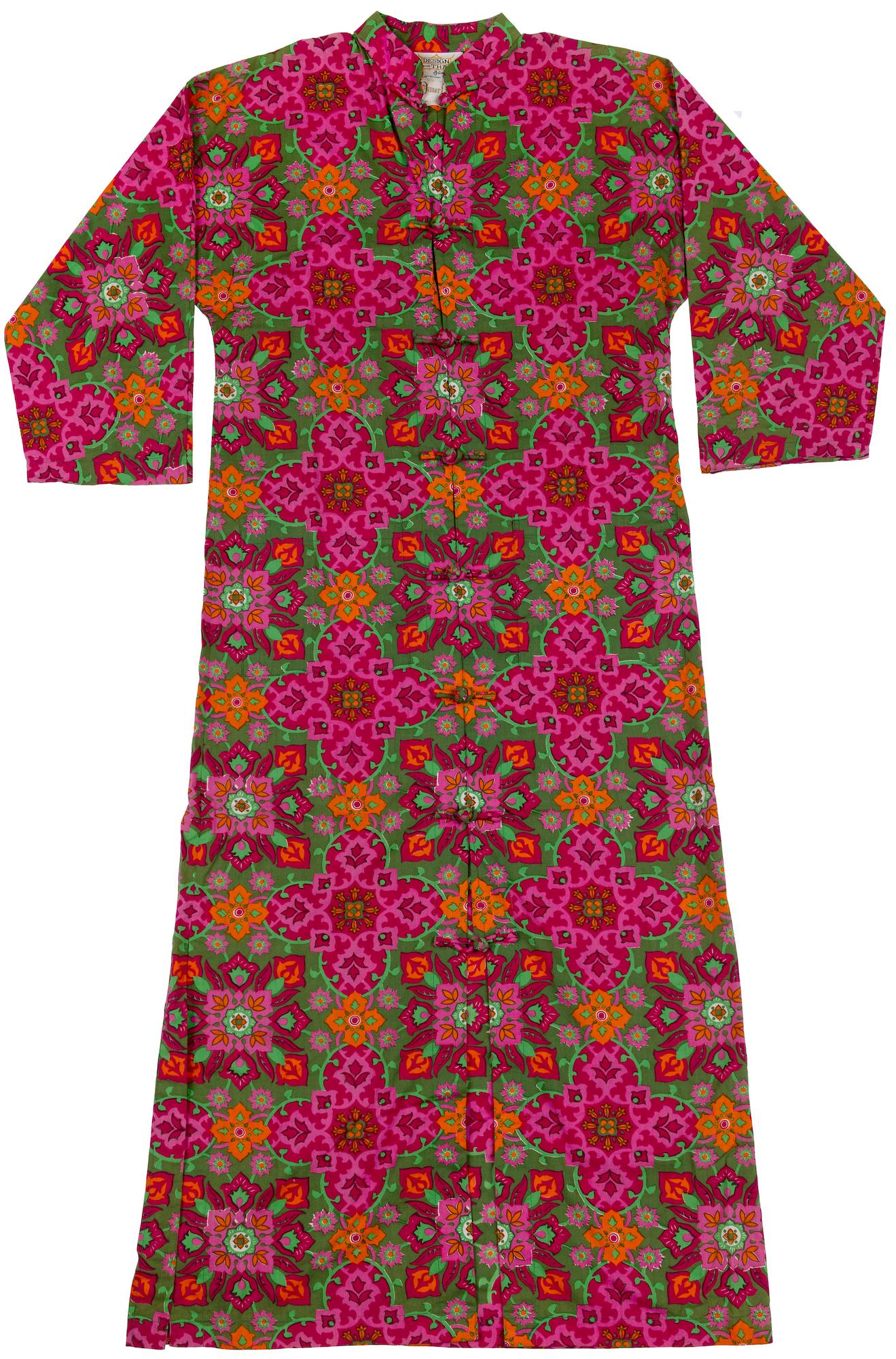
Jacqueline Ayer, Design Thai tunic, c. 1965
In the early 1960s, Jacqueline Ayer founded textile and garment company Design Thai, funded by IBEC (International Basic Economy Corporation) under Norman Rockefeller. The first printed fabrics were inspired by ancient Thai designs from carvings, temples, porcelains, and printed cloths in the vaults of the National Museum Bangkok. Design Thai opened a shop in Bangkok in 1962, and expanded to offer a line of ready-to-wear clothing. In the years that followed, Design Thai went from strength to strength, opening branches in New York and Hong Kong.
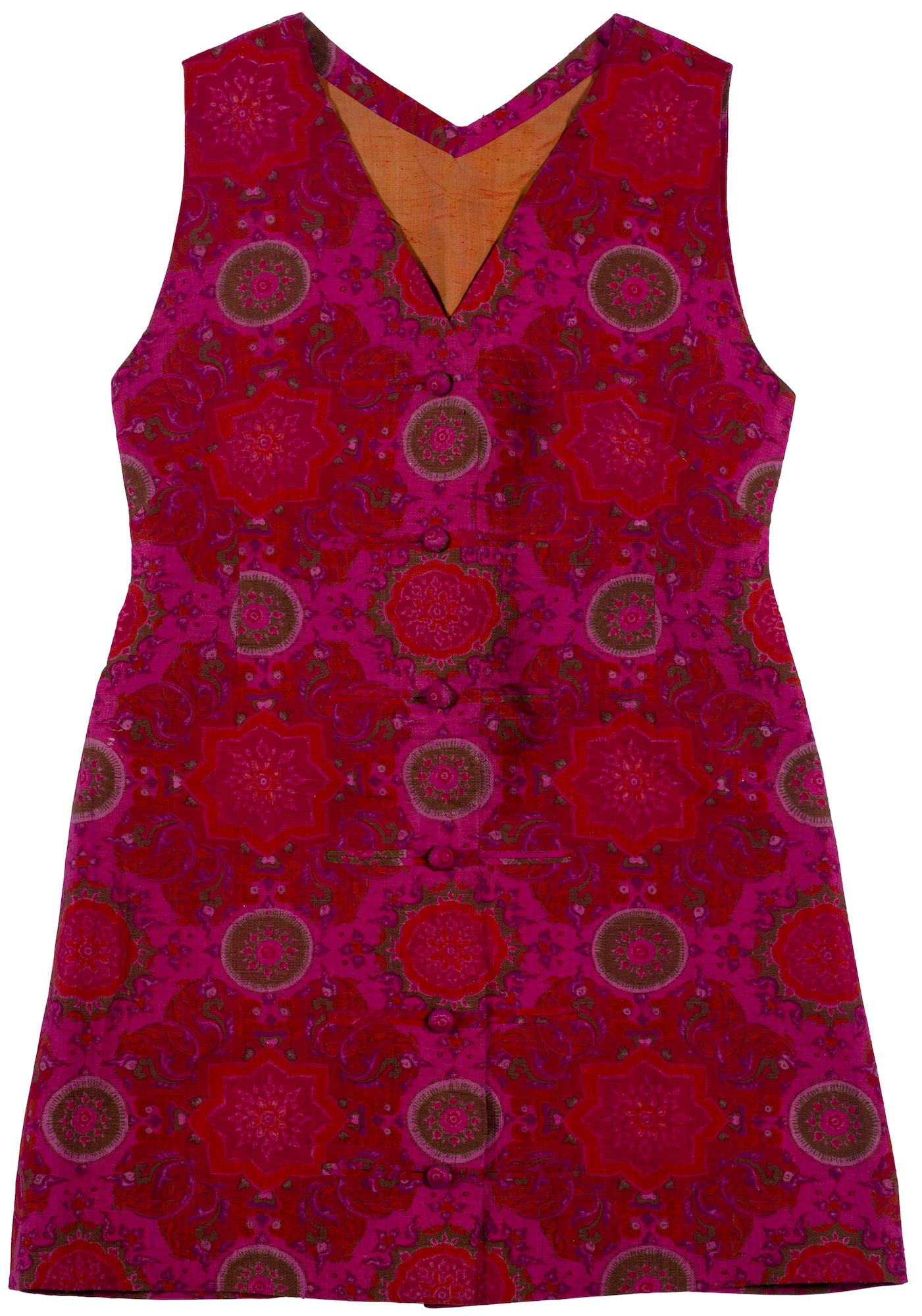
Jacqueline Ayer, Design Thai dress, c. 1965
In the early 1960s, Jacqueline Ayer founded textile and garment company Design Thai, funded by IBEC (International Basic Economy Corporation) under Norman Rockefeller. The first printed fabrics were inspired by ancient Thai designs from carvings, temples, porcelains, and printed cloths in the vaults of the National Museum Bangkok. Design Thai opened a shop in Bangkok in 1962, and expanded to offer a line of ready-to-wear clothing. In the years that followed, Design Thai went from strength to strength, opening branches in New York and Hong Kong.
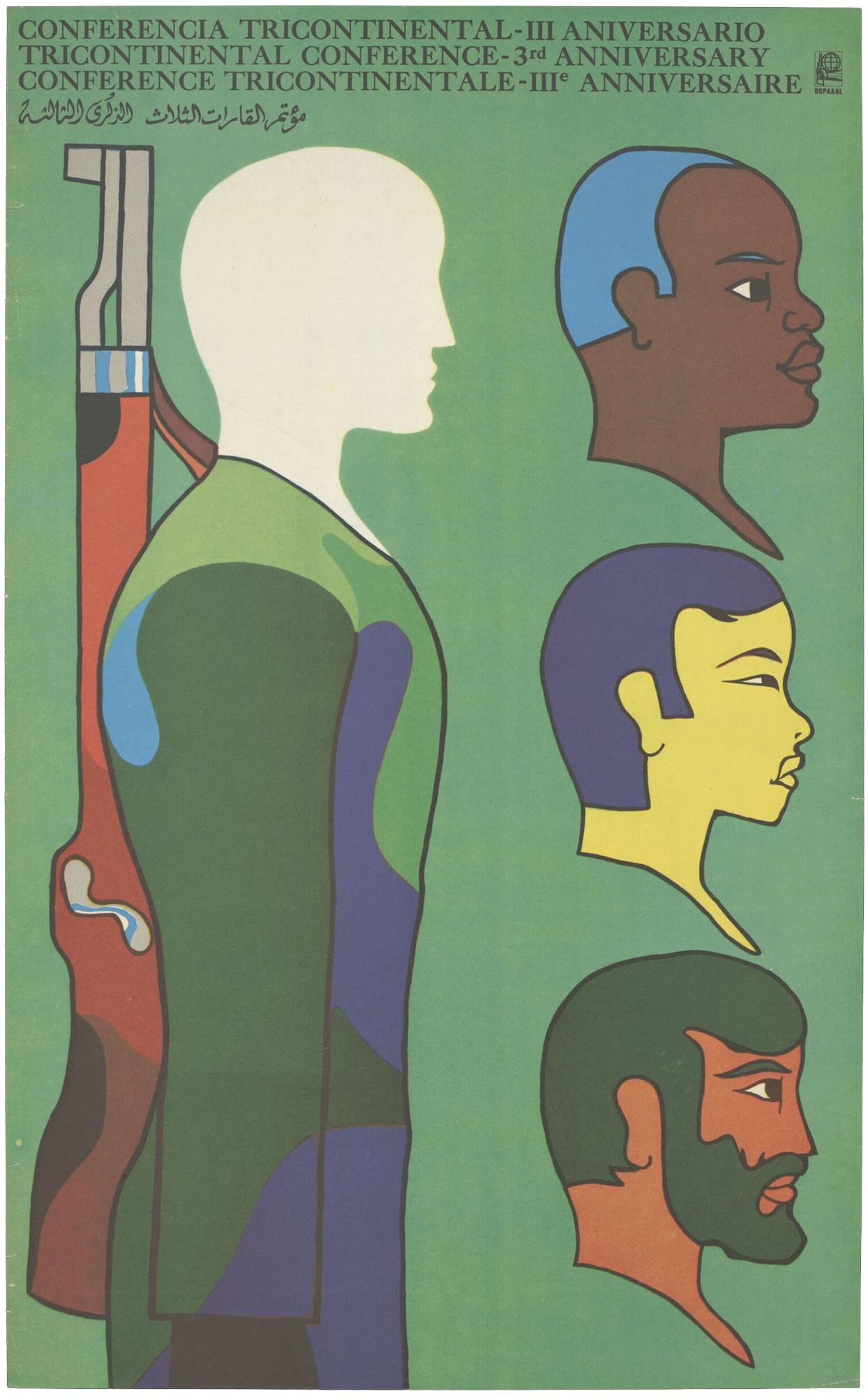
TRICONTINENTAL CONFERENCE - 3rd ANNIVERSARY, 1969
Between the 1960s and 1990s, more than fifty designers worked at OSPAAAL (the Organisation of Solidarity with the People of Africa, Asia and Latin America). Based in Cuba, they made magazines and posters that were sent around the world. Their aim was to promote radical political ideas. Many of their posters celebrate socialist revolutions and liberation movements from the Global South. OSPAAAL was established after the Tricontinental conference held in Havana in 1966. Representatives from 82 governments and national liberation movements discussed their positions on politics, economics, development and culture. Fidel Castro summarised their unifying aim as “the struggle against colonialism, racism and imperialism.” This commemorative poster uses three characters to represent Africa, Asia and Latin America as united by a common purpose.
Content warning: weaponry
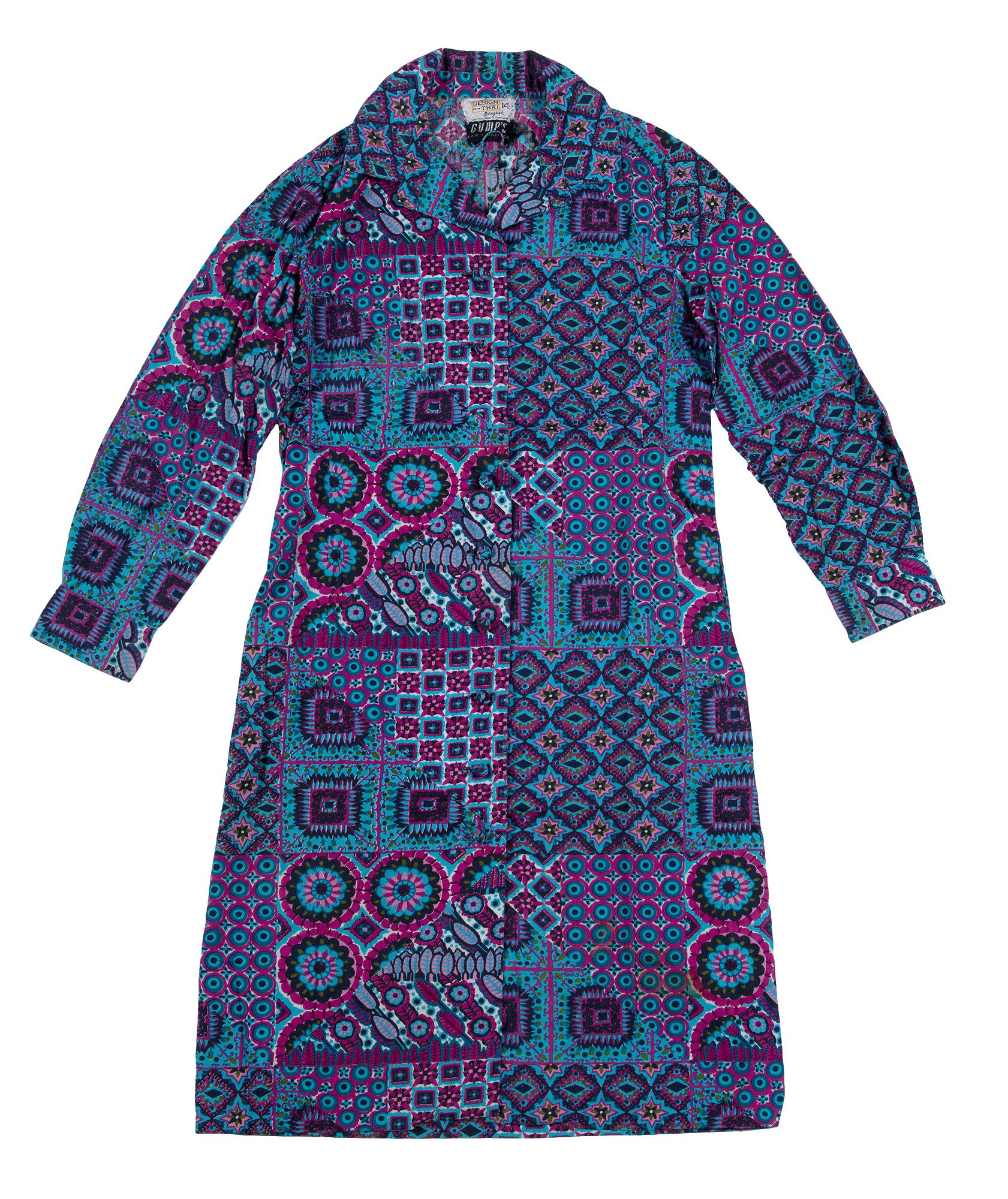
Jacqueline Ayer, Design Thai dress, c. 1965
In the early 1960s, Jacqueline Ayer founded textile and garment company Design Thai, funded by IBEC (International Basic Economy Corporation) under Norman Rockefeller. The first printed fabrics were inspired by ancient Thai designs from carvings, temples, porcelains, and printed cloths in the vaults of the National Museum Bangkok. Design Thai opened a shop in Bangkok in 1962, and expanded to offer a line of ready-to-wear clothing. In the years that followed, Design Thai went from strength to strength, opening branches in New York and Hong Kong.