Silver
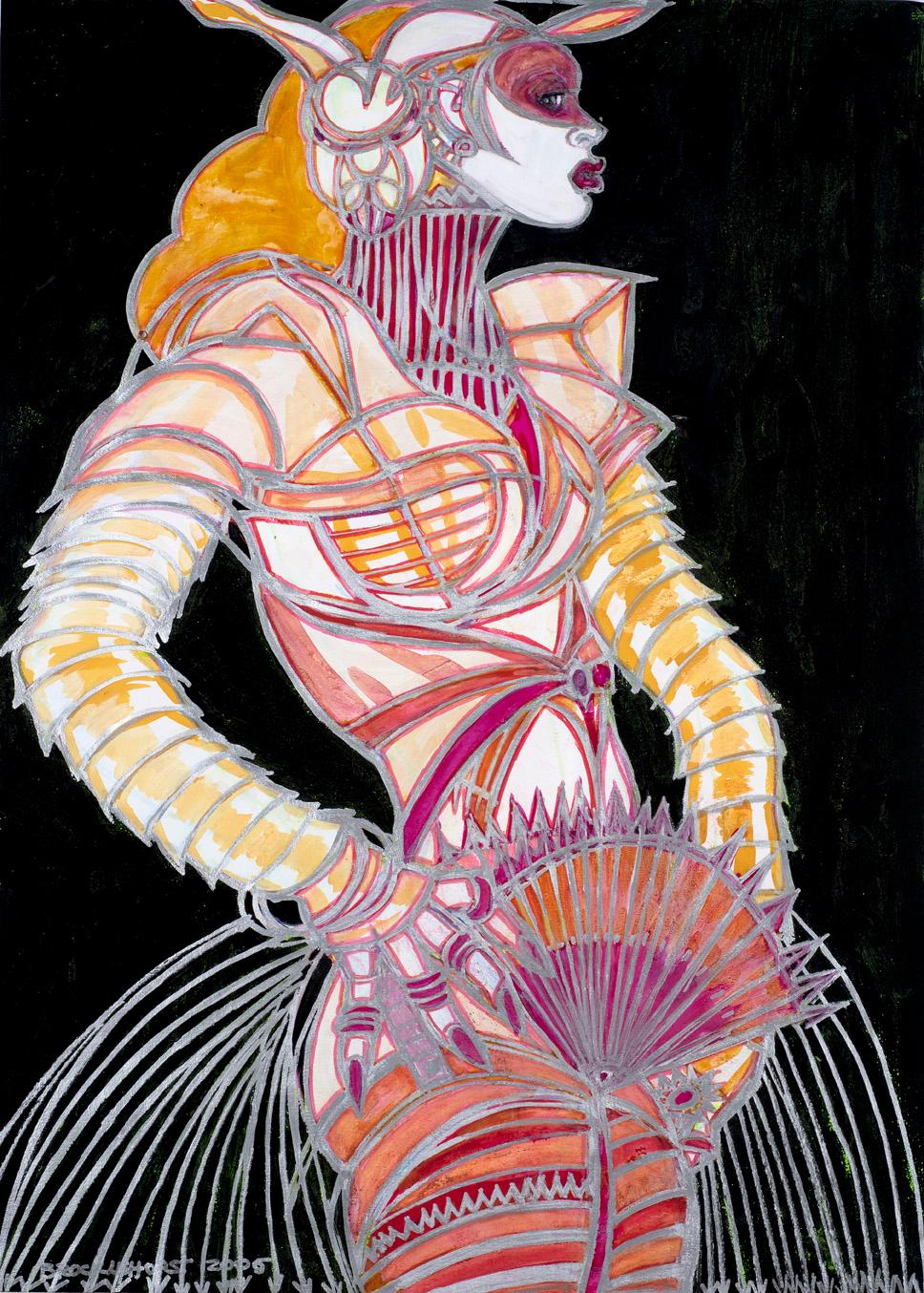
Jo Brocklehurst, Untitled (from Brocklehurst Through the Looking-Glass), 2005
Jo (Josephine) Brocklehurst (1935 - 2006) studied at Central Saint Martins and began her career as a fashion illustrator. She later focused on portraiture, drawing directly from models at her studio in West Hampstead and in nightclubs and theatres in Berlin, London and New York. Her work documents the alternative subcultures of the 1970s, 80s and 90s that went on to shape mainstream fashion and performance scenes. This work is from Brocklehurst Through the Looking-Glass, Brocklehurst’s final series. With an image of herself as a child as the centrepiece, Brocklehurst made hundreds of drawings that re-imagined characters from Lewis Carroll’s Alice novels. Her models were friends and dedicated club-goers who designed and made their own clothes. Works from the series were framed with bright plastic gemstones and hung on every available space at Brocklehurst’s home studio. She used metallic and neon inks that transformed under ultraviolet lights that she switched on for her guests in the evenings.
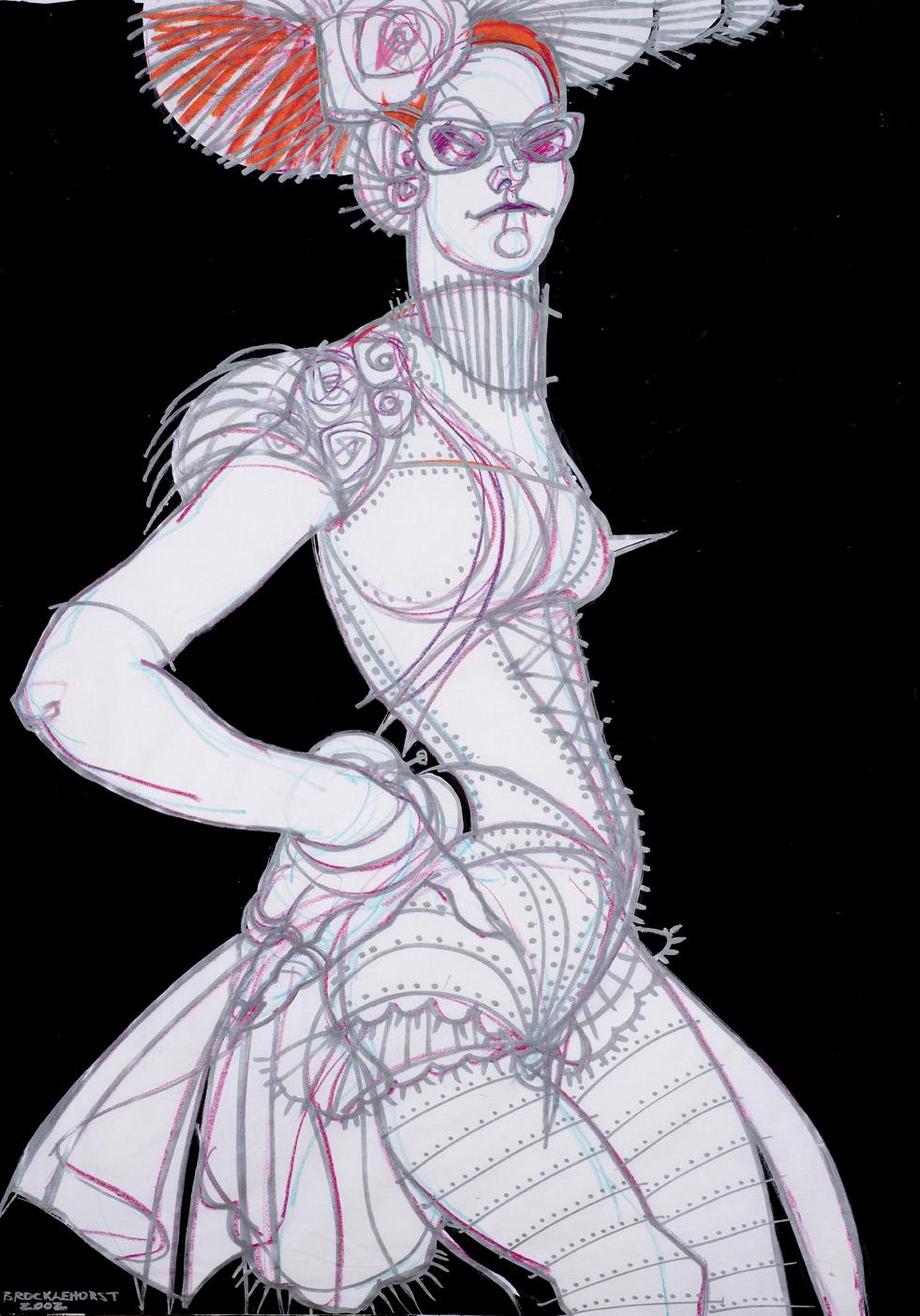
Jo Brocklehurst, Untitled (from Brocklehurst Through the Looking-Glass), 2002
Jo (Josephine) Brocklehurst (1935 - 2006) studied at Central Saint Martins and began her career as a fashion illustrator. She later focused on portraiture, drawing directly from models at her studio in West Hampstead and in nightclubs and theatres in Berlin, London and New York. Her work documents the alternative subcultures of the 1970s, 80s and 90s that went on to shape mainstream fashion and performance scenes. This work is from Brocklehurst Through the Looking-Glass, Brocklehurst’s final series. With an image of herself as a child as the centrepiece, Brocklehurst made hundreds of drawings that re-imagined characters from Lewis Carroll’s Alice novels. Her models were friends and dedicated club-goers who designed and made their own clothes. Brocklehurst’s regular collaborator Isabelle Bricknall was the model for this work. Works from the series were framed with bright plastic gemstones and hung on every available space at Brocklehurst’s home studio. She used metallic and neon inks that transformed under ultraviolet lights that she switched on for her guests in the evenings.
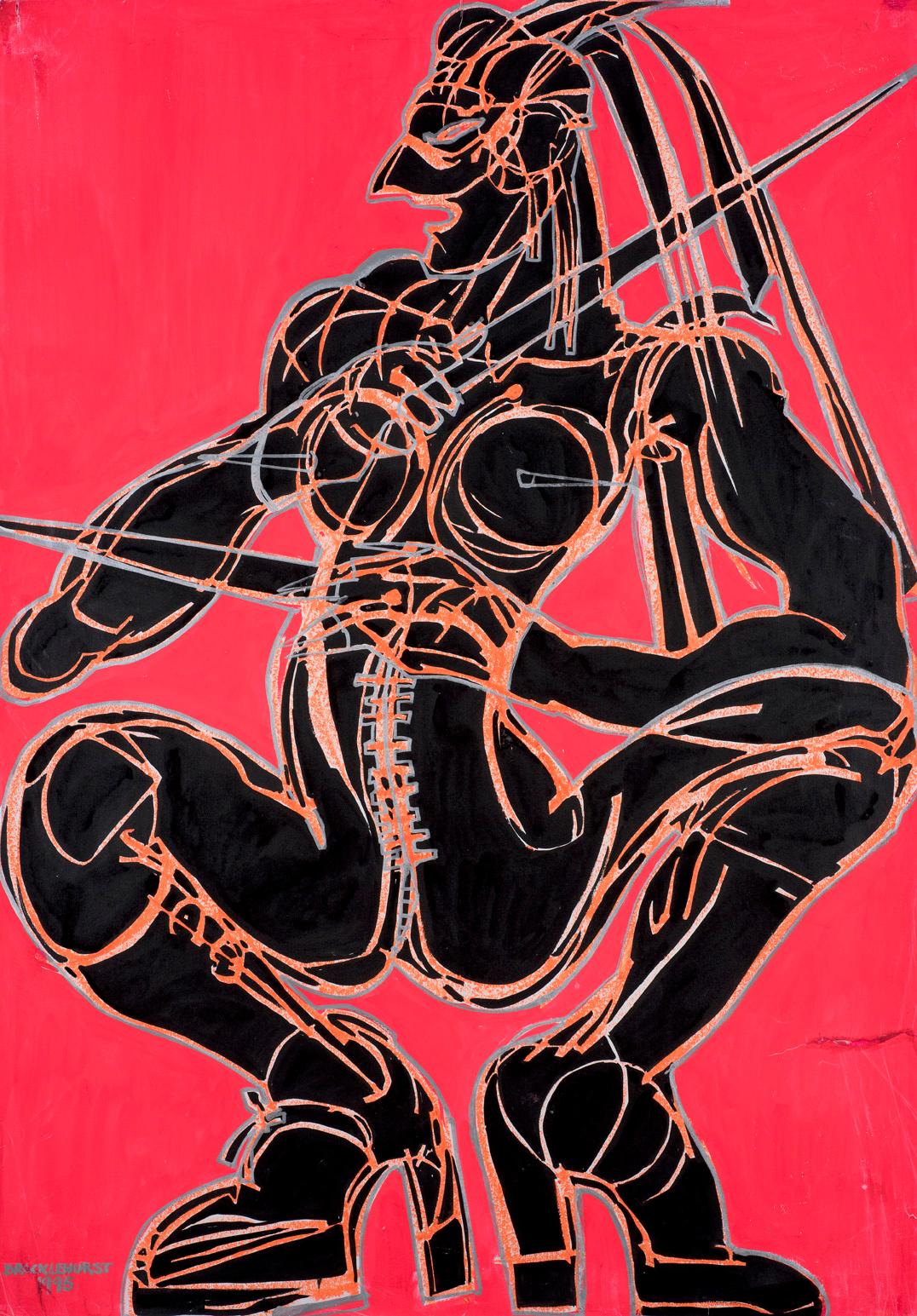
Jo Brocklehurst, Untitled (portrait of Eryka Isaak), 1995
Jo (Josephine) Brocklehurst (1935 - 2006) studied at Central Saint Martins and began her career as a fashion illustrator. She later focused on portraiture, drawing directly from models at her studio in West Hampstead and in nightclubs and theatres in Berlin, London and New York. Her work documents the alternative subcultures of the 1970s, 80s and 90s that went on to shape mainstream fashion and performance scenes. In the 1990s, Brocklehurst began drawing the fashion designers and performers finding space for experimentation in the fetish clubs of Soho and King’s Cross.
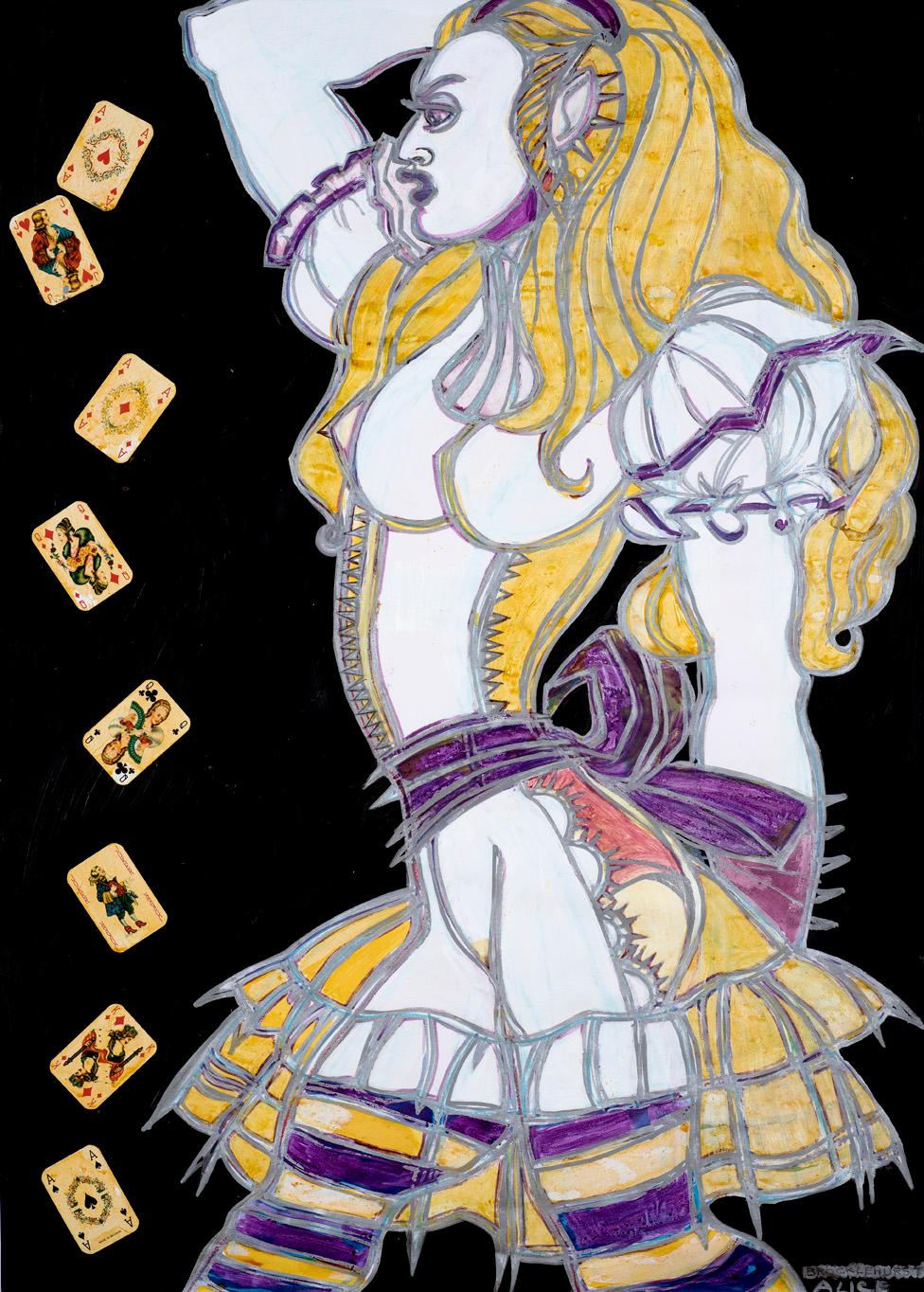
Jo Brocklehurst, Untitled (Alice from Brocklehurst Through the Looking-Glass), 2000s
Jo (Josephine) Brocklehurst (1935 - 2006) studied at Central Saint Martins and began her career as a fashion illustrator. She later focused on portraiture, drawing directly from models at her studio in West Hampstead and in nightclubs and theatres in Berlin, London and New York. Her work documents the alternative subcultures of the 1970s, 80s and 90s that went on to shape mainstream fashion and performance scenes. This work is from Brocklehurst Through the Looking-Glass, Brocklehurst’s final series. With an image of herself as a child as the centrepiece, Brocklehurst made hundreds of drawings that re-imagined characters from Lewis Carroll’s Alice novels. Her models were friends and dedicated club-goers who designed and made their own clothes. Works from the series were framed with bright plastic gemstones and hung on every available space at Brocklehurst’s home studio. She used metallic and neon inks that transformed under ultraviolet lights that she switched on for her guests in the evenings.
Jo Brocklehurst, Untitled (from Brocklehurst Through the Looking-Glass), 2000s
Jo (Josephine) Brocklehurst (1935 - 2006) studied at Central Saint Martins and began her career as a fashion illustrator. She later focused on portraiture, drawing directly from models at her studio in West Hampstead and in nightclubs and theatres in Berlin, London and New York. Her work documents the alternative subcultures of the 1970s, 80s and 90s that went on to shape mainstream fashion and performance scenes. This work is from Brocklehurst Through the Looking-Glass, Brocklehurst’s final series. With an image of herself as a child as the centrepiece, Brocklehurst made hundreds of drawings that re-imagined characters from Lewis Carroll’s Alice novels. Her models were friends and dedicated club-goers who designed and made their own clothes. Brocklehurst’s regular collaborator Isabelle Bricknall was the model for this work. Works from the series were framed with bright plastic gemstones and hung on every available space at Brocklehurst’s home studio. She used metallic and neon inks that transformed under ultraviolet lights that she switched on for her guests in the evenings.
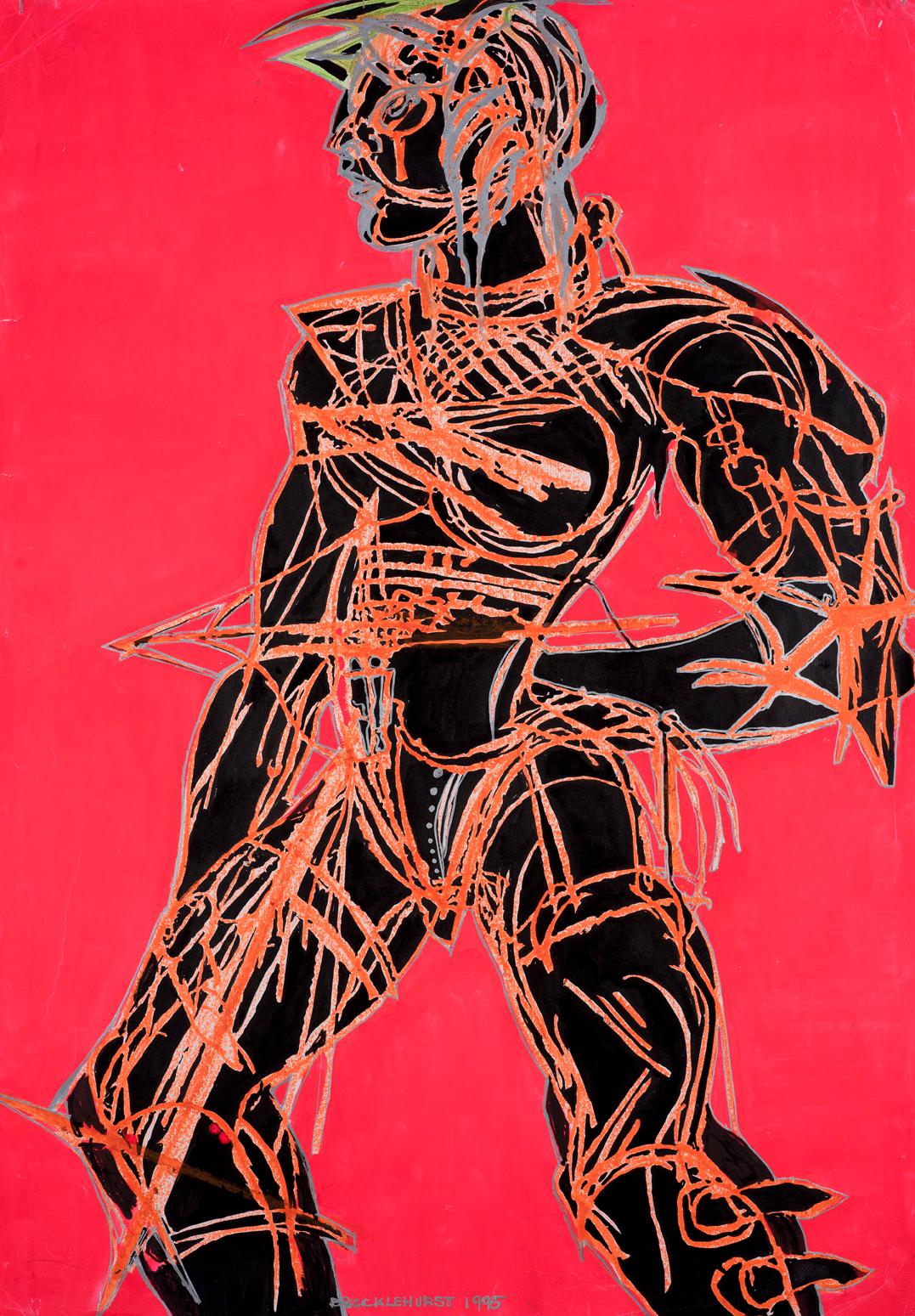
Jo Brocklehurst, Untitled (portrait of Liz de Havilland), 1995
Jo (Josephine) Brocklehurst (1935 - 2006) studied at Central Saint Martins and began her career as a fashion illustrator. She later focused on portraiture, drawing directly from models at her studio in West Hampstead and in nightclubs and theatres in Berlin, London and New York. Her work documents the alternative subcultures of the 1970s, 80s and 90s that went on to shape mainstream fashion and performance scenes. In the 1990s, Brocklehurst began drawing the fashion designers and performers finding space for experimentation in the fetish clubs of Soho and King’s Cross.
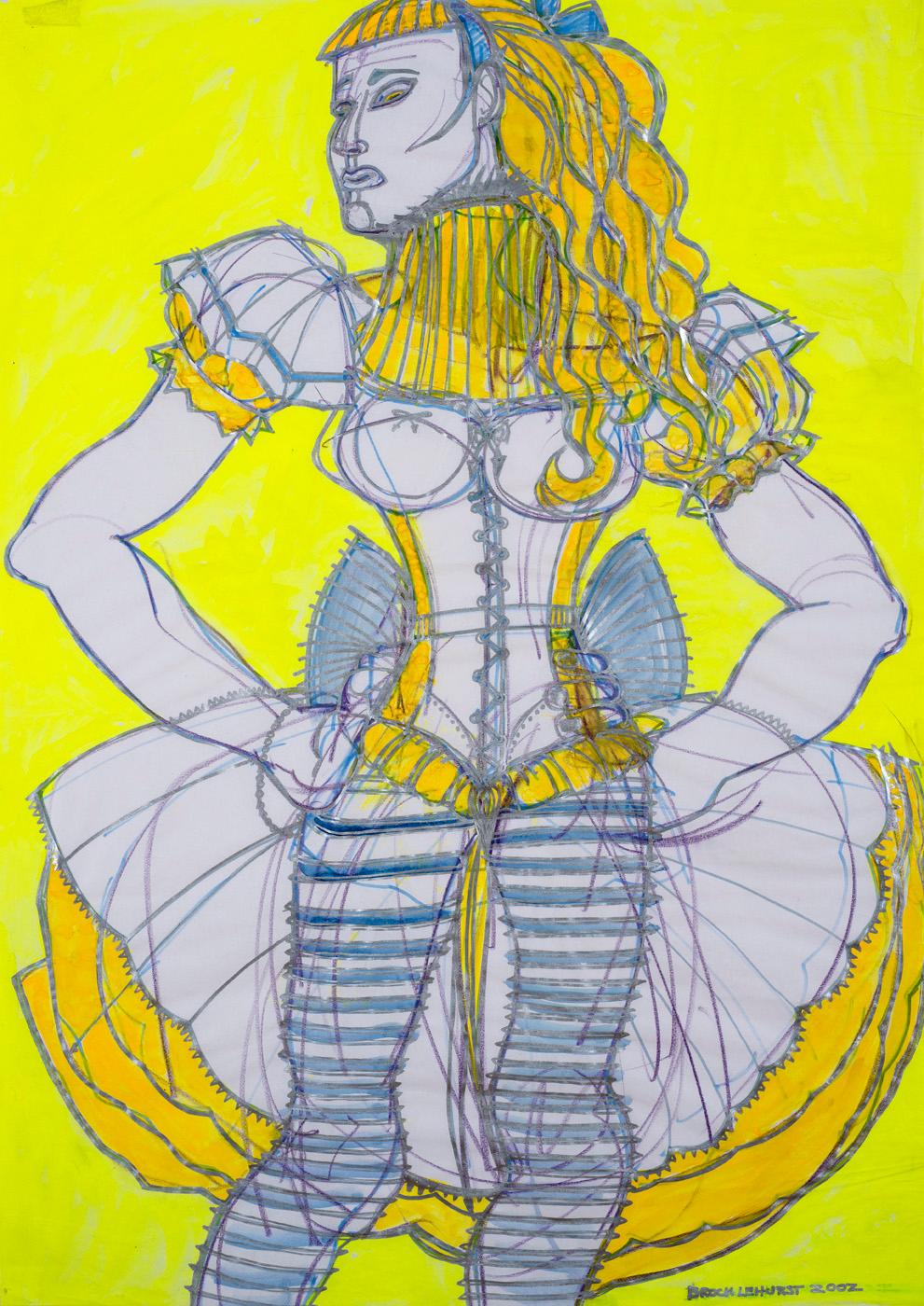
Jo Brocklehurst, Untitled (Alice from Brocklehurst Through the Looking-Glass), 2002
Jo (Josephine) Brocklehurst (1935 - 2006) studied at Central Saint Martins and began her career as a fashion illustrator. She later focused on portraiture, drawing directly from models at her studio in West Hampstead and in nightclubs and theatres in Berlin, London and New York. Her work documents the alternative subcultures of the 1970s, 80s and 90s that went on to shape mainstream fashion and performance scenes. This work is from Brocklehurst Through the Looking-Glass, Brocklehurst’s final series. With an image of herself as a child as the centrepiece, Brocklehurst made hundreds of drawings that re-imagined characters from Lewis Carroll’s Alice novels. Her models were friends and dedicated club-goers who designed and made their own clothes. Works from the series were framed with bright plastic gemstones and hung on every available space at Brocklehurst’s home studio. She used metallic and neon inks that transformed under ultraviolet lights that she switched on for her guests in the evenings.
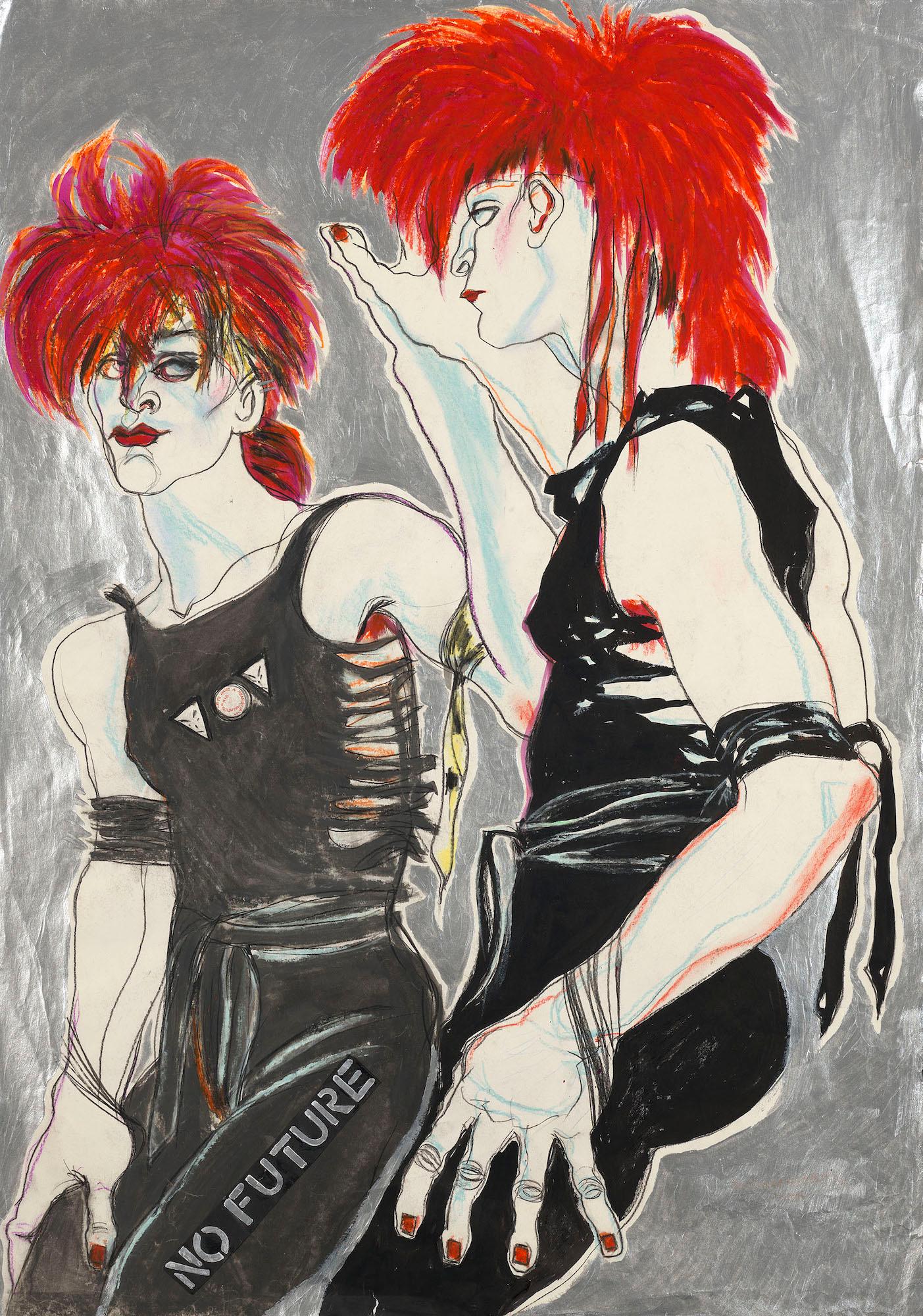
Jo Brocklehurst, Untitled (portrait of Iggy), 1980s
Jo (Josephine) Brocklehurst (1935 - 2006) studied at Central Saint Martins and began her career as a fashion illustrator. She later focused on portraiture, drawing directly from models at her studio in West Hampstead and in nightclubs and theatres in Berlin, London and New York. Her work documents the alternative subcultures of the 1970s, 80s and 90s that went on to shape mainstream fashion and performance scenes. In the 1980s, Brocklehurst drew a series portraits of members of the Kill Your Pet Puppy collective who were living in a squat close to her studio. Attracted to their anarcho-punk dress and ethos, she said “I felt that they understood very well what was going on in the world, what was in it for them”.
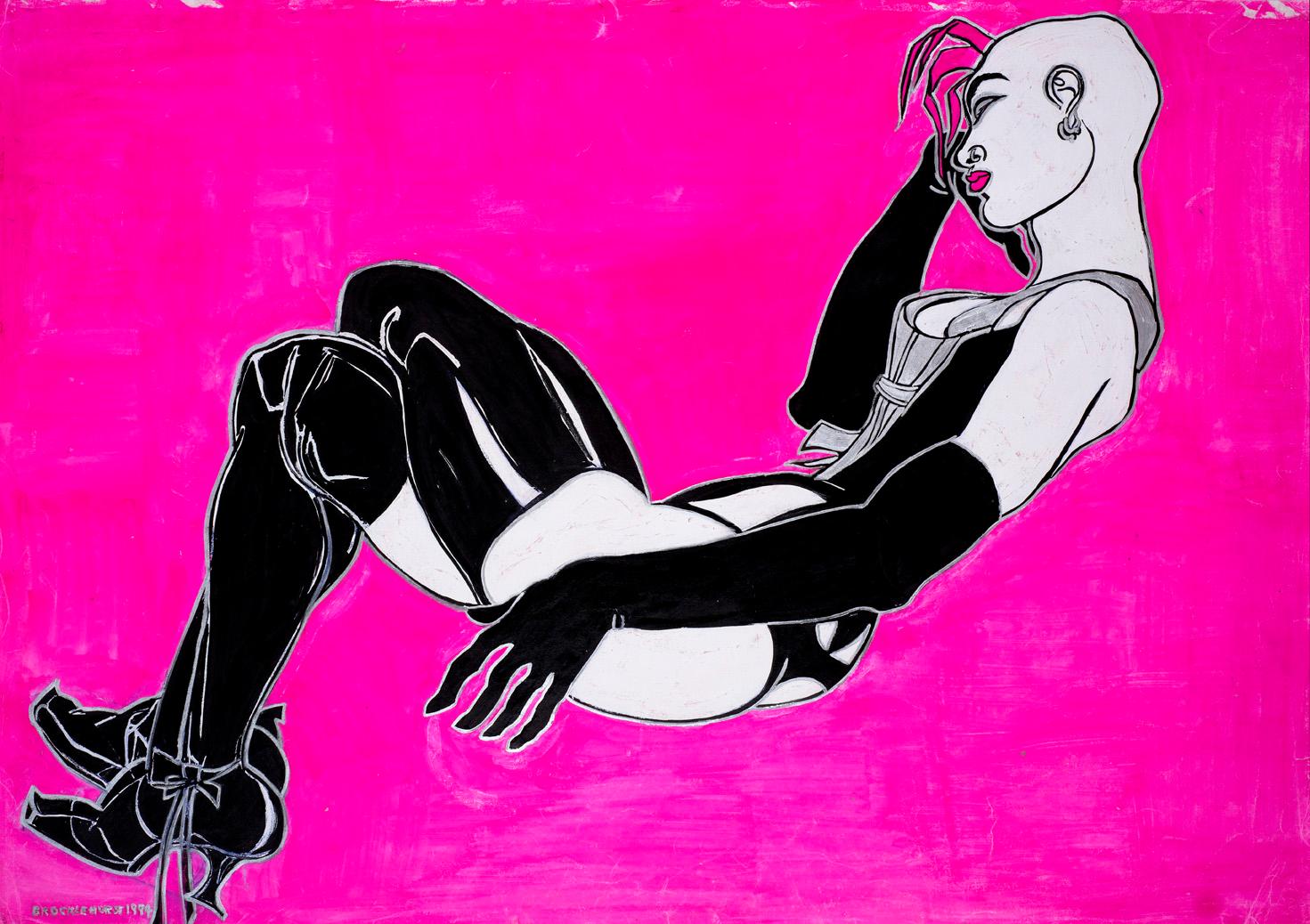
Jo Brocklehurst, Untitled (portrait of Betty Blue), 1994
Jo (Josephine) Brocklehurst (1935 - 2006) studied at Central Saint Martins and began her career as a fashion illustrator. She later focused on portraiture, drawing directly from models at her studio in West Hampstead and in nightclubs and theatres in Berlin, London and New York. Her work documents the alternative subcultures of the 1970s, 80s and 90s that went on to shape mainstream fashion and performance scenes. In the 1990s, Brocklehurst began drawing the fashion designers and performers finding space for experimentation in the fetish clubs of Soho and King’s Cross.
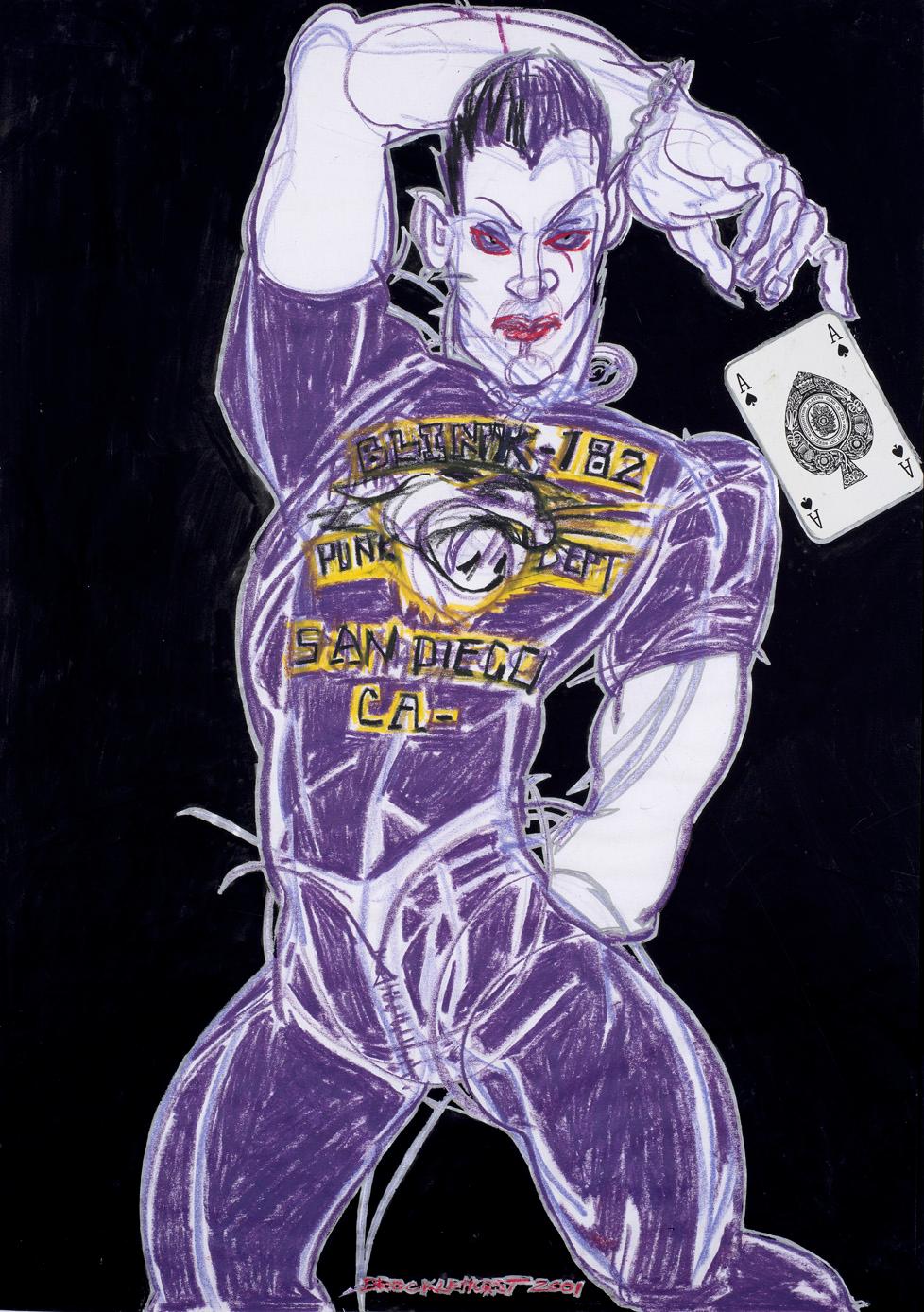
Jo Brocklehurst, Untitled (from Brocklehurst Through the Looking-Glass), 2001
Jo (Josephine) Brocklehurst (1935 - 2006) studied at Central Saint Martins and began her career as a fashion illustrator. She later focused on portraiture, drawing directly from models at her studio in West Hampstead and in nightclubs and theatres in Berlin, London and New York. Her work documents the alternative subcultures of the 1970s, 80s and 90s that went on to shape mainstream fashion and performance scenes. This work is from Brocklehurst Through the Looking-Glass, Brocklehurst’s final series. With an image of herself as a child as the centrepiece, Brocklehurst made hundreds of drawings that re-imagined characters from Lewis Carroll’s Alice novels. Her models were friends and dedicated club-goers who designed and made their own clothes. Works from the series were framed with bright plastic gemstones and hung on every available space at Brocklehurst’s home studio. She used metallic and neon inks that transformed under ultraviolet lights that she switched on for her guests in the evenings.
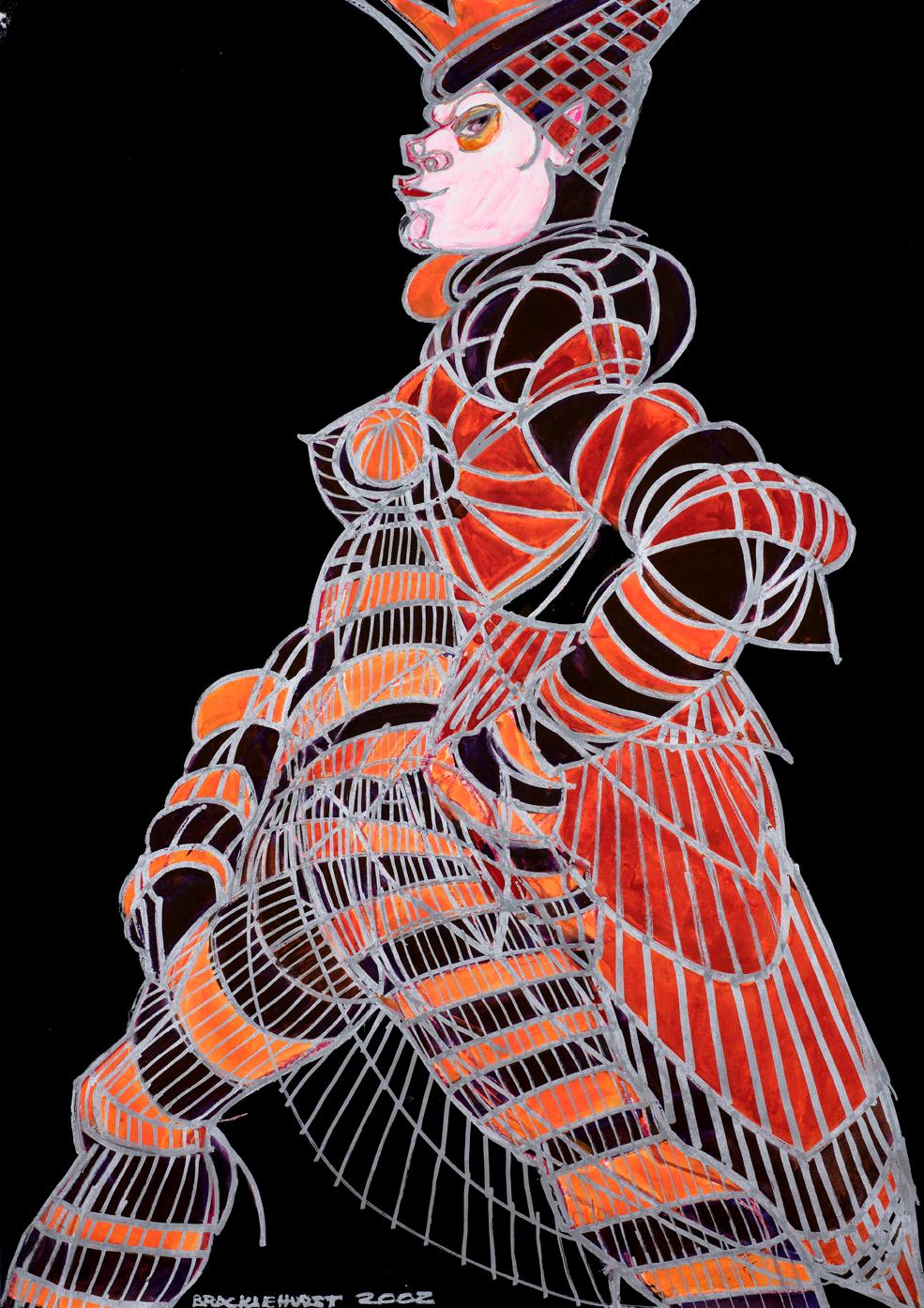
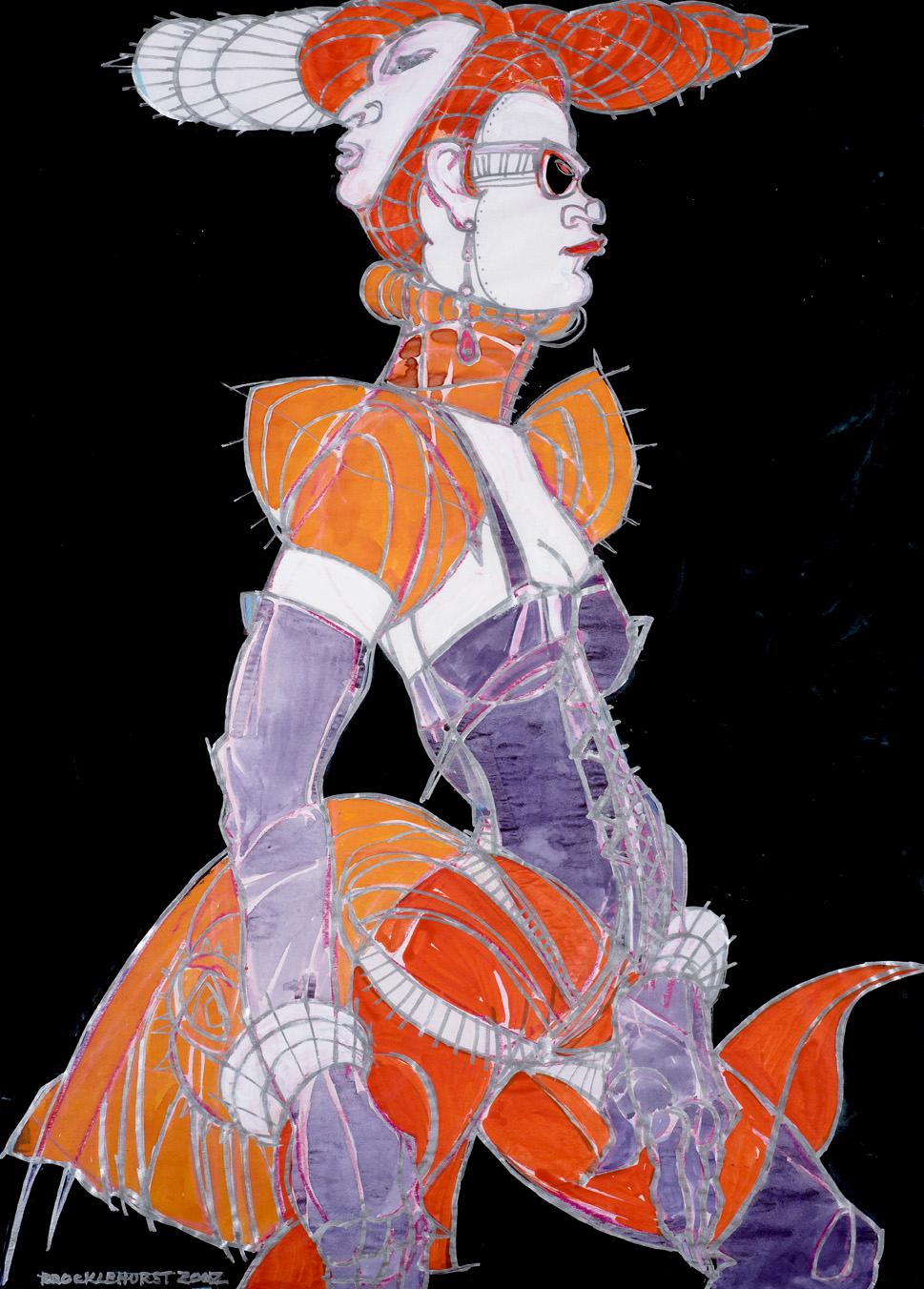
Jo Brocklehurst, Untitled (Red Queen from Brocklehurst Through the Looking-Glass) , 2002
Jo (Josephine) Brocklehurst (1935 - 2006) studied at Central Saint Martins and began her career as a fashion illustrator. She later focused on portraiture, drawing directly from models at her studio in West Hampstead and in nightclubs and theatres in Berlin, London and New York. Her work documents the alternative subcultures of the 1970s, 80s and 90s that went on to shape mainstream fashion and performance scenes. This work is from Brocklehurst Through the Looking-Glass, Brocklehurst’s final series. With an image of herself as a child as the centrepiece, Brocklehurst made hundreds of drawings that re-imagined characters from Lewis Carroll’s Alice novels. Her models were friends and dedicated club-goers who designed and made their own clothes. Brocklehurst’s regular collaborator Isabelle Bricknall was the model for this work. Works from the series were framed with bright plastic gemstones and hung on every available space at Brocklehurst’s home studio. She used metallic and neon inks that transformed under ultraviolet lights that she switched on for her guests in the evenings.
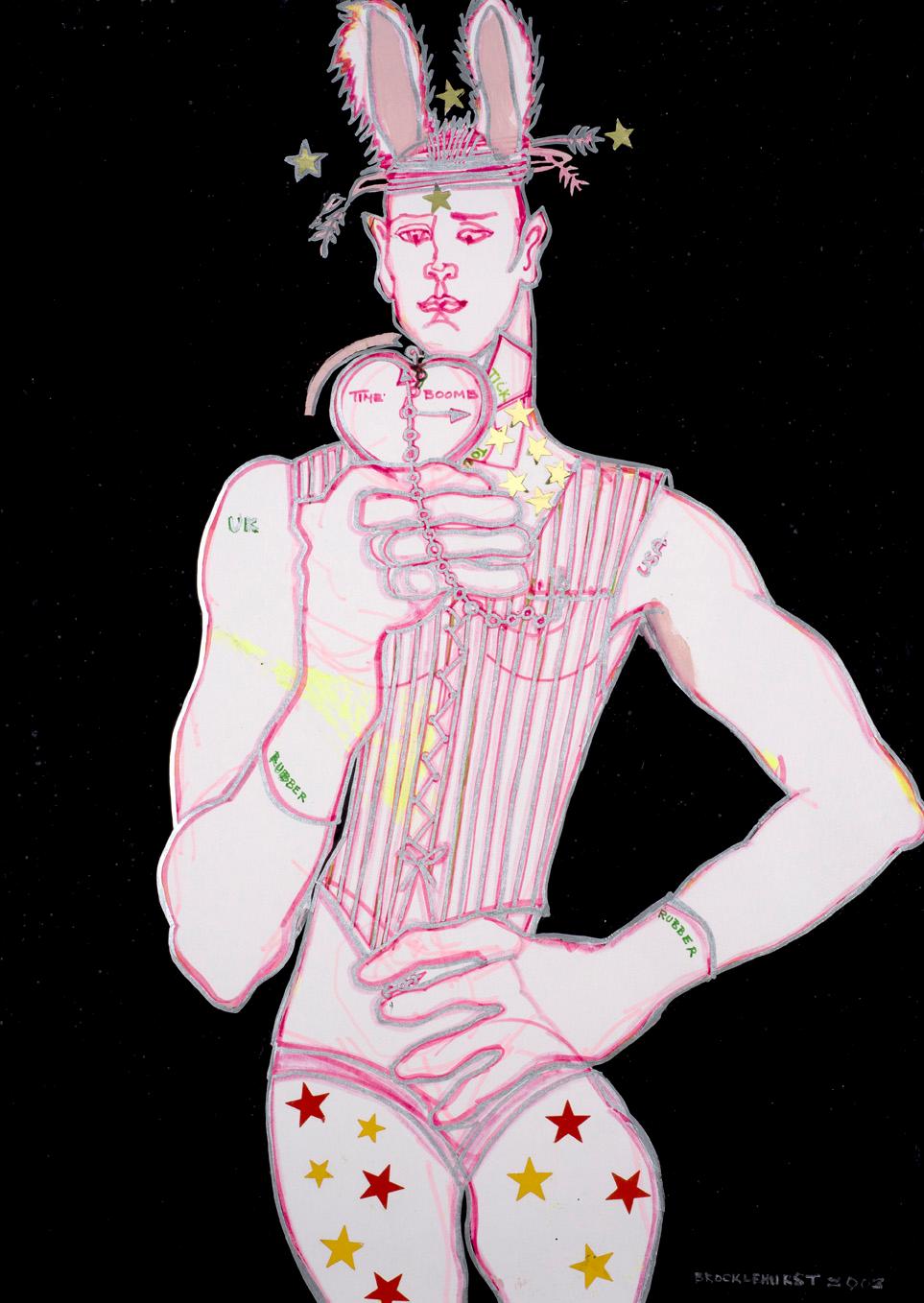
Jo Brocklehurst, Untitled (White Rabbit from Brocklehurst Through the Looking-Glass), 2003
Jo (Josephine) Brocklehurst (1935 - 2006) studied at Central Saint Martins and began her career as a fashion illustrator. She later focused on portraiture, drawing directly from models at her studio in West Hampstead and in nightclubs and theatres in Berlin, London and New York. Her work documents the alternative subcultures of the 1970s, 80s and 90s that went on to shape mainstream fashion and performance scenes. This work is from Brocklehurst Through the Looking-Glass, Brocklehurst’s final series. With an image of herself as a child as the centrepiece, Brocklehurst made hundreds of drawings that re-imagined characters from Lewis Carroll’s Alice novels. Her models were friends and dedicated club-goers who designed and made their own clothes. Works from the series were framed with bright plastic gemstones and hung on every available space at Brocklehurst’s home studio. She used metallic and neon inks that transformed under ultraviolet lights that she switched on for her guests in the evenings.
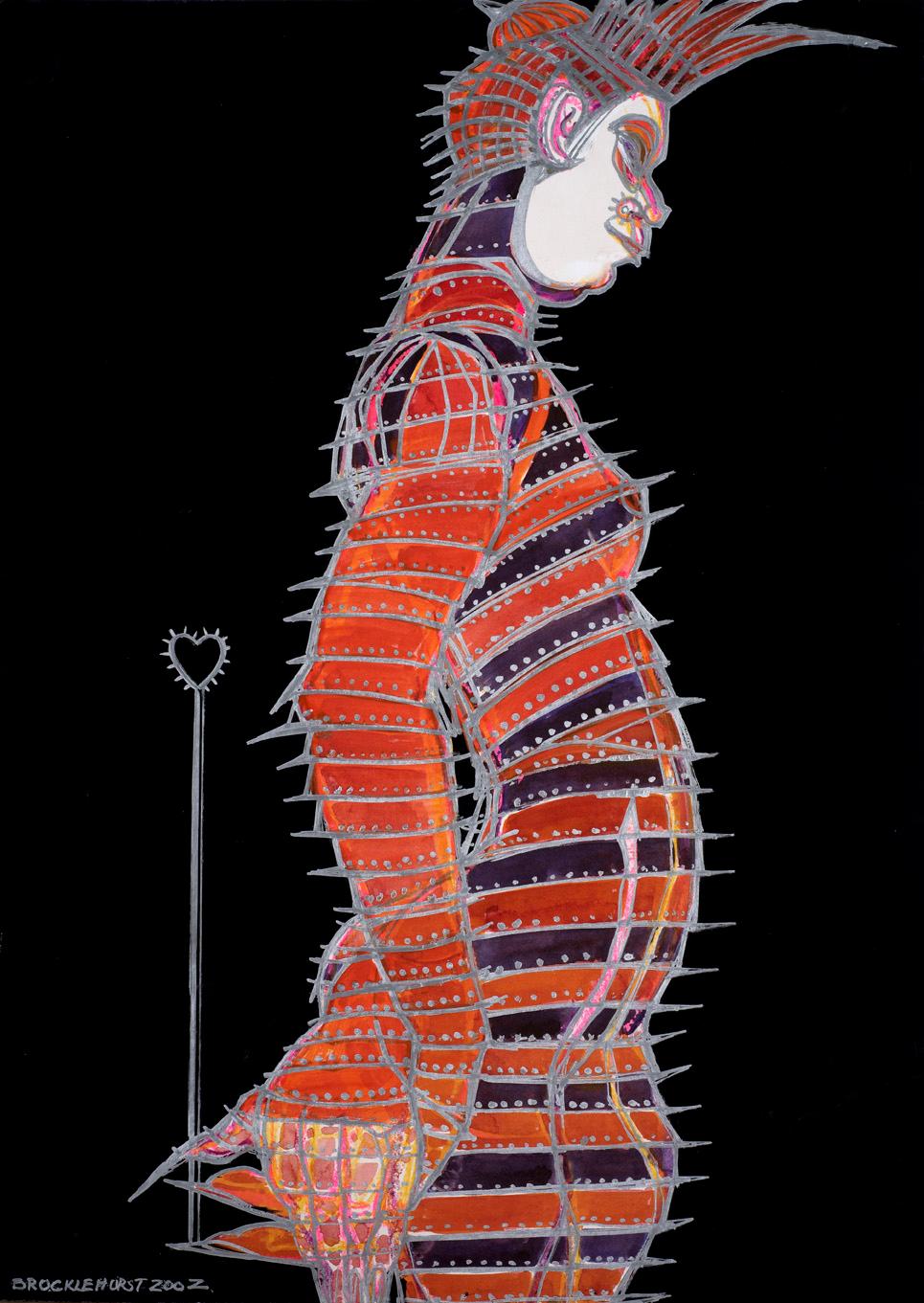
Jo Brocklehurst, Untitled (Red Queen from Brocklehurst Through the Looking-Glass), 2002
Jo (Josephine) Brocklehurst (1935 - 2006) studied at Central Saint Martins and began her career as a fashion illustrator. She later focused on portraiture, drawing directly from models at her studio in West Hampstead and in nightclubs and theatres in Berlin, London and New York. Her work documents the alternative subcultures of the 1970s, 80s and 90s that went on to shape mainstream fashion and performance scenes. This work is from Brocklehurst Through the Looking-Glass, Brocklehurst’s final series. With an image of herself as a child as the centrepiece, Brocklehurst made hundreds of drawings that re-imagined characters from Lewis Carroll’s Alice novels. Her models were friends and dedicated club-goers who designed and made their own clothes. Brocklehurst’s regular collaborator Isabelle Bricknall was the model for this work. Works from the series were framed with bright plastic gemstones and hung on every available space at Brocklehurst’s home studio. She used metallic and neon inks that transformed under ultraviolet lights that she switched on for her guests in the evenings.
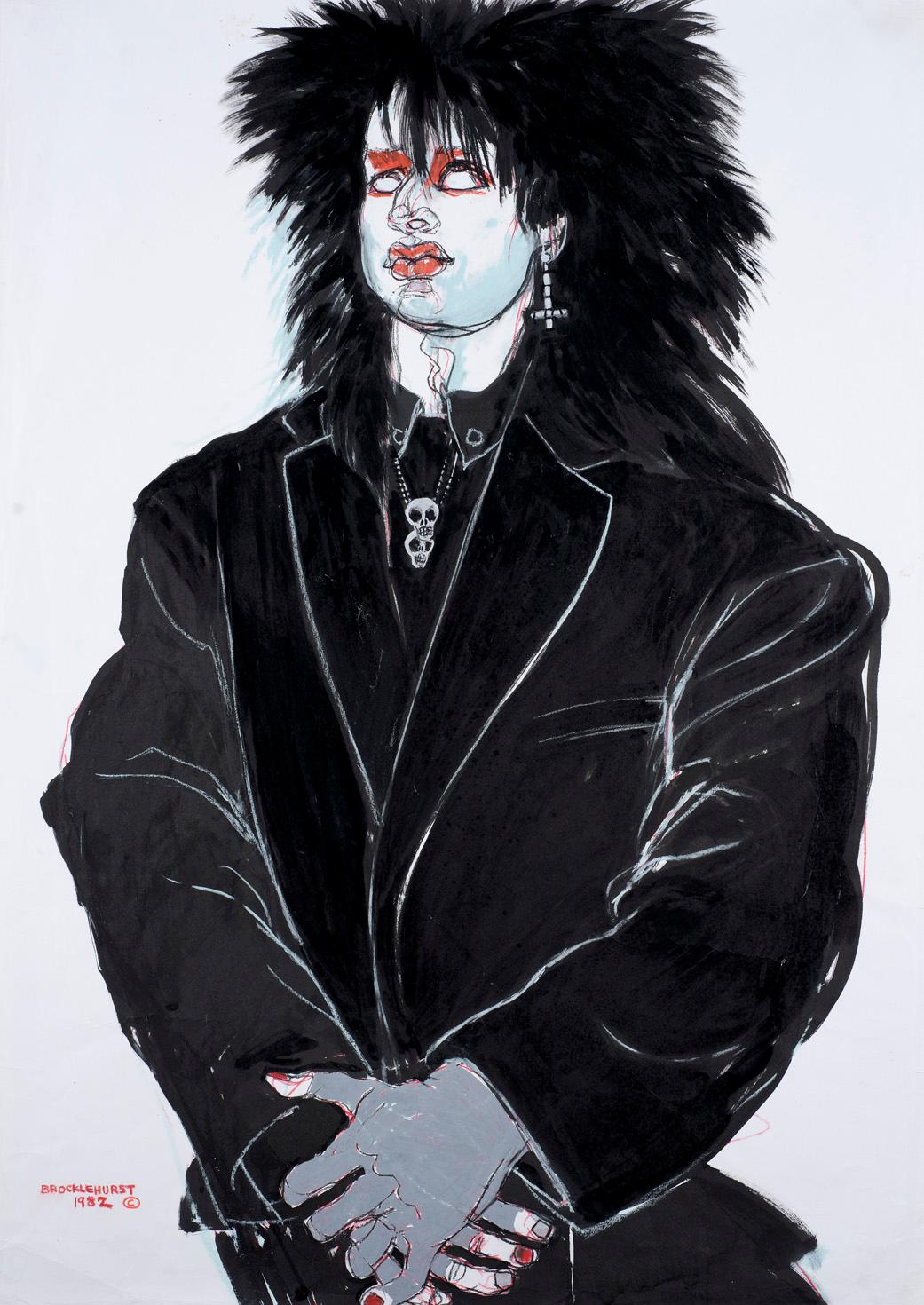
Jo Brocklehurst, Untitled (portrait of Julian), 1982
Jo (Josephine) Brocklehurst (1935 - 2006) studied at Central Saint Martins and began her career as a fashion illustrator. She later focused on portraiture, drawing directly from models at her studio in West Hampstead and in nightclubs and theatres in Berlin, London and New York. Her work documents the alternative subcultures of the 1970s, 80s and 90s that went on to shape mainstream fashion and performance scenes. In the 1980s, Brocklehurst drew a series portraits of members of the Kill Your Pet Puppy collective who were living in a squat close to her studio. Attracted to their anarcho-punk dress and ethos, she said “I felt that they understood very well what was going on in the world, what was in it for them”. This portrait is of Tony Drayton, founder of Kill Your Pet Puppy and punk fanzine Ripped And Torn.
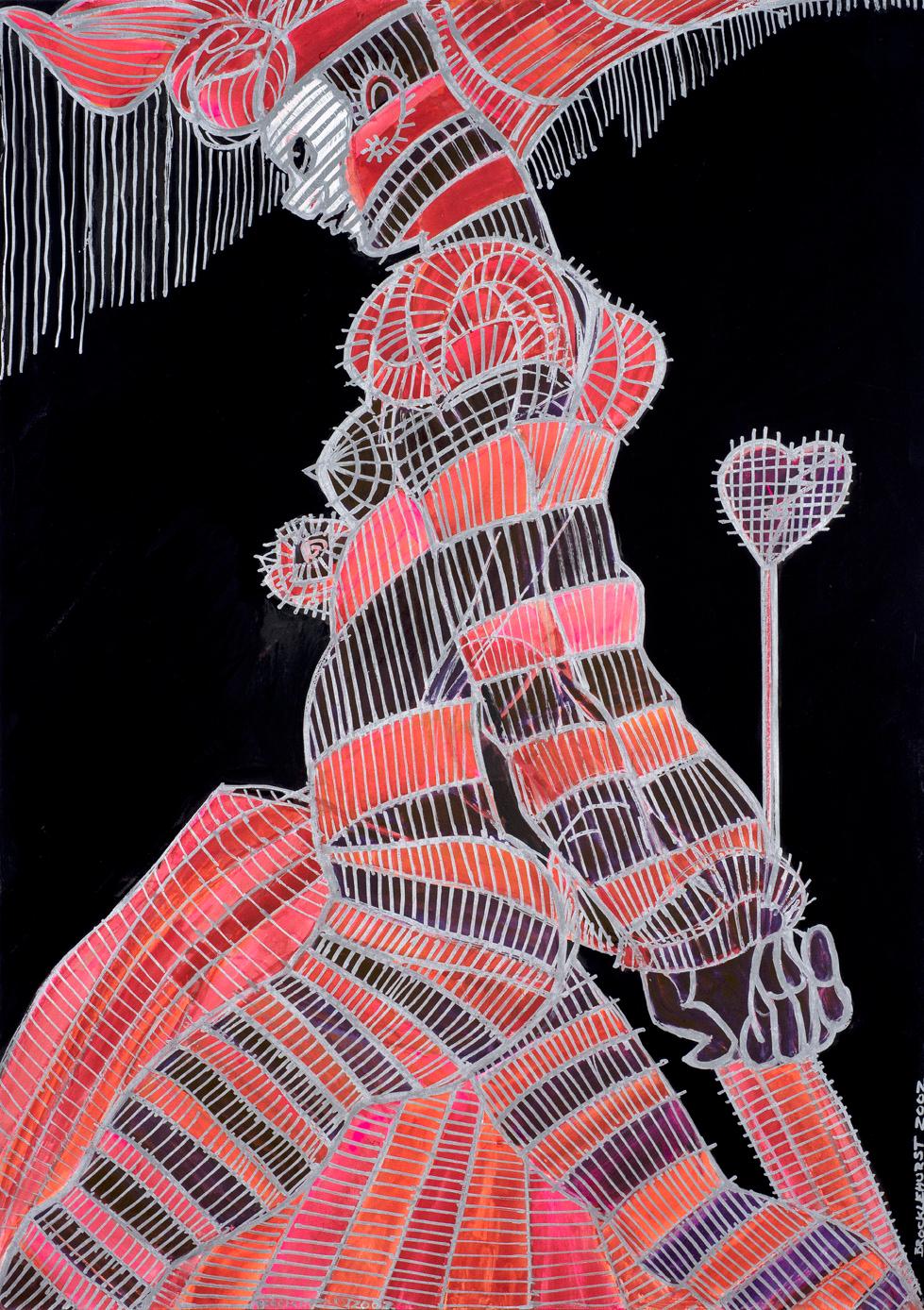
Jo Brocklehurst, Untitled (Red Queen from Brocklehurst Through the Looking-Glass), 2002
Jo (Josephine) Brocklehurst (1935 - 2006) studied at Central Saint Martins and began her career as a fashion illustrator. She later focused on portraiture, drawing directly from models at her studio in West Hampstead and in nightclubs and theatres in Berlin, London and New York. Her work documents the alternative subcultures of the 1970s, 80s and 90s that went on to shape mainstream fashion and performance scenes. This work is from Brocklehurst Through the Looking-Glass, Brocklehurst’s final series. With an image of herself as a child as the centrepiece, Brocklehurst made hundreds of drawings that re-imagined characters from Lewis Carroll’s Alice novels. Her models were friends and dedicated club-goers who designed and made their own clothes. Brocklehurst’s regular collaborator Isabelle Bricknall was the model for this work. Works from the series were framed with bright plastic gemstones and hung on every available space at Brocklehurst’s home studio. She used metallic and neon inks that transformed under ultraviolet lights that she switched on for her guests in the evenings.
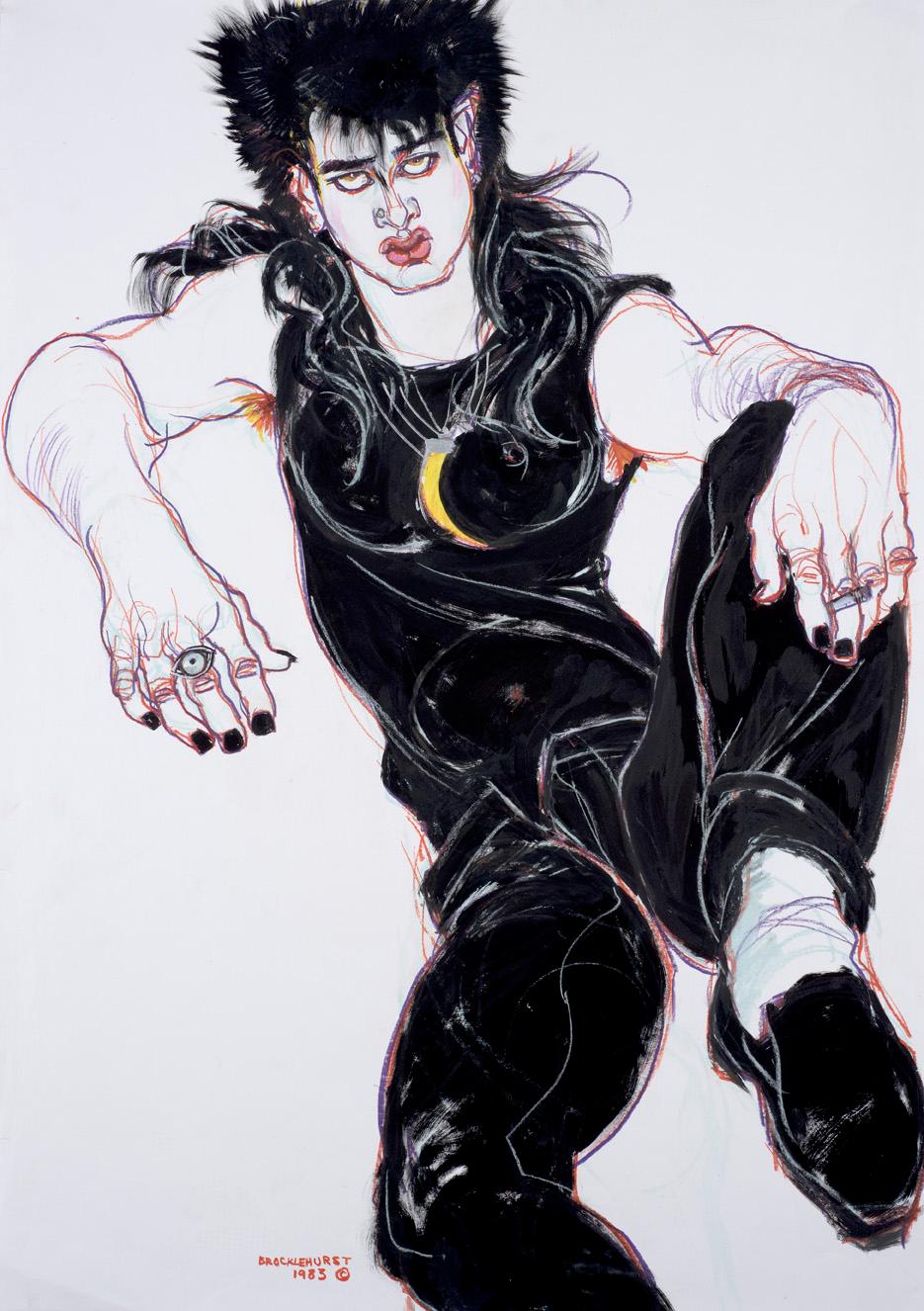
Jo Brocklehurst, Untitled, 1983
Jo (Josephine) Brocklehurst (1935 - 2006) studied at Central Saint Martins and began her career as a fashion illustrator. She later focused on portraiture, drawing directly from models at her studio in West Hampstead and in nightclubs and theatres in Berlin, London and New York. Her work documents the alternative subcultures of the 1970s, 80s and 90s that went on to shape mainstream fashion and performance scenes.
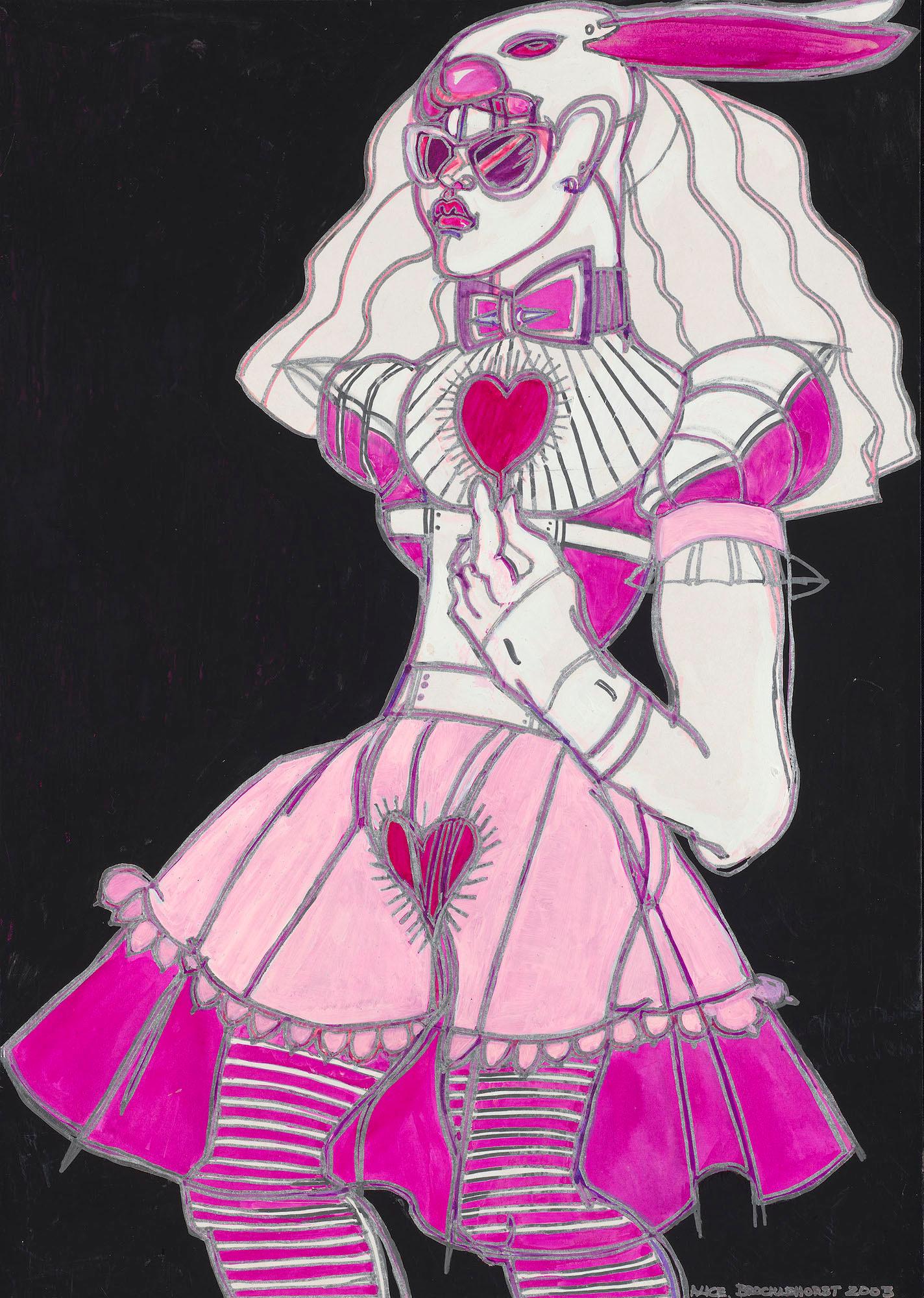
Jo Brocklehurst, Untitled (Alice from Brocklehurst Through the Looking-Glass) , 2003
Jo (Josephine) Brocklehurst (1935 - 2006) studied at Central Saint Martins and began her career as a fashion illustrator. She later focused on portraiture, drawing directly from models at her studio in West Hampstead and in nightclubs and theatres in Berlin, London and New York. Her work documents the alternative subcultures of the 1970s, 80s and 90s that went on to shape mainstream fashion and performance scenes. This work is from Brocklehurst Through the Looking-Glass, Brocklehurst’s final series. With an image of herself as a child as the centrepiece, Brocklehurst made hundreds of drawings that re-imagined characters from Lewis Carroll’s Alice novels. Her models were friends and dedicated club-goers who designed and made their own clothes. Works from the series were framed with bright plastic gemstones and hung on every available space at Brocklehurst’s home studio. She used metallic and neon inks that transformed under ultraviolet lights that she switched on for her guests in the evenings.
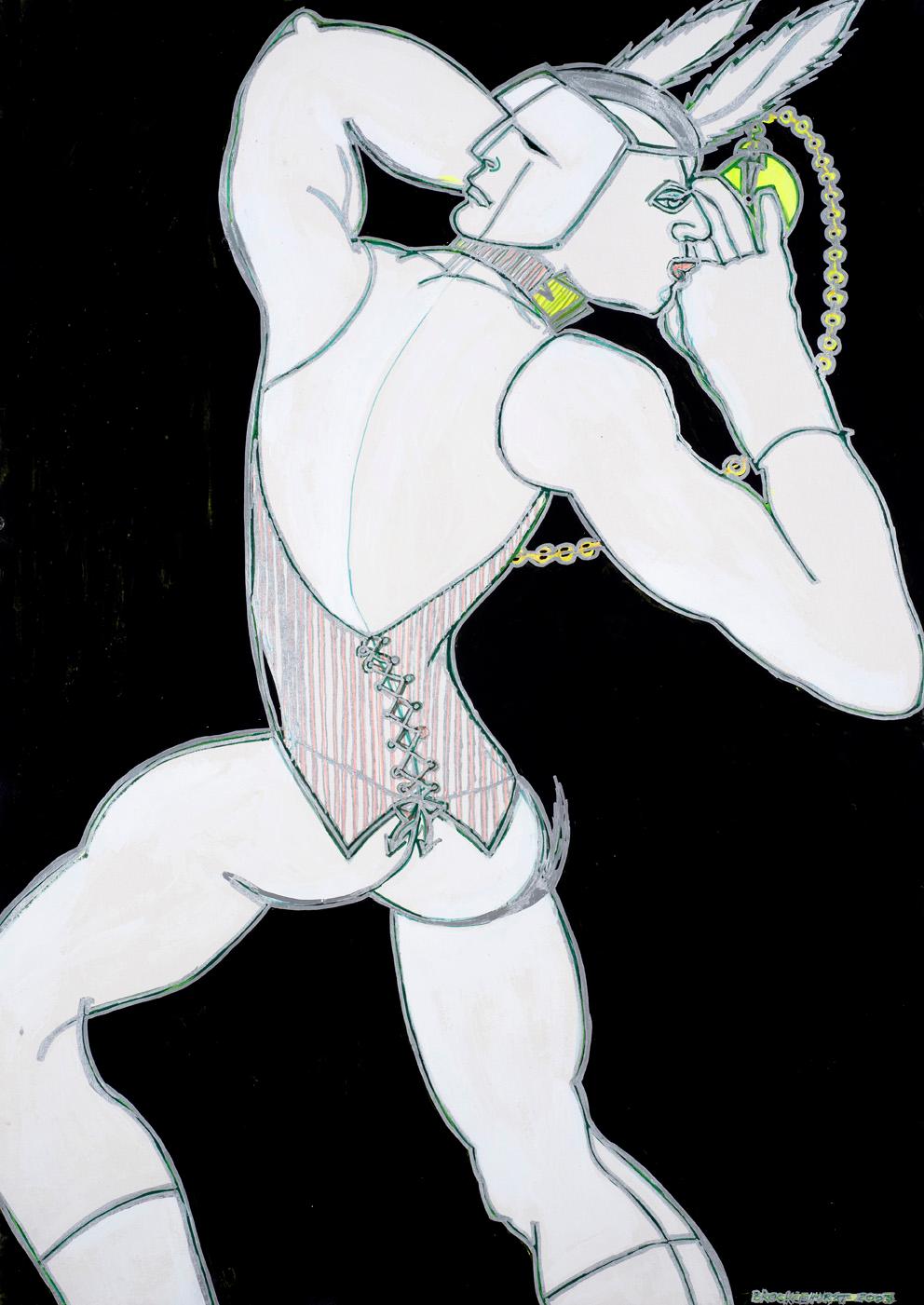
Jo Brocklehurst, Untitled (White Rabbit from Brocklehurst Through the Looking-Glass), 2003
Jo (Josephine) Brocklehurst (1935 - 2006) studied at Central Saint Martins and began her career as a fashion illustrator. She later focused on portraiture, drawing directly from models at her studio in West Hampstead and in nightclubs and theatres in Berlin, London and New York. Her work documents the alternative subcultures of the 1970s, 80s and 90s that went on to shape mainstream fashion and performance scenes. This work is from Brocklehurst Through the Looking-Glass, Brocklehurst’s final series. With an image of herself as a child as the centrepiece, Brocklehurst made hundreds of drawings that re-imagined characters from Lewis Carroll’s Alice novels. Her models were friends and dedicated club-goers who designed and made their own clothes. Works from the series were framed with bright plastic gemstones and hung on every available space at Brocklehurst’s home studio. She used metallic and neon inks that transformed under ultraviolet lights that she switched on for her guests in the evenings.
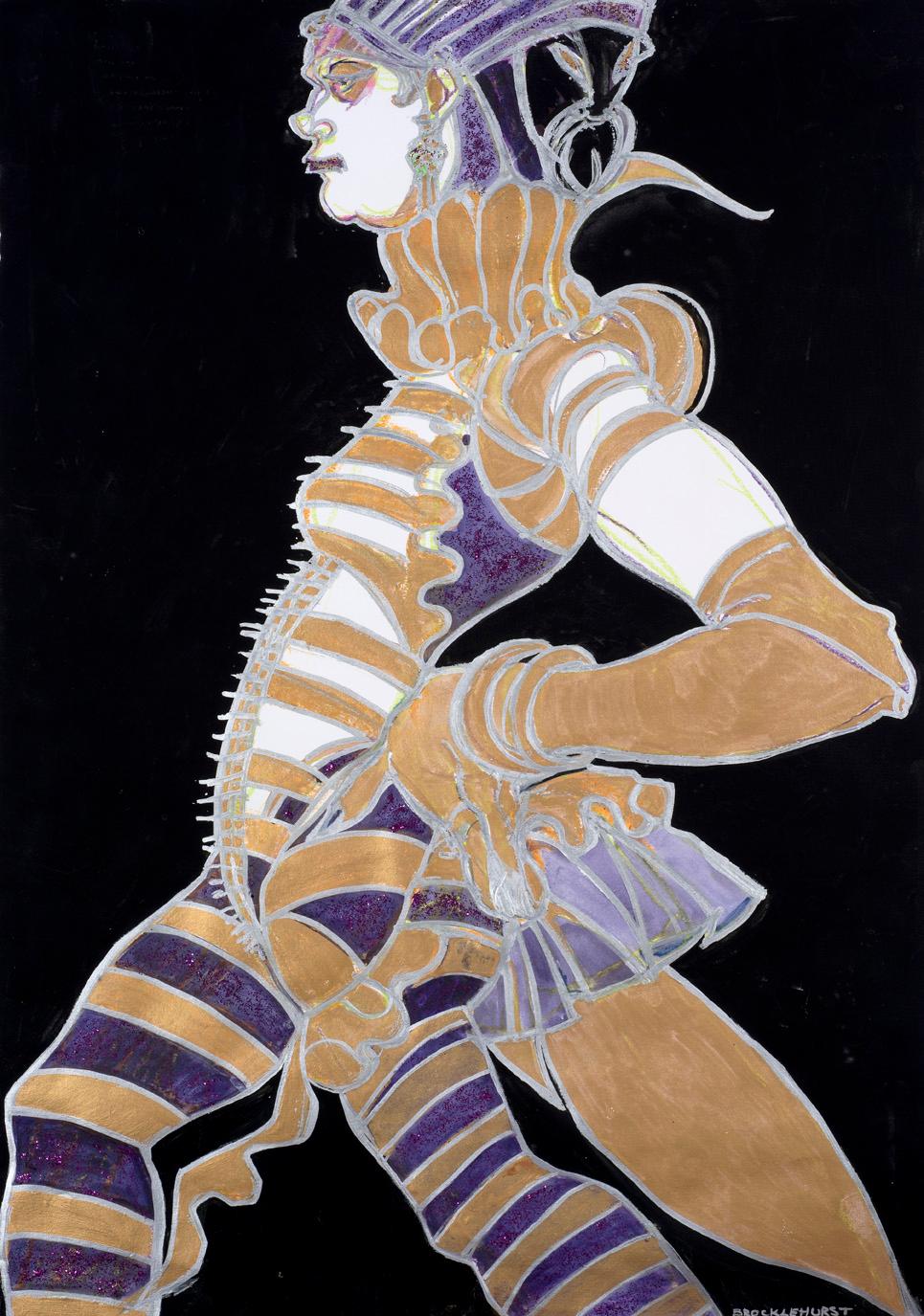
Jo Brocklehurst, Untitled (from Brocklehurst Through the Looking-Glass), 2000s
Jo (Josephine) Brocklehurst (1935 - 2006) studied at Central Saint Martins and began her career as a fashion illustrator. She later focused on portraiture, drawing directly from models at her studio in West Hampstead and in nightclubs and theatres in Berlin, London and New York. Her work documents the alternative subcultures of the 1970s, 80s and 90s that went on to shape mainstream fashion and performance scenes. This work is from Brocklehurst Through the Looking-Glass, Brocklehurst’s final series. With an image of herself as a child as the centrepiece, Brocklehurst made hundreds of drawings that re-imagined characters from Lewis Carroll’s Alice novels. Her models were friends and dedicated club-goers who designed and made their own clothes. Brocklehurst’s regular collaborator Isabelle Bricknall was the model for this work. Works from the series were framed with bright plastic gemstones and hung on every available space at Brocklehurst’s home studio. She used metallic and neon inks that transformed under ultraviolet lights that she switched on for her guests in the evenings.
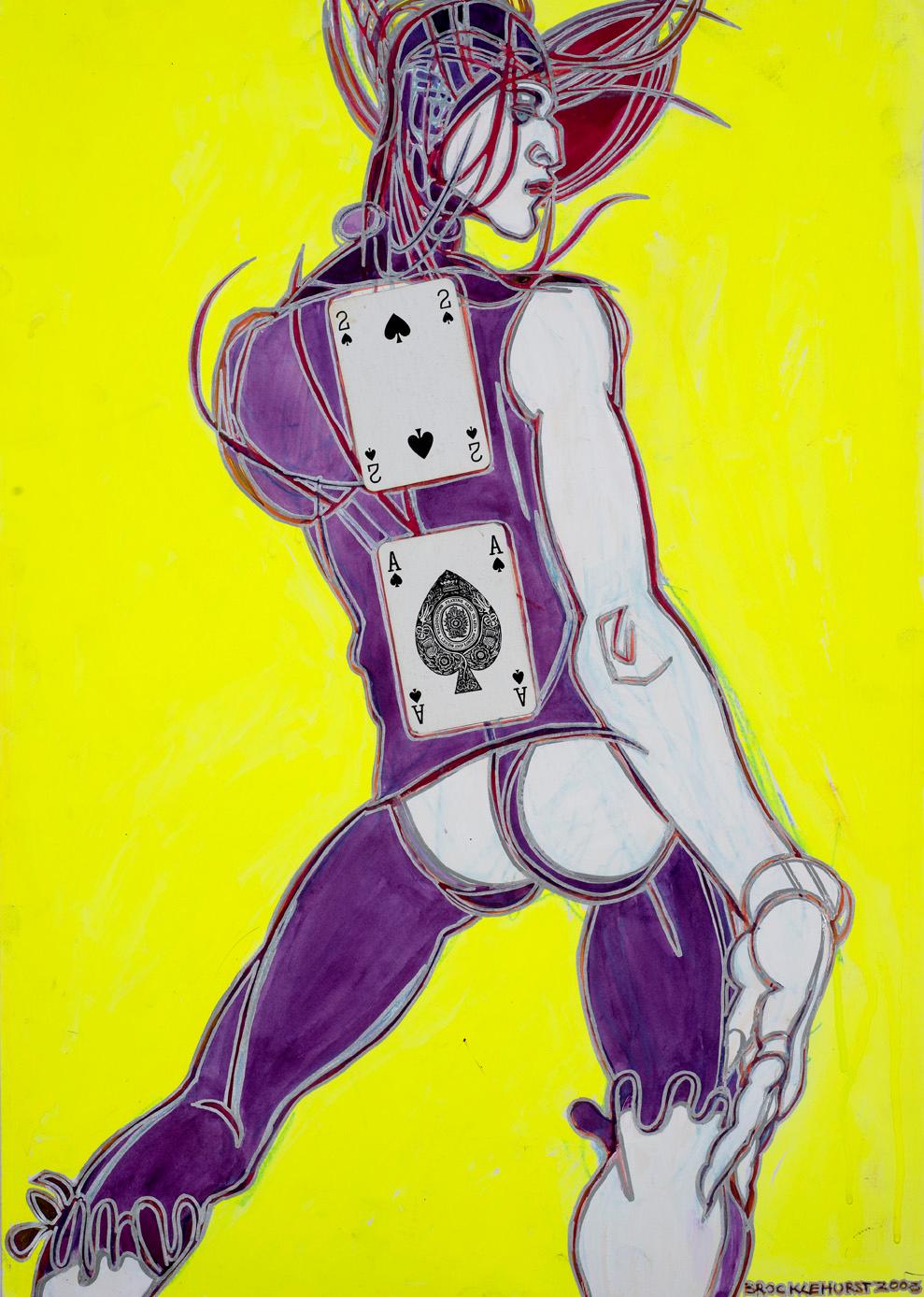
Jo Brocklehurst, Untitled (from Brocklehurst Through the Looking-Glass), 2002
Jo (Josephine) Brocklehurst (1935 - 2006) studied at Central Saint Martins and began her career as a fashion illustrator. She later focused on portraiture, drawing directly from models at her studio in West Hampstead and in nightclubs and theatres in Berlin, London and New York. Her work documents the alternative subcultures of the 1970s, 80s and 90s that went on to shape mainstream fashion and performance scenes. This work is from Brocklehurst Through the Looking-Glass, Brocklehurst’s final series. With an image of herself as a child as the centrepiece, Brocklehurst made hundreds of drawings that re-imagined characters from Lewis Carroll’s Alice novels. Her models were friends and dedicated club-goers who designed and made their own clothes. Works from the series were framed with bright plastic gemstones and hung on every available space at Brocklehurst’s home studio. She used metallic and neon inks that transformed under ultraviolet lights that she switched on for her guests in the evenings.
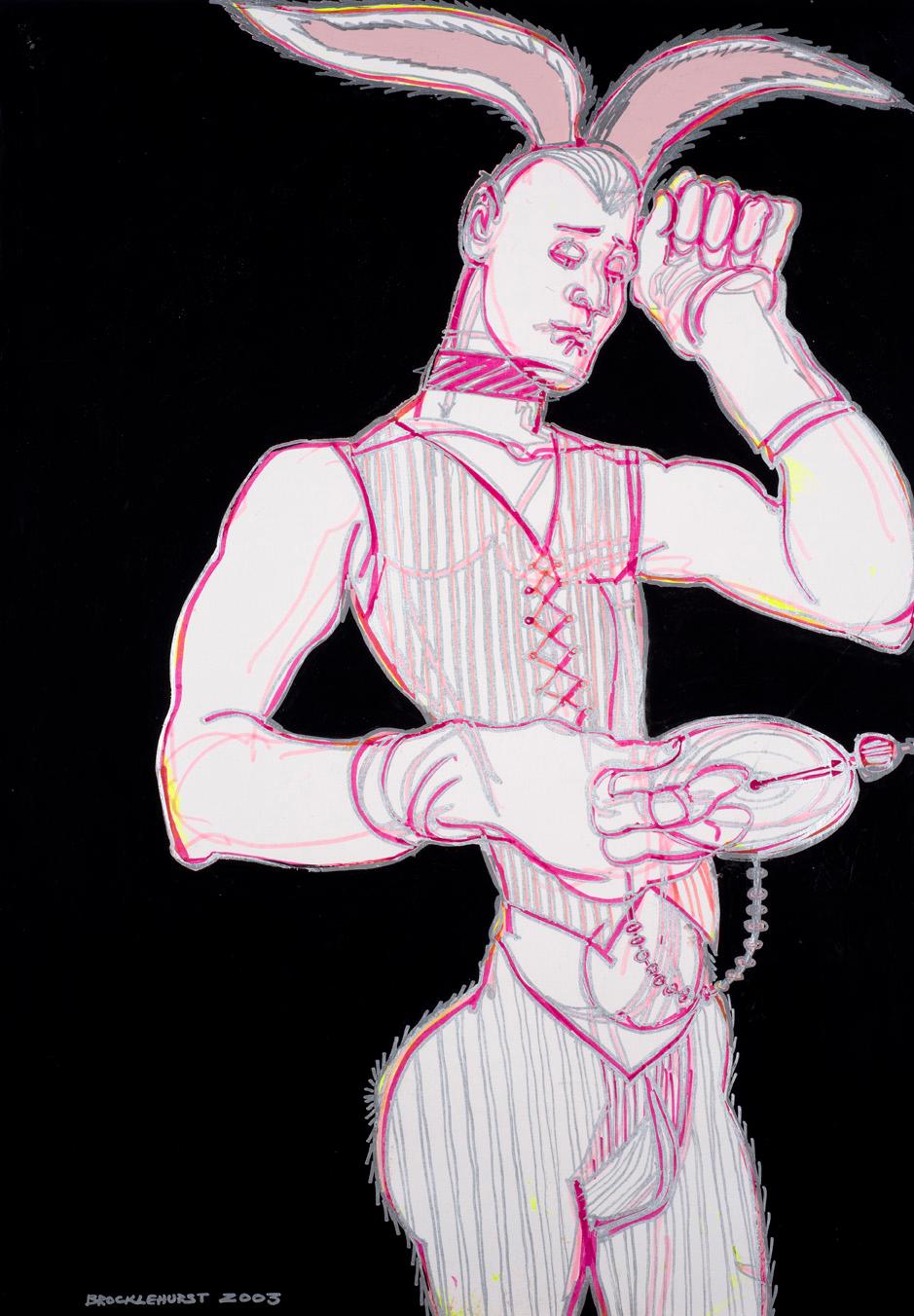
Jo Brocklehurst, Untitled (White Rabbit from Brocklehurst Through the Looking-Glass), 2000s
Jo (Josephine) Brocklehurst (1935 - 2006) studied at Central Saint Martins and began her career as a fashion illustrator. She later focused on portraiture, drawing directly from models at her studio in West Hampstead and in nightclubs and theatres in Berlin, London and New York. Her work documents the alternative subcultures of the 1970s, 80s and 90s that went on to shape mainstream fashion and performance scenes. This work is from Brocklehurst Through the Looking-Glass, Brocklehurst’s final series. With an image of herself as a child as the centrepiece, Brocklehurst made hundreds of drawings that re-imagined characters from Lewis Carroll’s Alice novels. Her models were friends and dedicated club-goers who designed and made their own clothes. Works from the series were framed with bright plastic gemstones and hung on every available space at Brocklehurst’s home studio. She used metallic and neon inks that transformed under ultraviolet lights that she switched on for her guests in the evenings.
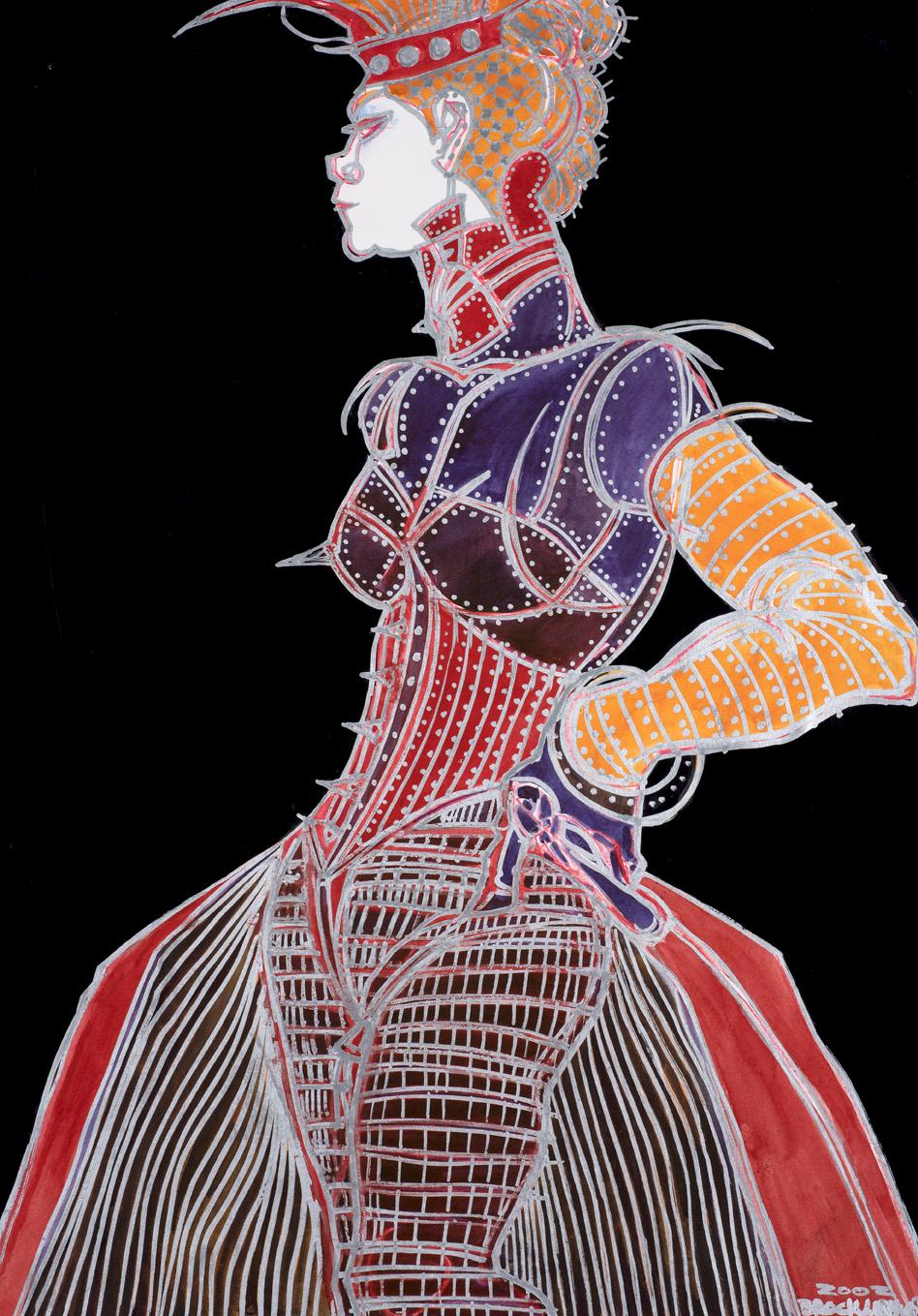
Jo Brocklehurst, Untitled (from Brocklehurst Through the Looking-Glass), 2002
Jo (Josephine) Brocklehurst (1935 - 2006) studied at Central Saint Martins and began her career as a fashion illustrator. She later focused on portraiture, drawing directly from models at her studio in West Hampstead and in nightclubs and theatres in Berlin, London and New York. Her work documents the alternative subcultures of the 1970s, 80s and 90s that went on to shape mainstream fashion and performance scenes. This work is from Brocklehurst Through the Looking-Glass, Brocklehurst’s final series. With an image of herself as a child as the centrepiece, Brocklehurst made hundreds of drawings that re-imagined characters from Lewis Carroll’s Alice novels. Her models were friends and dedicated club-goers who designed and made their own clothes. Brocklehurst’s regular collaborator Isabelle Bricknall was the model for this work. Works from the series were framed with bright plastic gemstones and hung on every available space at Brocklehurst’s home studio. She used metallic and neon inks that transformed under ultraviolet lights that she switched on for her guests in the evenings.
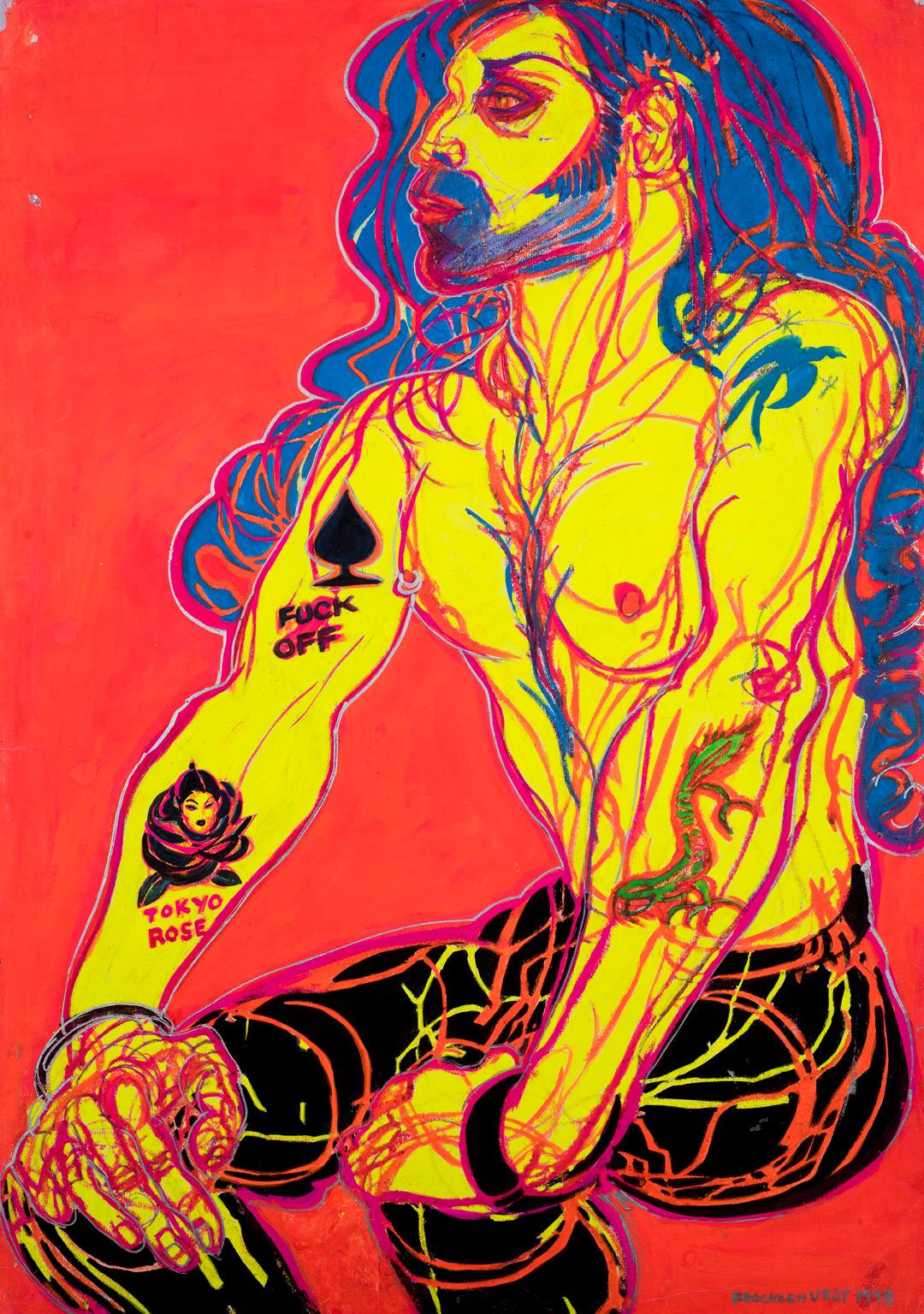
Jo Brocklehurst, Untitled (portrait of Anthony Gregory), 1995
Jo (Josephine) Brocklehurst (1935 - 2006) studied at Central Saint Martins and began her career as a fashion illustrator. She later focused on portraiture, drawing directly from models at her studio in West Hampstead and in nightclubs and theatres in Berlin, London and New York. Her work documents the alternative subcultures of the 1970s, 80s and 90s that went on to shape mainstream fashion and performance scenes. In the 1990s, Brocklehurst began drawing the fashion designers and performers finding space for experimentation in the fetish clubs of Soho and King’s Cross.
Content warning: strong language
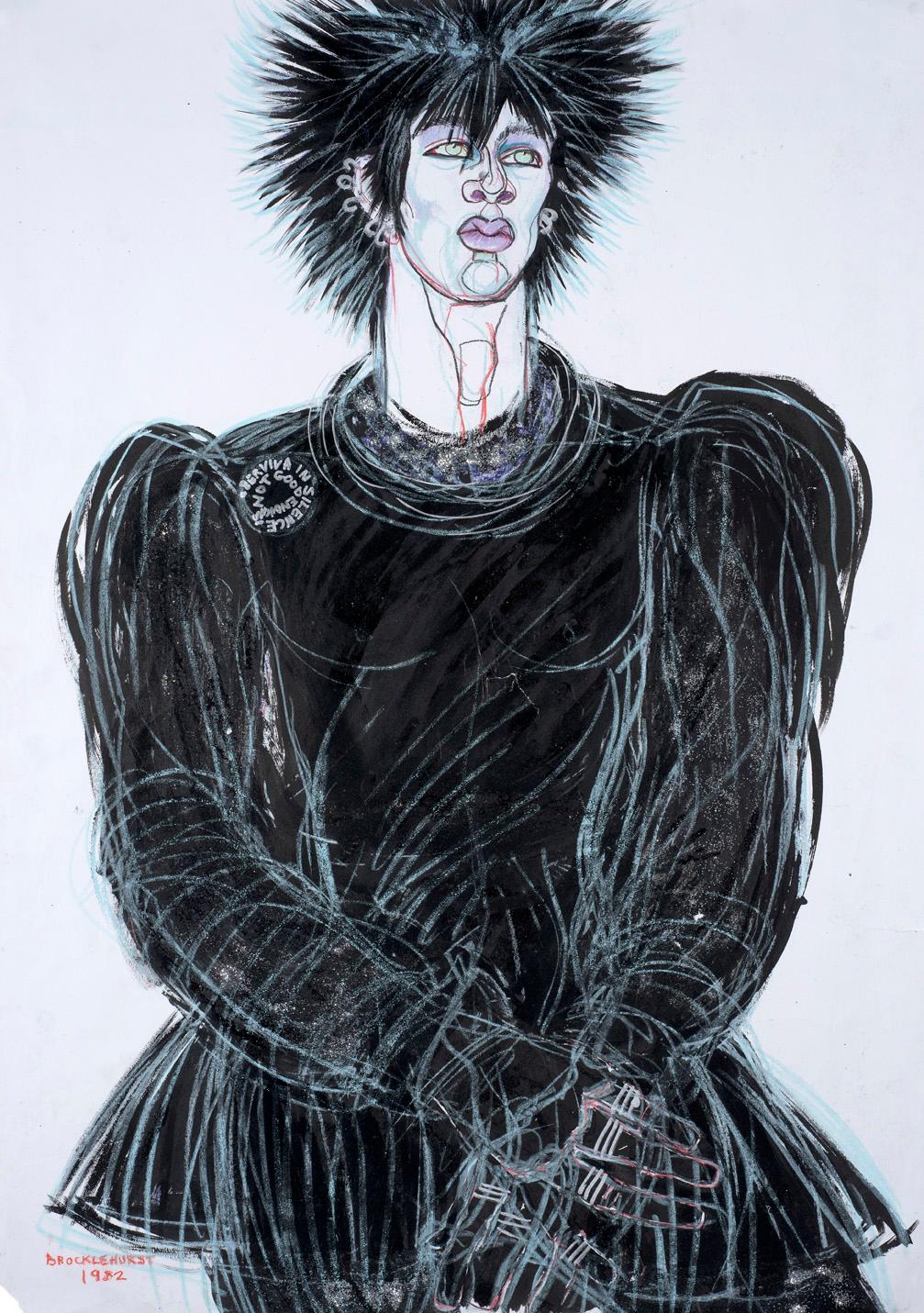
Jo Brocklehurst, Untitled, 1982
Jo (Josephine) Brocklehurst (1935 - 2006) studied at Central Saint Martins and began her career as a fashion illustrator. She later focused on portraiture, drawing directly from models at her studio in West Hampstead and in nightclubs and theatres in Berlin, London and New York. Her work documents the alternative subcultures of the 1970s, 80s and 90s that went on to shape mainstream fashion and performance scenes.
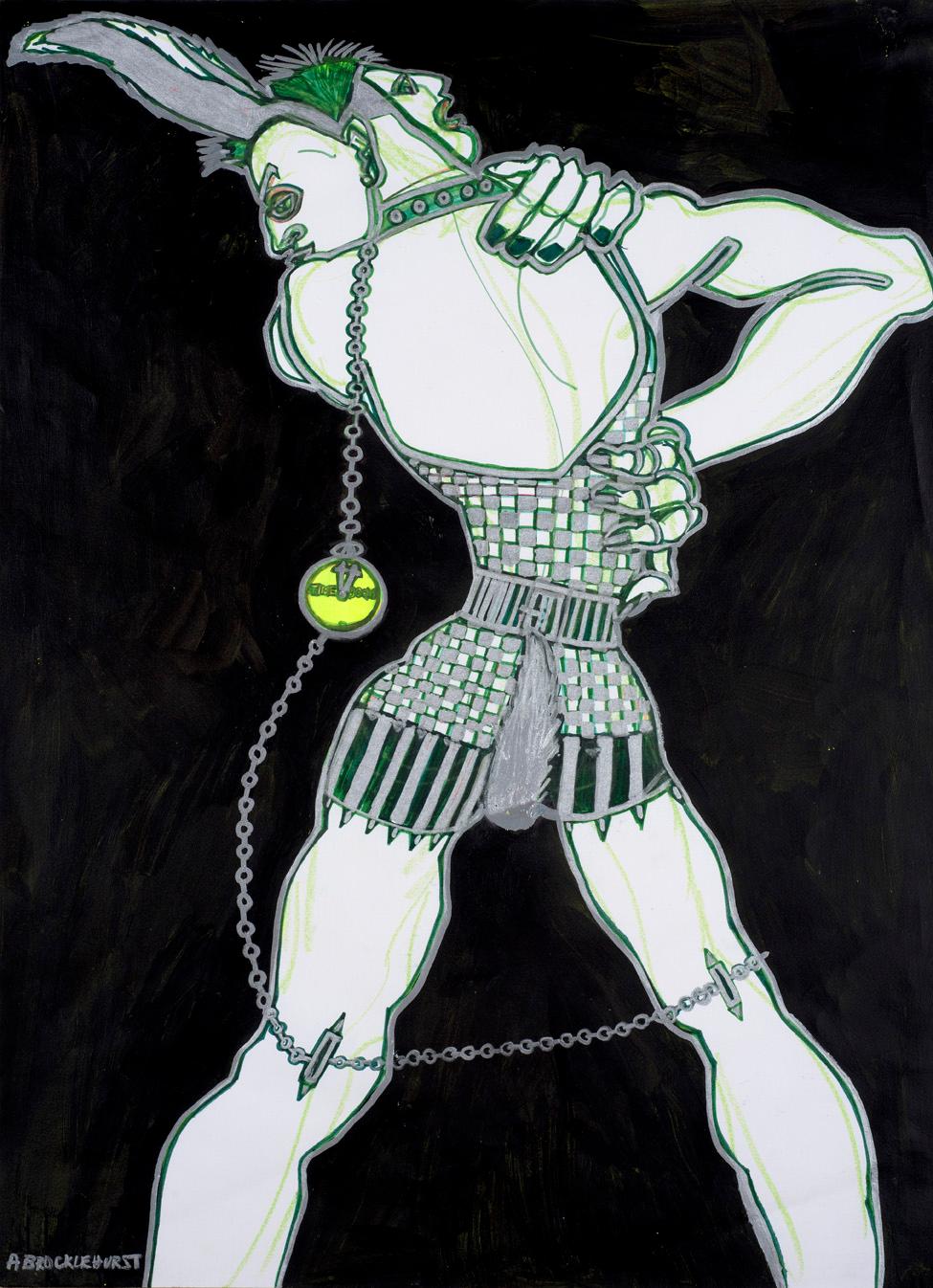
Jo Brocklehurst, Untitled (White Rabbit from Brocklehurst Through the Looking-Glass), 2000s
Jo (Josephine) Brocklehurst (1935 - 2006) studied at Central Saint Martins and began her career as a fashion illustrator. She later focused on portraiture, drawing directly from models at her studio in West Hampstead and in nightclubs and theatres in Berlin, London and New York. Her work documents the alternative subcultures of the 1970s, 80s and 90s that went on to shape mainstream fashion and performance scenes. This work is from Brocklehurst Through the Looking-Glass, Brocklehurst’s final series. With an image of herself as a child as the centrepiece, Brocklehurst made hundreds of drawings that re-imagined characters from Lewis Carroll’s Alice novels. Her models were friends and dedicated club-goers who designed and made their own clothes. Works from the series were framed with bright plastic gemstones and hung on every available space at Brocklehurst’s home studio. She used metallic and neon inks that transformed under ultraviolet lights that she switched on for her guests in the evenings.
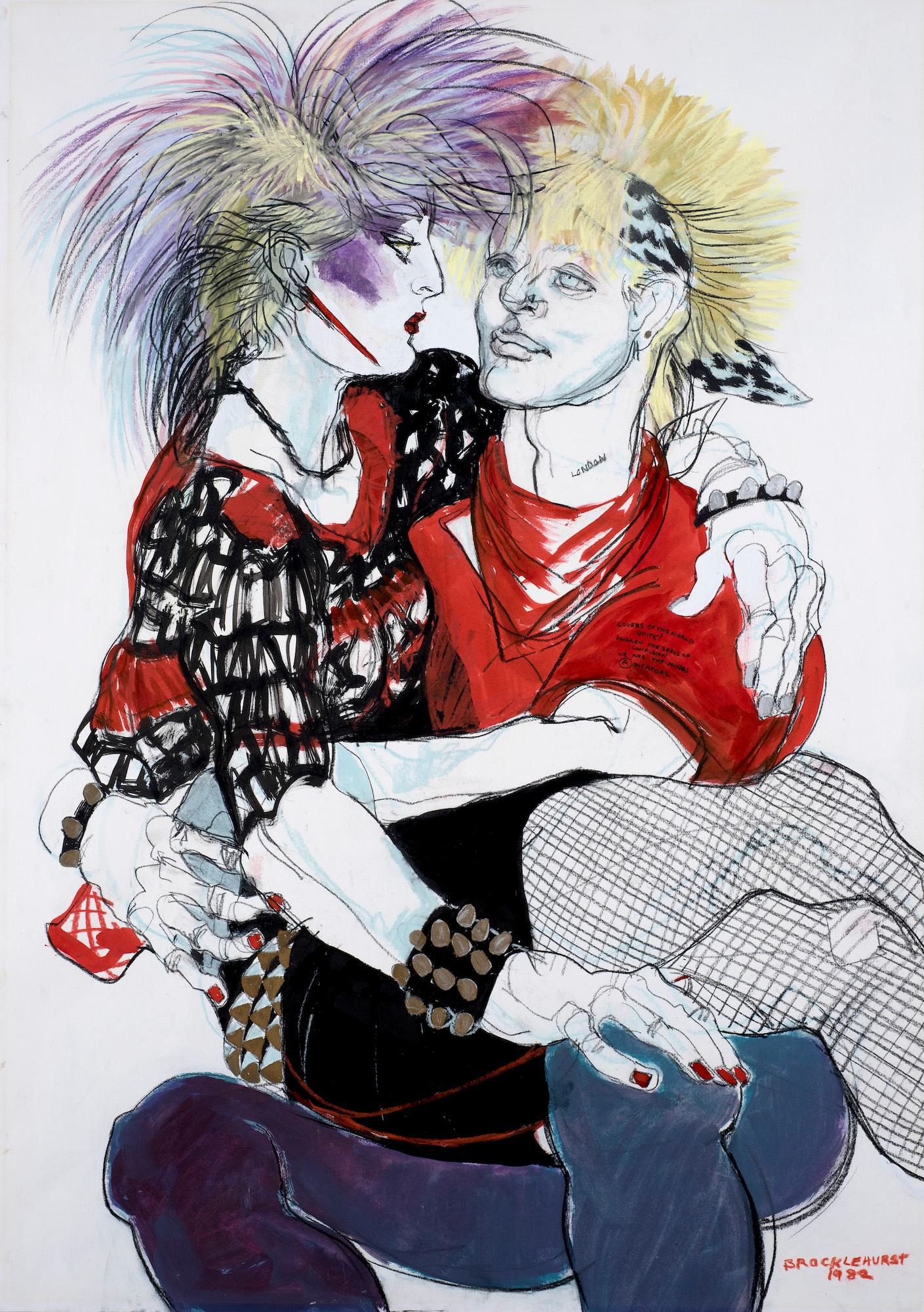
Jo Brocklehurst, Untitled (portrait with Val Drayton (left)), 1982
Jo (Josephine) Brocklehurst (1935 - 2006) studied at Central Saint Martins and began her career as a fashion illustrator. She later focused on portraiture, drawing directly from models at her studio in West Hampstead and in nightclubs and theatres in Berlin, London and New York. Her work documents the alternative subcultures of the 1970s, 80s and 90s that went on to shape mainstream fashion and performance scenes. In the 1980s, Brocklehurst drew a series portraits of members of the Kill Your Pet Puppy collective who were living in a squat close to her studio. Attracted to their anarcho-punk dress and ethos, she said “I felt that they understood very well what was going on in the world, what was in it for them”.
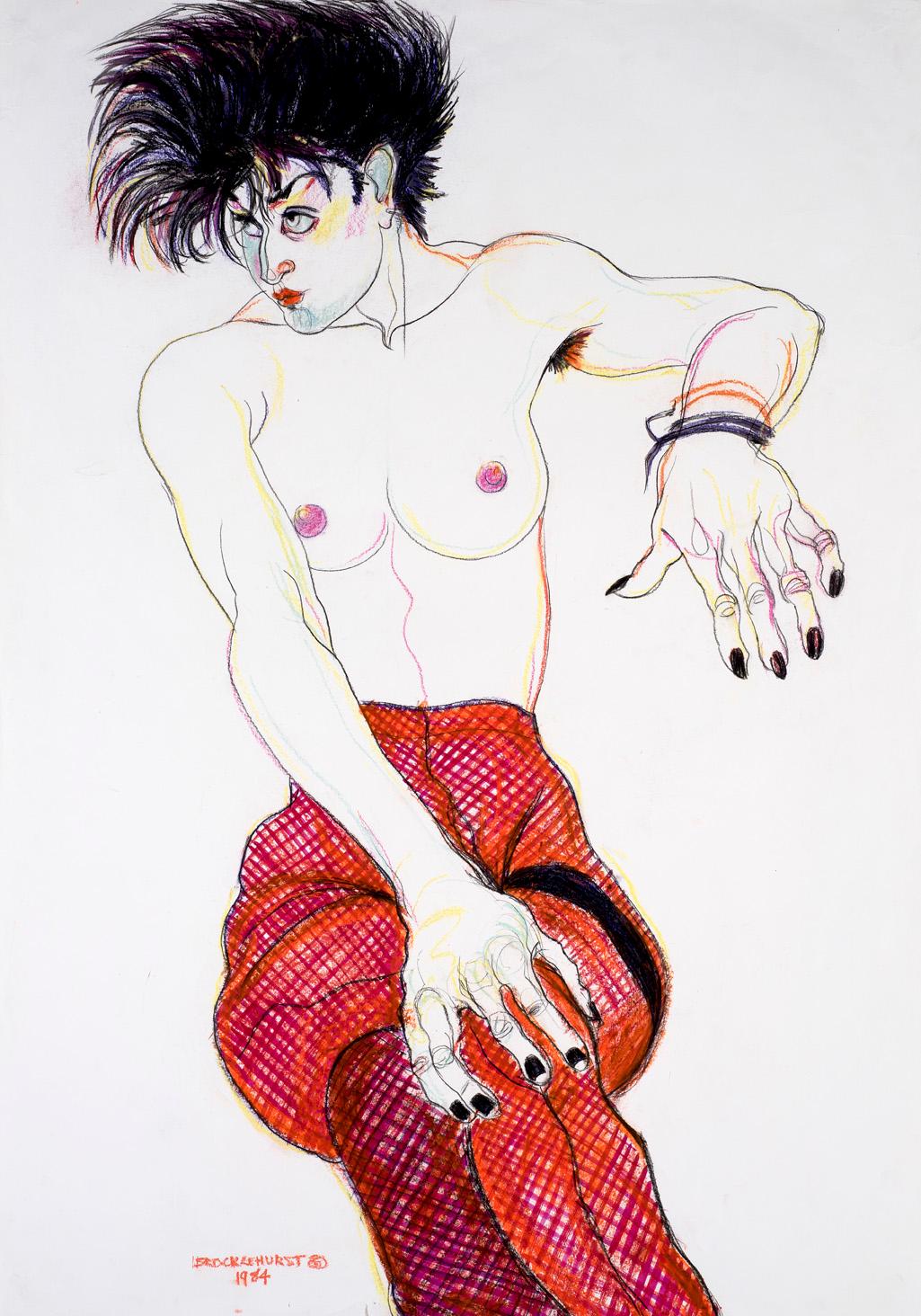
Jo Brocklehurst, Untitled, 1984
Jo (Josephine) Brocklehurst (1935 - 2006) studied at Central Saint Martins and began her career as a fashion illustrator. She later focused on portraiture, drawing directly from models at her studio in West Hampstead and in nightclubs and theatres in Berlin, London and New York. Her work documents the alternative subcultures of the 1970s, 80s and 90s that went on to shape mainstream fashion and performance scenes.
Content warning: nudity
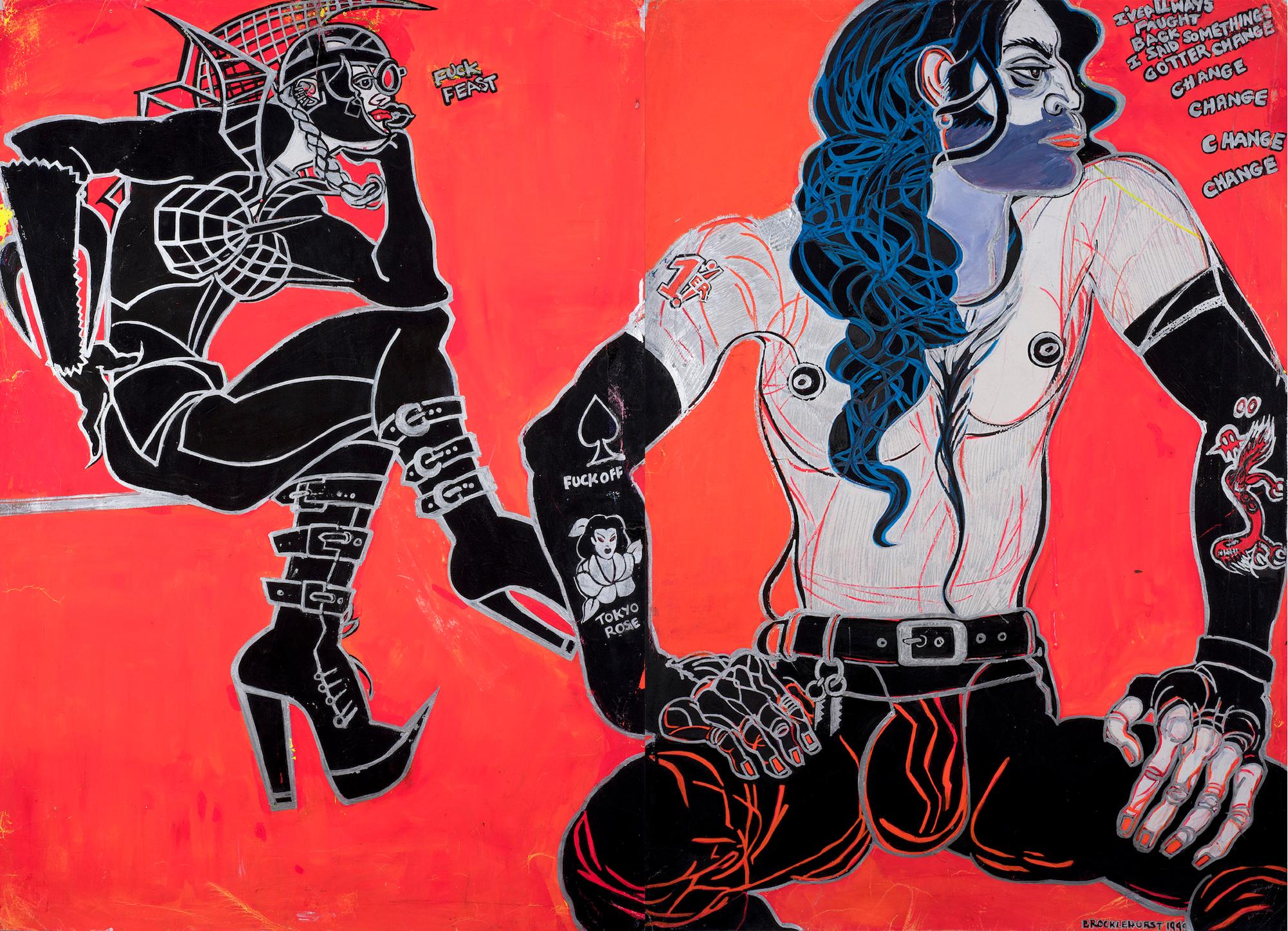
Jo Brocklehurst, Untitled (portrait of Isabelle Bricknall and Anthony Gregory), 1995
Jo (Josephine) Brocklehurst (1935 - 2006) studied at Central Saint Martins and began her career as a fashion illustrator. She later focused on portraiture, drawing directly from models at her studio in West Hampstead and in nightclubs and theatres in Berlin, London and New York. Her work documents the alternative subcultures of the 1970s, 80s and 90s that went on to shape mainstream fashion and performance scenes. In the 1990s, Brocklehurst began drawing the fashion designers and performers finding space for experimentation in the fetish clubs of Soho and King’s Cross. This portrait is of Brocklehurst’s regular collaborator Isabelle Bricknall, whose collection of steel ‘body armour’ (constructed by Anthony Gregory) was designed as ‘protection’ for nights on the fetish scene.
Content warning: strong language
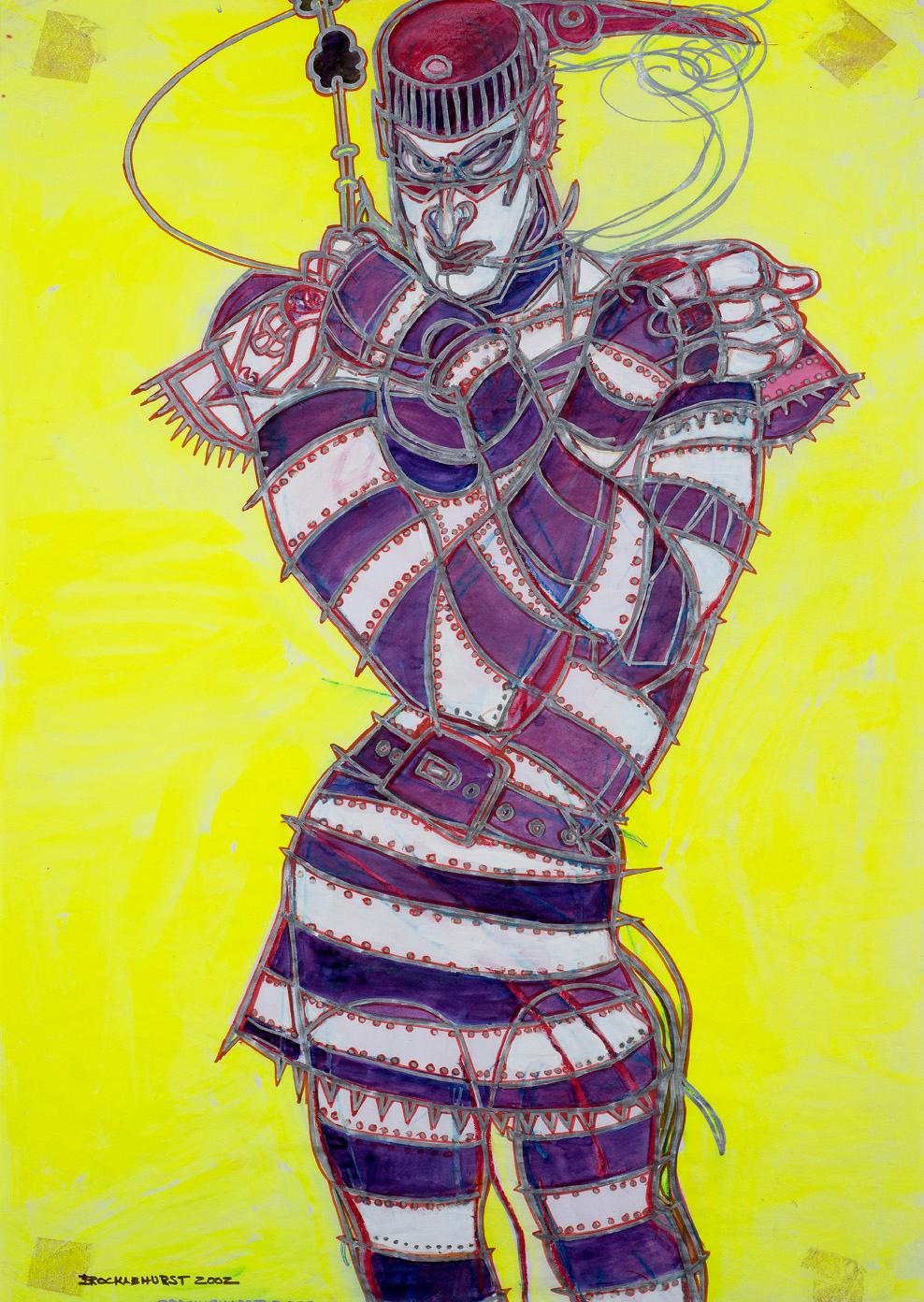
Jo Brocklehurst, Untitled (Caterpillar from Brocklehurst Through the Looking-Glass), 2002
Jo (Josephine) Brocklehurst (1935 - 2006) studied at Central Saint Martins and began her career as a fashion illustrator. She later focused on portraiture, drawing directly from models at her studio in West Hampstead and in nightclubs and theatres in Berlin, London and New York. Her work documents the alternative subcultures of the 1970s, 80s and 90s that went on to shape mainstream fashion and performance scenes. This work is from Brocklehurst Through the Looking-Glass, Brocklehurst’s final series. With an image of herself as a child as the centrepiece, Brocklehurst made hundreds of drawings that re-imagined characters from Lewis Carroll’s Alice novels. Her models were friends and dedicated club-goers who designed and made their own clothes. Works from the series were framed with bright plastic gemstones and hung on every available space at Brocklehurst’s home studio. She used metallic and neon inks that transformed under ultraviolet lights that she switched on for her guests in the evenings.
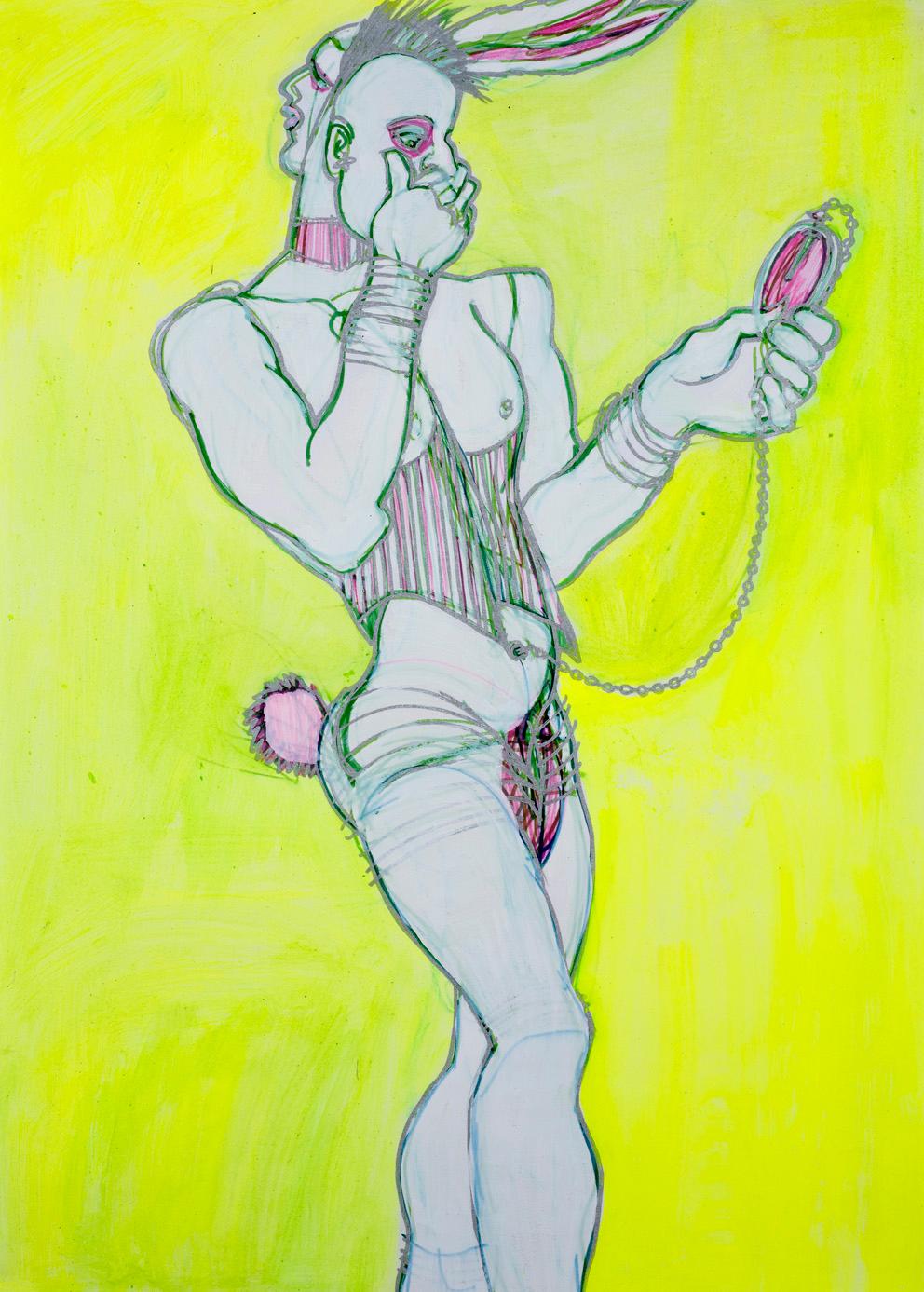
Jo Brocklehurst, Untitled (White Rabbit from Brocklehurst Through the Looking-Glass), 2000s
Jo (Josephine) Brocklehurst (1935 - 2006) studied at Central Saint Martins and began her career as a fashion illustrator. She later focused on portraiture, drawing directly from models at her studio in West Hampstead and in nightclubs and theatres in Berlin, London and New York. Her work documents the alternative subcultures of the 1970s, 80s and 90s that went on to shape mainstream fashion and performance scenes. This work is from Brocklehurst Through the Looking-Glass, Brocklehurst’s final series. With an image of herself as a child as the centrepiece, Brocklehurst made hundreds of drawings that re-imagined characters from Lewis Carroll’s Alice novels. Her models were friends and dedicated club-goers who designed and made their own clothes. Works from the series were framed with bright plastic gemstones and hung on every available space at Brocklehurst’s home studio. She used metallic and neon inks that transformed under ultraviolet lights that she switched on for her guests in the evenings.
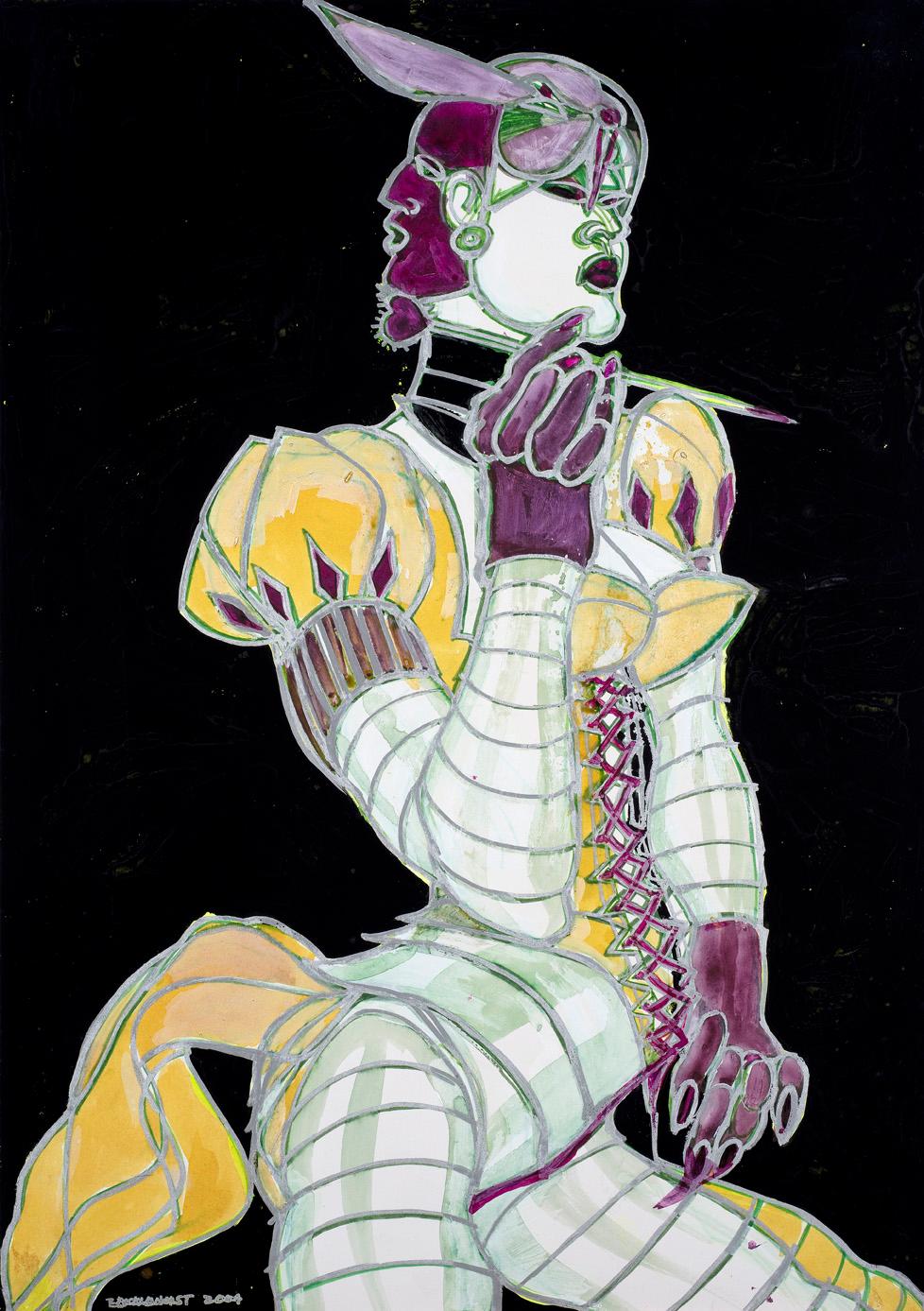
Jo Brocklehurst, Untitled (from Brocklehurst Through the Looking-Glass), 2004
Jo (Josephine) Brocklehurst (1935 - 2006) studied at Central Saint Martins and began her career as a fashion illustrator. She later focused on portraiture, drawing directly from models at her studio in West Hampstead and in nightclubs and theatres in Berlin, London and New York. Her work documents the alternative subcultures of the 1970s, 80s and 90s that went on to shape mainstream fashion and performance scenes. This work is from Brocklehurst Through the Looking-Glass, Brocklehurst’s final series. With an image of herself as a child as the centrepiece, Brocklehurst made hundreds of drawings that re-imagined characters from Lewis Carroll’s Alice novels. Her models were friends and dedicated club-goers who designed and made their own clothes. Works from the series were framed with bright plastic gemstones and hung on every available space at Brocklehurst’s home studio. She used metallic and neon inks that transformed under ultraviolet lights that she switched on for her guests in the evenings.
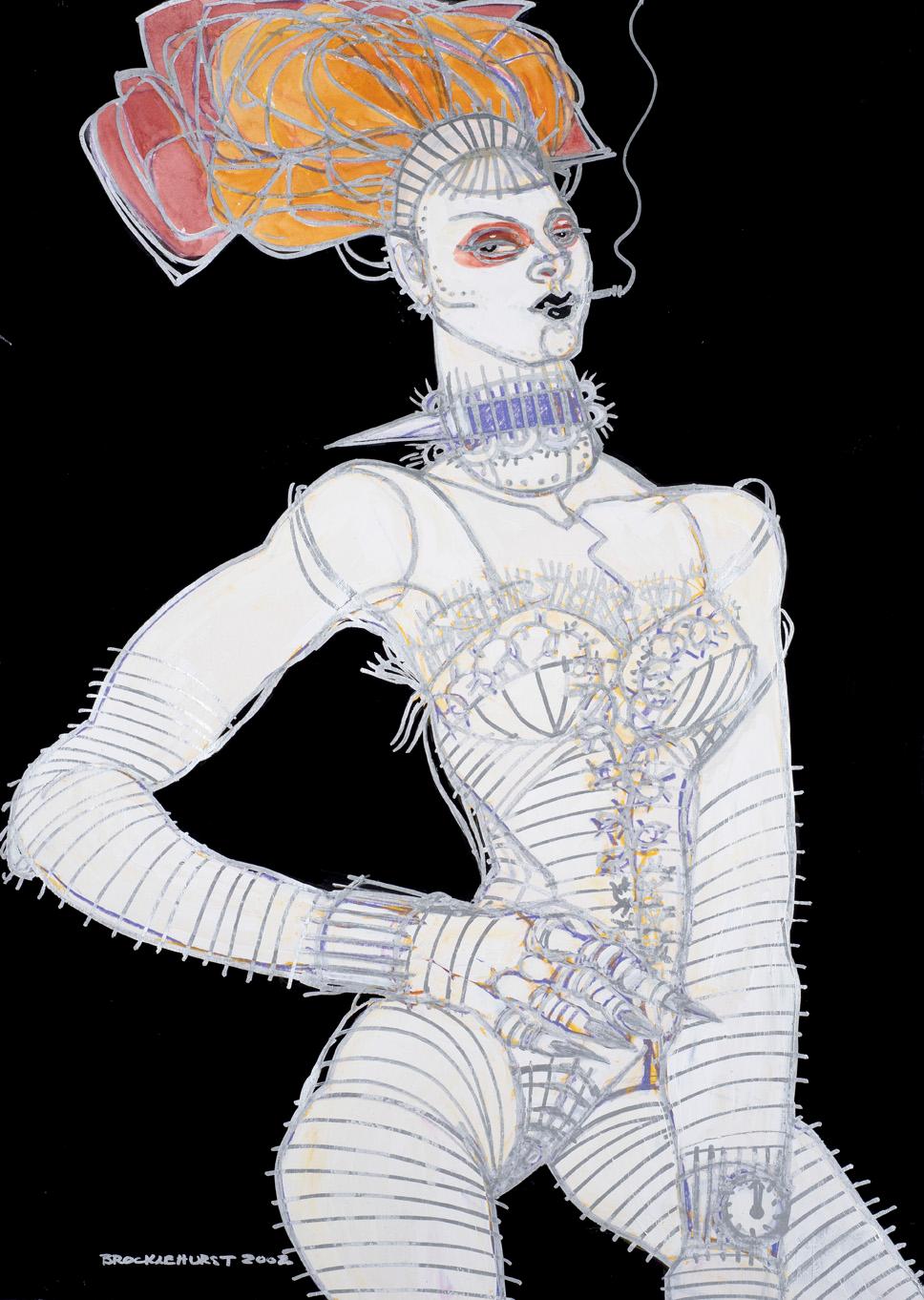
Jo Brocklehurst, Untitled (Duchess from Brocklehurst Through the Looking-Glass), 2002
Jo (Josephine) Brocklehurst (1935 - 2006) studied at Central Saint Martins and began her career as a fashion illustrator. She later focused on portraiture, drawing directly from models at her studio in West Hampstead and in nightclubs and theatres in Berlin, London and New York. Her work documents the alternative subcultures of the 1970s, 80s and 90s that went on to shape mainstream fashion and performance scenes. This work is from Brocklehurst Through the Looking-Glass, Brocklehurst’s final series. With an image of herself as a child as the centrepiece, Brocklehurst made hundreds of drawings that re-imagined characters from Lewis Carroll’s Alice novels. Her models were friends and dedicated club-goers who designed and made their own clothes. Works from the series were framed with bright plastic gemstones and hung on every available space at Brocklehurst’s home studio. She used metallic and neon inks that transformed under ultraviolet lights that she switched on for her guests in the evenings.
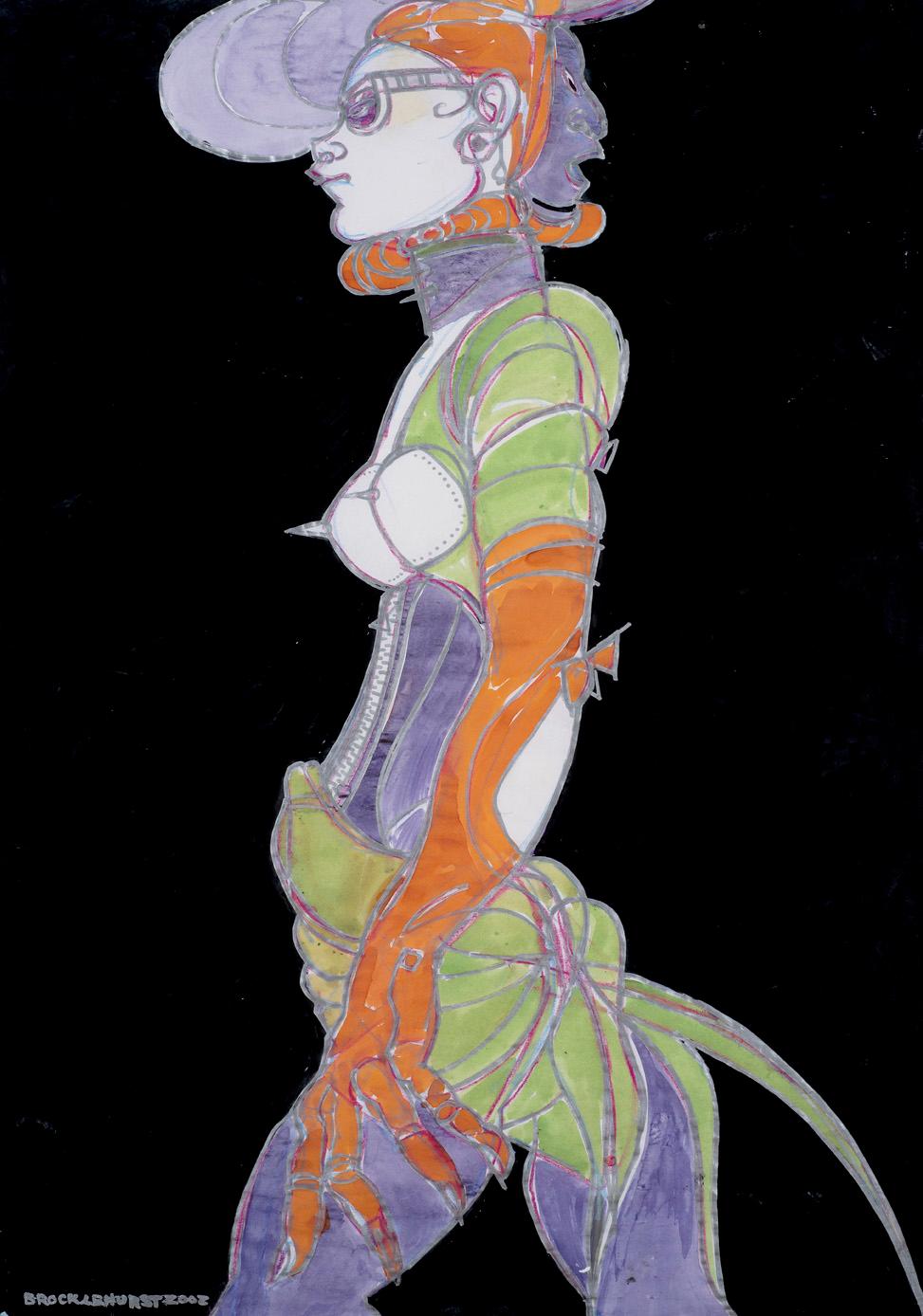
Jo Brocklehurst, Untitled (from Brocklehurst Through the Looking-Glass), 2002
Jo (Josephine) Brocklehurst (1935 - 2006) studied at Central Saint Martins and began her career as a fashion illustrator. She later focused on portraiture, drawing directly from models at her studio in West Hampstead and in nightclubs and theatres in Berlin, London and New York. Her work documents the alternative subcultures of the 1970s, 80s and 90s that went on to shape mainstream fashion and performance scenes. This work is from Brocklehurst Through the Looking-Glass, Brocklehurst’s final series. With an image of herself as a child as the centrepiece, Brocklehurst made hundreds of drawings that re-imagined characters from Lewis Carroll’s Alice novels. Her models were friends and dedicated club-goers who designed and made their own clothes. Brocklehurst’s regular collaborator Isabelle Bricknall was the model for this work. Works from the series were framed with bright plastic gemstones and hung on every available space at Brocklehurst’s home studio. She used metallic and neon inks that transformed under ultraviolet lights that she switched on for her guests in the evenings.
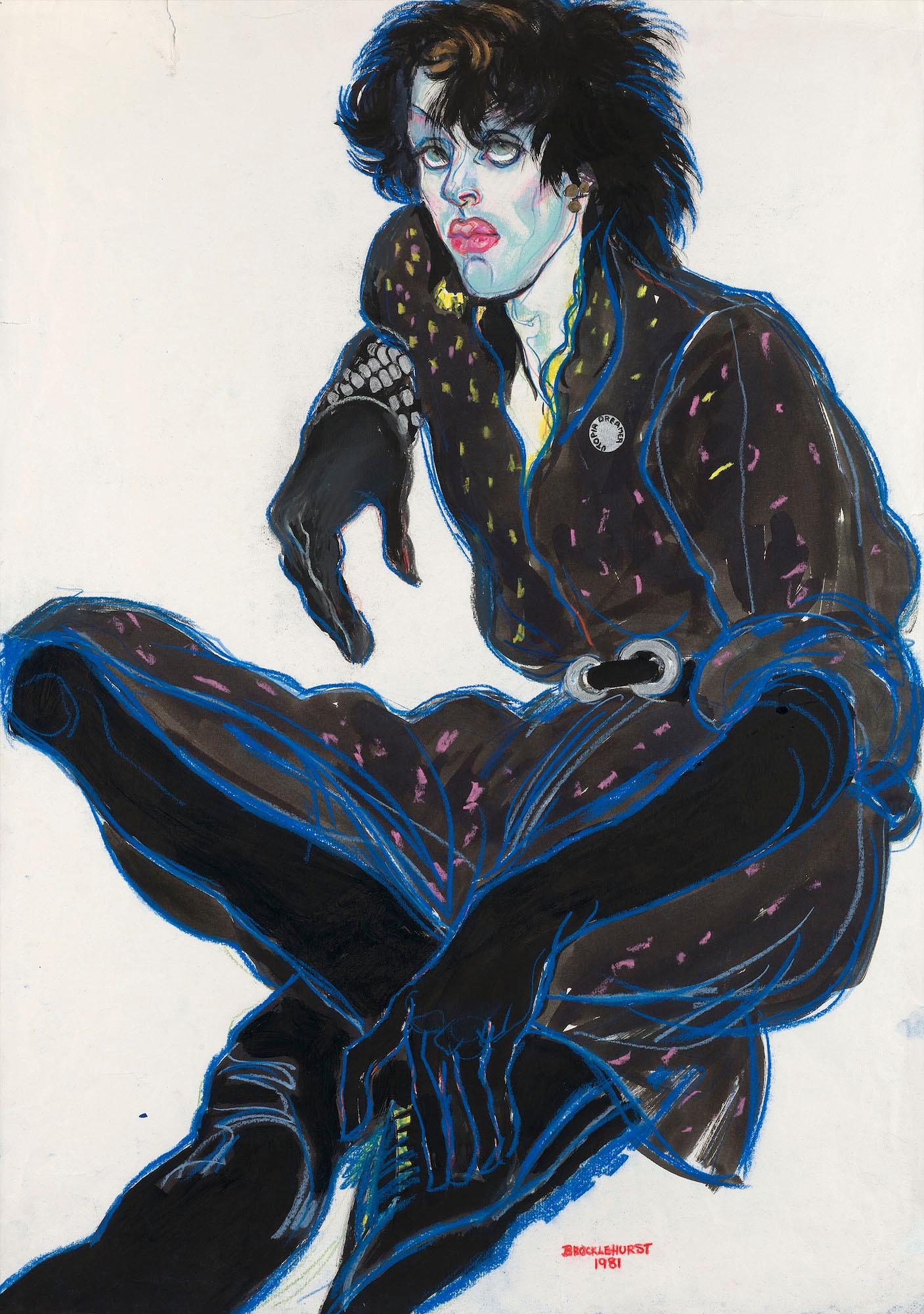
Jo Brocklehurst, Untitled, 1981
Jo (Josephine) Brocklehurst (1935 - 2006) studied at Central Saint Martins and began her career as a fashion illustrator. She later focused on portraiture, drawing directly from models at her studio in West Hampstead and in nightclubs and theatres in Berlin, London and New York. Her work documents the alternative subcultures of the 1970s, 80s and 90s that went on to shape mainstream fashion and performance scenes.
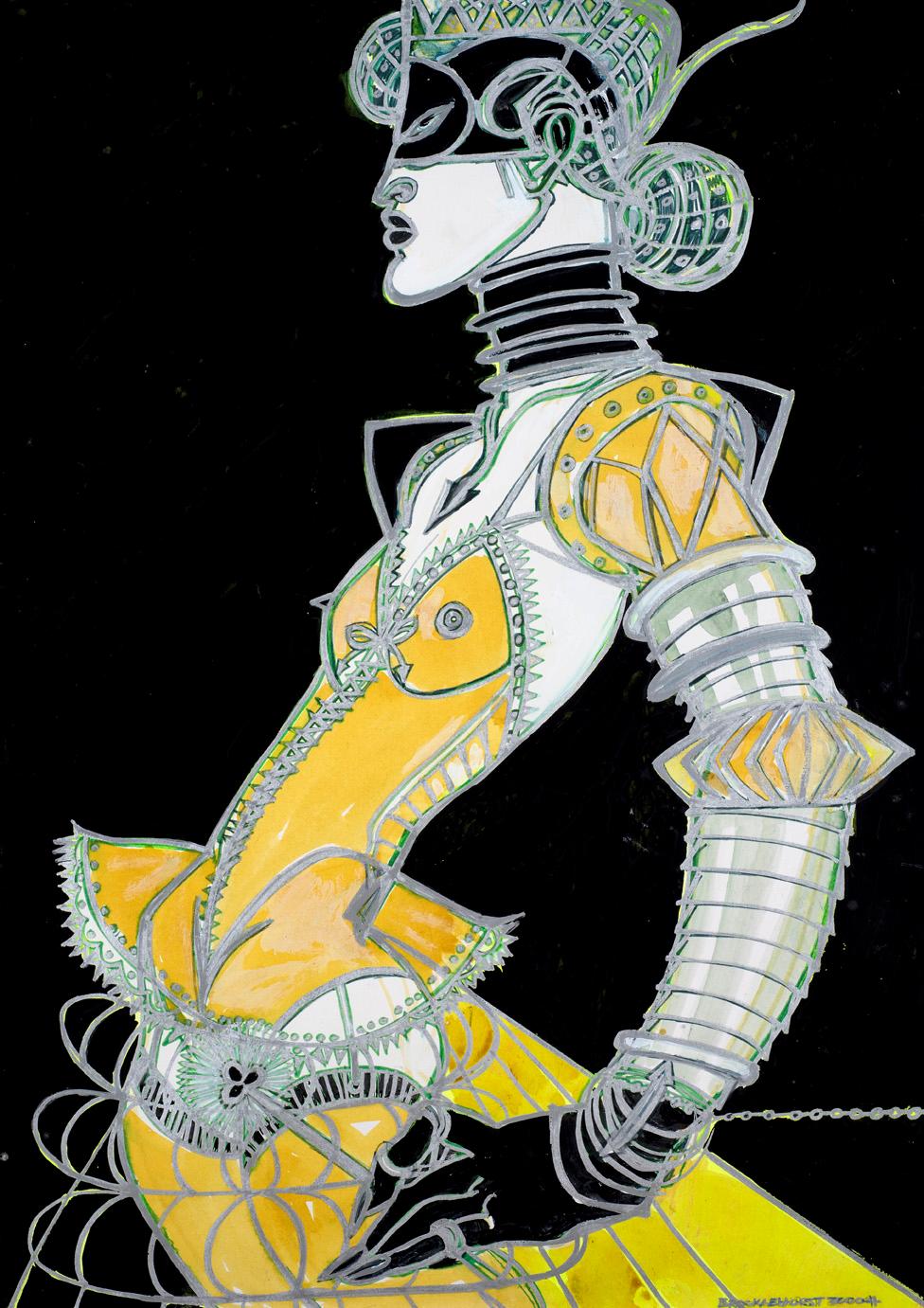
Jo Brocklehurst, Untitled (from Brocklehurst Through the Looking-Glass), 2004
Jo (Josephine) Brocklehurst (1935 - 2006) studied at Central Saint Martins and began her career as a fashion illustrator. She later focused on portraiture, drawing directly from models at her studio in West Hampstead and in nightclubs and theatres in Berlin, London and New York. Her work documents the alternative subcultures of the 1970s, 80s and 90s that went on to shape mainstream fashion and performance scenes. This work is from Brocklehurst Through the Looking-Glass, Brocklehurst’s final series. With an image of herself as a child as the centrepiece, Brocklehurst made hundreds of drawings that re-imagined characters from Lewis Carroll’s Alice novels. Her models were friends and dedicated club-goers who designed and made their own clothes. Works from the series were framed with bright plastic gemstones and hung on every available space at Brocklehurst’s home studio. She used metallic and neon inks that transformed under ultraviolet lights that she switched on for her guests in the evenings.
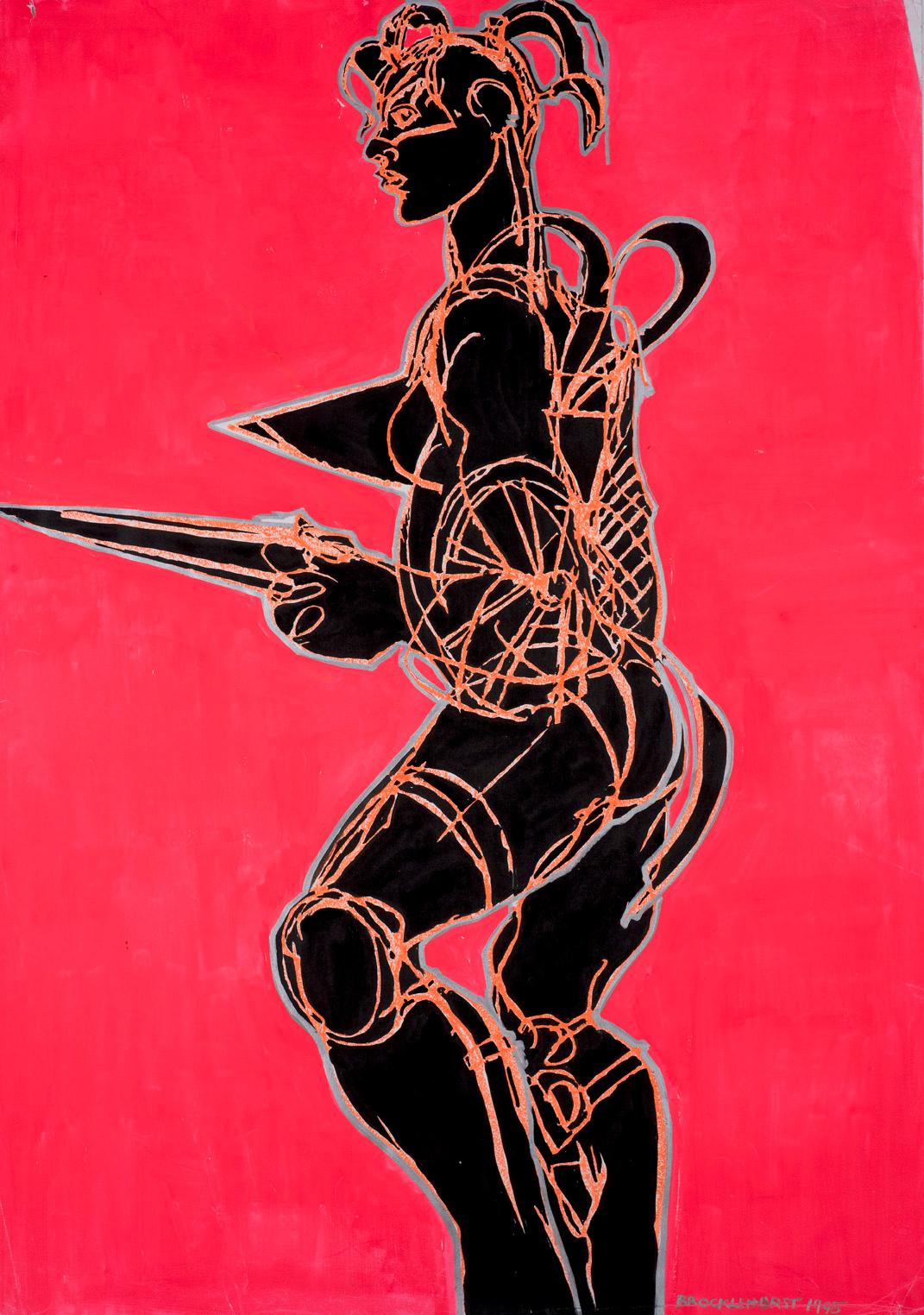
Jo Brocklehurst, Untitled (portrait of Fia Bergsren), 1995
Jo (Josephine) Brocklehurst (1935 - 2006) studied at Central Saint Martins and began her career as a fashion illustrator. She later focused on portraiture, drawing directly from models at her studio in West Hampstead and in nightclubs and theatres in Berlin, London and New York. Her work documents the alternative subcultures of the 1970s, 80s and 90s that went on to shape mainstream fashion and performance scenes. In the 1990s, Brocklehurst began drawing the fashion designers and performers finding space for experimentation in the fetish clubs of Soho and King’s Cross.
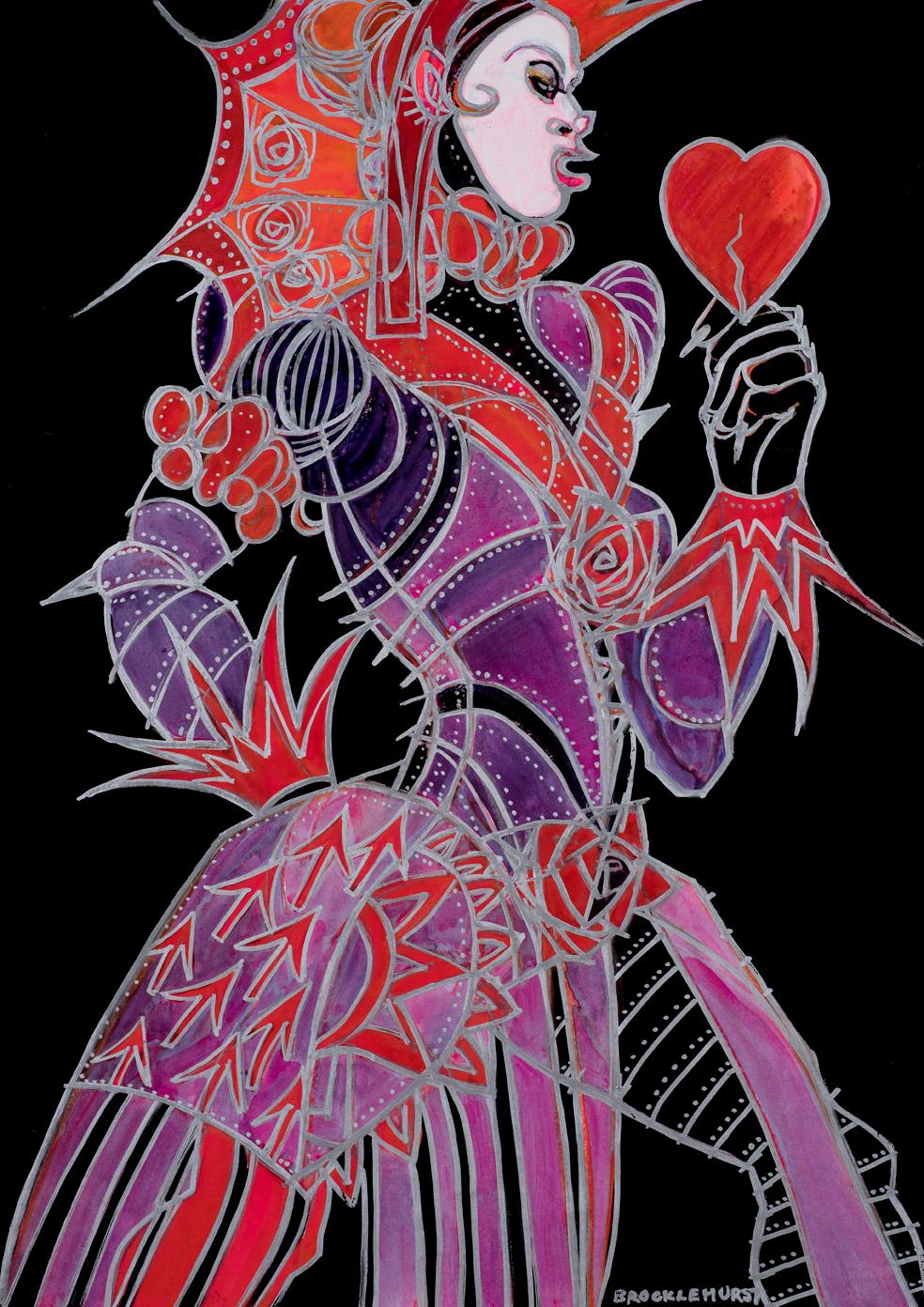
Jo Brocklehurst, Untitled (Red Queen from Brocklehurst Through the Looking-Glass) , 2000s
Jo (Josephine) Brocklehurst (1935 - 2006) studied at Central Saint Martins and began her career as a fashion illustrator. She later focused on portraiture, drawing directly from models at her studio in West Hampstead and in nightclubs and theatres in Berlin, London and New York. Her work documents the alternative subcultures of the 1970s, 80s and 90s that went on to shape mainstream fashion and performance scenes. This work is from Brocklehurst Through the Looking-Glass, Brocklehurst’s final series. With an image of herself as a child as the centrepiece, Brocklehurst made hundreds of drawings that re-imagined characters from Lewis Carroll’s Alice novels. Her models were friends and dedicated club-goers who designed and made their own clothes. Brocklehurst’s regular collaborator Isabelle Bricknall was the model for this work. Works from the series were framed with bright plastic gemstones and hung on every available space at Brocklehurst’s home studio. She used metallic and neon inks that transformed under ultraviolet lights that she switched on for her guests in the evenings.
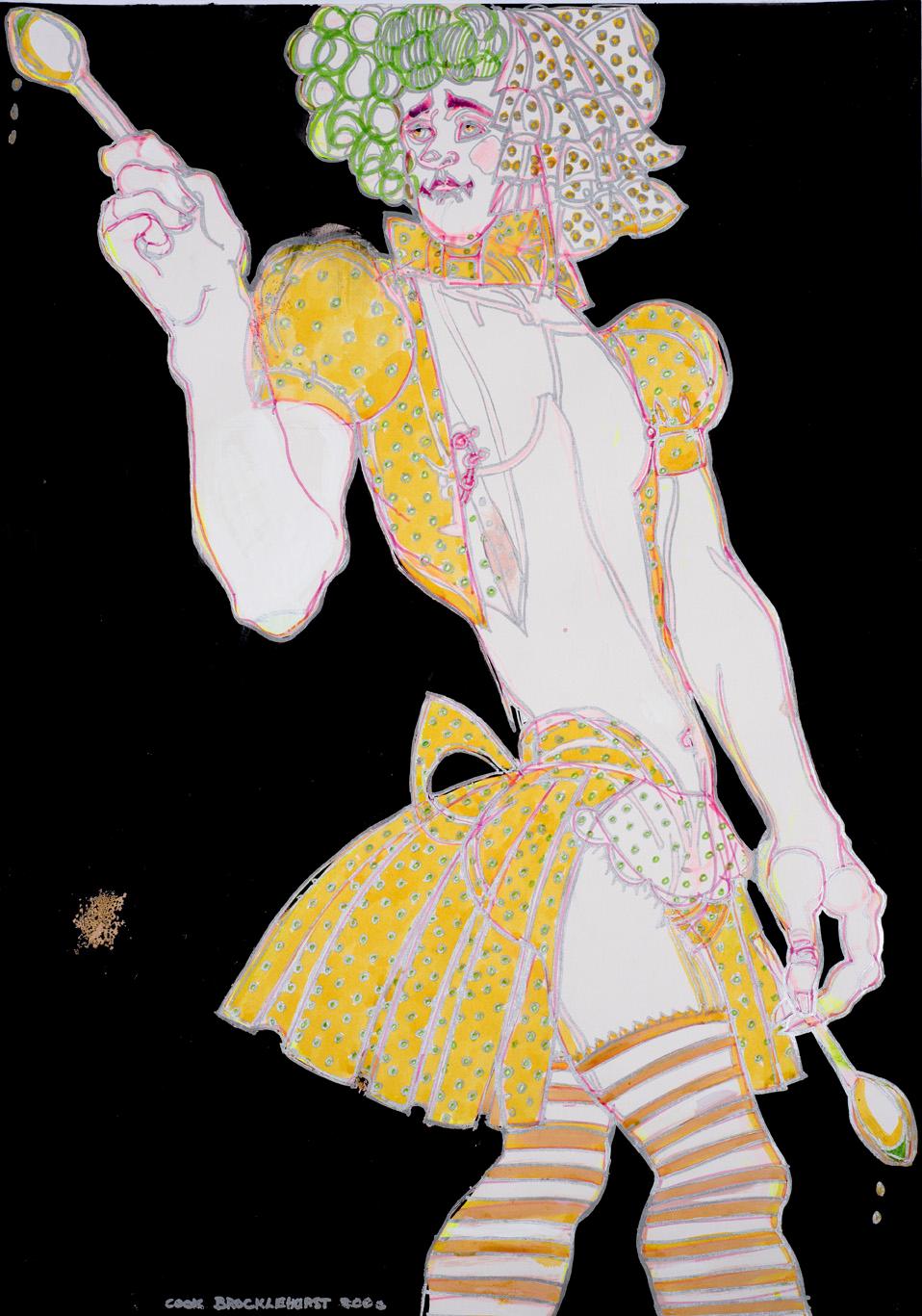
Jo Brocklehurst, Cook (from Brocklehurst Through the Looking-Glass), 2003
Jo (Josephine) Brocklehurst (1935 - 2006) studied at Central Saint Martins and began her career as a fashion illustrator. She later focused on portraiture, drawing directly from models at her studio in West Hampstead and in nightclubs and theatres in Berlin, London and New York. Her work documents the alternative subcultures of the 1970s, 80s and 90s that went on to shape mainstream fashion and performance scenes. This work is from Brocklehurst Through the Looking-Glass, Brocklehurst’s final series. With an image of herself as a child as the centrepiece, Brocklehurst made hundreds of drawings that re-imagined characters from Lewis Carroll’s Alice novels. Her models were friends and dedicated club-goers who designed and made their own clothes. Works from the series were framed with bright plastic gemstones and hung on every available space at Brocklehurst’s home studio. She used metallic and neon inks that transformed under ultraviolet lights that she switched on for her guests in the evenings.
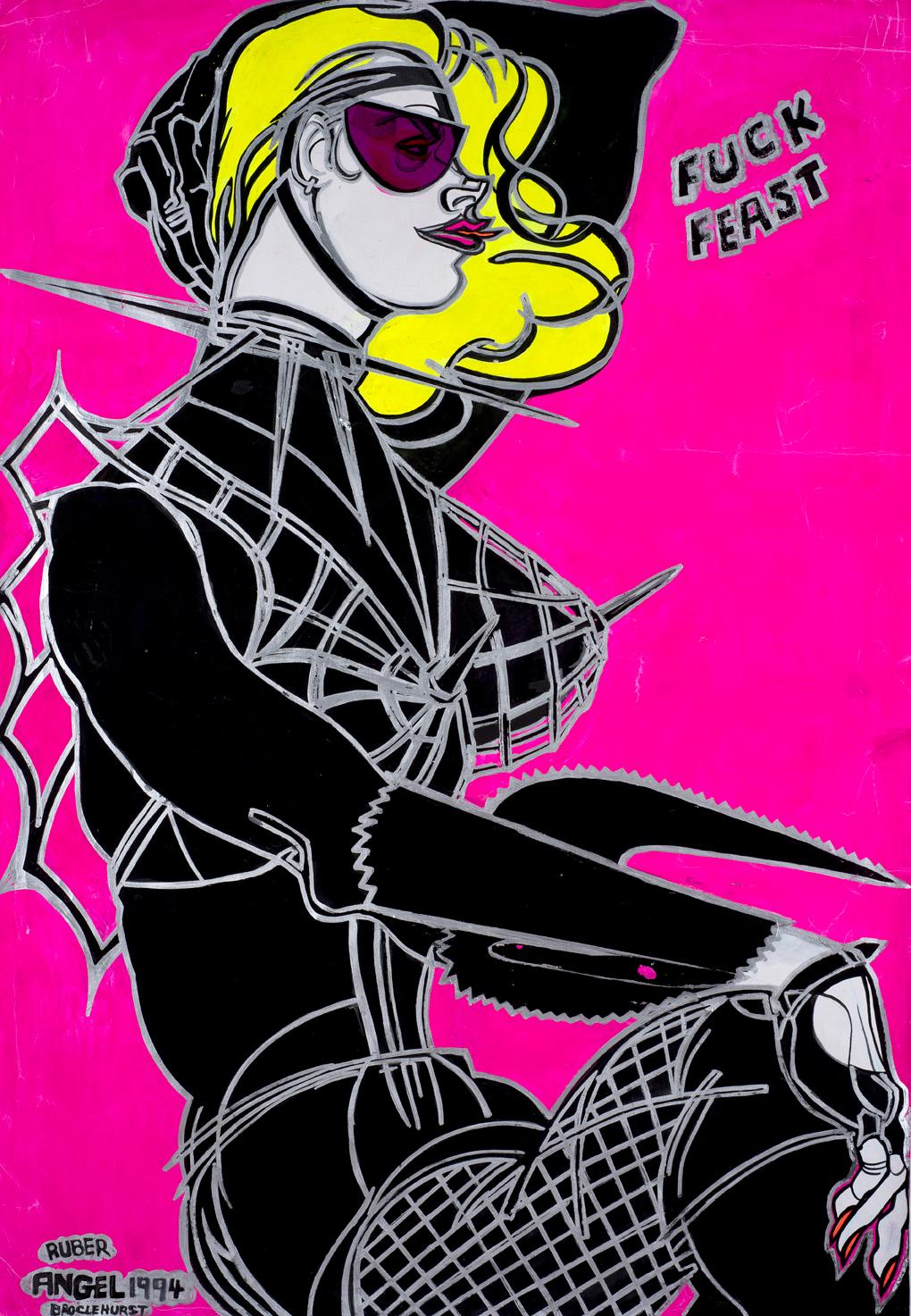
Jo Brocklehurst, Ruber Angel (portrait of Isabelle Bricknall), 1994
Jo (Josephine) Brocklehurst (1935 - 2006) studied at Central Saint Martins and began her career as a fashion illustrator. She later focused on portraiture, drawing directly from models at her studio in West Hampstead and in nightclubs and theatres in Berlin, London and New York. Her work documents the alternative subcultures of the 1970s, 80s and 90s that went on to shape mainstream fashion and performance scenes. In the 1990s, Brocklehurst began drawing the fashion designers and performers finding space for experimentation in the fetish clubs of Soho and King’s Cross. This portrait is of Brocklehurst’s regular collaborator Isabelle Bricknall, whose collection of steel ‘body armour’ (constructed by Anthony Gregory) was designed as ‘protection’ for nights on the fetish scene.
Content warning: strong language